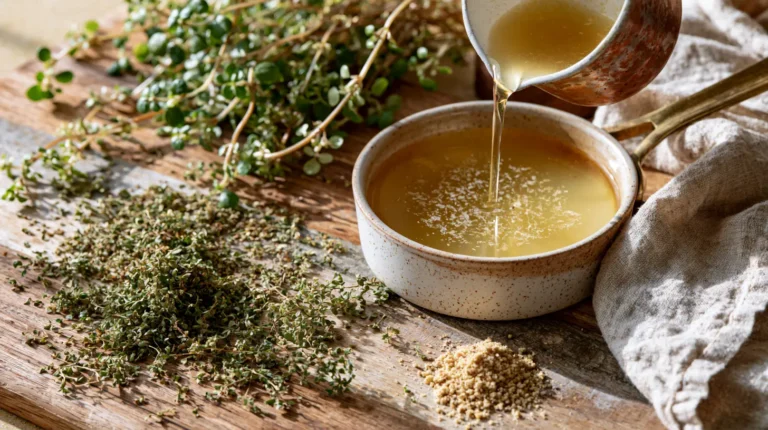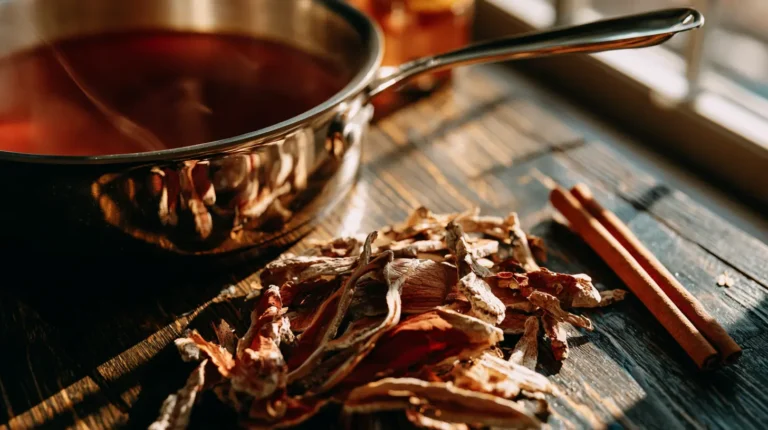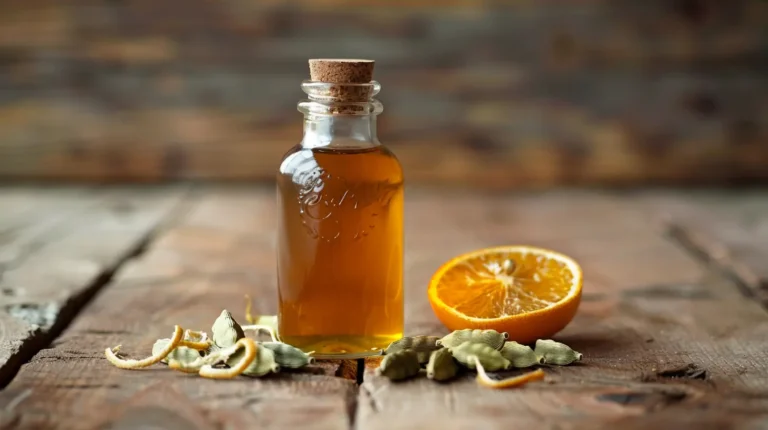
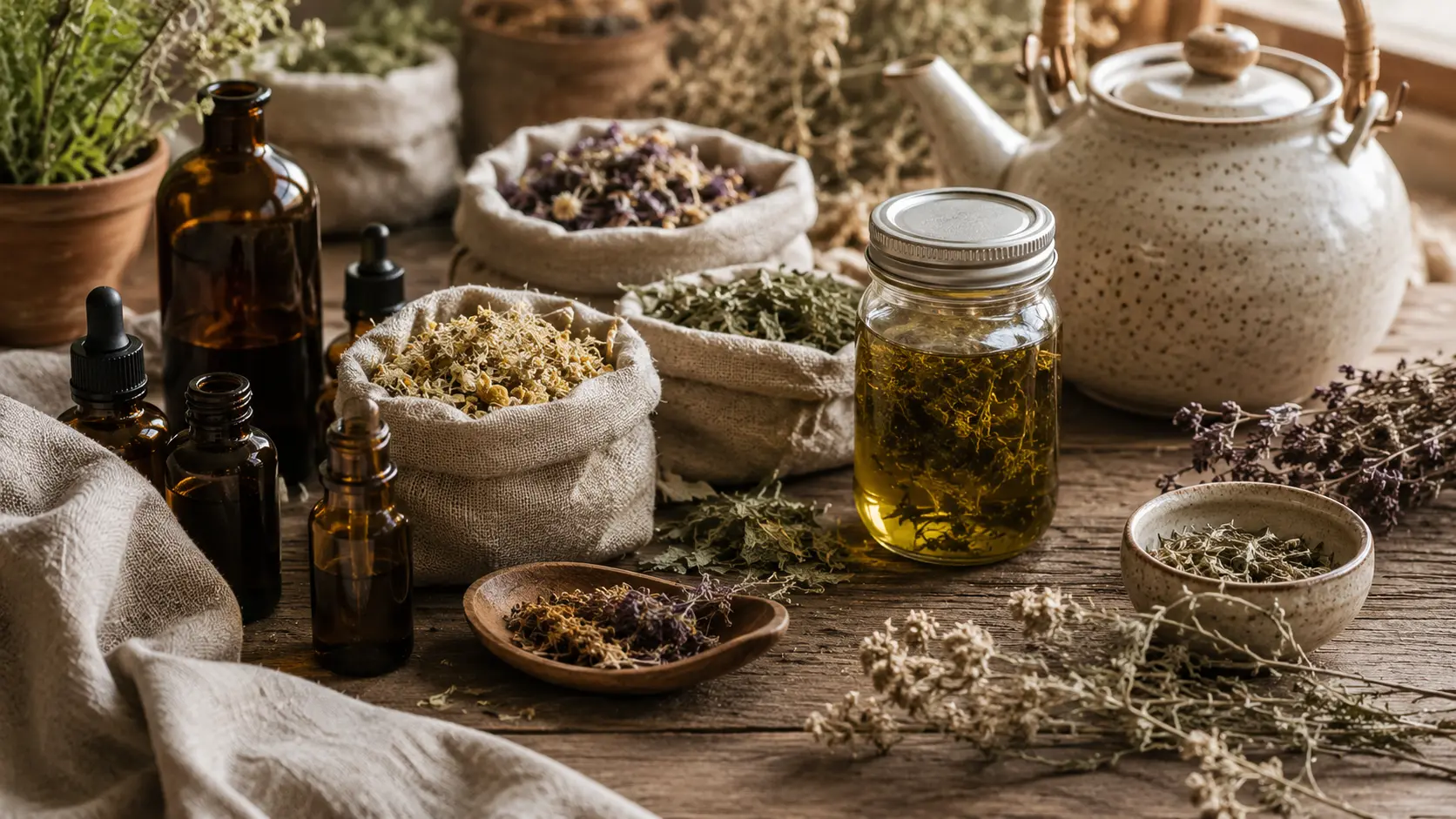
Herbal Extraction Methods Explained: Which One Pulls Out What
Not all herbal preparations are created equal — even when they start with the exact same plant. A tea and a tincture made from the same root can taste different, work differently, and even feel different in the body, because the method used to pull compounds out of a plant determines exactly what ends up in your cup, dropper, or jar. Understanding extraction isn’t just herbalist trivia — it’s the difference between a preparation that actually works and one that barely scratches the surface.
The Main Extraction Types — Quick Overview
- Infusion — hot water steeping, best for leaves and flowers
- Decoction — simmering, best for roots, bark, and seeds
- Cold Infusion — long, unheated steeping, best for mucilage-rich or heat-sensitive herbs
- Tincture — alcohol extraction, best for alkaloids and resins
- Glycerite — glycerin extraction, an alcohol-free alternative
- Vinegar Extraction (Acetum) — mild acid extraction, good for minerals
- Oil Infusion — fat-based extraction, best for topical and fat-soluble compounds
- Percolation — a faster, more thorough alcohol extraction method
- Honey Extraction (Electuary) — honey as both solvent and preservative
- Oxymel — a honey-and-vinegar hybrid extraction
- Elixir — a honey- or glycerin-sweetened tincture
- Syrup — a decoction preserved and sweetened with sugar or honey
- Steam Distillation — a specialized method for extracting essential oils
- Whole Herb / Powder — no extraction, full-spectrum baseline
Why Extraction Method Matters
Plants are chemical treasure chests, but not every compound dissolves the same way. Some compounds — like mucilage and many minerals — are water-soluble and pull out easily with a simple steep. Others, like resins, many alkaloids, and certain volatile oils, need alcohol or oil to fully release. Heat helps extract some compounds (like those locked in tough roots and bark) while destroying others (like delicate volatile oils in fresh flowers). Choosing the right extraction method means matching your solvent — water, alcohol, glycerin, vinegar, or oil — and your technique to the specific chemistry of the plant part you’re working with.
Infusion (Hot Water Steeping)
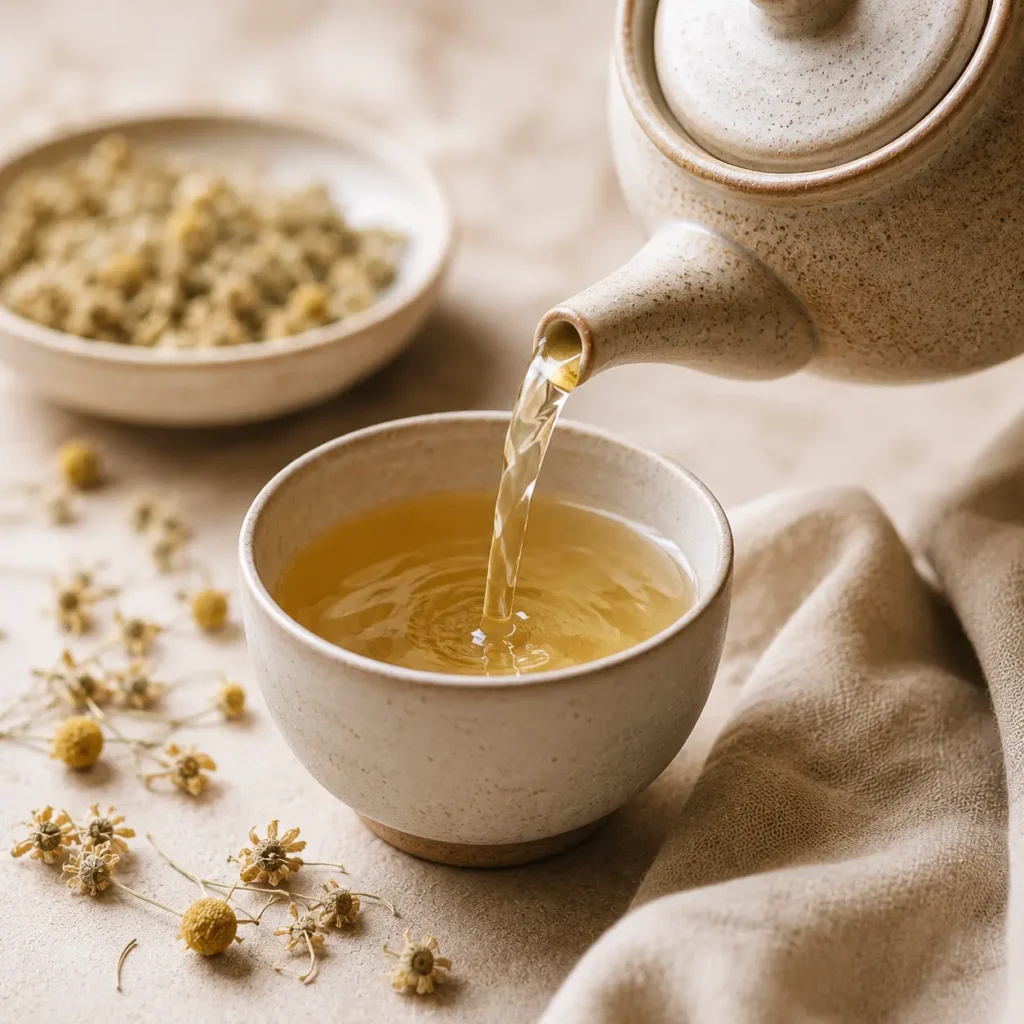
What It Is: The simplest and most familiar extraction method — pouring hot water over herbs and letting them steep, much like making tea.
Best For: Water-soluble compounds like flavonoids, some alkaloids, vitamins, and volatile oils in delicate plant parts. Best suited to leaves, flowers, and other soft aerial parts — think chamomile, lemon balm, peppermint, and tulsi.
How to Do It:
- Use roughly 1–2 teaspoons of dried herb (or 2–3 teaspoons fresh) per cup of water.
- Bring water to a boil, then pour over the herb in a mug or teapot.
- Cover and steep for 5–15 minutes depending on the herb.
- Strain and drink.
Secret Tips: Always cover your infusion while steeping — an uncovered mug lets volatile oils escape as steam, which means you lose potency (and aroma) before you even take a sip. For flowers and delicate leaves, steep slightly off the boil rather than at a full rolling boil to protect fragile compounds.
Shelf Life & Storage: Best consumed fresh, within a few hours; refrigerate if storing longer than a day.
Decoction (Simmering)
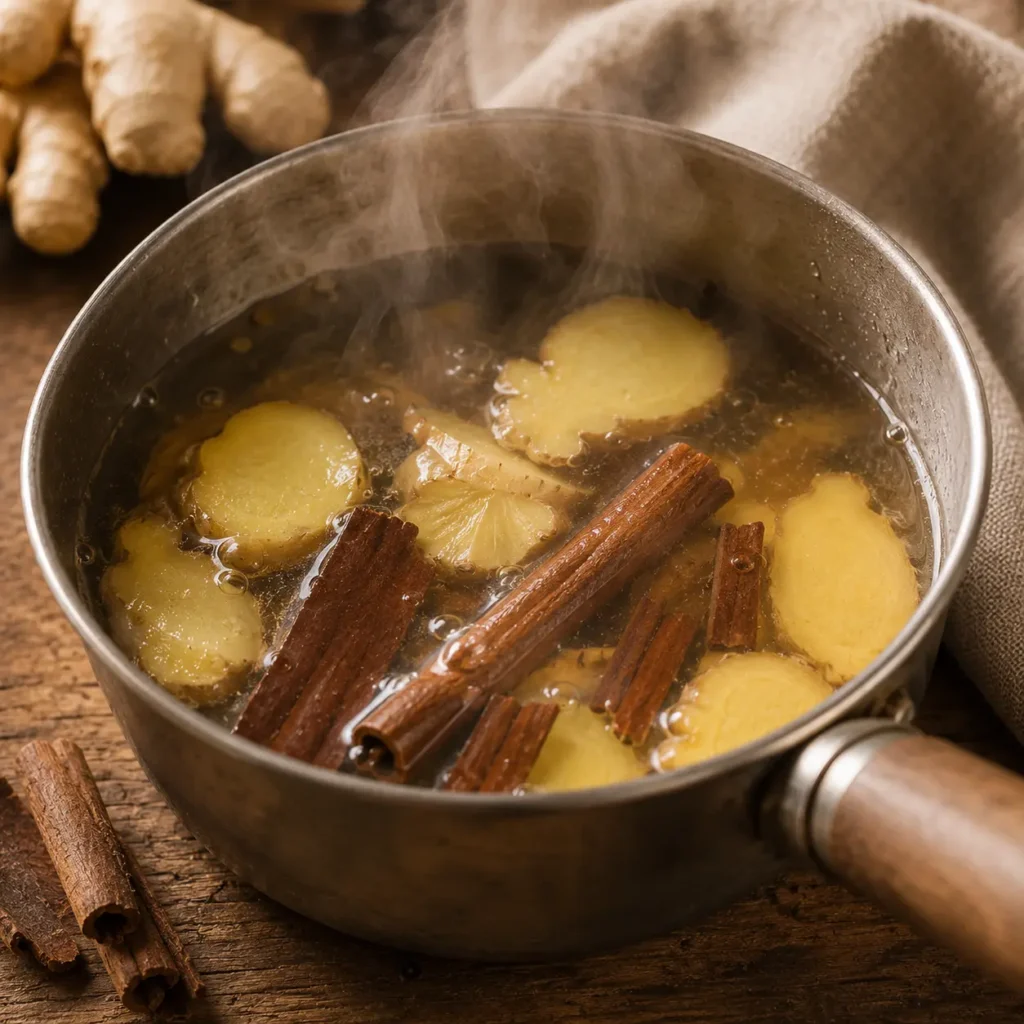
What It Is: A longer, more forceful extraction method involving simmering tougher plant material directly in water.
Best For: Roots, bark, seeds, and other dense plant parts where compounds are locked behind tough cell walls — think ginger, licorice root, astragalus, and cinnamon bark.
How to Do It:
- Use about 1 tablespoon of dried root or bark per cup of water.
- Add cold water and herb to a saucepan together (starting cold helps even extraction).
- Bring to a gentle simmer, cover, and cook for 15–45 minutes depending on density.
- Strain and drink warm.
Secret Tips: Chop or crush roots and bark into small pieces before simmering — surface area matters enormously here, and whole roots can take hours to fully extract. If a recipe calls for both roots and delicate leaves/flowers, simmer the roots first, then turn off the heat and add the leaves/flowers to steep in the residual heat so you don’t destroy their volatile compounds.
Shelf Life & Storage: Refrigerate and use within 2–3 days.
Cold Infusion (Overnight Steeping)
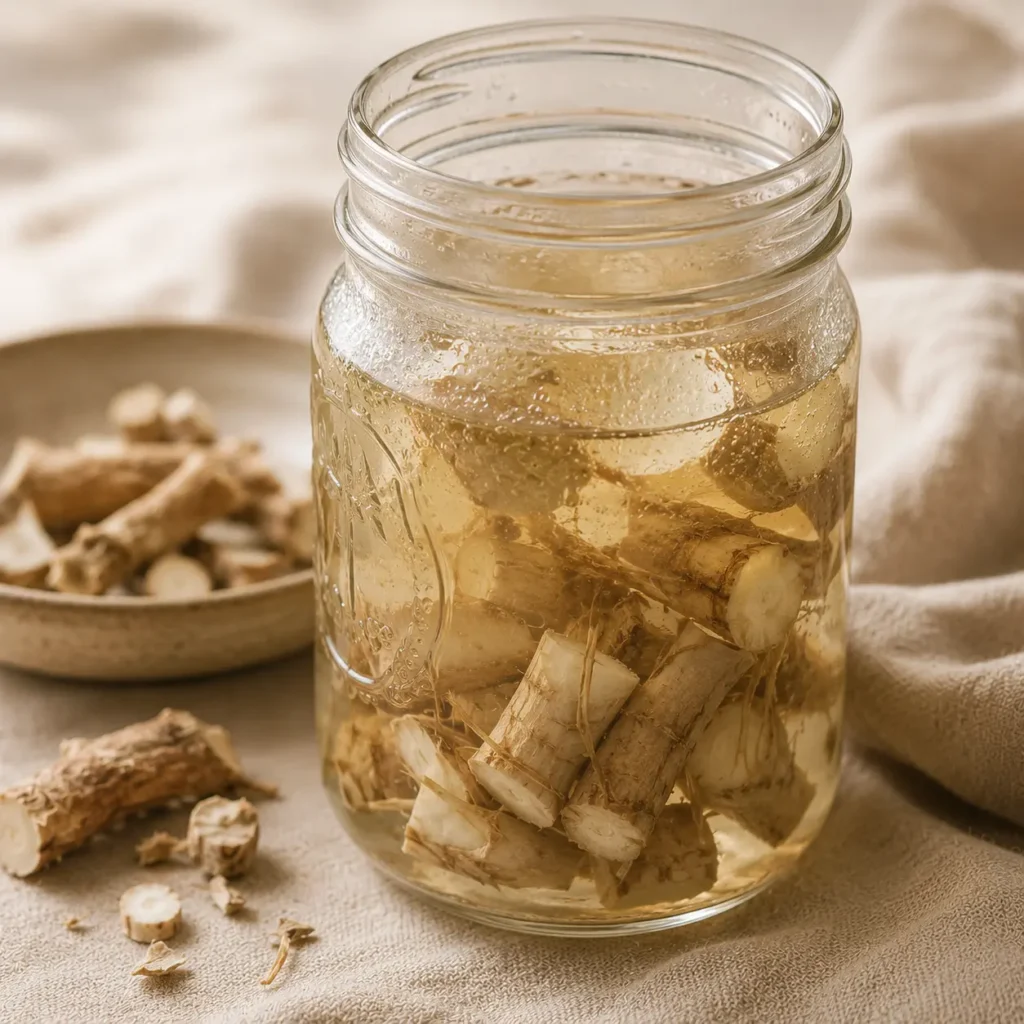
What It Is: A slow, unheated steeping method that relies on time instead of heat to pull out compounds.
Best For: Mucilage-rich herbs (which turn gummy and less effective when exposed to heat) and heat-sensitive nutritive herbs — think marshmallow root, oatstraw, and nettle.
How to Do It:
- Combine dried herb with room-temperature or cool water in a jar (roughly 1–2 tablespoons per cup, more for nutritive infusions).
- Cover and let sit at room temperature or in the refrigerator for 4–8 hours, or overnight.
- Strain and drink chilled or gently warmed (not boiled).
Secret Tips: For mucilage herbs like marshmallow root, resist the urge to squeeze the straining cloth — gentle straining preserves the silky, soothing texture that heat-based methods destroy. If steeping at room temperature for more than a few hours, especially in warm weather, refrigerate partway through to avoid spoilage.
Shelf Life & Storage: Refrigerate immediately after straining; use within 24–48 hours.
Tincture (Alcohol Extraction)
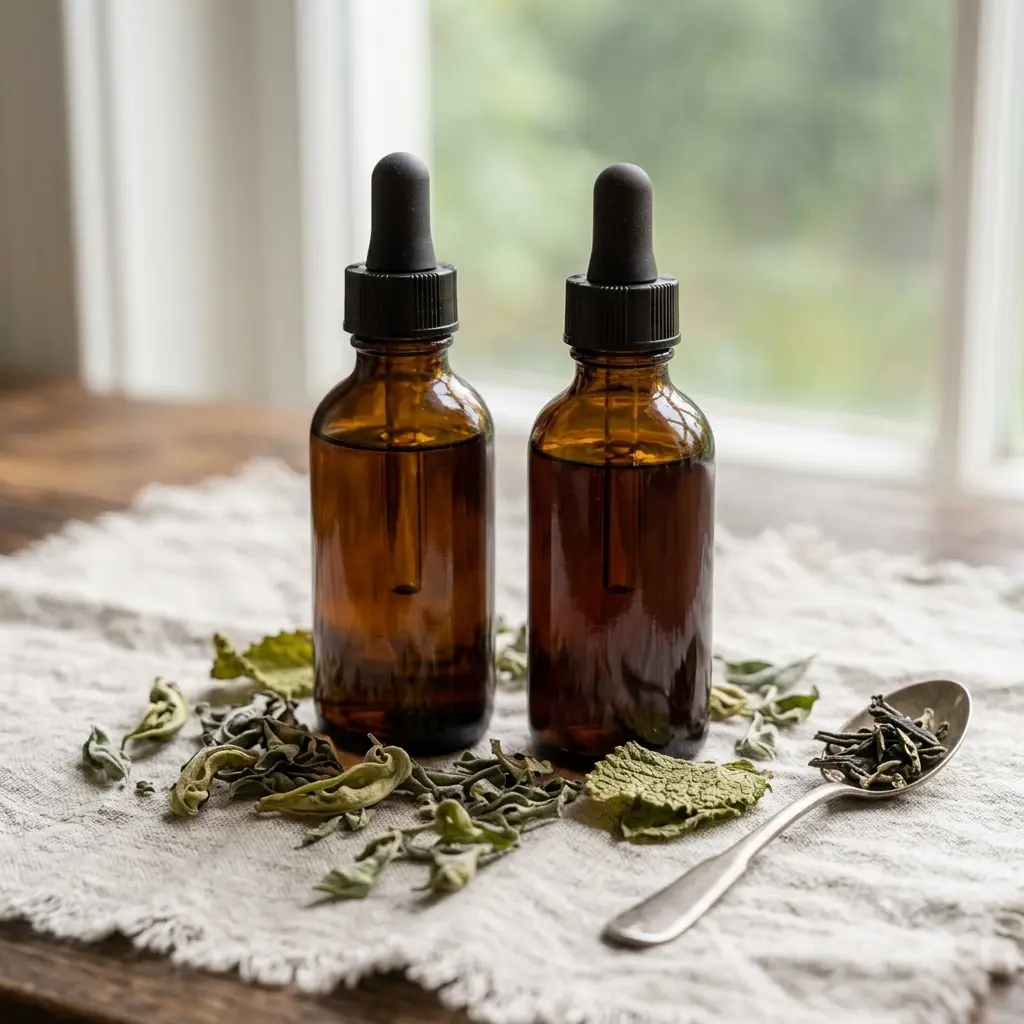
What It Is: A concentrated liquid extract made by soaking herbs in alcohol, which pulls out a broader range of compounds than water alone.
Best For: Alkaloids, resins, and many compounds that are poorly soluble in water — think skullcap, ashwagandha, and echinacea root.
How to Do It:
- Fill a glass jar about one-third to halfway with finely chopped or powdered dried herb (or two-thirds full with fresh herb).
- Cover completely with high-proof alcohol (typically 80–100 proof vodka, or higher-proof grain alcohol for resinous herbs).
- Seal, label with the date, and store in a cool, dark place for 4–6 weeks, shaking every day or two.
- Strain through cheesecloth, pressing out the liquid, and bottle in amber dropper bottles.
Secret Tips: Match your alcohol percentage to the herb — resinous or gummy herbs (like myrrh or propolis) need higher-proof alcohol (150+ proof) to fully dissolve their compounds, while most leafy herbs do fine with 80–100 proof. Always use amber or dark glass for storage, since light degrades many of the compounds you worked to extract.
Shelf Life & Storage: Properly made tinctures stored in a cool, dark place can last 3–5+ years.
Glycerite (Glycerin Extraction)
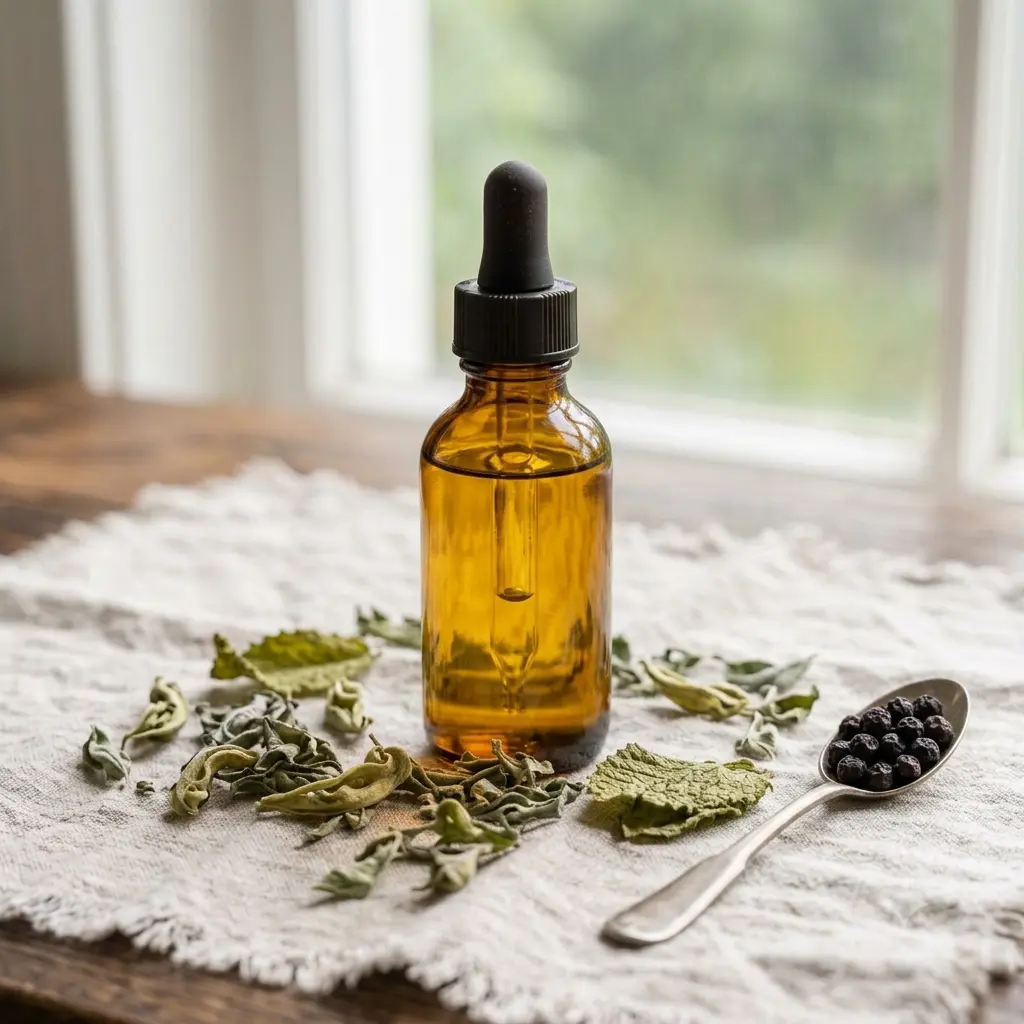
What It Is: An alcohol-free extract that uses vegetable glycerin as the solvent instead of alcohol, offering a sweeter, gentler alternative.
Best For: Herbs used with children, or by those avoiding alcohol; works well for many water-soluble and mildly alcohol-soluble compounds, though it’s generally considered a gentler, less potent extraction than tincturing — good for herbs like lemon balm, chamomile, and elderberry.
How to Do It:
- Fill a jar about one-third full with dried herb (or two-thirds with fresh).
- Cover with a mixture of roughly 60–70% vegetable glycerin and 30–40% distilled water.
- Seal and store in a cool, dark place for 4–6 weeks, shaking regularly.
- Strain, press out the liquid, and bottle in dark glass.
Secret Tips: Glycerin is a weaker solvent than alcohol, so glycerites benefit from more frequent shaking (daily, without fail) and slightly longer steeping times to compensate. Because glycerites lack alcohol’s natural preservative power, keep the glycerin-to-water ratio on the higher end (closer to 70/30) to extend shelf life and prevent mold.
Shelf Life & Storage: Typically 1–3 years when properly made; refrigeration after opening extends freshness.
Vinegar Extraction (Acetum)
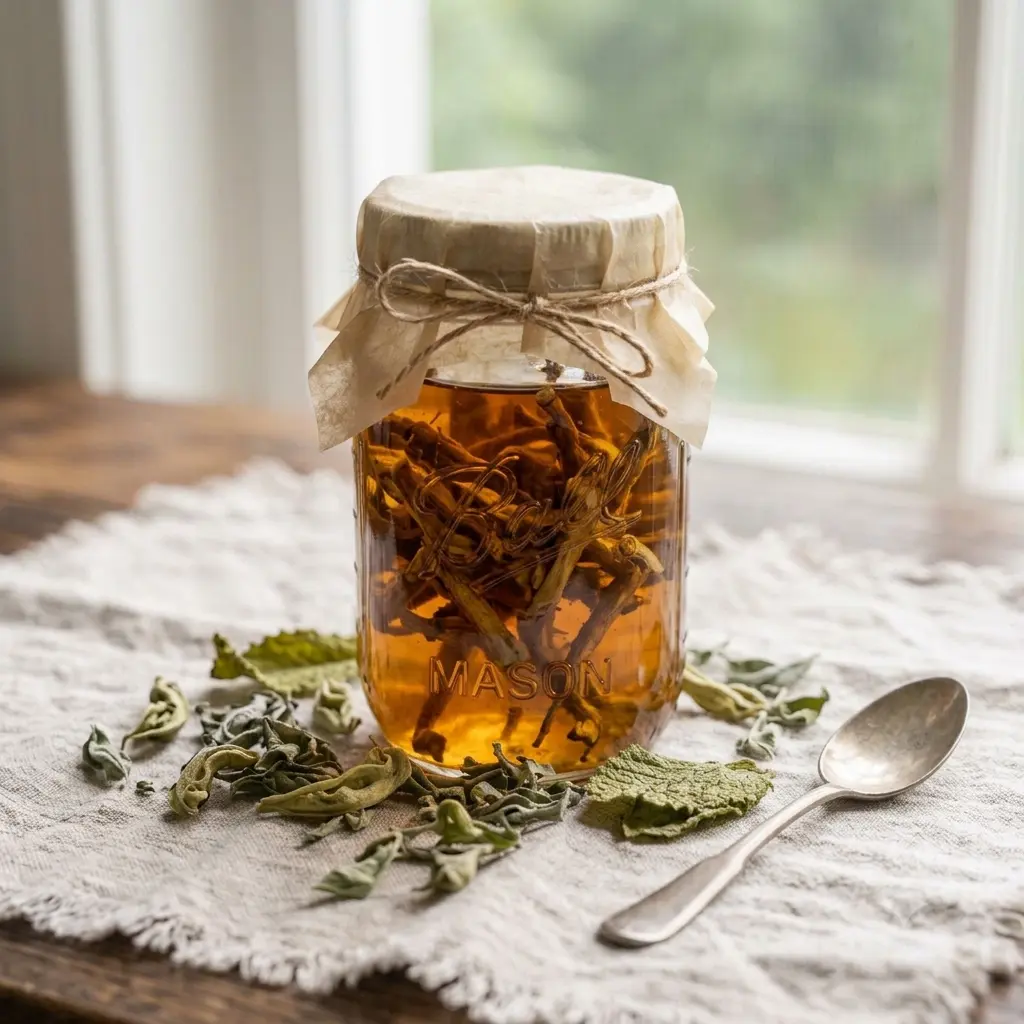
What It Is: An extraction using acidic vinegar (usually apple cider vinegar) as the solvent, historically used both medicinally and culinarily.
Best For: Minerals (vinegar’s acidity is particularly good at pulling calcium, magnesium, and other minerals from plant material) and some gentle alkaloids — good for nettle, dandelion leaf and root, and burdock root.
How to Do It:
- Fill a jar about halfway with chopped dried or fresh herb.
- Cover completely with raw apple cider vinegar.
- Seal with a non-metal lid (vinegar corrodes metal — use wax paper or a plastic lid underneath).
- Store in a cool, dark place for 4–6 weeks, shaking occasionally, then strain.
Secret Tips: Always use a non-reactive lid — even a short brush with vinegar can corrode a metal lid over weeks of storage, contaminating your extract. A splash of raw vinegar extract in salad dressings or a small glass of water is a traditional way to use these mineral-rich extracts daily.
Shelf Life & Storage: Can last 6 months to a year in a cool, dark place; refrigeration extends this further.
Oil Infusion
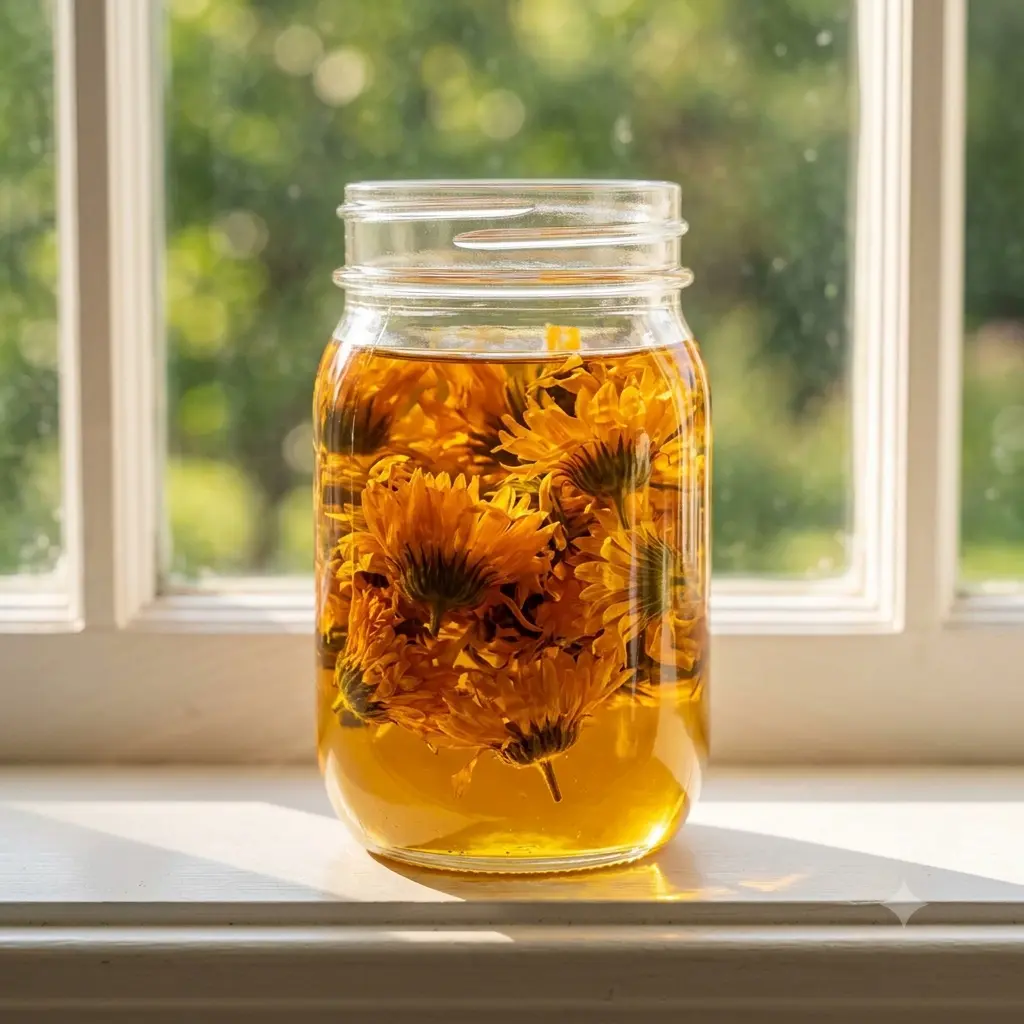
What It Is: An extraction method using a carrier oil (like olive or sweet almond oil) to pull out fat-soluble compounds, typically used for topical preparations like salves and balms.
Best For: Fat-soluble compounds like certain resins and volatile oils — think calendula, St. John’s wort, and comfrey.
How to Do It (Slow/Cold Method):
- Fill a jar with dried herb, covering completely with carrier oil (dried herb is preferred over fresh, to avoid introducing moisture that can cause mold).
- Seal and place in a warm, sunny windowsill for 2–4 weeks, shaking occasionally.
- Strain through cheesecloth, pressing out the oil, and store in a dark bottle.
How to Do It (Quick/Heat Method):
- Combine dried herb and oil in a double boiler.
- Gently warm on low heat for 2–5 hours, never letting it simmer or bubble.
- Strain and bottle as above.
Secret Tips: Moisture is the enemy of oil infusions — even slightly damp fresh herb can introduce mold risk, so always use fully dried plant material, or wilt fresh herbs for 24 hours first to reduce water content. If using the heat method, keep a close eye on temperature; oil that gets too hot can degrade the very compounds you’re trying to preserve.
Shelf Life & Storage: 6 months to 1 year stored in a cool, dark place; adding a small amount of vitamin E oil can help extend shelf life.
Percolation
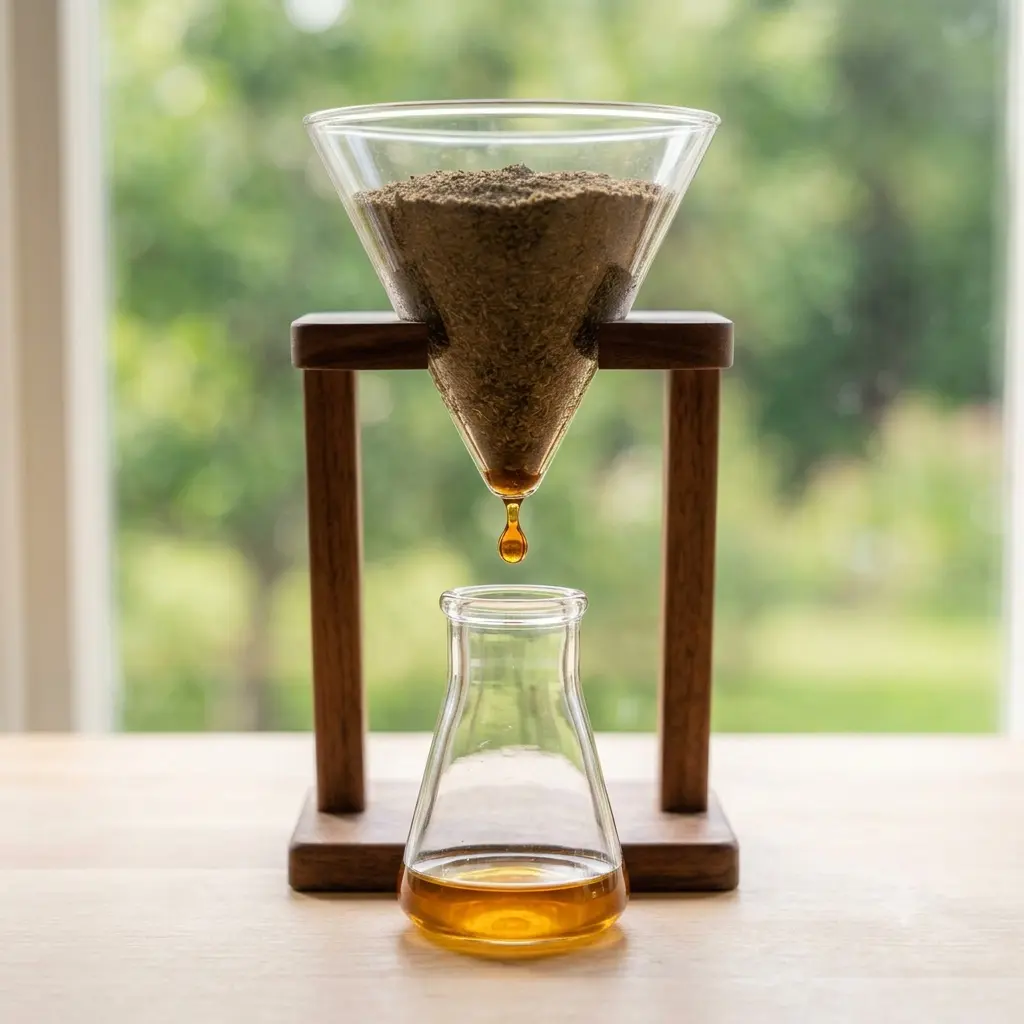
What It Is: A faster, more efficient alcohol extraction method where solvent is slowly dripped through packed, moistened herb (similar to how a coffee percolator works), commonly used in professional and production settings.
Best For: Producing highly concentrated tinctures more quickly and thoroughly than standard maceration — useful for potent roots and barks like goldenseal or valerian.
How to Do It:
- Moisten powdered herb with a small amount of alcohol and let it sit for several hours to swell.
- Pack the moistened herb firmly into a percolation cone or funnel lined with a filter.
- Slowly drip additional alcohol through the packed herb, collecting the liquid that percolates through at the bottom, over several hours.
- Combine, bottle, and label.
Secret Tips: This method requires specialized equipment and more precision than standard tincturing, so it’s generally best attempted after you’re comfortable with basic maceration — evenly packing the herb (not too tight, not too loose) is the make-or-break step for a good percolation.
Shelf Life & Storage: Similar to standard tinctures — 3–5+ years when stored properly.Powder (No Extraction)
Honey Extraction (Herbal Honey / Electuary)
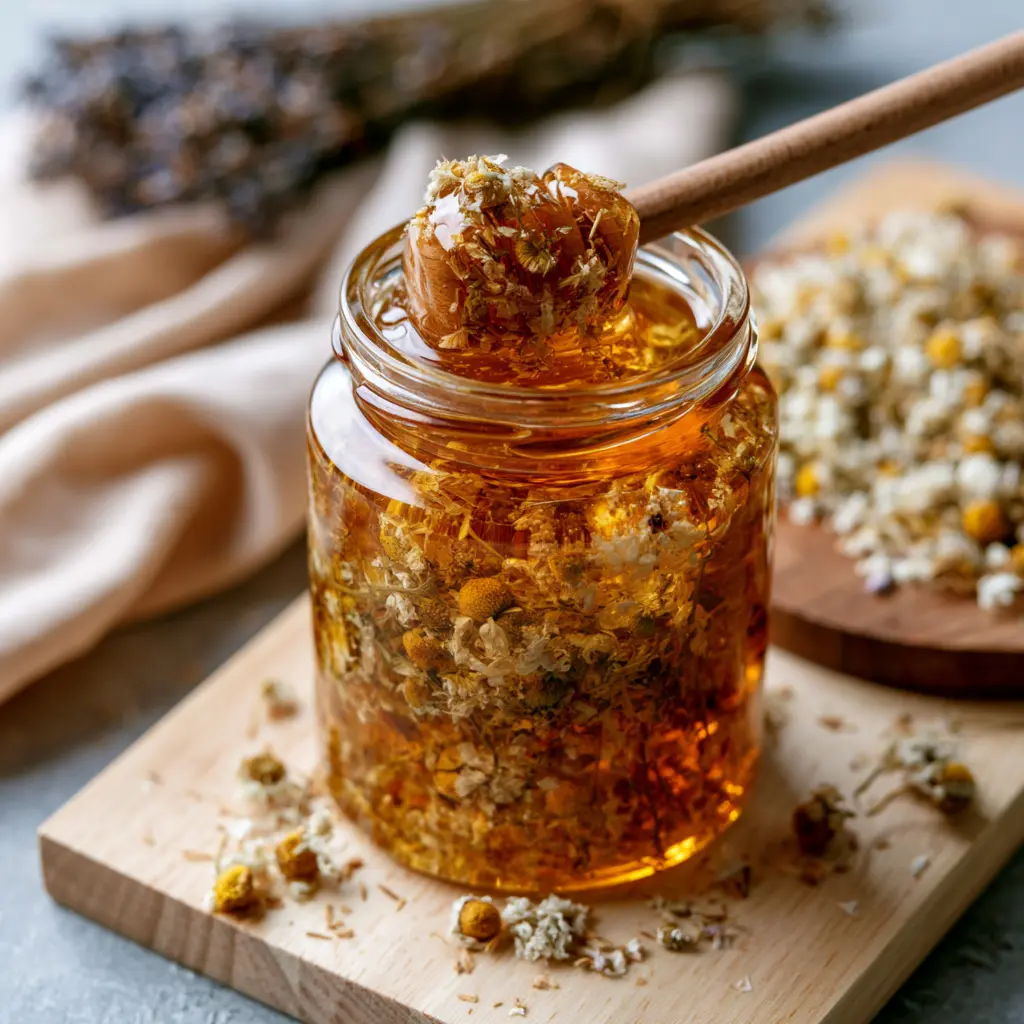
What It Is: An extraction that uses raw honey as the menstruum, drawing out compounds slowly while doubling as a natural preservative — the base for what herbalists call an electuary when mixed with powdered herb into a paste.
Best For: Mild, water-soluble compounds and herbs best taken as a soothing, palatable daily remedy — particularly suited to sore-throat and respiratory herbs like thyme, sage, and elderberry, and warming herbs like ginger and garlic.
How to Do It (Herbal Honey):
- Fill a jar about one-third full with dried or lightly wilted fresh herb (avoid very wet fresh herb, which dilutes the honey and risks fermentation).
- Cover completely with raw honey, stirring to remove air pockets.
- Seal and store in a cool, dark place for 2–4 weeks, turning or stirring the jar every few days.
- Strain through a cloth (warming the honey gently first makes straining easier), and bottle.
How to Do It (Electuary Paste):
- Combine finely powdered herb with just enough raw honey to form a thick, spoonable paste.
- Stir until fully and evenly combined.
- Store in a small jar and take by the spoonful.
Secret Tips: Use raw, unpasteurized honey whenever possible — its natural enzymes and lower moisture content make it a better preservative and extraction medium than heavily processed honey. If your herb is very absorbent (like powdered ginger), add honey gradually to avoid ending up with a dry, crumbly paste instead of a smooth one.
Shelf Life & Storage: Honey extracts can last 6 months to 1 year in a cool, dark place, thanks to honey’s natural antimicrobial properties; watch for fermentation bubbles if fresh herb was used.
Oxymel (Honey and Vinegar Extraction)
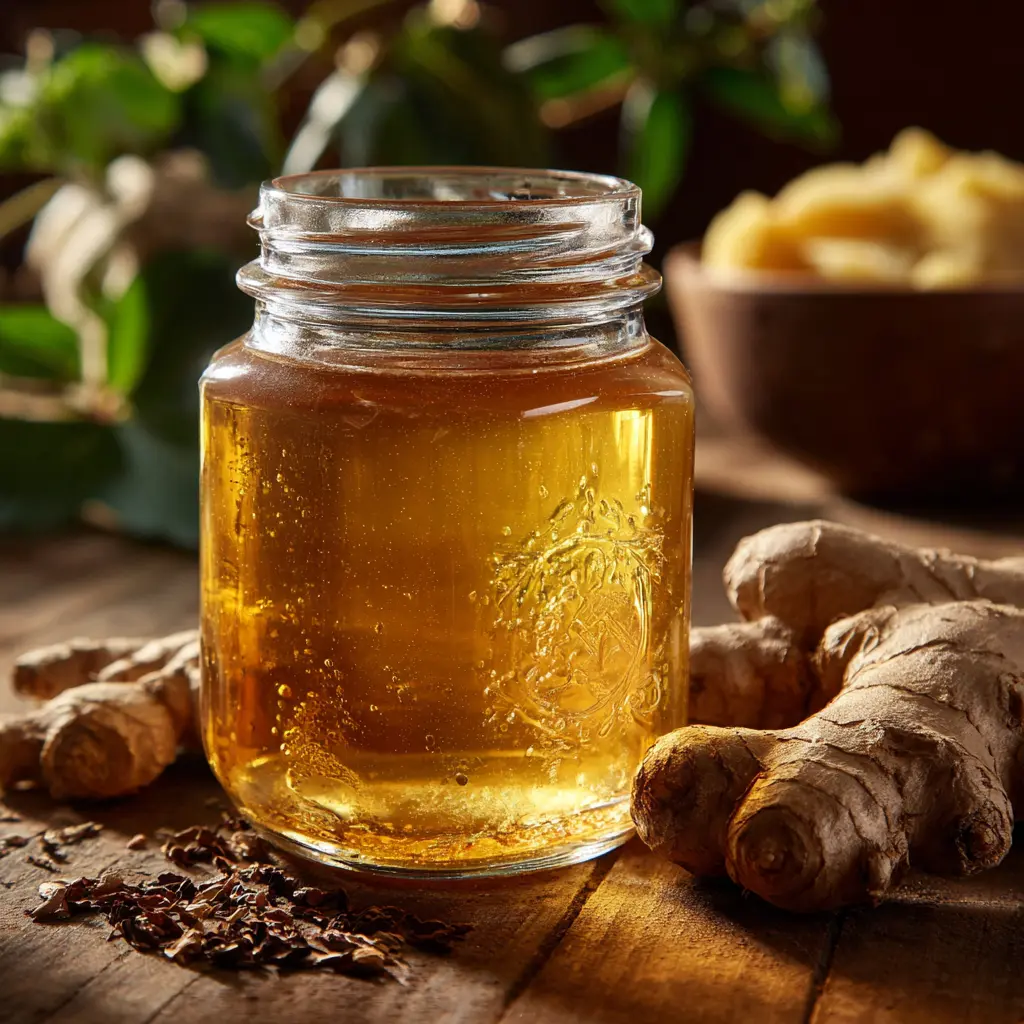
What It Is: A traditional hybrid extraction combining honey and vinegar, whose name comes from the Latin for “acid” and “honey” — one of the oldest documented herbal preparation styles, dating back to ancient Greek and Roman medicine.
Best For: Herbs whose compounds benefit from both a mineral-rich acidic pull and honey’s soothing sweetness — a favorite for immune and respiratory support herbs like elderberry, sage, thyme, and fire cider-style blends of garlic, ginger, and horseradish.
How to Do It:
- Fill a jar about halfway with chopped dried or fresh herb.
- Combine equal parts raw apple cider vinegar and raw honey (adjust ratio to taste, from equal parts to 2:1 vinegar-to-honey), and pour over the herb.
- Seal with a non-metal lid and store in a cool, dark place for 2–4 weeks, shaking occasionally.
- Strain and bottle; take by the spoonful or diluted in water.
Secret Tips: Start with a higher honey ratio if you’re new to oxymels — the sharpness of straight vinegar extracts can be a lot for first-timers, and you can always adjust the honey-to-vinegar balance to taste once you strain the finished batch. As with vinegar extraction, always use a non-metal lid.
Shelf Life & Storage: Typically 6 months to 1 year stored in a cool, dark place; refrigeration extends shelf life further.
Elixir (Sweetened Alcohol or Glycerin Extract)
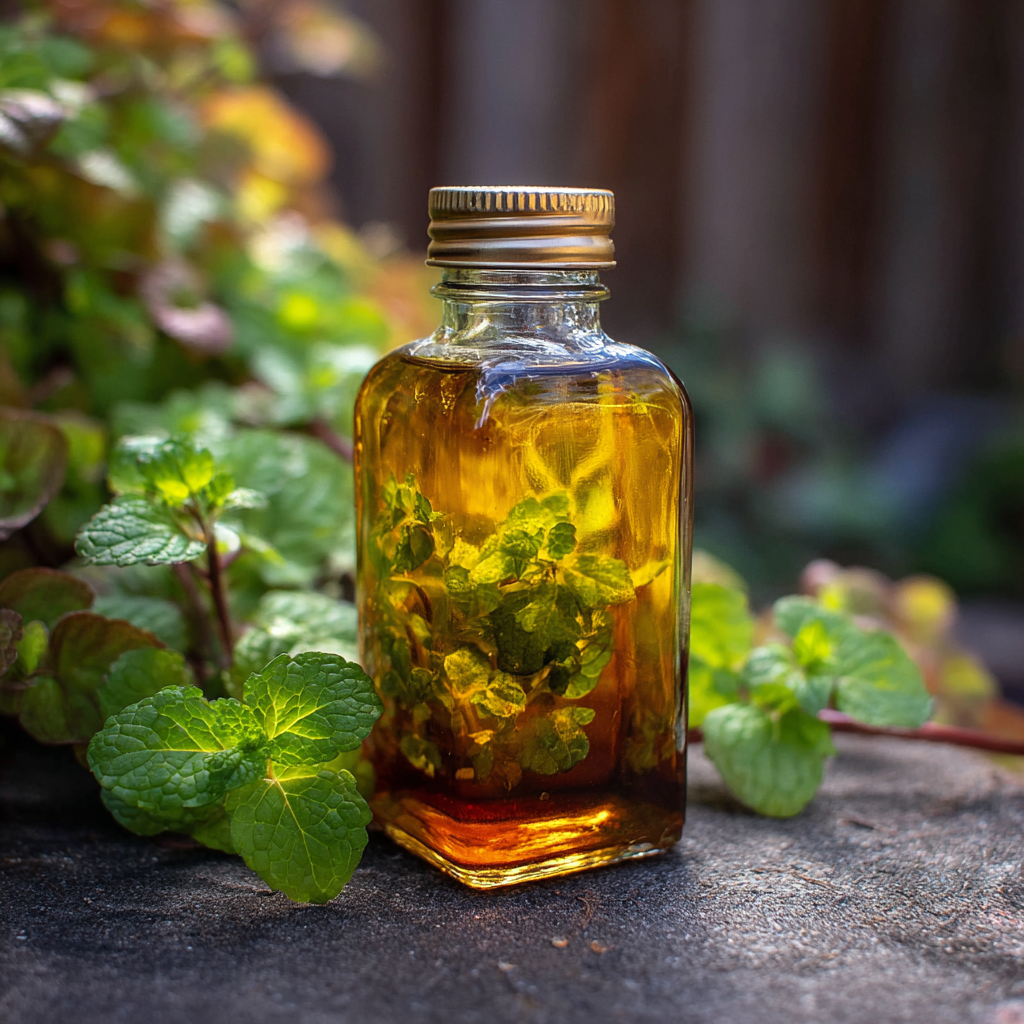
What It Is: A tincture-like extract finished with honey, glycerin, or a flavored syrup added after the initial alcohol extraction, designed to be more palatable and often taken as a small daily “tonic” dose rather than in drop-form dilution.
Best For: Herbs that benefit from alcohol’s broad extraction range but need a flavor boost to be enjoyable as a regular tonic — commonly used for adaptogens and bitters like ashwagandha, dandelion root, or ginger.
How to Do It:
- Prepare a standard tincture (see Section 4) and strain as usual.
- Warm a small amount of honey gently (do not boil) to thin it slightly, or use glycerin as-is.
- Combine the strained tincture with the honey or glycerin at a ratio of roughly 3:1 to 1:1 alcohol-extract-to-sweetener, adjusting to taste.
- Bottle and label; shake well before each use since the two liquids can separate over time.
Secret Tips: Elixirs are a great way to make a bitter or sharp-tasting tincture actually enjoyable to take daily, which matters more for consistency than potency in many cases. Warming the honey (gently, off heat) before combining helps it blend more smoothly into the alcohol base instead of clumping.
Shelf Life & Storage: 1–3 years in a cool, dark place, though shelf life is generally governed by the honey or glycerin portion rather than the alcohol.
Syrup (Decoction Preserved with Sugar or Honey)
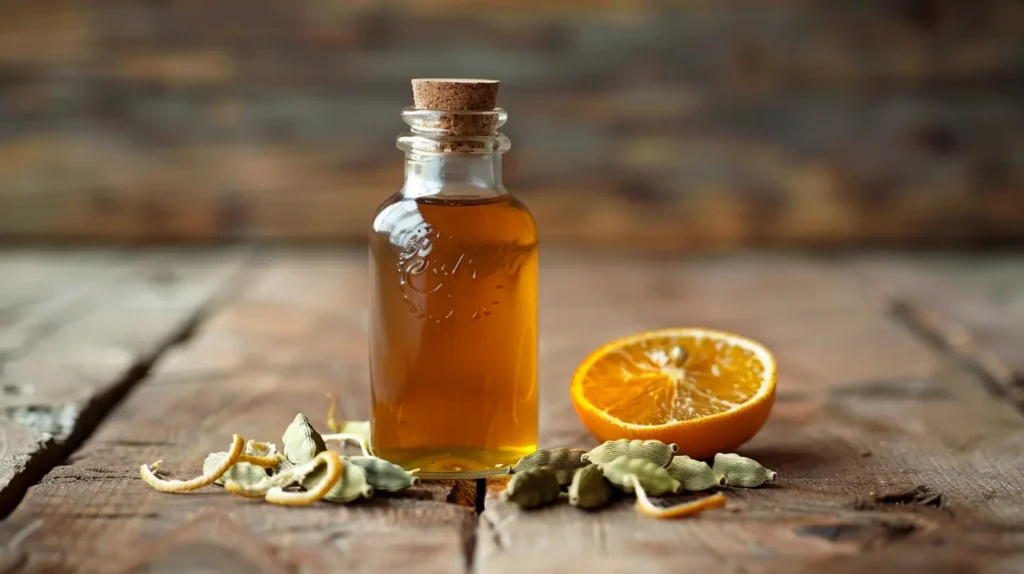
What It Is: A concentrated decoction that’s been sweetened and thickened with sugar or honey, both to preserve it and make it more palatable — a classic format for cough and cold remedies.
Best For: Roots, bark, and berries suited to decoction, especially herbs commonly given to children or anyone who finds straight decoctions unpalatable — think elderberry, ginger, and licorice root.
How to Do It:
- Make a strong decoction (see Section 2), using roughly double the usual herb-to-water ratio, and simmer until reduced by about half.
- Strain out the plant material while the liquid is still warm.
- Stir in sugar or honey at a ratio of about 1 part sweetener to 2 parts strained liquid (use honey off the heat, since boiling honey destroys some of its beneficial qualities).
- Bottle in a clean glass container and refrigerate.
Secret Tips: If using honey as the sweetener, always add it after removing the liquid from heat — boiling honey degrades some of its natural enzymes and can also affect flavor. Reducing the decoction well before adding sweetener (rather than adding more sugar to compensate) keeps the final syrup from becoming overly sweet or thin.
Shelf Life & Storage: Refrigerate and use within 1–2 months; some herbalists add a splash of brandy as an additional preservative to extend shelf life further.
Steam Distillation (Essential Oil Extraction)
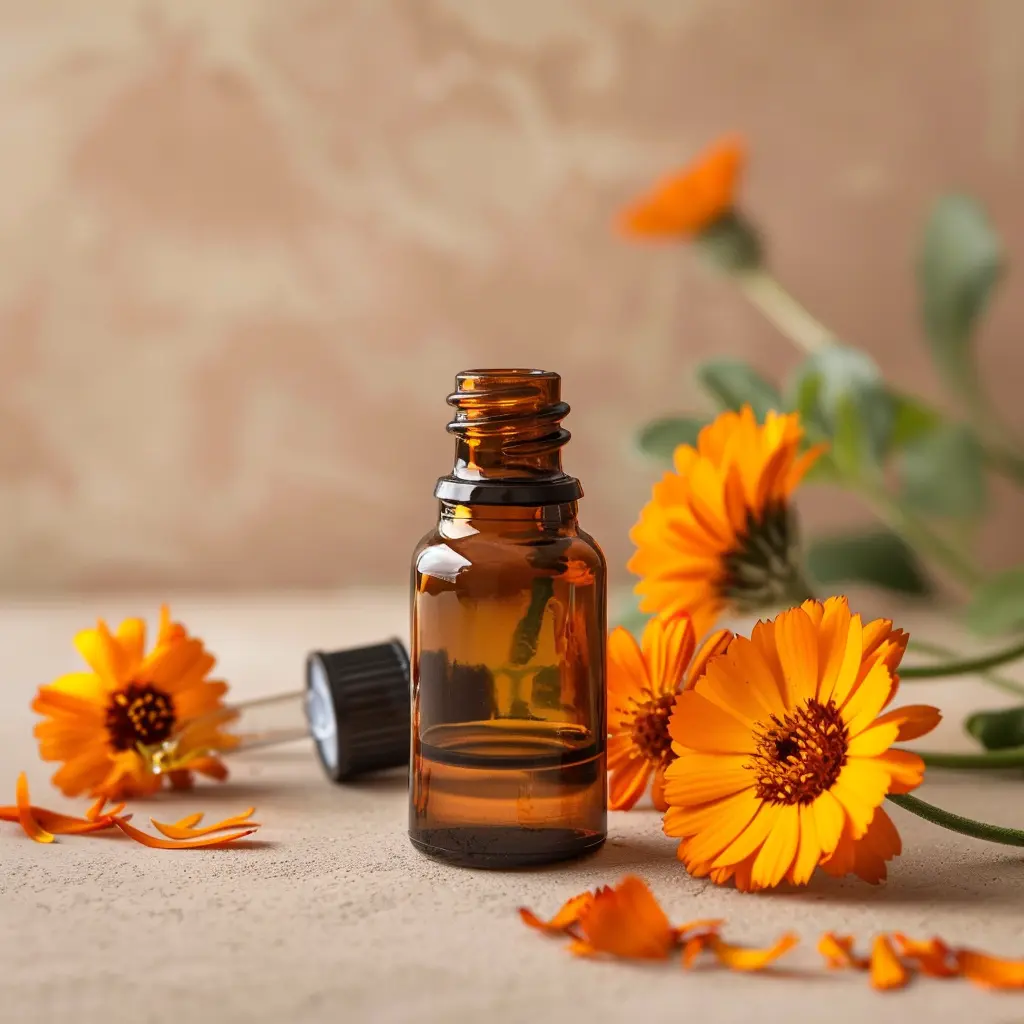
What It Is: A specialized, equipment-intensive extraction method that uses steam to vaporize and carry volatile aromatic compounds out of plant material, which are then condensed back into liquid form as essential oil (and aromatic hydrosol water) — distinct from the infused oils in Section 7, which are diluted in a carrier oil rather than pure distillates.
Best For: Highly aromatic, volatile-oil-rich plants where a concentrated essential oil is the goal — think lavender, peppermint, rosemary, and citrus peel.
How to Do It:
- Fresh plant material is placed in a still chamber above (but not touching) water.
- As the water is heated, steam passes through the plant material, carrying volatile aromatic compounds with it.
- The steam and compounds travel through a cooling condenser, turning back into liquid.
- The liquid separates naturally into essential oil (which floats) and hydrosol/floral water (the remaining aromatic water), which are collected separately.
Secret Tips: This method genuinely requires a proper still — it isn’t a stovetop DIY project like the other methods in this guide, so most home herbalists purchase finished essential oils rather than distilling their own. If you’re curious to try on a small scale, tabletop copper or glass distillation units are available, but expect a very large volume of fresh plant material to yield a surprisingly small amount of essential oil.
Shelf Life & Storage: True essential oils are highly concentrated and can last 1–several years properly stored in dark glass with a tight seal, away from heat and light; citrus oils tend to have a shorter shelf life than woody or resinous oils.`
Powdering
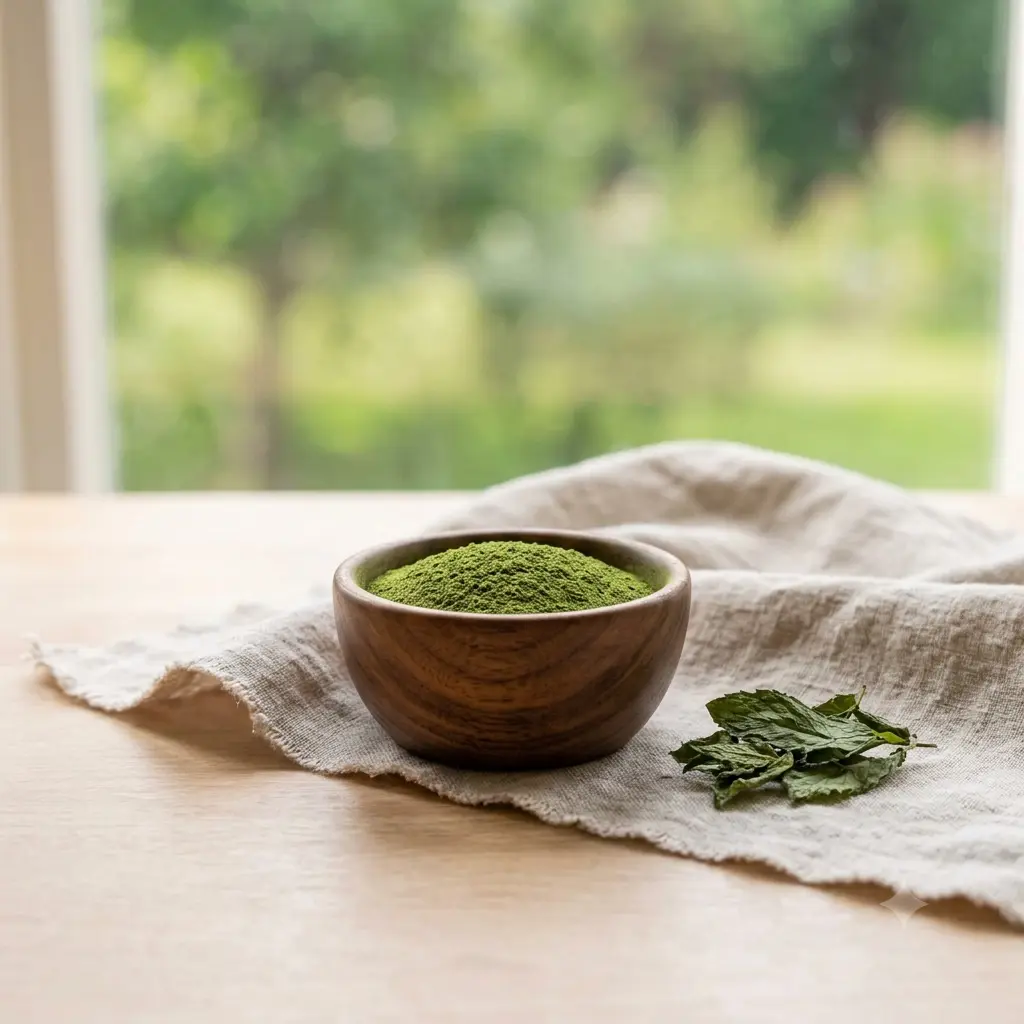
What It Is: Using the dried, ground herb itself rather than extracting it into a liquid — capsules, powders stirred into food, or whole dried herb eaten directly.
Best For: A full-spectrum approach that includes fiber and compounds that don’t dissolve well in any solvent — useful for nutritive herbs like moringa, nettle, or spirulina where you want the whole plant matrix, not just what an extraction pulls out.
How to Do It:
- Grind dried herb into a fine powder using a spice or coffee grinder.
- Encapsulate using a capsule machine, or stir directly into smoothies, oatmeal, or food.
- Store powder in an airtight, light-blocking container.
Secret Tips: Grind only what you’ll use within a few weeks — powdered herb has significantly more surface area exposed to air and light than whole dried herb, so it loses potency faster. Store powders in the freezer for extended shelf life if you’re grinding in bulk.
Shelf Life & Storage: Whole dried herb can last 1–2 years; ground powder is best used within 3–6 months.
Extraction Method vs. Compound Type
| Compound Class | Best Extraction Method(s) |
|---|---|
| Volatile oils | Infusion (covered, gentle heat), oil infusion |
| Alkaloids | Tincture, decoction (for heat-stable types), percolation |
| Flavonoids | Infusion, tincture |
| Mucilage | Cold infusion |
| Tannins | Decoction, infusion |
| Resins | Tincture (high-proof), oil infusion |
| Minerals | Vinegar extraction, long decoction, cold infusion (nutritive herbs) |
| Saponins | Decoction |
| Fiber / whole-plant nutrients | Whole herb / powder |
Extraction Method vs. Preparation Format
Infusion
Water (hot)Decoction
Water (simmered)Cold infusion
Water (unheated)Tincture
AlcoholGlycerite
Glycerin/waterVinegar extraction
VinegarOil infusion
Carrier oilPercolation
AlcoholWhole herb / powder
NoneHow to Choose the Right Method for Your Herb
- Working with a root or bark? Decoction is usually your best starting point, since heat and time are needed to break down tough plant material.
- Working with delicate leaves or flowers? Infusion is the gentlest and simplest option, especially for volatile-oil-rich herbs.
- Want a concentrated, shelf-stable extract? Tincture (or percolation, if you have the equipment) offers the strongest potency and longest shelf life.
- Avoiding alcohol? Glycerite or vinegar extraction are your best alcohol-free options.
- Making a topical product? Oil infusion is the standard choice for salves, balms, and body oils.
- Want the whole plant, fiber included? Powdered whole herb is the way to go — no solvent required.
Common Mistakes
- Using a full rolling boil on delicate flowers and volatile-oil-rich herbs, which drives off the very compounds you’re trying to capture.
- Under-extracting tough roots and bark with a quick steep instead of a proper simmer.
- Using low-proof alcohol on resinous or gummy herbs that need a higher-proof solvent to fully dissolve.
- Introducing moisture into oil infusions via fresh, undried herb, risking mold.
- Storing tinctures and oils in clear glass, where light gradually degrades the extracted compounds.
- Forgetting to shake tinctures and glycerites regularly during the extraction period, leading to uneven, weaker extracts.
Q&A
Q: Is a tincture always stronger than a tea? A: Generally yes for compounds like alkaloids and resins, since alcohol extracts a broader range of constituents than water and preserves them at a higher concentration — but for some water-soluble compounds, a well-made tea can be just as effective.
Q: Can I combine extraction methods? A: Yes — many herbalists make a decoction of roots and then use that liquid as the base for a glycerite, or combine a tincture with a tea for a more complete-spectrum preparation.
Q: How long do different extractions actually last? A: It varies widely: infusions and cold infusions should be used within a day or two, oils and glycerites typically last 6 months to a few years, and properly made tinctures can last 3–5+ years or longer.
Q: Are alcohol-free extraction methods just as effective? A: They can be for many herbs, though alcohol remains the most versatile solvent for extracting the widest range of compounds; glycerites and vinegar extracts are gentler and generally best suited to milder herbs.
Q: Is alcohol extraction safe for children or during pregnancy? A: The alcohol content in a typical tincture dose is very small, but many parents and pregnant individuals prefer glycerites specifically to avoid alcohol altogether — consult a healthcare provider for personalized guidance.
Q: Why do some recipes call for fresh herb and others for dried? A: Fresh herb contains more water, which can dilute alcohol-based extractions or introduce mold risk in oil infusions, so dried herb is often preferred for tinctures and oils, while fresh herb is sometimes favored for infusions and vinegar extracts where a brighter, more vibrant flavor and profile is desired.
References
- National Center for Complementary and Integrative Health (NCCIH) — Herbal Preparations
- American Botanical Council
- University of Maryland Medical Center — Herbal Medicine Basics
- National Institutes of Health — PubMed
- Journal of Ethnopharmacology
Safety Tips
- Always properly identify plant material before extraction — misidentification is a serious risk with wild-harvested herbs.
- Use food-grade, high-proof alcohol for tinctures; never use rubbing alcohol or non-food-grade solvents.
- Watch for signs of mold or spoilage in any water-based or oil-based extraction, and discard if present.
- Some herbs are contraindicated during pregnancy, nursing, or alongside certain medications — research each herb individually before use.
- Store all extracts properly labeled with the herb name and date of preparation.
- Consult a healthcare provider before using any herbal extract medicinally, especially if you are on prescription medication or managing a health condition.
Disclaimer
This content is for educational purposes only and is not intended as medical advice. It is not a substitute for professional diagnosis or treatment. Always consult a qualified healthcare provider before using herbal extracts for medicinal purposes, especially if you are pregnant, nursing, taking medication, or managing a health condition.