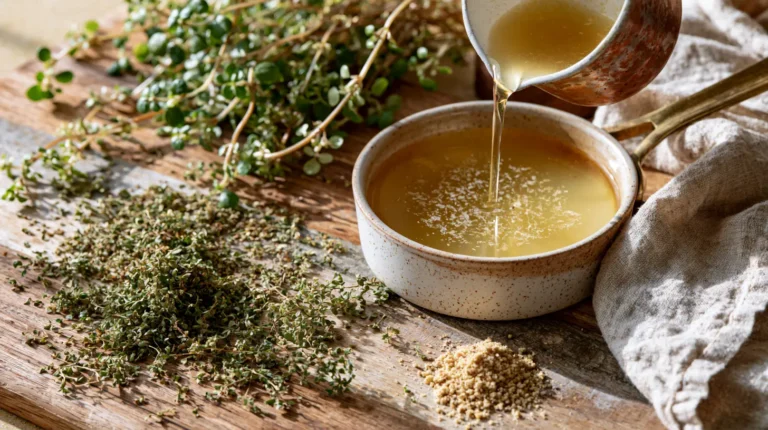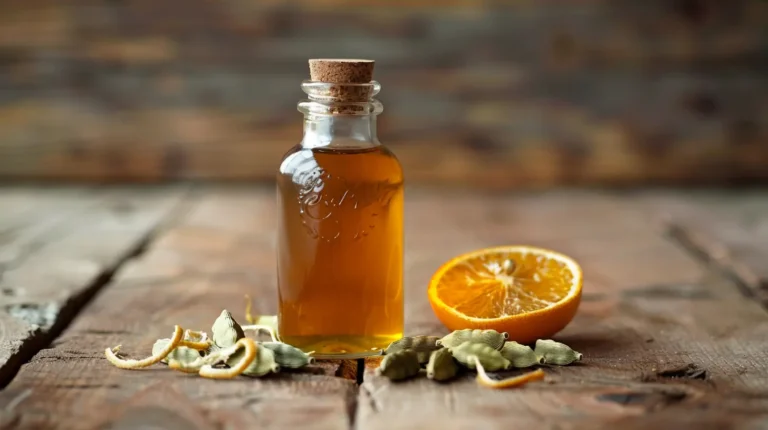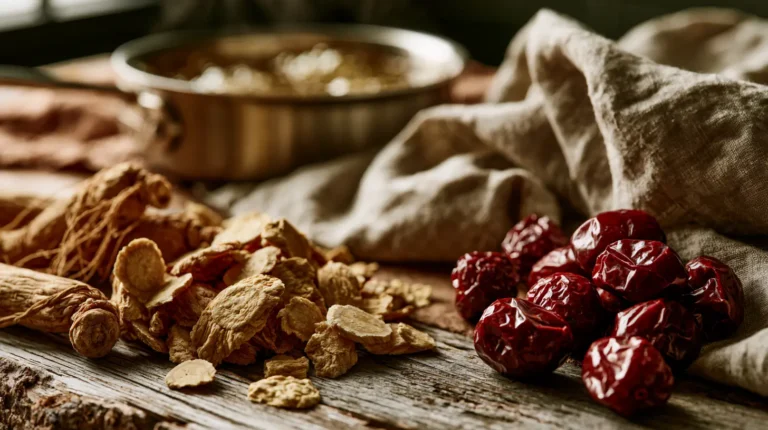
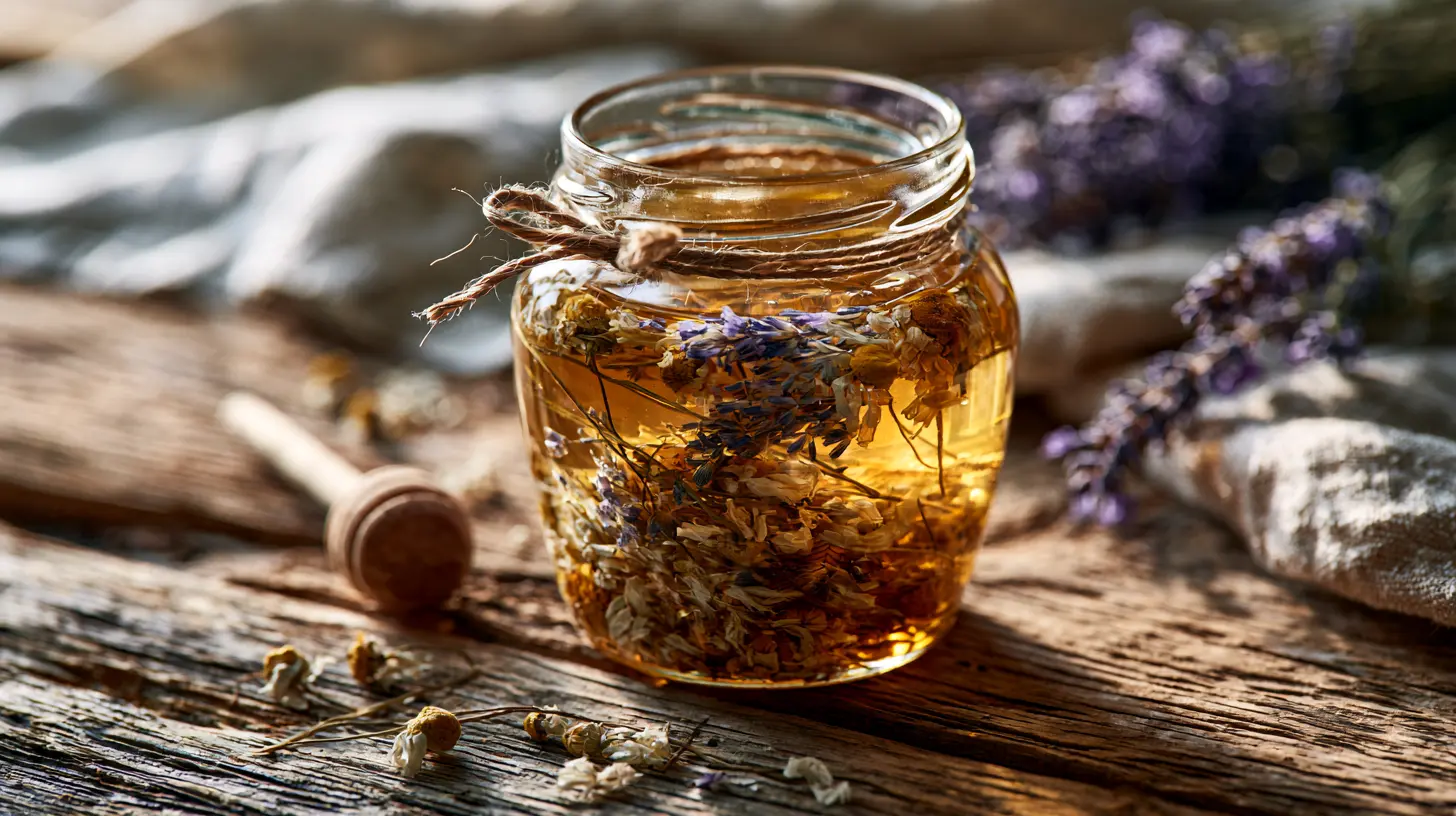
An herbal honey uses raw honey itself as the extraction medium, slowly drawing out plant compounds while doubling as a natural preservative. Combined with powdered herb into a thick paste, it becomes what herbalists call an electuary — one of the oldest, most palatable ways to take herbs by the spoonful.
- Fill a clean glass jar about one-third full with dried herb (or lightly wilted fresh herb, since very wet fresh herb can dilute the honey and risk fermentation).
- Cover completely with raw honey, stirring gently to remove air pockets and make sure every piece of herb is submerged.
- Seal and store in a cool, dark place for 2–4 weeks, turning or stirring the jar every few days.
- Strain through a cloth — warming the honey gently first (never boiling) makes straining much easier.
- Bottle and store in a cool, dark place.
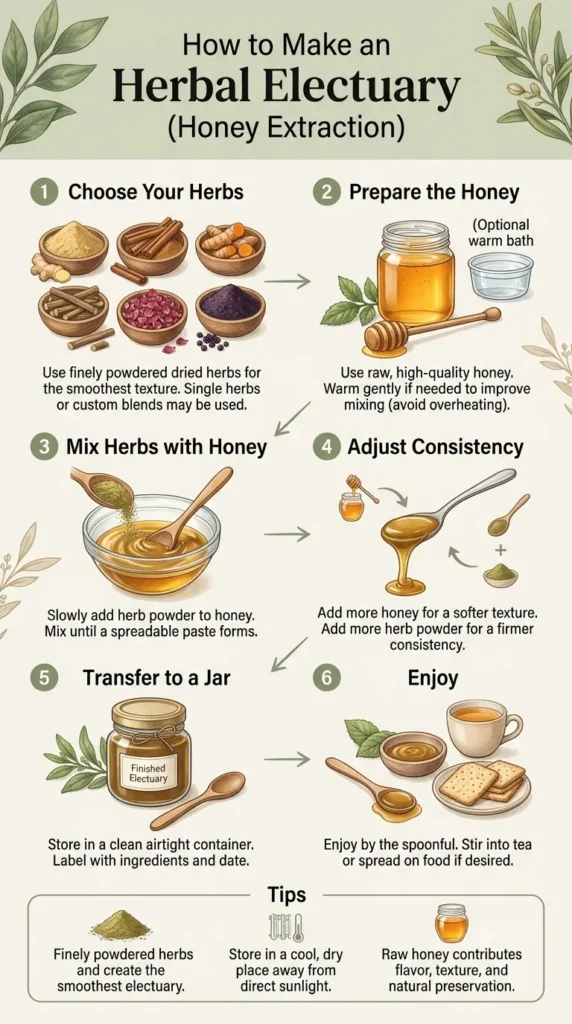
How to Make an Electuary Paste
- Combine finely powdered herb with just enough raw honey to form a thick, spoonable paste.
- Stir until fully and evenly combined.
- Store in a small jar and take by the spoonful.
Secret Tips
- Use raw, unpasteurized honey whenever possible — its natural enzymes and lower moisture content make it a more effective preservative and extraction medium than heavily processed honey.
- If your herb is very absorbent (like powdered ginger), add honey gradually when making an electuary paste, so you don’t end up with a dry, crumbly mixture instead of a smooth one.
- Warm honey gently (off direct heat, in a water bath) if it’s too thick to pour easily — never boil it, as high heat degrades some of honey’s beneficial enzymes.
Herb Examples Best Suited to Honey Extraction
- Thyme — a classic throat- and respiratory-supportive herb traditionally taken as an herbal honey.
- Sage — often combined with honey for a soothing, traditional remedy.
- Elderberry — a favorite for honey-based immune-supportive preparations.
- Ginger — commonly made into a warming electuary paste.
Q&A
Q: How is an herbal honey different from an oxymel? A: An herbal honey uses only honey as the extraction medium, while an oxymel combines honey with vinegar for a more mineral-rich, tangier extraction.
Q: How long does an herbal honey last? A: Typically 6 months to 1 year in a cool, dark place, thanks to honey’s natural antimicrobial properties.
Q: Can I use fresh herb instead of dried? A: Yes, but lightly wilt fresh herb for 24 hours first to reduce excess moisture, which otherwise dilutes the honey and increases the risk of fermentation.
Q: Is herbal honey safe for children? A: Herbal honey and electuaries are a popular choice for children over one year old specifically because they’re palatable and alcohol-free, but honey should never be given to children under one year old due to the risk of infant botulism.
Q: Why do I see bubbles in my jar after a week or two? A: Bubbles can indicate fermentation, often from excess moisture in fresh herb — if you notice this, it’s best to discard the batch and start again with well-dried herb.
Safety Tips
- Never give honey-based preparations to children under one year old, due to infant botulism risk.
- Watch for fermentation (bubbling, off smell) and discard if present.
- Consult a healthcare provider before using herbal honeys medicinally, especially if pregnant, nursing, or diabetic.
Disclaimer
This content is for educational purposes only and is not a substitute for professional medical advice, diagnosis, or treatment.