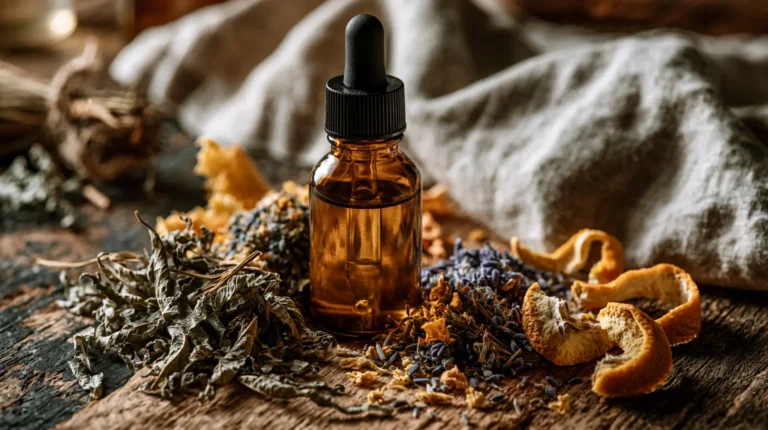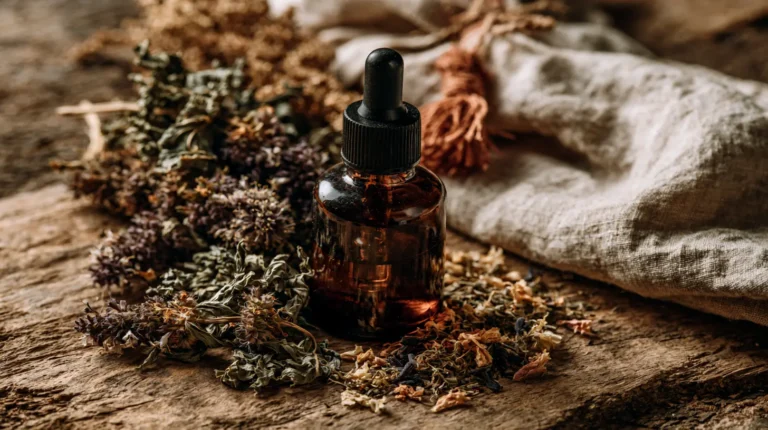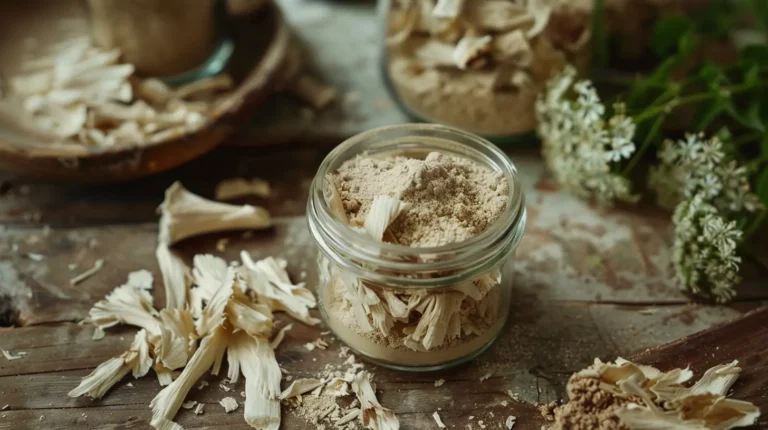
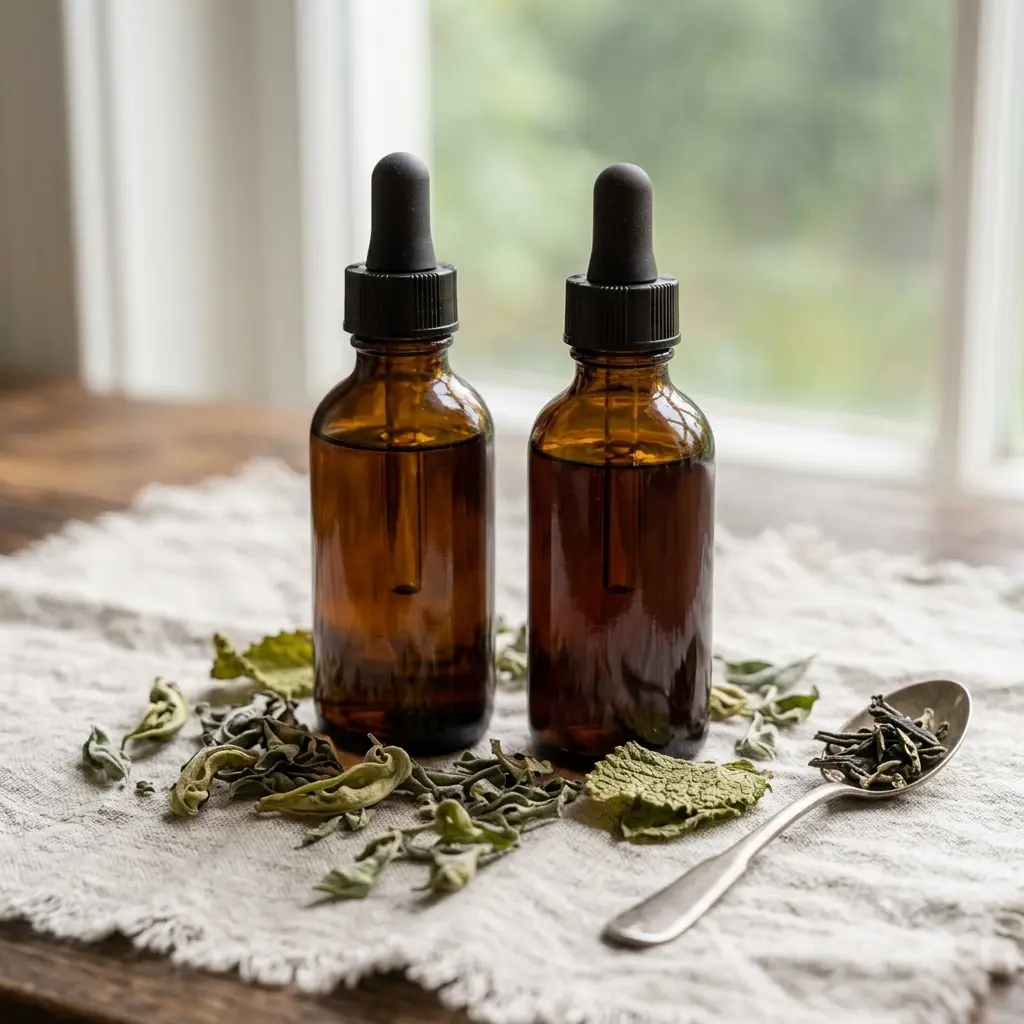
A tincture is a concentrated liquid herbal extract made by soaking plant material in alcohol, which pulls out a broader range of compounds — including alkaloids and resins — than water alone can reach. It’s one of the most popular ways to preserve an herb’s potency for years, in a small, easy-to-dose bottle.
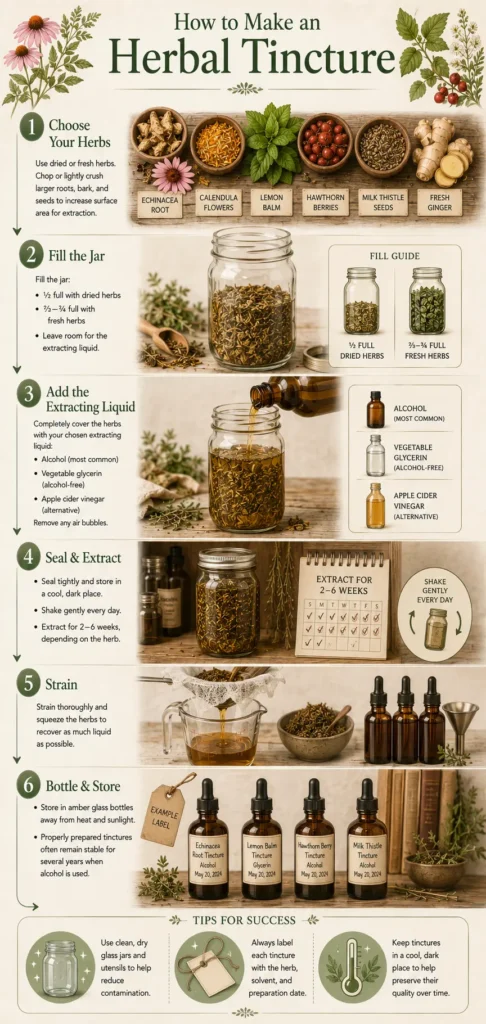
- Choose your herb and chop it finely (or use powdered herb) to maximize surface area for extraction.
- Fill a clean glass jar about one-third to halfway with dried herb (or two-thirds full if using fresh herb).
- Cover completely with high-proof alcohol — typically 80–100 proof vodka for most herbs, or 150+ proof grain alcohol for resinous herbs like myrrh or propolis.
- Seal the jar and label it with the herb name and date.
- Store in a cool, dark place for 4–6 weeks, shaking the jar every day or two to keep the herb moving through the liquid.
- Strain through cheesecloth or a fine mesh strainer, pressing out as much liquid as possible.
- Bottle in amber or dark glass dropper bottles to protect from light.
Secret Tips
- Match your alcohol proof to the herb: leafy, less resinous herbs do well with 80–100 proof, while gummy or resinous roots and barks need higher-proof alcohol to fully dissolve their compounds.
- Chop or grind your herb as finely as possible — the more surface area exposed to the alcohol, the more thorough and efficient the extraction.
- Store tinctures in a dark cupboard, not on a sunny windowsill; light degrades many of the compounds you worked to extract.
- If a tincture tastes weak after straining, it’s often a sign the herb-to-alcohol ratio was too low, or the herb wasn’t chopped finely enough.
Herb Examples Best Suited to Tincturing
- Skullcap — a calming nervine whose active compounds extract well in alcohol.
- Ashwagandha — an adaptogenic root suited to tincturing for a concentrated, easy-to-dose form.
- Echinacea Root — alcohol helps extract the plant’s characteristic tingling alkylamides.
- Valerian Root — a strong-smelling root traditionally tinctured for potency and convenience.
Q&A
Q: How long does a tincture last? A: Properly made tinctures stored in a cool, dark place can last 3–5+ years due to alcohol’s natural preservative properties.
Q: Can I use a different alcohol besides vodka? A: Yes — brandy, rum, or grain alcohol all work; the key factor is the proof (alcohol percentage), not the specific spirit.
Q: Do I need to shake the jar every day? A: Regular shaking (every 1–2 days) helps redistribute the herb through the liquid and speeds up even extraction, though missing a day or two occasionally won’t ruin the batch.
Q: Is there an alcohol-free alternative to tincturing? A: Yes — glycerites (using vegetable glycerin) or vinegar extracts are common alcohol-free alternatives, though they tend to be gentler and shorter-lived than alcohol tinctures.
Q: How do I know when my tincture is ready? A: Most tinctures are ready after 4–6 weeks, though many herbalists let them steep even longer for maximum potency — there’s no harm in waiting.
Safety Tips
- Use only food-grade, high-proof alcohol — never rubbing alcohol or non-food-grade solvents.
- Label all tinctures clearly with herb name and date.
- Consult a healthcare provider before using tinctures medicinally, especially if pregnant, nursing, or on medication.
Disclaimer
This content is for educational purposes only and is not a substitute for professional medical advice, diagnosis, or treatment.