An herbal syrup transforms a strong decoction into a thick, sweetened preparation — a classic, kid-friendly format especially popular for cough and cold remedies. Sweetening isn’t just about taste; it also helps preserve the finished syrup for longer than a plain decoction.
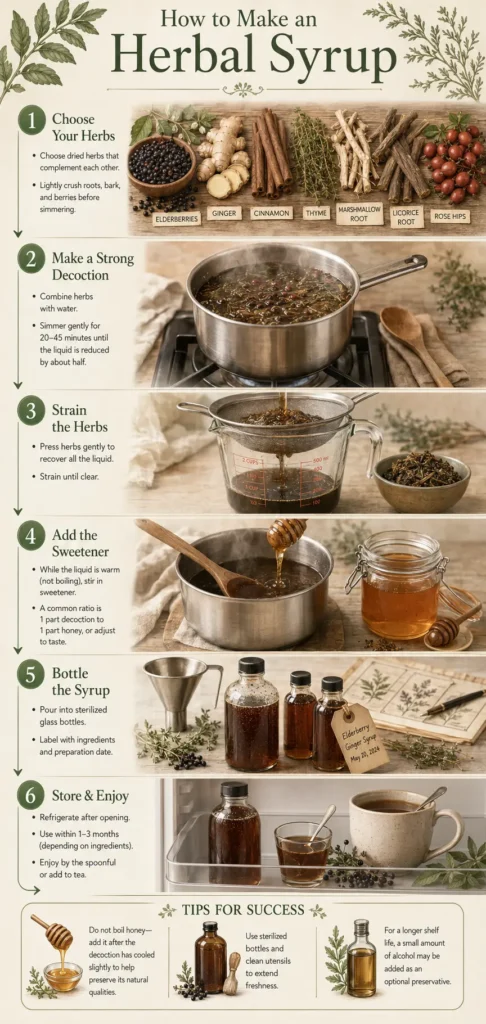
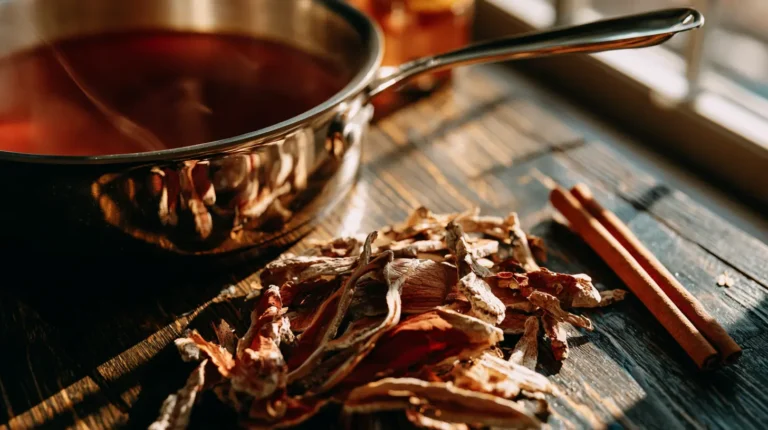
- Make a strong decoction using roughly double the usual herb-to-water ratio, and simmer until the liquid is reduced by about half.
- Strain out the plant material while the liquid is still warm.
- Stir in sugar or honey at a ratio of about 1 part sweetener to 2 parts strained liquid.
- Add honey off the heat (never boil it) to preserve its beneficial qualities, or dissolve sugar into the still-warm liquid.
- Bottle in a clean glass container and refrigerate.
Secret Tips
- If using honey as the sweetener, always add it after removing the liquid from heat — boiling honey can degrade some of its natural enzymes and affect the final flavor.
- Reduce the decoction well before adding sweetener, rather than adding extra sugar to compensate for a weak decoction — this keeps the final syrup from tasting overly sweet or thin.
- A splash of brandy (about 5–10% of total volume) is a traditional way to extend a syrup’s shelf life beyond refrigeration alone.
Herb Examples Best Suited to Syrup
- Elderberry — the most iconic herbal syrup, prized for its rich flavor and immune-supportive tradition.
- Ginger — makes a warming, spicy syrup useful in teas or drizzled over food.
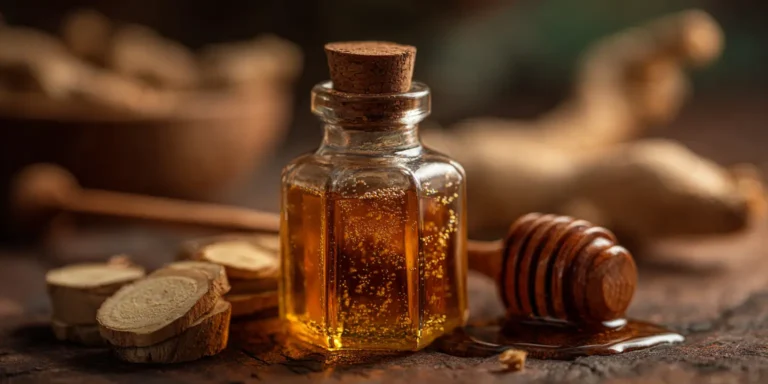
- Licorice Root — adds natural sweetness and depth to cough-support syrups.
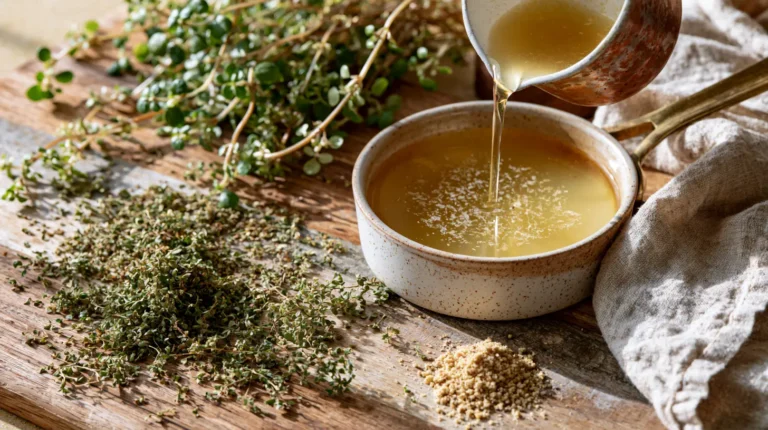
- Thyme — a classic addition to respiratory-support syrup blends.
Q&A
Q: How is a syrup different from an herbal honey? A: A syrup starts with a water-based decoction that’s later sweetened and preserved, while an herbal honey uses honey itself as the extraction medium from the start.
Q: How long does an herbal syrup last? A: Refrigerate and use within 1–2 months; a small addition of brandy can extend shelf life further.
Q: Can I use sugar instead of honey? A: Yes — both work as sweeteners and preservatives, though honey is often preferred for its additional traditional soothing qualities, especially for throat-related remedies.
Q: Is elderberry syrup safe for children? A: Elderberry syrup is a very popular children’s remedy, though if made with honey, it should never be given to children under one year old due to infant botulism risk; sugar-based versions avoid this specific concern.
Q: Can I freeze herbal syrup to extend its shelf life? A: Yes — freezing in small portions (like ice cube trays) is a common way to extend usability well beyond the standard refrigerated shelf life.
Safety Tips
- Never give honey-sweetened syrups to children under one year old, due to infant botulism risk.
- Refrigerate promptly and watch for mold, cloudiness, or fermentation.
- Consult a healthcare provider before using herbal syrups medicinally, especially for children, pregnancy, or nursing.
Disclaimer
This content is for educational purposes only and is not a substitute for professional medical advice, diagnosis, or treatment.