A decoction is a simmered water extraction used for tough plant material like roots, bark, and seeds — parts that a simple hot-water steep can’t fully break down. It’s one of the oldest and most straightforward ways to unlock the deeper compounds hidden inside dense herbs.
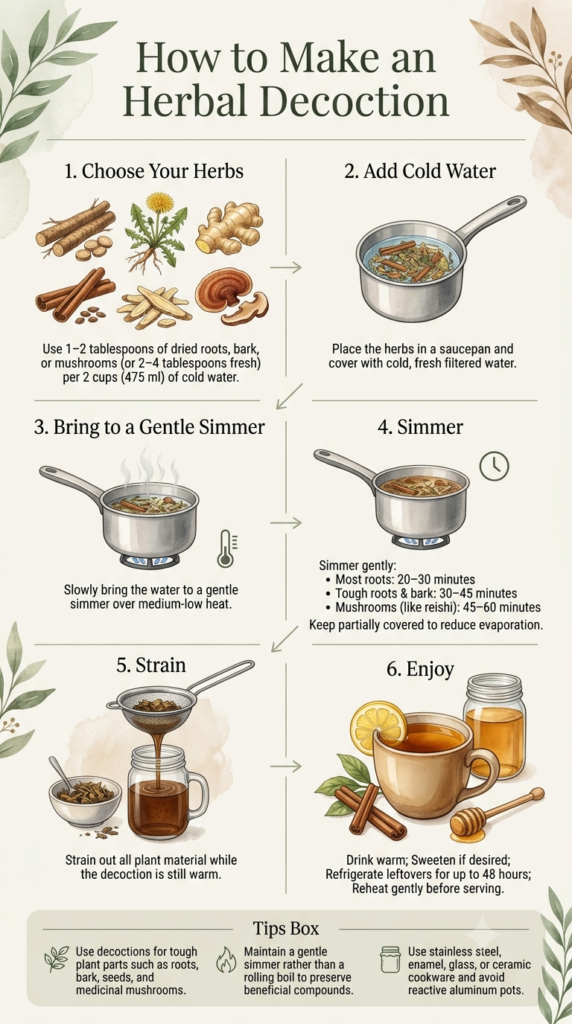
- Chop or crush the root, bark, or seeds into small pieces to maximize surface area.
- Combine about 1 tablespoon of herb per cup of water in a saucepan, starting with cold water.
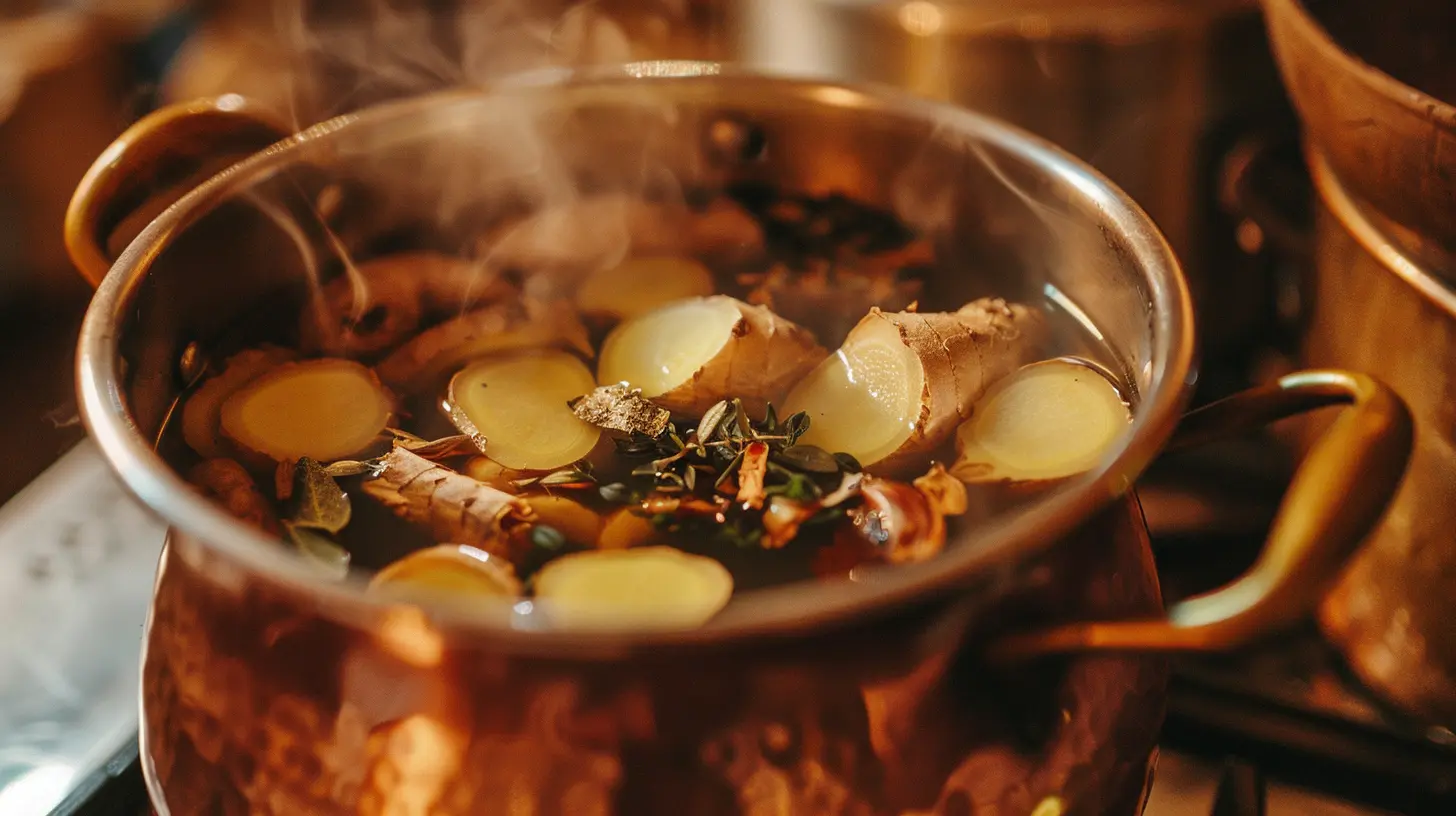
- Bring to a gentle simmer over medium-low heat.
- Cover and simmer for 15–45 minutes, depending on the density of the plant material (tougher roots need longer).
- Strain into a mug or pitcher, pressing out the liquid.
- Drink warm, or refrigerate for later use.
Secret Tips
- Start with cold water and bring it up to temperature with the herb already in the pot — this allows for more even, gradual extraction than adding herb to already-boiling water.
- Chop roots and bark into small, uniform pieces; larger chunks can take significantly longer to fully extract.
- If a recipe combines roots with delicate leaves or flowers, simmer the roots first, then turn off the heat and add the leaves/flowers to steep in the residual warmth, protecting their more delicate compounds.
- A longer simmer isn’t always better — some compounds can start to break down with extended heat exposure, so stick to recommended times for each herb when possible.
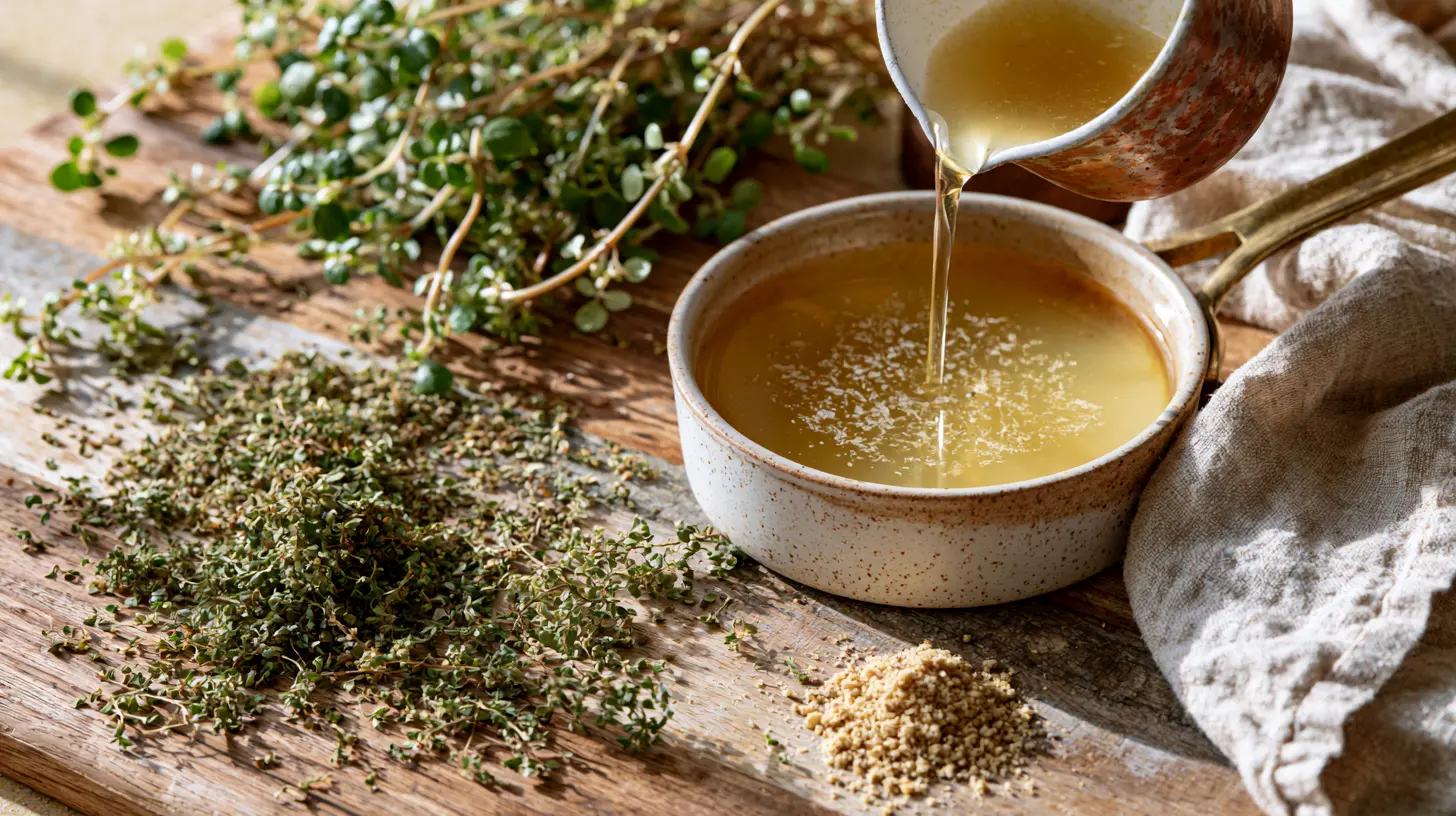
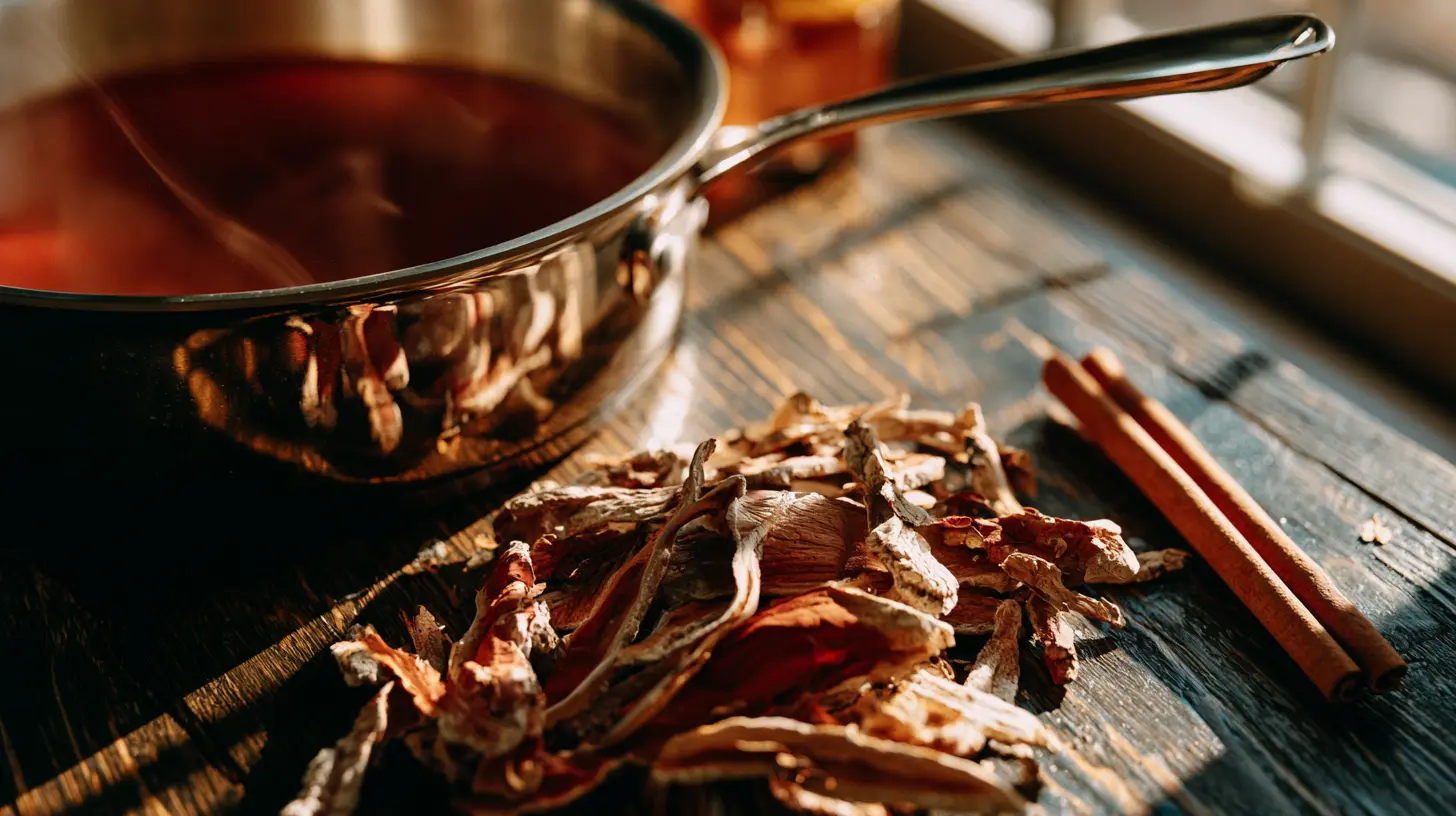
Herb Examples Best Suited to Decoction
- Ginger Root — a warming root that benefits from a longer simmer to release its full flavor and potency.
- Licorice Root — a dense, woody root requiring simmering to extract its distinctive sweetness.
- Astragalus Root — traditionally simmered for extended periods in Chinese herbal tradition.
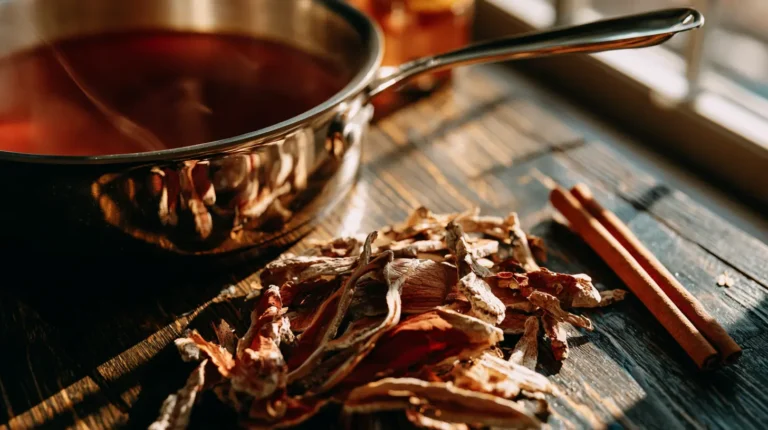
- Cinnamon Bark — releases its warming compounds best through simmering rather than a quick steep.
Q&A
Q: How is a decoction different from an infusion? A: An infusion is a quick, hot-water steep best for leaves and flowers, while a decoction involves actively simmering tougher plant material like roots and bark for a longer period.
Q: How long does a decoction last once made? A: Refrigerate and use within 2–3 days for best quality and safety.
Q: Can I make a big batch of decoction ahead of time? A: Yes — many people make a larger batch and refrigerate it, reheating individual servings as needed within the 2–3 day window.
Q: Do I need to cover the pot while simmering? A: Covering helps retain volatile compounds and water volume, though a slight crack can help you monitor the simmer without boiling over.
Q: Can I reuse the same herb material for a second decoction? A: Some herbalists do a “double decoction,” simmering the same material a second time with fresh water to extract remaining compounds, though the second batch will generally be weaker.
Safety Tips
- Chop roots and bark safely with a sturdy knife or use a mortar and pestle for smaller pieces.
- Don’t let the pot boil dry — check periodically during longer simmers.
- Consult a healthcare provider before using decoctions medicinally, especially if pregnant, nursing, or on medication.
Disclaimer
This content is for educational purposes only and is not a substitute for professional medical advice, diagnosis, or treatment.