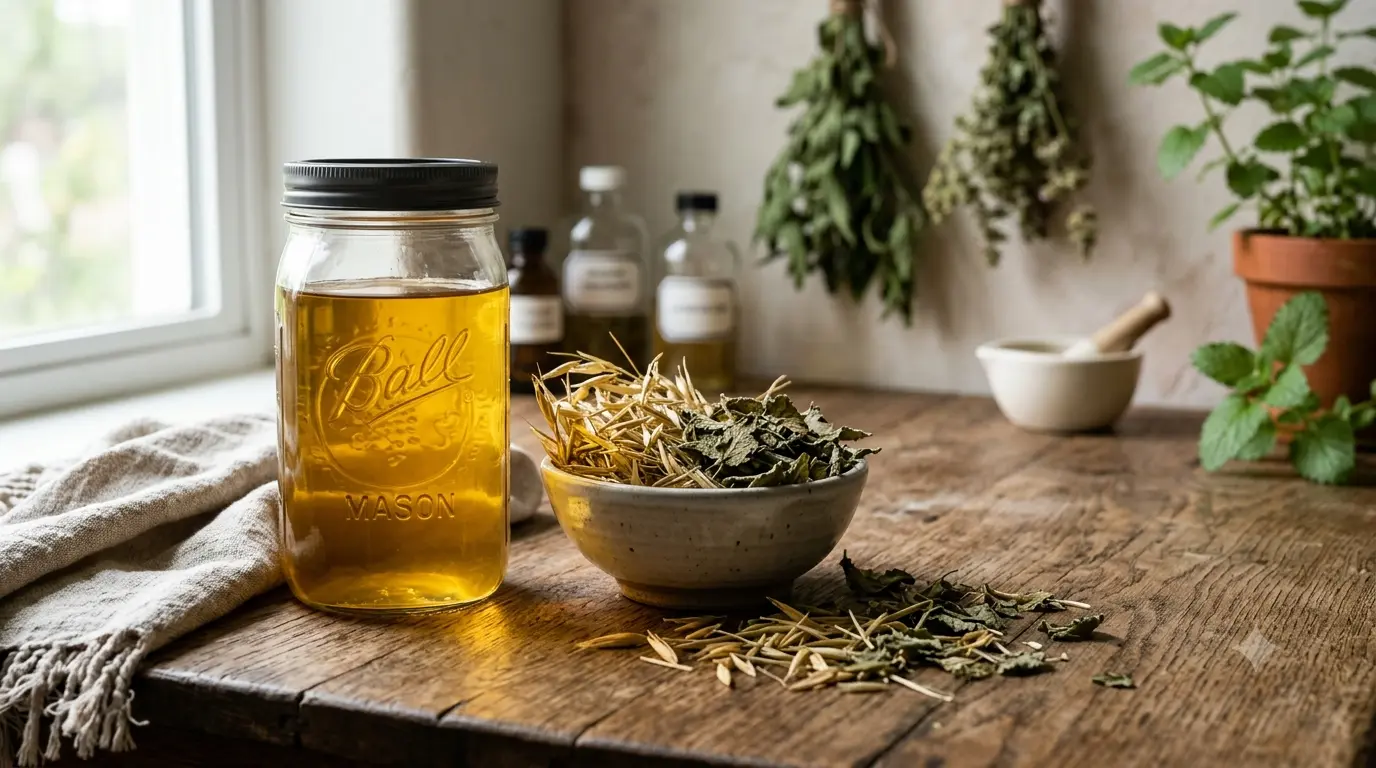
A vinegar extraction, or acetum, uses acidic vinegar — typically raw apple cider vinegar — as the solvent to draw out plant compounds, with a particular strength for pulling minerals from mineral-rich herbs. It’s one of the oldest herbal preparation methods, doubling as both a folk remedy and a kitchen staple.
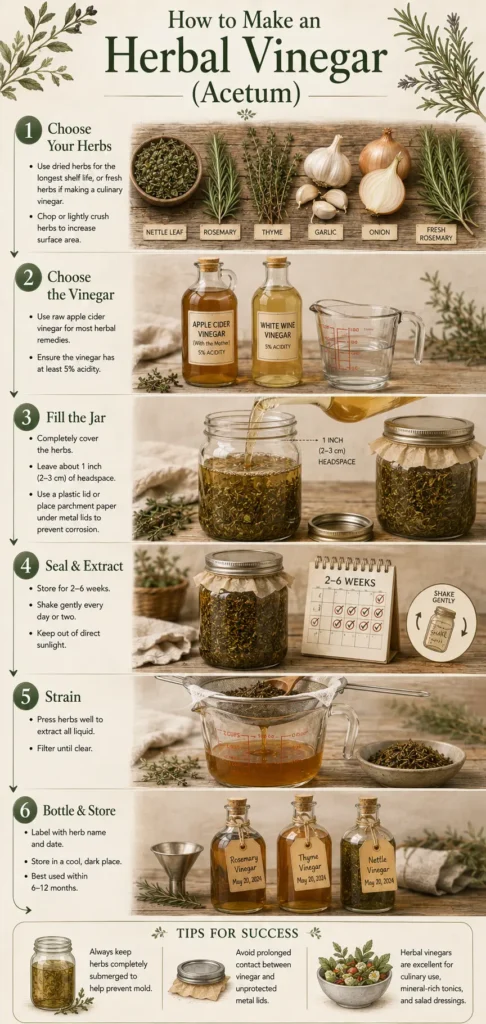
- Fill a clean glass jar about halfway with chopped dried or fresh herb.
- Cover completely with raw, unfiltered apple cider vinegar.
- Seal with a non-metal lid (use wax paper or a plastic lid, since vinegar corrodes metal over time).
- Store in a cool, dark place for 4–6 weeks, shaking occasionally.
- Strain through cheesecloth, pressing out the liquid.
- Bottle and store in a cool, dark place.
Secret Tips
- Always use a non-reactive lid — even a brief period of vinegar-metal contact can begin corroding a metal lid, which contaminates your extract over weeks of storage.
- Raw, unfiltered apple cider vinegar (the kind with the cloudy “mother” still in it) is traditionally preferred, as it’s thought to bring additional beneficial qualities to the extract.
- A splash of finished vinegar extract stirred into salad dressings is a traditional, easy way to use these mineral-rich extracts daily without needing to take them “medicinally.”
- If using fresh herb, make sure it’s free of excess surface moisture before adding it to the jar, as this can dilute the vinegar’s extraction strength.
Herb Examples Best Suited to Vinegar Extraction
- Nettle Leaf — a mineral-rich herb whose calcium and other minerals extract particularly well in vinegar’s acidity.
- Dandelion Leaf and Root — both parts are traditionally extracted in vinegar for a bitter, mineral-rich tonic.
- Burdock Root — a deeply nourishing root well suited to this gentle acid extraction.
- Rosemary — sometimes extracted in vinegar for both culinary and traditional folk use.
Q&A
Q: Why is vinegar particularly good at extracting minerals? A: Vinegar’s acidity helps break down plant cell walls and dissolve minerals like calcium and magnesium more effectively than plain water.
Q: How long does a vinegar extraction last? A: Typically 6 months to a year when stored in a cool, dark place; refrigeration can extend this further.
Q: Can I drink vinegar extracts straight? A: Most people dilute vinegar extracts in water or use them in food (like salad dressings) rather than drinking them straight, both for taste and to protect tooth enamel.
Q: Does the type of vinegar matter? A: Yes — raw, unfiltered apple cider vinegar is the traditional choice, though other vinegars can technically be used; avoid vinegars with added flavors or preservatives.
Q: Why can’t I use a metal lid? A: Vinegar is acidic and will corrode metal over the weeks-long extraction period, which can introduce metal particles or an off flavor into your finished extract.
Safety Tips
- Use a non-metal lid or a barrier like wax paper between the vinegar and any metal lid.
- Dilute vinegar extracts before drinking to protect tooth enamel and the digestive tract.
- Consult a healthcare provider before using vinegar extracts medicinally, especially if you have acid reflux or take medications affected by vinegar’s acidity.
Disclaimer
This content is for educational purposes only and is not a substitute for professional medical advice, diagnosis, or treatment.