The Herbs That Help You Carry the Load
Emotional stress is that heavy, worn-down feeling that builds when life asks more of your heart than it has to give — grief, conflict, overwhelm, one too many hard days in a row. Ever notice how you can hold it together all day, then snap at the smallest thing the second you walk in the door? That’s not you being dramatic — that’s emotional stress finally finding an exit.
Herbs That Can Help
Herbs can offer gentle, grounding support during emotionally heavy stretches — easing tension in the body, softening reactivity, and helping you feel more like yourself again. They work alongside rest, connection, and time, not as a substitute for them.
- Ashwagandha — An adaptogenic root traditionally used in Ayurvedic practice to help the body build resilience and stay steady through emotionally demanding periods.
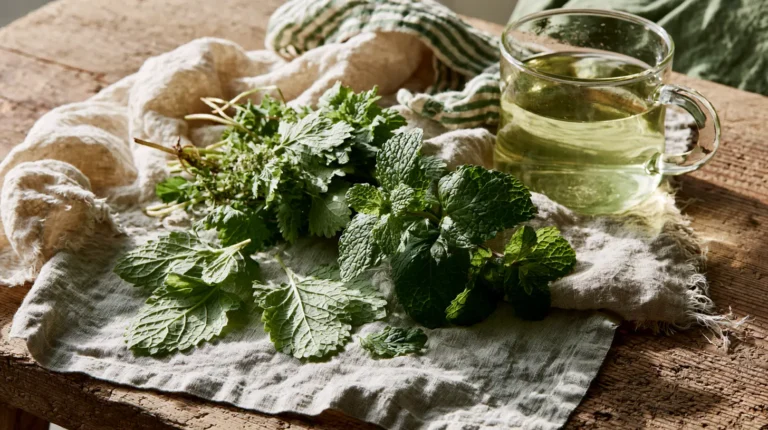
- Lemon Balm — A bright, uplifting herb traditionally used to ease heaviness and support a lighter, more settled mood.
- Rose — Long valued in herbal tradition for its heart-opening, comforting quality, often used to support emotional processing and self-compassion.
- Holy Basil (Tulsi) — An adaptogen traditionally used to help the body and emotions stay balanced under sustained pressure.
- Milky Oat Tops — A deeply nourishing nervine traditionally used to restore a depleted nervous system after prolonged emotional strain.
- Lavender — A classic calming herb traditionally used to ease tension and support a sense of safety and softness.
- Schisandra — An adaptogenic berry traditionally used to support emotional resilience and a steady, even temperament.
- Hawthorn — Traditionally known as a heart tonic, used to gently support emotional steadiness, especially during grief or heartache.
- Motherwort — A grounding herb traditionally reached for during moments of emotional overwhelm or a racing, anxious heart.
- Chamomile — A gentle, familiar herb traditionally used to soothe frayed nerves and support a sense of comfort and ease.
Most Popular Recipe
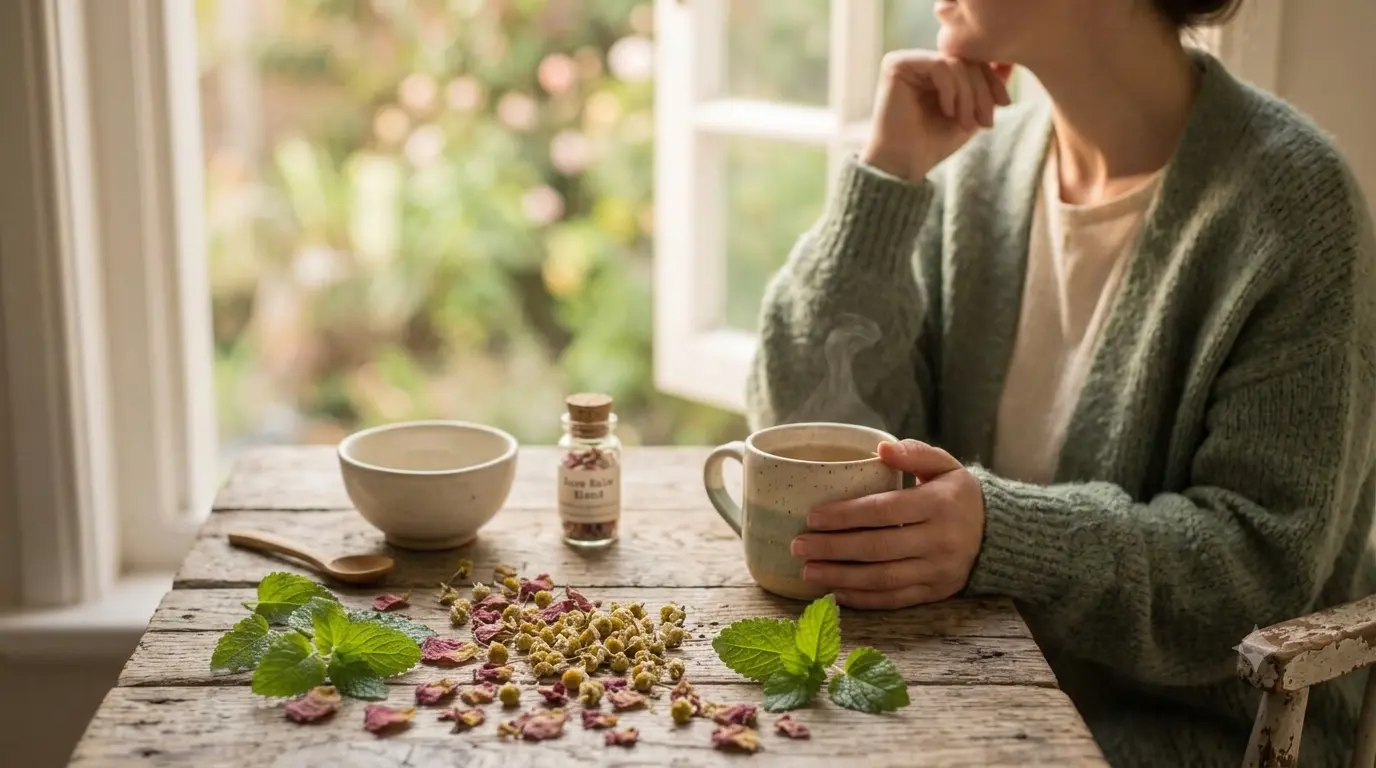
Rose & Lemon Balm Comfort Tea
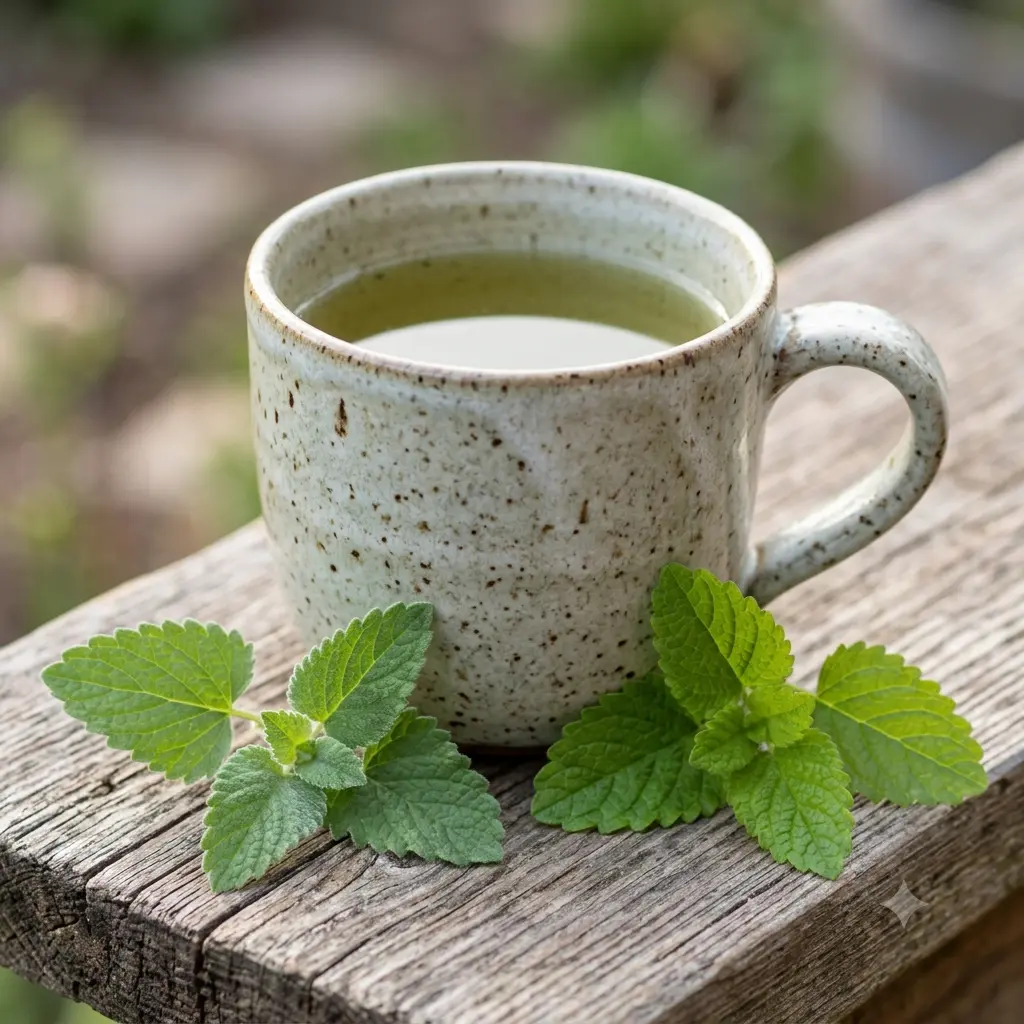
Herbs used: Rose petals, lemon balm
- Combine 1 teaspoon dried rose petals and 1 teaspoon dried lemon balm in a mug.
- Pour hot water over the herbs, cover, and steep for 8–10 minutes.
- Strain and sip slowly, ideally somewhere quiet where you can just sit with the moment.
This is a gentle, welcoming starting point if you’re new to herbs for emotional stress — soft, comforting, and easy to reach for on hard days.
Explore Other Recipes
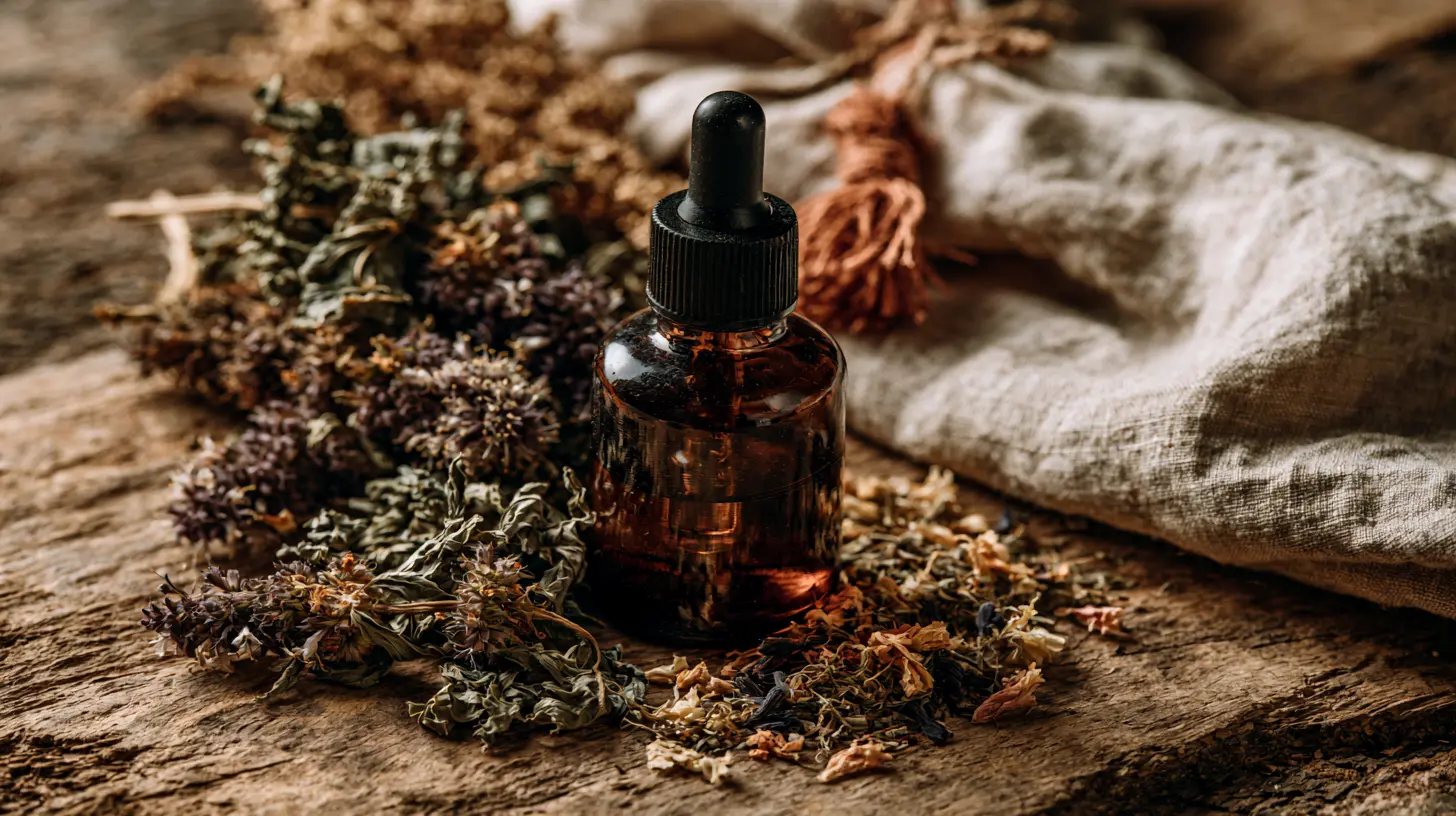
Herbal Products with Emotional Stress Herbs
If brewing your own tea isn’t practical right now, there are plenty of simple ways to bring these herbs into your day. Comforting herbal tea blends combine several of these herbs into an easy daily ritual [Product Link]. Tinctures offer a fast, concentrated option for moments when you need support quickly [Product Link]. Capsules make it easy to take adaptogens like ashwagandha or schisandra consistently, without any prep [Product Link]. And herbal bath soaks featuring lavender or rose can turn a hard day into a moment of real rest [Product Link].
Comparison of Herbs
| Herb | Best For | How to Use |
| Ashwagandha | Sustained emotional resilience | Capsule, powder, or tincture, taken daily |
| Lemon Balm | Lifting heaviness, easing tension | Tea or tincture |
| Rose | Emotional processing, comfort | Tea or glycerite |
| Holy Basil (Tulsi) | Balance under ongoing pressure | Tea or capsule, taken consistently |
| Milky Oat Tops | Nervous system depletion | Tea, tincture, or infusion |
| Lavender | General tension and overwhelm | Tea, bath soak, or diffused essential oil |
| Schisandra | Steady, even temperament | Capsule or tincture, taken daily |
| Hawthorn | Grief, heartache, emotional steadiness | Tea or tincture |
| Motherwort | Acute emotional overwhelm | Tincture, taken as needed |
| Chamomile | Soothing frayed nerves | Tea, steeped 8–10 minutes |
Learn More About Emotional Stress
What Emotional Stress Is
Emotional stress is the strain that builds when your feelings — grief, frustration, heartbreak, overwhelm — outpace your capacity to process them in the moment. It’s different from anxiety, which tends to center on worry about what might happen, and different from general daily stress, which is often tied to practical demands like deadlines or workload. Emotional stress is more specifically about the weight of feeling itself — the emotional residue that lingers after a hard conversation, a loss, or an ongoing difficult situation.
How It Shows Up
- Physical: tight chest, fatigue, headaches, shallow breathing, tension in the shoulders or jaw
- Mental: difficulty focusing, feeling emotionally “foggy” or numb, intrusive replaying of difficult moments
- Behavioral: irritability, withdrawing from others, crying more easily, changes in appetite or sleep, feeling emotionally “flooded” by small triggers
Why It Happens
When emotions run high, the body’s stress-response system activates much like it would for a physical threat — releasing cortisol and adrenaline, and diverting energy away from digestion, sleep, and rest. Sustained emotional strain keeps this system engaged longer than it’s designed for, which is part of why prolonged emotional stress can leave you physically exhausted, not just emotionally. The nervous system also plays a role in how emotions are processed and released; when there’s no time or space to process, that unresolved charge tends to show up as tension, fatigue, or reactivity.
Q&A
Q: Can herbs actually help with something as personal as emotional stress? A: Herbs won’t resolve the underlying situation, but many people find that certain herbs — especially nervines and adaptogens — offer gentle physical and emotional support that makes it easier to process difficult feelings and stay grounded.
Q: How soon will I feel a difference? A: Nervines like lemon balm, rose, or chamomile can offer a gentle, soothing effect fairly quickly. Adaptogens like ashwagandha or schisandra generally work more gradually, often over a few weeks of consistent use.
Q: Can I combine several of these herbs? A: Many people combine a nervine (like lemon balm or chamomile) with an adaptogen (like ashwagandha or holy basil) for layered support. Introduce one new herb at a time when possible, and check with a healthcare provider if combining several.
Q: Is it okay to use these herbs during grief specifically? A: Many herbalists traditionally reach for hawthorn, rose, and milky oat tops during grief, as they’re gentle and supportive rather than numbing. That said, grief deserves care beyond herbs alone — please lean on people, community, or a grief counselor as well.
Q: Are any of these herbs not safe to combine with medication? A: Yes — St. John’s Wort (sometimes used for mood support) has significant medication interactions, and ashwagandha and schisandra may interact with thyroid or blood pressure medications. Always check with a healthcare provider or pharmacist.
Q: Who should avoid these herbs? A: Pregnant or breastfeeding individuals, those on multiple medications, and anyone with a chronic health condition should consult a healthcare provider before starting any of these herbs regularly.
References
- National Center for Complementary and Integrative Health (NCCIH) – Herbs at a Glance
- American Botanical Council
- Mount Sinai – Herbal Medicine Overview
- University of Michigan Health – Complementary and Alternative Medicine
- PubMed – National Library of Medicine
- American Herbalists Guild
Safety Tips
- Introduce one herb at a time so you can notice how your body and emotions respond.
- Check for interactions if you take prescription medications, especially antidepressants, thyroid, or blood pressure medication.
- Choose reputable, third-party-tested brands for quality and accurate dosing.
- Avoid certain herbs during pregnancy or breastfeeding — check with a provider first.
- If emotional stress feels unmanageable, persistent, or is affecting your ability to function day to day, please reach out to a healthcare provider, therapist, or counselor.
Disclaimer
This post is for educational and informational purposes only and is not intended as medical advice. It should not be used to diagnose, treat, cure, or prevent any condition. Always consult a qualified healthcare provider before starting any new herbal or supplement regimen, especially if you are pregnant, nursing, taking medication, or managing a health condition.