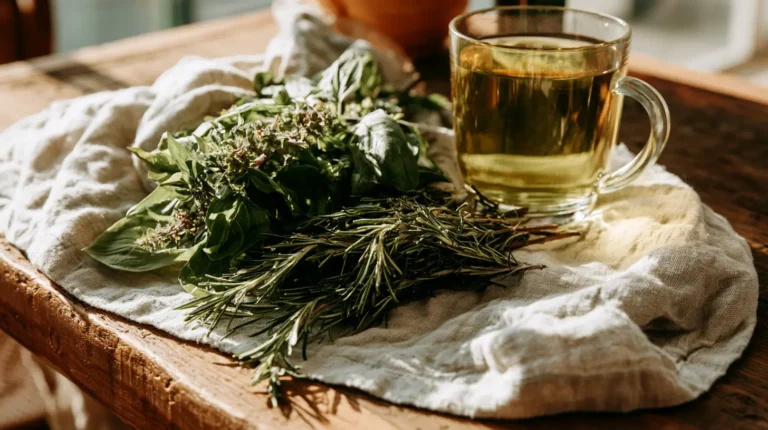

The Mental Fog Herbs Can Help Clear
Scattered stress is that foggy, can’t-quite-focus feeling — where your to-do list is a mile long, your brain feels like it’s running twelve tabs at once, and you just walked into a room and forgot why. Ever read the same email three times and still have no idea what it said? That’s scattered stress talking, and you’re far from the only one nodding along right now.
Herbs That Can Help
Herbs can offer gentle support for a scattered, foggy mind by easing mental overstimulation, supporting steady focus, and helping the nervous system settle enough for clarity to return. They work best alongside rest and a lighter mental load, not as a replacement for either.
- Rosemary — A classic herb long associated with mental clarity, traditionally used to support focus and a sharper, less foggy mind.
- Gotu Kola — A traditional Ayurvedic herb used to support mental clarity, memory, and a calm, focused state under pressure.
- Rhodiola — An adaptogen traditionally used to support mental stamina and reduce the fatigue that often clouds thinking during chronic stress.
- Ginkgo — A well-known herb traditionally used to support healthy circulation to the brain and steady mental sharpness.
- Lemon Balm — A gently uplifting herb traditionally used to ease mental clutter and support a calmer, clearer headspace.
- Peppermint — A bright, invigorating herb traditionally used to refresh a tired mind and support alertness.
- Holy Basil (Tulsi) — An adaptogen traditionally used to support mental balance and steadiness when the mind feels pulled in too many directions.
- Bacopa — A traditional Ayurvedic herb long used to support memory, mental clarity, and calm, focused thinking.
- Skullcap — A nervine traditionally used to quiet mental chatter and ease the restless, scattered feeling of an overstimulated mind.
- Ginseng — An adaptogen traditionally used to support sustained mental energy and focus during demanding periods.
Most Popular Recipe
Rosemary & Peppermint Clarity Tea
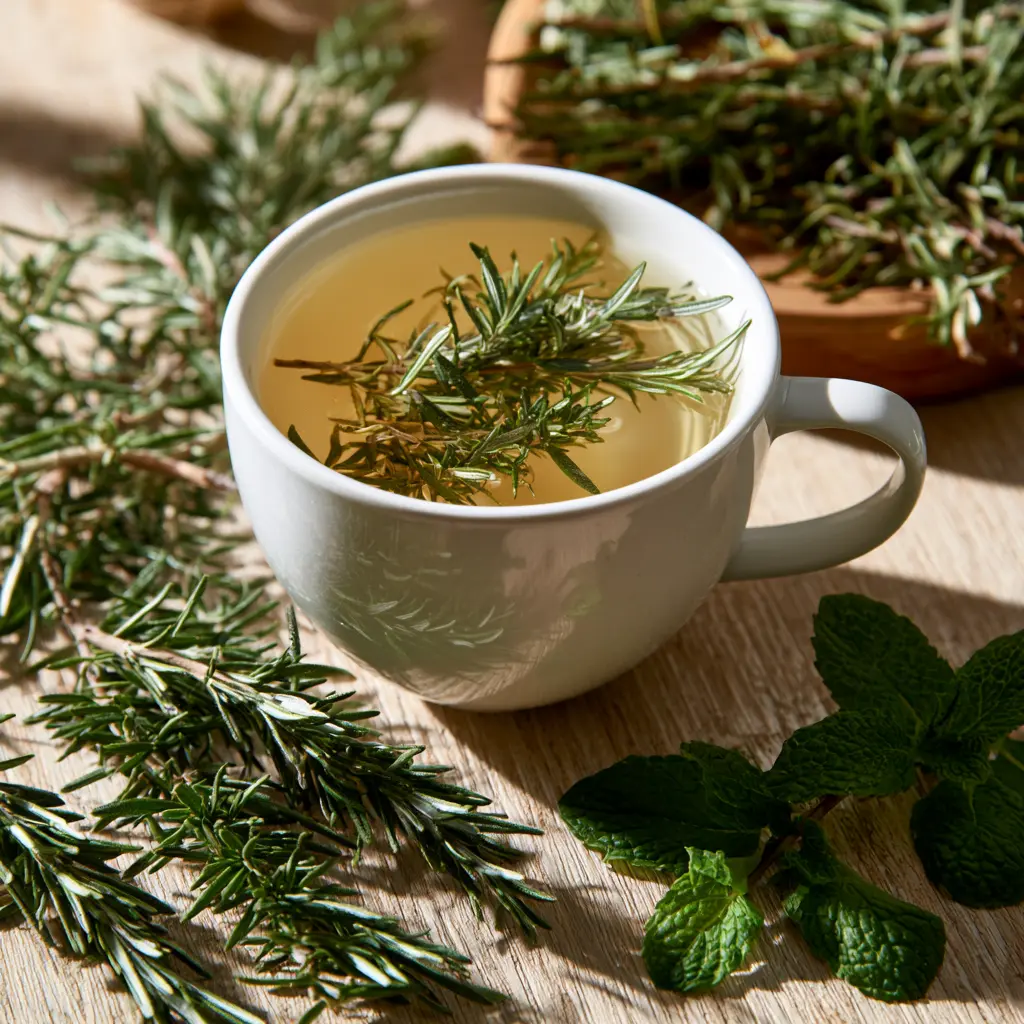
Herbs used: Rosemary, peppermint
- Combine 1 teaspoon dried rosemary and 1 teaspoon dried peppermint in a mug or tea infuser.
- Pour hot water over the herbs, cover, and steep for 6–8 minutes.
- Strain and sip slowly — ideally during a short pause between tasks, as a mini mental reset.
This is a simple, refreshing starting point if you’re new to herbs for mental fog — bright, easy to make, and a nice mid-afternoon ritual.
Explore Other Recipes

Chrysanthemum & Goji Steady-Gaze Tea
Chrysanthemum flower is used in Traditional Chinese Medicine to help clear a “foggy head” and settle restless eyes and mind,…
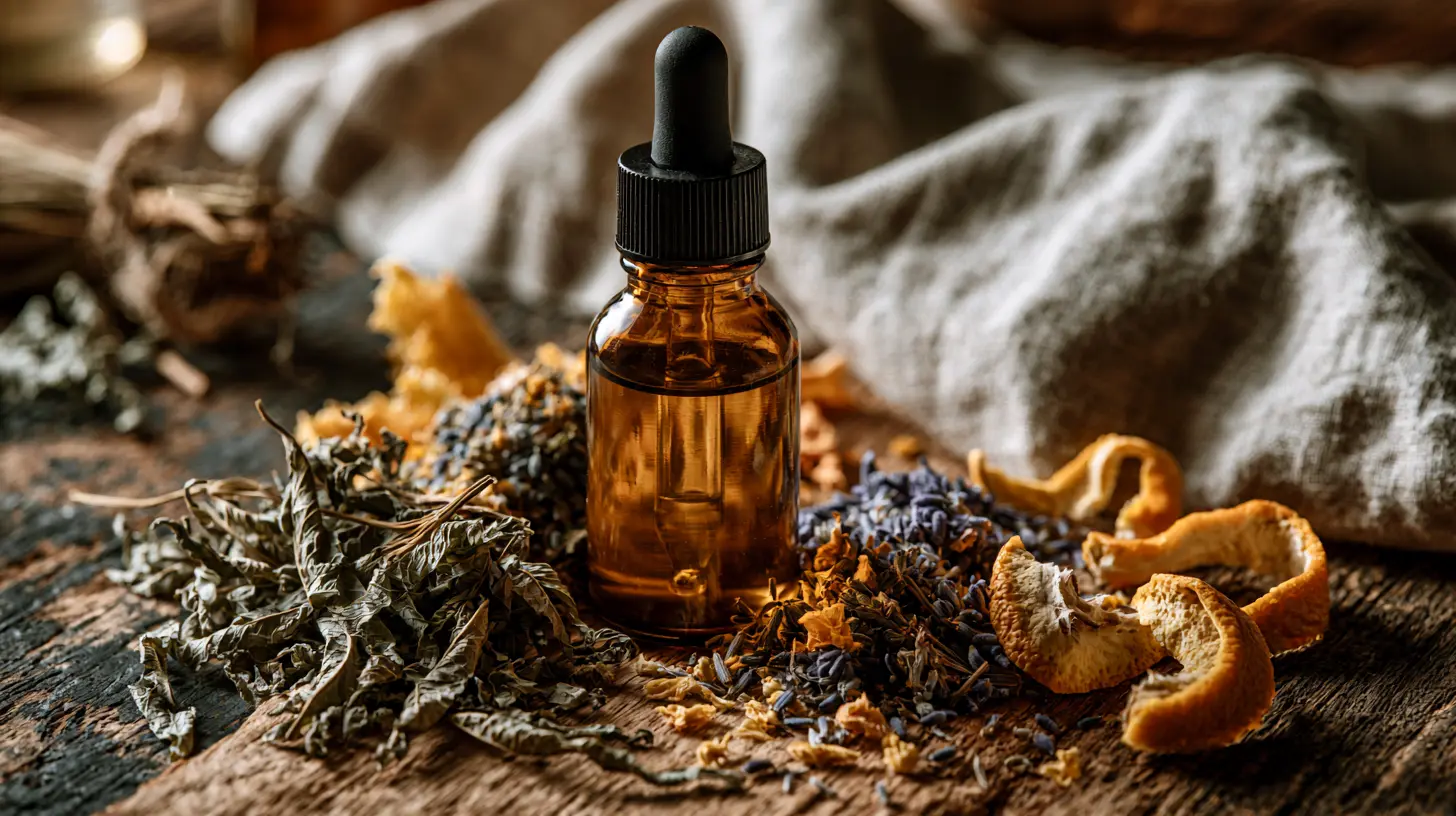
Lavender & Lemon Verbena Reset Bitters
When scattered stress ties itself to a jittery stomach and appetite loss, a light aromatic bitters formula can help re-anchor…
Comparison of Herbs
| Herb | Best For | How to Use |
| Rosemary | Mental clarity, sharpness | Tea, tincture, or aromatic mist |
| Gotu Kola | Focus, memory support | Tea or capsule, taken consistently |
| Rhodiola | Mental fatigue, stamina | Capsule, taken in the morning |
| Ginkgo | Circulation, steady sharpness | Capsule or tincture, taken daily |
| Lemon Balm | Mental clutter, calm clarity | Tea or tincture |
| Peppermint | Alertness, quick refresh | Tea or aromatic inhalation |
| Holy Basil (Tulsi) | Mental balance under pressure | Tea or capsule, taken consistently |
| Bacopa | Memory, focused thinking | Capsule, taken daily |
| Skullcap | Quieting mental chatter | Tea or tincture |
| Ginseng | Sustained mental energy | Capsule or tincture, taken in the morning |
Learn More About Scattered Stress: The Mental Fog
What Scattered Stress Is
Scattered stress is the mentally foggy, unfocused state that shows up when the mind is overloaded — too many demands, too little downtime, and not enough mental bandwidth left to think clearly. It’s different from anxiety, which centers on worry about what might happen, and different from general emotional stress, which is about the weight of feelings themselves. Scattered stress is specifically a cognitive experience — difficulty concentrating, organizing thoughts, or holding onto information — even when you’re not necessarily feeling anxious or emotionally overwhelmed.
How It Shows Up
- Physical: mental fatigue, tension headaches, eye strain, restlessness
- Mental: difficulty concentrating, forgetfulness, trouble organizing thoughts, feeling mentally “scattered” or unable to prioritize
- Behavioral: starting tasks and abandoning them, losing track of time, procrastination, relying heavily on reminders or lists to function
Why It Happens
When the brain is under sustained mental load, cognitive resources like working memory and attention become stretched thin — much like a computer running too many programs at once. Chronic stress also affects the prefrontal cortex, the brain region responsible for focus and decision-making, making it harder to filter out distractions and hold onto a single thought. Poor sleep and elevated cortisol compound this further, since both are essential for clearing mental “clutter” and consolidating information properly.
Q&A
Q: Can herbs really help with brain fog, or is that just marketing? A: Herbs won’t fix an overloaded schedule, but many people find that certain herbs — especially nootropic-leaning ones like gotu kola, bacopa, and rosemary — offer gentle support for focus and mental clarity, particularly when fog is tied to stress or fatigue rather than a medical condition.
Q: How long before I notice a difference? A: Herbs like rosemary or peppermint can offer a quick, refreshing effect within minutes when used aromatically or as tea. Herbs like bacopa, gotu kola, and ginkgo are typically taken consistently over several weeks for their fuller cognitive-support benefit.
Q: Can I combine herbs for focus with herbs for calm? A: Yes, many people pair a clarity-focused herb (like rosemary or gotu kola) with a calming one (like lemon balm or skullcap) since scattered, foggy thinking often improves once the nervous system settles. Introduce one new herb at a time when possible.
Q: Is it safe to take these herbs alongside caffeine? A: Generally yes for most of these herbs, but stacking multiple stimulating herbs (like ginseng and rhodiola) with caffeine can feel overstimulating for some people. Start with smaller amounts and see how your body responds.
Q: When should mental fog be checked out by a doctor instead of managed with herbs? A: If brain fog is severe, sudden, persistent, or comes with other symptoms like memory loss, confusion, or mood changes, it’s worth ruling out underlying causes like thyroid issues, sleep disorders, or nutrient deficiencies with a healthcare provider.
Q: Who should avoid these herbs? A: Pregnant or breastfeeding individuals, those on blood-thinning or thyroid medication, and anyone with a chronic health condition should check with a healthcare provider before regular use, particularly with ginkgo, ginseng, and bacopa.
References
- National Center for Complementary and Integrative Health (NCCIH) – Herbs at a Glance
- American Botanical Council
- Mount Sinai – Herbal Medicine Overview
- Oregon State University – Linus Pauling Institute, Micronutrient Information Center
- PubMed – National Library of Medicine
- American Herbalists Guild
Safety Tips
- Introduce one herb at a time to see how it affects your focus and energy.
- Check for interactions if you take blood thinners, thyroid medication, or stimulant medications.
- Choose reputable, third-party-tested brands for quality and accurate dosing.
- Avoid certain herbs during pregnancy or breastfeeding — check with a provider first.
- If mental fog is severe, sudden, or accompanied by other symptoms, consult a healthcare provider to rule out an underlying cause.
Disclaimer
This post is for educational and informational purposes only and is not intended as medical advice. It should not be used to diagnose, treat, cure, or prevent any condition. Always consult a qualified healthcare provider before starting any new herbal or supplement regimen, especially if you are pregnant, nursing, taking medication, or managing a health condition.