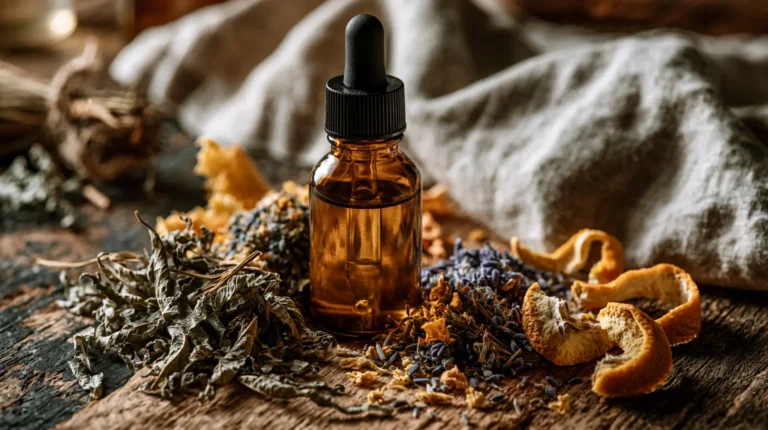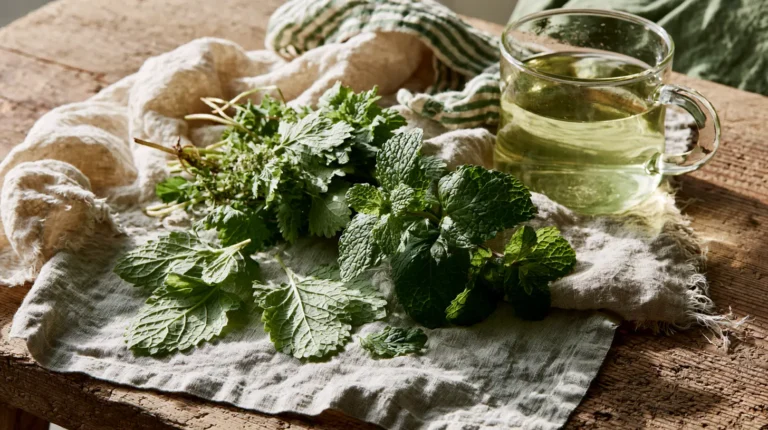

Herbal Support for Restful Nights
Sleep disruption refers to any pattern that interferes with falling asleep, staying asleep, or getting genuinely restful sleep. You know the feeling: you’re exhausted all day, but the second your head hits the pillow, your brain decides it’s the perfect time to replay every conversation from 2019. If 3 a.m. has become your unofficial second workday, your nervous system might just need a little help winding down.
Herbs That Can Help
Herbs can’t force sleep, but many have a long tradition of use for calming an overactive mind, easing physical tension, and supporting the body’s natural transition into rest. Certain herbs — known as nervines and sedatives in herbal tradition — are specifically used to quiet the nervous system rather than force sedation. Below are some of the most trusted herbs for sleep support.
- Valerian Root — A strong-smelling root long used in European herbal tradition to support falling asleep and staying asleep through the night.
- Chamomile — A gentle, apple-scented flower traditionally used as an everyday bedtime tea to ease a busy mind and support sleep onset.
- Passionflower — Traditionally used to quiet racing thoughts, particularly helpful for the kind of mental chatter that keeps you staring at the ceiling.
- Lemon Balm — A calming, lemony herb from the mint family traditionally used to ease tension and support a relaxed transition into sleep.
- Ashwagandha — An adaptogen used in Ayurvedic tradition to help the body manage stress, which is often the underlying reason sleep feels so elusive.
- Skullcap — A traditional nervine used to calm an overstimulated nervous system, especially helpful when stress shows up as physical restlessness.
- Hops — Best known for beer-making, but also a traditional sedative herb long paired with valerian for sleep support.
- California Poppy — A gentle, non-narcotic member of the poppy family traditionally used to support both falling asleep and staying asleep.
- Lavender — A fragrant herb traditionally used to calm the mind and ease the body into a relaxed, sleep-ready state.
- Reishi Mushroom — A staple of traditional Chinese medicine, reishi is traditionally used to calm the spirit and support deep, restorative sleep.
Most Popular Recipe
Deep Sleep Tea
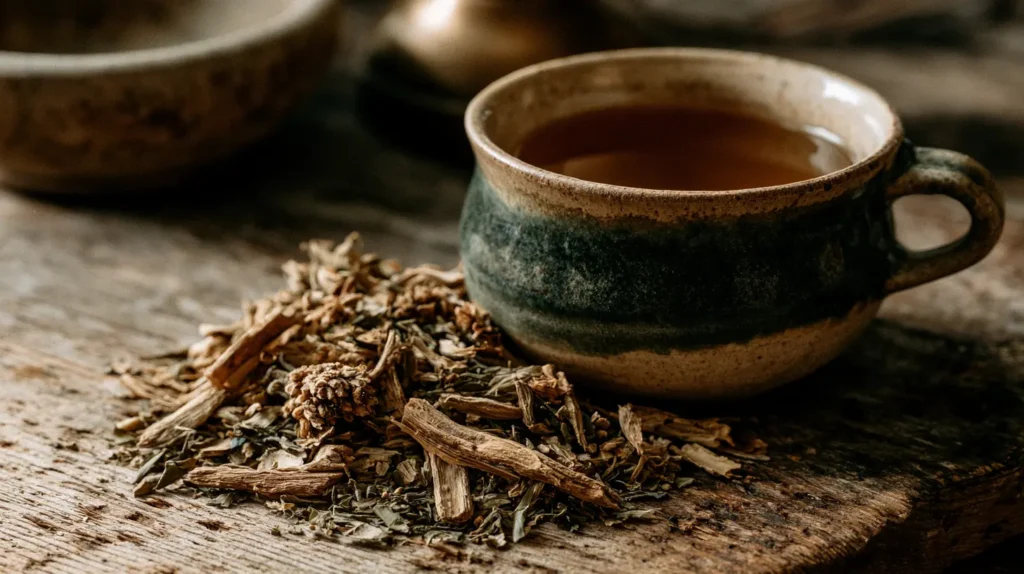
Herbs used: Valerian Root, Chamomile, Passionflower
- Combine ½ teaspoon dried valerian root, 1 teaspoon dried chamomile, and 1 teaspoon dried passionflower in a tea infuser or mug.
- Pour freshly boiled water over the herbs, cover, and steep for 10 minutes to allow the deeper root to fully infuse.
- Strain and sip slowly about 30–45 minutes before bed — a simple starting point if you’re new to herbs for sleep.
Explore Other Recipes
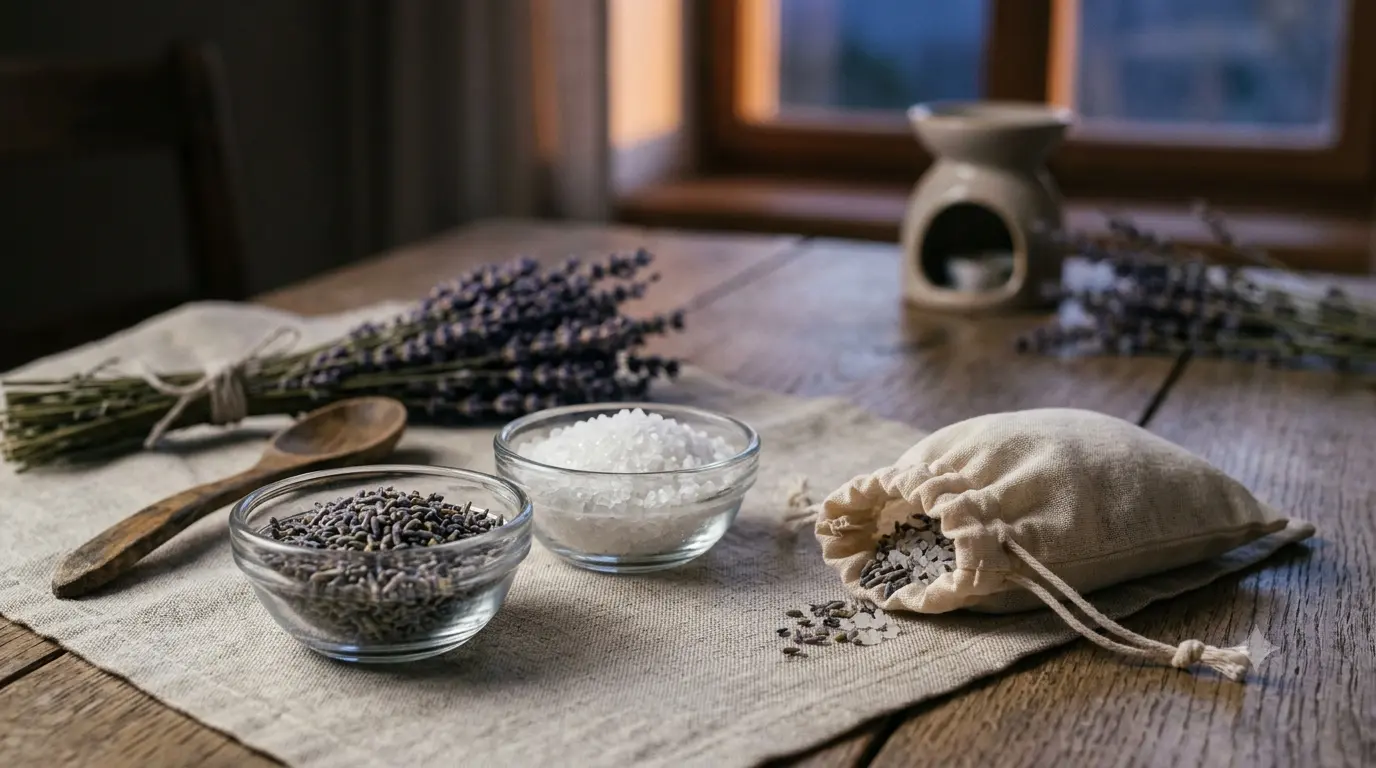
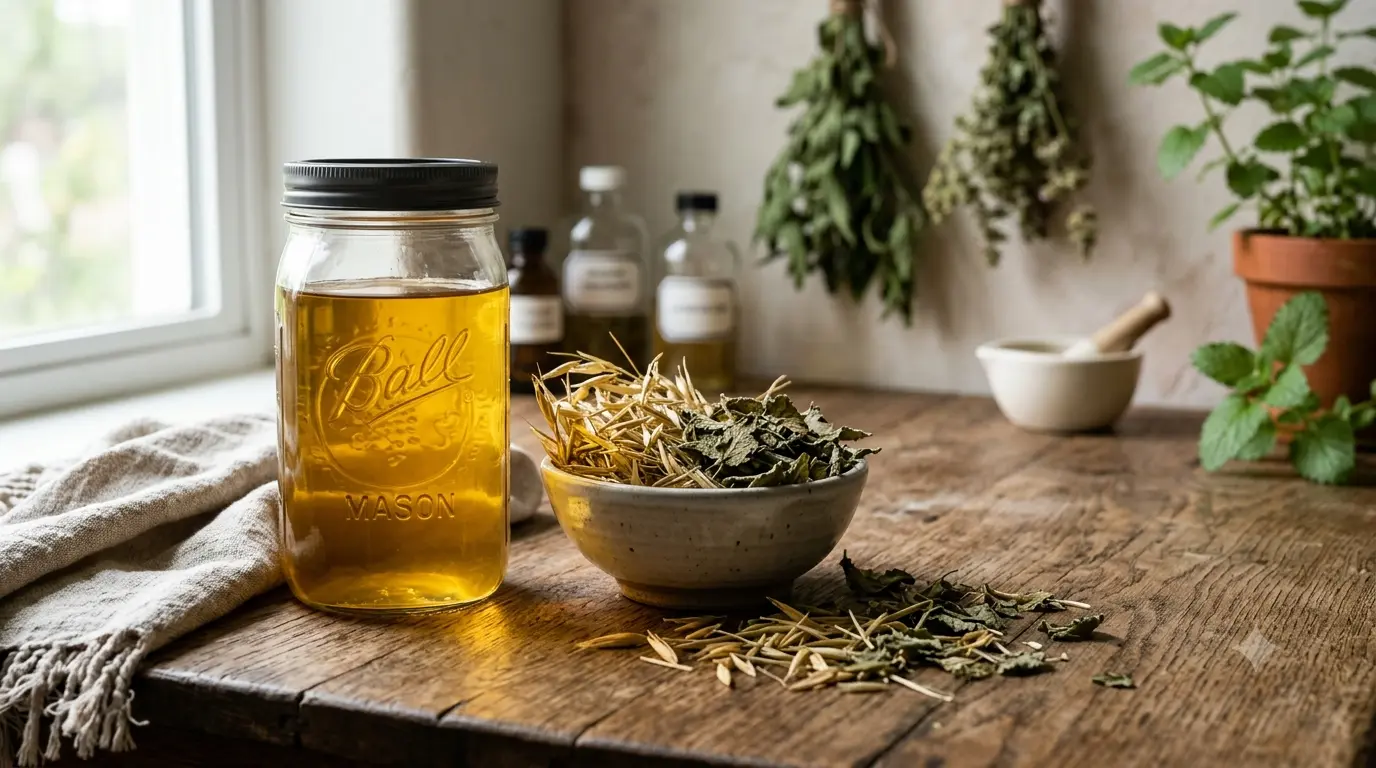
Herbal Products
If steeping loose herbs isn’t practical for your routine, most of the herbs above are also available as teas, tinctures, capsules, and even bath soaks — making it easy to build a wind-down ritual that fits your evening.
- Bedtime tea blends:
- Valerian root capsules:
- Passionflower tincture:
- Lavender bath soak:
- Reishi mushroom powder:
- Calming nervine tincture blends:
Comparison of Herbs
| Herb | Best For | How to Use |
|---|---|---|
| Valerian Root | Falling and staying asleep | Tea, tincture, or capsule 30–45 min before bed |
| Chamomile | Everyday bedtime wind-down | Tea, enjoyed nightly |
| Passionflower | Racing thoughts, mental chatter | Tea or tincture before bed |
| Lemon Balm | Tension relief, gentle relaxation | Tea or tincture, evening |
| Ashwagandha | Stress-related sleep disruption | Capsule or powder, taken earlier in the day |
| Skullcap | Physical restlessness, overstimulation | Tincture or tea, evening |
| Hops | Sedative support, often paired with valerian | Tea or tincture before bed |
| California Poppy | Difficulty falling and staying asleep | Tincture, evening |
| Lavender | Calming the mind, easing into rest | Tea, bath soak, or aromatherapy |
| Reishi Mushroom | Deep, restorative sleep | Powder in tea, or tincture in the evening |
Learn More About Sleep Disruption
What Sleep Disruption Is
Sleep disruption describes difficulty falling asleep, staying asleep, or waking feeling unrested, without necessarily meeting the criteria for a diagnosed sleep disorder like insomnia or sleep apnea. It’s distinct from occasional sleeplessness (a single rough night) and different from burnout, though the two often overlap — burnout is a state of depletion from chronic stress, while sleep disruption specifically refers to the sleep pattern itself being disturbed, whatever the underlying cause.
How It Shows Up
- Physical: difficulty falling asleep, frequent waking, restlessness, waking up not feeling rested, muscle tension
- Mental: racing thoughts at bedtime, difficulty “turning off” the brain, rumination
- Emotional: irritability, anxiety about not sleeping, dread of bedtime
- Behavioral: relying on screens to fall asleep, inconsistent sleep schedule, daytime napping that disrupts nighttime sleep
Why It Happens
Sleep is closely regulated by the nervous system, particularly the balance between the sympathetic (“fight or flight”) and parasympathetic (“rest and digest”) states. When stress hormones like cortisol remain elevated into the evening — often due to daytime stress, screen exposure, or an irregular routine — the body has a harder time shifting into the parasympathetic state needed for sleep. Many sleep-supportive herbs work by gently calming this overactive nervous system response, helping the body recognize it’s safe to rest.
Q&A
Q: How long before bed should I take sleep herbs?
A: Most sleep-supportive herbs, like valerian, chamomile, and passionflower, are best taken 30–45 minutes before bed to allow time to take effect as you wind down.
Q: Can I combine multiple sleep herbs?
A: Yes — many traditional blends combine herbs like valerian, chamomile, and passionflower, though it’s wise to try herbs individually first to understand how your body responds before combining several.
Q: Will these herbs make me feel groggy the next morning?
A: Most traditional sleep herbs are not associated with the next-day grogginess sometimes linked to pharmaceutical sleep aids, though individual sensitivity varies, especially with valerian.
Q: Are sleep herbs safe to take every night?
A: Many, like chamomile and lemon balm, are considered gentle enough for regular use, though it’s generally wise to take occasional breaks and consult a healthcare provider for extended nightly use of stronger herbs like valerian.
Q: Can these herbs interact with sleep medication?
A: Yes — herbs like valerian, hops, and California poppy can enhance the effects of sedative medications, so always check with a healthcare provider if you take prescription sleep aids, benzodiazepines, or other sedatives.
Q: Why do I need adaptogens like ashwagandha for a sleep issue?
A: When sleep disruption is driven by daytime stress and elevated cortisol, addressing that root stress with an adaptogen can be just as important as calming the mind at bedtime itself.
References
- National Center for Complementary and Integrative Health (NCCIH) — Melatonin and Sleep
- Mount Sinai — Valerian
- National Sleep Foundation
- National Institutes of Health — PubMed
- American Botanical Council
- Centers for Disease Control and Prevention — Sleep and Sleep Disorders
Safety Tips
- Herbs like valerian, hops, and California poppy can interact with sedatives, alcohol, and certain medications — check with a healthcare provider first.
- Pregnant or breastfeeding individuals should consult a doctor before using sleep-supportive herbs.
- Start with one herb at a time and a lower dose to assess tolerance and any next-day effects.
- Avoid driving or operating machinery until you know how a new herb affects you.
- Persistent sleep disruption, especially with symptoms like loud snoring, gasping, or extreme daytime fatigue, warrants a conversation with a healthcare provider to rule out a diagnosable sleep disorder.
Disclaimer
This article is for educational purposes only and is not intended as medical advice. It is not a substitute for professional diagnosis or treatment. Always consult a qualified healthcare provider before starting any new herbal regimen, especially if you are pregnant, nursing, taking medication, or managing a health condition.