


Passionflower is a climbing vine with dramatic purple-and-white flowers that look almost too fancy to be real. In herbalism, the part most often used is the aerial herb: the leaves, stems, and flowers of Passiflora incarnata. The fruit is edible when ripe, but the herb used in teas and tinctures is usually the above-ground plant material.
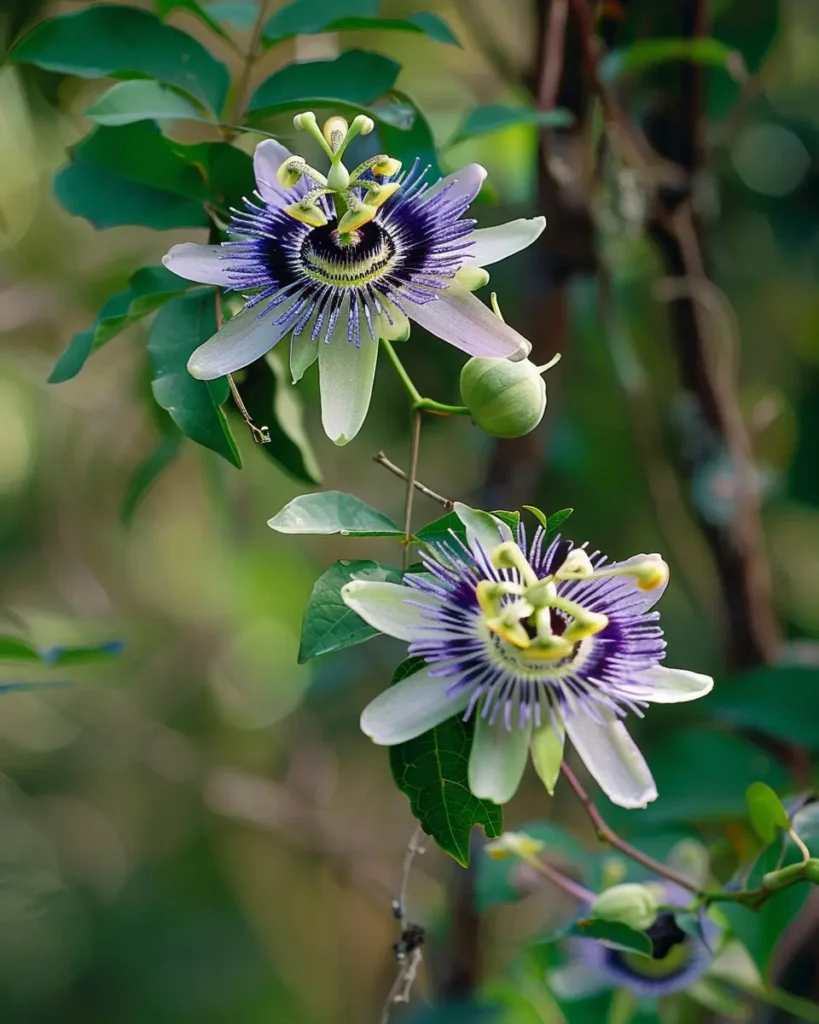
Passionflower (Passiflora incarnata) – Common names include maypop, purple passionflower, true passionflower, and passion vine.
Traditional uses of passionflower:
Nervous System Support: Passionflower is traditionally used as a calming nervine, especially when the mind feels busy and the body has forgotten how to exhale.
Sleep Support: It is commonly used in evening teas and formulas for occasional sleeplessness related to tension or restlessness.
Stress Support: European herbal tradition recognizes passionflower herb for relief of mild symptoms of mental stress and to aid sleep.
Digestive Tension: Because stress and digestion enjoy gossiping with each other, passionflower is sometimes used when nervous tension shows up in the belly.
Passionflower is not a “knock-you-out” herb. It is more like a calm friend gently turning down the volume.
“Passionflower helps remind a racing mind that it is allowed to coast.”
Available Passionflower Products
Dried Passionflower
Dried passionflower herb is one of the most common forms. It includes the dried leaves, stems, and flowers. It is used for teas, sleep blends, stress-support formulas, herbal baths, and infused preparations.
Good dried passionflower should look green to olive-green, with pieces of leaf and stem. It should smell mild, grassy, and slightly earthy, not musty or stale.
Passionflower Tea
Passionflower tea is a classic preparation for evening use or gentle daytime calming support. It has a mild grassy taste with a slightly earthy, hay-like quality. It blends well with lemon balm, chamomile, skullcap, oat straw, lavender, and rose.
A simple passionflower tea can be made with 1–2 teaspoons dried herb per cup of hot water. Steep covered for 10–15 minutes, then strain.
Passionflower Tincture
Passionflower tincture is one of the most popular market forms. It is practical because it is portable, shelf-stable, and easy to add to a small amount of water or tea. Tinctures extract flavonoids, alkaloids in small amounts, phenolic compounds, and other constituents.
Passionflower Capsules
Passionflower capsules usually contain powdered herb or dry extract. Capsules may be convenient for people who dislike herbal tea. Labels should identify Passiflora incarnata, the plant part used, serving size, and whether the product is standardized.
Passionflower Glycerite
Passionflower glycerite is an alcohol-free liquid extract. It may be useful for people avoiding alcohol or for formulas where taste matters. Glycerites are generally milder than alcohol tinctures but can still be useful when prepared well.
Passionflower Powder
Passionflower powder is used in capsules, powdered blends, and some tea formulas. It is less pleasant as a loose powder because the taste is earthy and green. Powder loses freshness faster than cut herb, so it should be purchased in small amounts and stored carefully.
Passionflower Extract
Passionflower extract may appear in sleep, stress, and relaxation supplements, either alone or combined with herbs such as valerian, lemon balm, hops, or chamomile. Extracts are more concentrated than tea and should be used with more caution, especially if someone takes sedating medications.
Passionflower Essential Oil
Passionflower essential oil is not a standard herbal product. Passionflower is mainly used as tea, tincture, capsule, glycerite, powder, or extract. If a product is called “passionflower oil,” it is often an infused oil, fragrance oil, or cosmetic ingredient rather than a true essential oil.
Key Herbal Actions
Passionflower is known as a nervine, anxiolytic-supportive herb, mild sedative, antispasmodic, relaxant, hypotensive-supportive herb, and mild analgesic-supportive herb.
Nervine
A nervine is an herb traditionally used to support the nervous system. Passionflower is a classic calming nervine. Herbalists often choose it when tension, restlessness, or overthinking seems to keep the body from settling.
Anxiolytic-Supportive Herb
“Anxiolytic” means anxiety-reducing, but for an educational herb article it is better to say passionflower has been studied for anxiety-related symptoms and nervous tension. Research suggests passionflower preparations may help some people feel calmer, though evidence quality and product types vary. This does not mean it replaces mental health care.
Mild Sedative
A sedative herb supports relaxation and sleepiness. Passionflower is usually considered mild compared with stronger sedative herbs. It is often used in evening tea blends where the goal is to relax rather than feel heavy.
Antispasmodic
An antispasmodic herb is traditionally used to ease mild spasms or tension. Passionflower has been used in formulas where nervous tension is connected with muscle tightness or digestive discomfort. This action fits its broader relaxing profile.
Relaxant
Relaxant herbs help the body shift out of a tense, held state. Passionflower’s relaxing action is most associated with the nervous system. It is often paired with other calming herbs for a broader effect.
Hypotensive-Supportive Herb
Passionflower has traditional use in formulas for tension and circulation, and some sources describe mild blood-pressure-lowering potential. This is not the main reason most people use passionflower, but it matters for safety. People with low blood pressure or blood pressure medications should be cautious.
Mild Analgesic-Supportive Herb
Passionflower is sometimes included in traditional formulas for discomfort linked with tension. Its role is not that of a strong pain reliever. It is better understood as supporting relaxation when tension contributes to discomfort.
Active Compounds and Extraction
Passionflower contains flavonoids, C-glycosyl flavones, vitexin, isovitexin, orientin, isoorientin, chrysin, small amounts of harmala alkaloids, phenolic acids, cyanogenic glycosides in trace amounts, maltol derivatives, and volatile constituents.
Flavonoids
Flavonoids are a major compound group in passionflower. They include vitexin, isovitexin, orientin, and isoorientin. These compounds are studied for antioxidant activity and may contribute to passionflower’s calming nervous system effects.
Best extraction: Hot infusion, tincture, glycerite.
To make passionflower tea, use 1–2 teaspoons dried herb per cup of hot water. Cover, steep 10–15 minutes, and strain. Covering the tea helps keep delicate aromatic components from escaping.
C-Glycosyl Flavones
C-glycosyl flavones are a specific type of flavonoid found in passionflower. They are often used as chemical markers for Passiflora incarnata quality. Vitexin and isovitexin belong to this group.
Best extraction: Hot infusion and water-alcohol extract.
For a stronger water-based preparation, steep 1 tablespoon dried herb per cup of hot water for 15–20 minutes. This can be used as part of an evening tea blend.
Vitexin and Isovitexin
Vitexin and isovitexin are two well-known flavonoids found in passionflower. They are studied in relation to nervous system activity and antioxidant effects. These compounds are not “the whole herb,” but they are important markers.
Best extraction: Hot infusion, tincture, standardized extract.
A tincture may be preferred when a more concentrated preparation is wanted. For beginners, tea is usually gentler and easier to understand.
Orientin and Isoorientin
Orientin and isoorientin are flavonoids found in passionflower and several other plants. They contribute to antioxidant and tissue-supportive activity. In passionflower, they are part of the broader calming and protective plant chemistry.
Best extraction: Hot infusion, glycerite, tincture.
A glycerite can be made by combining dried passionflower with vegetable glycerin and water, then steeping for several weeks. This creates a sweet, alcohol-free extract.
Chrysin
Chrysin is a flavonoid that has received attention for possible interactions with GABA-related pathways in preclinical research. The actual amount and bioavailability in passionflower preparations can vary. It should not be treated as a stand-alone active ingredient that explains everything.
Best extraction: Alcohol-water tincture or extract.
Alcohol-water extraction is more suitable for a broader range of flavonoids. However, concentrated extracts should be used carefully.
Harmala Alkaloids
Passionflower may contain very small amounts of harmala-type alkaloids, such as harman, harmine, and related compounds. These are much lower than in plants known for strong MAO-inhibiting activity. Still, they are sometimes discussed in passionflower safety and pharmacology.
Best extraction: Tincture or alcohol-water extract.
Because alkaloids can be pharmacologically active, avoid combining concentrated passionflower products with sedatives or psychiatric medications unless guided by a healthcare professional.
Phenolic Acids
Phenolic acids are antioxidant plant compounds. They contribute to passionflower’s broader tissue-supportive profile. They are not the main reason passionflower is famous, but they add to its whole-plant activity.
Best extraction: Hot infusion, tincture, glycerite.
A simple tea extracts many water-soluble phenolic compounds. For everyday use, this is usually enough.
Volatile Constituents
Passionflower contains small amounts of aromatic volatile compounds. These are not as dominant as in herbs like lavender or fennel, but they still contribute to the sensory character of the plant. Their role is subtle.
Best extraction: Covered hot infusion or fresh tincture.
A covered infusion is best when making tea. Do not boil passionflower aggressively, as it is a delicate aerial herb.
Harvesting and Storing Right
Passionflower aerial parts are usually harvested when the plant is actively growing and beginning to flower. The leaves, stems, tendrils, and flowers may be gathered. Harvesting during flowering helps ensure strong plant identity and good-quality aerial herb.
The best time of day to harvest is late morning after the dew has dried but before intense afternoon heat. Choose healthy, unsprayed plants away from roadsides and contaminated areas.
Dry passionflower quickly in a shaded, well-ventilated space. Because vines and leaves can hold moisture, spread the plant material loosely and turn it as needed. Once fully dry, store it in an airtight container away from light, heat, and moisture.
Dried passionflower is usually best used within 1 year. Tinctures may remain stable for several years when properly made and stored. Prepared tea should be used fresh.
Body Functions Passionflower Can Support
Passionflower can support the nervous system, stress support, sleep, brain, digestion system, muscles and joint, circulation, and energy and vitality.
Nervous System
Passionflower is primarily a nervous system herb. Its flavonoids and traditional relaxing action make it useful in formulas for tension, restlessness, and nervous irritability. It is usually gentle but can still cause drowsiness in some people.
Stress Support
The European Medicines Agency lists passionflower herb as traditionally used for mild symptoms of mental stress. Herbalists often use it when stress feels tense, repetitive, or mentally busy. It is not a substitute for mental health care, but it can be a supportive herb for mild, occasional stress.
Sleep
Passionflower is commonly used in evening tea blends for occasional sleeplessness. NCCIH notes that passionflower tea may be safe for short-term use, such as up to 7 nights, and extract use may be safe for up to 8 weeks. Its role is gentle relaxation, not forced sedation.
Brain
Passionflower has been studied for anxiety-related symptoms, sleep quality, and neuropsychiatric conditions. Reviews suggest possible calming effects, but more high-quality human research is needed. Its brain support is best understood through nervous system relaxation and stress modulation.
Digestion System
Nervous tension can affect digestion, and passionflower may be useful when digestive discomfort is tied to stress. Its antispasmodic and relaxant qualities are relevant here. It is often blended with lemon balm, chamomile, fennel, or peppermint for nervous digestion.
Muscles and Joint
Passionflower’s relaxing and antispasmodic reputation makes it relevant when muscle tension is connected with stress. It is not a primary joint herb like turmeric, boswellia, or rosehip. Its role is more about easing the body’s held tension.
Circulation
Passionflower may have mild hypotensive effects in some traditional and pharmacological discussions. This may matter for people with low blood pressure or those taking blood-pressure medication. It should be used cautiously in those situations.
Energy and Vitality
Passionflower does not increase energy directly. Instead, it may support vitality by helping the body settle when stress is draining. Sometimes the most energizing thing an herb can do is help you stop running your nervous system like a browser with 47 tabs open.
Safety and Practical Considerations
Passionflower is generally considered gentle for many adults when used appropriately, but it can cause drowsiness, dizziness, confusion, or impaired alertness in some people.
Do not combine passionflower with alcohol, sedatives, sleep medications, anti-anxiety medications, opioids, or other central nervous system depressants unless supervised by a qualified healthcare professional. It may increase sleepiness.
People taking antidepressants, psychiatric medications, seizure medications, blood pressure medications, or medications that affect the nervous system should get professional guidance before using passionflower regularly.
Pregnant people should avoid passionflower unless specifically guided by a qualified healthcare professional. Safety in pregnancy is not well established, and some sources advise against use. Breastfeeding safety data is also limited, so professional guidance is recommended.
The EMA states passionflower medicines should be used by adults and adolescents over age 12, and a healthcare professional should be consulted if symptoms last longer than 2 weeks or worsen.
Avoid driving, operating machinery, or doing tasks requiring full alertness after taking passionflower until you know how it affects you. This is especially important with tinctures, extracts, capsules, or stronger blends.
People with low blood pressure, liver conditions, complex medical histories, or planned surgery should use caution. Stop using herbs before surgery only under professional guidance, because recommendations vary depending on the herb and procedure.
Children, older adults, and sensitive individuals may respond more strongly. Start low, keep preparations simple, and consult a qualified professional when needed.
FAQ
What does passionflower taste like?
Passionflower tea tastes mild, grassy, earthy, and slightly hay-like. It is not strongly floral despite the beautiful flower. Many people blend it with lemon balm, chamomile, rose, or lavender to improve flavor.
When is the best time to use passionflower?
Passionflower is often used in the evening because it may cause relaxation or drowsiness. Some people use small amounts during the day for stress support, but it is best to test it when you do not need to drive or focus intensely. Start with a mild tea before stronger extracts.
Is fresh or dried passionflower better?
Both can be useful. Fresh passionflower is excellent for tinctures when properly identified and harvested. Dried passionflower is more common and convenient for tea.
Is passionflower tea, tincture, or capsule better?
Tea is gentle and traditional. Tincture is convenient and more concentrated. Capsules are practical but depend heavily on product quality and may feel stronger than tea for some people.
Can passionflower be used daily?
Some people use passionflower daily for short periods, but long-term daily use should be discussed with a qualified professional. NCCIH notes short-term use data for tea and extracts, but safety beyond those timeframes is less clear. Daily use is especially important to discuss if you take medications.
How should passionflower be stored?
Store dried passionflower in an airtight container away from heat, light, and moisture. Use it within about 1 year for best quality. Tinctures should be stored tightly closed in a cool, dark place.
Does passionflower combine well with other herbs?
Yes. Passionflower combines well with lemon balm, chamomile, skullcap, oat straw, lavender, hops, valerian, and rose. For digestion linked with stress, it can pair nicely with fennel, peppermint, or chamomile.
Is passionflower safe for everyone?
No. Passionflower may not be appropriate for pregnant or breastfeeding people, children under 12, people using sedatives or psychiatric medications, people with low blood pressure, or those preparing for surgery. It can also cause drowsiness or dizziness.
Can passionflower be used for pets?
Passionflower appears in some pet calming products, but pet use should be guided by a veterinarian or qualified animal herbalist. Animals metabolize herbs differently from humans. Do not give passionflower tinctures, extracts, or blends to pets without professional guidance.
Is passionflower the same as passion fruit?
They are related but not the same herbal product. Passionflower herb usually refers to the aerial parts of Passiflora incarnata. Passion fruit usually refers to the edible fruit of other Passiflora species, often Passiflora edulis.
Disclaimer
This content is educational only. It is not medical advice, diagnosis, or treatment. Herbs may interact with medications or health conditions. People who are pregnant, breastfeeding, managing a medical condition, taking prescription medications, or preparing for surgery should consult a qualified healthcare professional before using herbs.
References
EMA: Community Herbal Monograph on Passiflora incarnata L., herba
PMC: Passiflora incarnata in Neuropsychiatric Disorders
PubMed: Passiflora: A Review Update
PubMed: Passion Flower Passiflora incarnata L. — A Reliable Herbal Sedative
PubMed: Passionflower in the Treatment of Generalized Anxiety
PMC: Effect of Passiflora incarnata on Sleep
PMC: Randomized Clinical Study of Passiflora incarnata Extract for Stress and Sleep