


Hops are the female flower cones of a climbing plant best known for giving beer its bitter flavor and aromatic character. In herbalism, those same bitter, resinous cones are traditionally used for sleep support, nervous tension, digestion, and calming evening formulas.
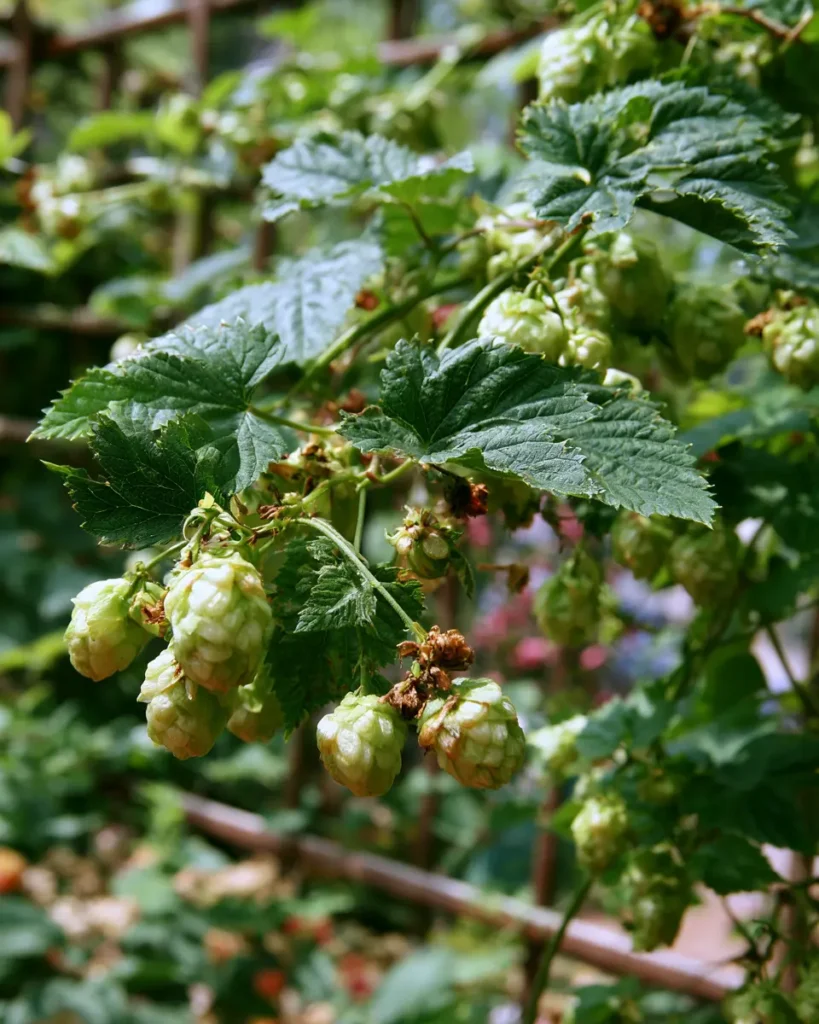
Hops (Humulus lupulus)
Traditional Uses of Hops
Sleep Support: Hops are traditionally used in evening formulas to support relaxation and healthy sleep rhythm.
Nervous System Support: Herbalists often use hops as a calming nervine when tension, restlessness, or irritability are part of the picture.
Digestive Support: Because hops are bitter, they have been traditionally used to support appetite, digestive readiness, and post-meal digestive tone.
Menopausal Transition Support: Hops contain phytoestrogenic compounds, especially 8-prenylnaringenin, which has made the plant a subject of research related to hot flashes and midlife wellness.
“Hops are the bitter little cones that remind the nervous system it does not have to answer emails after bedtime.”
Available Hops Products
Dried Hops Flowers
Dried hops flowers, also called strobiles or cones, are the traditional herbal form. They are used for tea, tinctures, sleep pillows, bitters, infused oils, and brewing. Good dried hops should smell fresh, bitter, floral, resinous, and slightly green.
Hops Tea
Hops tea is usually made as a short covered infusion. It is quite bitter, so it is often blended with lemon balm, chamomile, passionflower, lavender, skullcap, or mint.
Hops Tincture
Hops tincture is a common herbal form because alcohol-water mixtures extract bitter resins and aromatic compounds well. It is often used in small amounts in sleep or digestive formulas.
Hops Capsules
Capsules may contain powdered hops or hops extract. They are convenient for people who dislike bitter tea, but labels should clearly show the botanical name, plant part, serving size, extract ratio, and whether the product is standardized.
Hops Powder
Hops powder is dried hops ground into a fine form. It is used in capsules, brewing, and some herbal preparations, but it loses aroma faster than whole cones.
Hops Extract
Hops extracts may be standardized for bitter acids, prenylflavonoids, or other compounds. Extracts are stronger than tea and should be used more cautiously, especially with medications or hormone-sensitive conditions.
Hops Bitters
Hops bitters are digestive formulas that use hops’ bitter flavor to stimulate appetite and digestive secretions. These are usually taken before meals in small amounts.
Hops Essential Oil
Hops essential oil is steam-distilled from the cones and is highly concentrated. It is used mostly in aromatherapy, perfumery, and flavoring contexts, not as a casual internal herb.
Hops Sleep Pillow
Dried hops are sometimes placed in small sleep pillows, often with lavender or chamomile. The aroma can be relaxing for some people, though sensitive individuals may find it too strong.
Key Herbal Actions
Hops are known as a nervine, sedative, bitter tonic, aromatic digestive, antispasmodic, phytoestrogenic herb, anodyne-supportive herb, antimicrobial-supportive herb, and antioxidant.
Nervine
A nervine is an herb traditionally used to support the nervous system. Hops are considered a stronger calming nervine than gentle herbs like oat straw or lemon balm.
Sedative
Sedative herbs are traditionally used to help the body settle into rest. Hops are often paired with valerian, passionflower, skullcap, or lemon balm in sleep formulas.
Bitter Tonic
Bitter tonics stimulate the bitter taste receptors and traditionally support appetite and digestion. Hops are strongly bitter, which makes them useful in digestive bitters but challenging as a plain tea.
Aromatic Digestive
Hops contain aromatic compounds that contribute to their smell and digestive character. Their volatile oils and bitter resins make them both fragrant and appetite-awakening.
Antispasmodic
Antispasmodic herbs are traditionally used to ease patterns of tension or gripping in smooth muscle tissue. Hops are sometimes used when nervous tension and digestive tension overlap.
Phytoestrogenic Herb
Hops contain prenylflavonoids, including 8-prenylnaringenin, a plant compound with estrogen-like activity. This is why hops require caution in hormone-sensitive situations.
Anodyne-Supportive Herb
Anodynes are traditionally used to support comfort. Hops are not a strong pain herb, but they appear in formulas where tension, restlessness, and discomfort are connected.
Antimicrobial-Supportive Herb
Hops bitter acids have been studied for antimicrobial activity, especially in brewing and food science. This does not mean hops treat infections.
Antioxidant
Hops contain flavonoids and phenolic compounds, including xanthohumol, that are studied for antioxidant activity.
Active Compounds and Extraction
Hops contain alpha acids, humulone, cohumulone, adhumulone, beta acids, lupulone, volatile oils, myrcene, humulene, caryophyllene, xanthohumol, isoxanthohumol, 8-prenylnaringenin, tannins, flavonoids, and phenolic acids.
Alpha Acids
Alpha acids are bitter resin compounds in hops, including humulone, cohumulone, and adhumulone. In brewing, these compounds transform during boiling into iso-alpha acids that contribute beer bitterness.
In herbal use, alpha acids are part of hops’ bitter, digestive, and calming profile. They are better extracted by alcohol than by a quick tea alone.
Best extraction: alcohol-water tincture, extract, bitters, and brewing.
To make hops tincture, use dried hops cones at about 1 part herb to 5 parts liquid with 40–60% alcohol. Let sit for 2–4 weeks, shake regularly, and strain.
Humulone
Humulone is one of the main alpha acids in hops. It is studied for bitter activity, inflammatory-response pathways, and possible nervous-system effects.
Best extraction: alcohol tincture, standardized extract, bitters, and brewing.
Humulone is not the same as a simple water-soluble tea compound, so tinctures and extracts may feel different from plain hops tea.
Beta Acids
Beta acids include lupulone, colupulone, and adlupulone. These bitter resin compounds contribute to hops’ antimicrobial activity and long-standing use in brewing preservation.
Best extraction: alcohol extract, tincture, essential oil-associated resin fractions, and brewing.
Because beta acids are resinous, alcohol-based preparations are more efficient than plain water.
Lupulone
Lupulone is one of the main beta acids in hops. It contributes to bitterness, resin character, and antimicrobial research interest.
Best extraction: tincture, extract, bitters, and brewing preparations.
Lupulone-rich products should be treated as concentrated extracts rather than casual teas.
Volatile Oils
Hops contain volatile oils that give the cones their distinctive aroma. Important aromatic compounds include myrcene, humulene, caryophyllene, linalool, and farnesene, depending on hop variety.
Best extraction: covered infusion, tincture, essential oil, and fresh or dried cone use.
To make hops tea, use about 1/2 to 1 teaspoon dried hops per cup of hot water. Cover and steep for 5–10 minutes, then strain. Start small because hops tea is bitter and can feel strongly calming.
Myrcene
Myrcene is a major aromatic compound in many hop varieties. It contributes a green, resinous, sometimes fruity aroma.
Best extraction: essential oil, tincture, covered infusion, and aromatic use.
Because myrcene is volatile, avoid boiling hops uncovered for long periods. A covered infusion preserves more aroma.
Humulene and Caryophyllene
Humulene and caryophyllene are sesquiterpenes found in hops essential oil. They contribute woody, spicy, earthy, and herbal aromas.
Best extraction: essential oil, tincture, covered infusion, and aromatic preparations.
These compounds are part of hops’ fragrance profile but are not the same as the bitter acids used in standardized extracts.
Xanthohumol
Xanthohumol is a prenylated flavonoid found in hops. It is widely studied for antioxidant, inflammatory-response, metabolic, and cellular signaling pathways.
Best extraction: alcohol-water extract, standardized extract, powder, and bitters.
Xanthohumol is not usually the main compound in a simple cup of tea. Extracts may provide more measurable amounts.
8-Prenylnaringenin
8-prenylnaringenin is a strong phytoestrogen found in hops in small amounts and formed from related compounds. It is studied because it can interact with estrogen receptors.
Best extraction: standardized extract, alcohol-water tincture, and powder.
This compound is one reason hops should be used cautiously by people with hormone-sensitive conditions or hormone-related medication use.
Tannins
Tannins give herbs a drying, puckering quality. In hops, they contribute to bitterness, astringency, and digestive tone.
Best extraction: hot-water infusion, tincture, and bitters.
A short infusion extracts enough tannins for tea. Longer steeping makes hops even more bitter.
Harvesting and Storing Right
Hops cones are usually harvested in late summer to early fall when the cones feel papery, springy, aromatic, and slightly sticky from yellow lupulin glands. The lupulin is the golden resinous powder inside the cones where many active compounds are concentrated.
The best time of day to harvest is late morning after dew has dried. Wet hops can mold quickly, so drying needs to begin soon after harvest.
Dry hops gently in a shaded, well-ventilated place or with low heat. They should become papery but not brown or scorched.
Store dried hops in airtight containers away from heat, light, oxygen, and moisture. Hops degrade faster than many herbs because their volatile oils and bitter acids are sensitive to oxygen.
For best quality, dried hops are often stored cold or frozen. Use within 6–12 months for the freshest aroma.
Hops tincture can keep for several years when made with adequate alcohol and stored in a cool, dark place. Hops essential oil should be stored tightly closed in dark glass away from heat and children.
Body Functions Hops Can Support
Hops can support Sleep, Nervous system, Stress Support, Digestion system, Reproductive system female, Skin, Immune system, Respiratory system, and Brain.
Sleep
Hops are best known in herbalism for sleep and evening relaxation. They are often combined with valerian, passionflower, lemon balm, skullcap, or lavender in sleep formulas.
Human research is still limited, and many studies use hops combined with valerian or nonalcoholic beer, which makes it hard to isolate hops alone. It is best described as traditional sleep support, not a treatment for insomnia.
Nervous System
Hops are a calming nervine, traditionally used when the nervous system feels tense, irritable, or unable to settle. The bitter acids and aromatic compounds may interact with calming neurotransmitter pathways, including GABA-related research.
Some people find hops pleasantly calming, while others feel groggy or emotionally heavy. Individual response matters.
Stress Support
Hops may support stress routines when tension shows up as restlessness, irritability, tight digestion, or difficulty winding down. It is more relaxing than energizing.
Because hops can feel sedating, it is usually better suited for evening than morning use. It is not ideal when someone needs alertness.
Digestion System
Hops are a classic bitter tonic. Bitter herbs are traditionally used before meals to support appetite, digestive secretions, and digestive readiness.
The bitter taste is part of the action. Capsules may avoid the flavor, but bitters work partly because the tongue tastes the bitterness.
Reproductive System Female
Hops contain phytoestrogenic prenylflavonoids, especially 8-prenylnaringenin. This has led to research interest in menopausal transition support, including hot flashes.
Evidence is mixed and product-specific. Hops should not be described as hormone therapy, and people with hormone-sensitive conditions should use caution.
Skin
Hops appear in some topical products because of their antioxidant compounds, bitter resins, and antimicrobial research interest. They may be used in skincare or scalp formulas.
Topical hops can irritate sensitive skin, especially in strong extracts. Patch testing is wise.
Immune System
Hops bitter acids and flavonoids have antimicrobial and antioxidant research interest, especially in food and brewing contexts. This does not mean hops should be used to treat infection.
Their immune role is secondary and supportive. They fit better as a bitter, calming, and antioxidant herb than as a primary immune herb.
Respiratory System
Hops may appear in traditional respiratory formulas when restlessness, tension, or irritability accompany seasonal discomfort. Their aromatic compounds can feel soothing in warm tea blends.
They are not a strong expectorant like thyme, mullein, or elecampane. Respiratory use is secondary.
Brain
Hops may influence the brain mostly through calming and sedative pathways. Research has explored GABA-related mechanisms, which may help explain its traditional use for relaxation.
This should not be turned into claims about treating anxiety, depression, or neurological conditions. Hops are supportive, not corrective.
Safety and Practical Considerations
Hops can be strongly sedating for some people. Avoid combining hops with alcohol, sedatives, sleep medications, anti-anxiety medications, antidepressants, antipsychotics, seizure medications, opioids, or other nervous-system depressants unless guided by a qualified healthcare professional.
Do not drive or operate machinery after taking hops until you know how you respond. Even an herb can make you too relaxed for responsible steering.
Hops may not be appropriate for people with depression or mood disorders because some individuals report emotional heaviness or worsening low mood. Anyone with a history of depression should use caution.
Because hops contain phytoestrogenic compounds, people with hormone-sensitive conditions should seek professional guidance before using hops supplements. This includes estrogen-sensitive breast cancer, uterine cancer, ovarian cancer, endometriosis, fibroids, unexplained reproductive bleeding, or hormone-related medication use.
Pregnancy and breastfeeding safety data are limited, and hops supplements should generally be avoided unless guided by a qualified clinician.
People preparing for surgery should stop hops products according to clinician guidance because of sedative and medication-interaction concerns.
Hops can cause drowsiness, dizziness, allergic reactions, skin irritation, stomach upset, or headache in some people. People allergic to hops, hemp-family plants, or beer-related ingredients should be cautious.
Hops essential oil should not be taken internally without professional supervision. It should be diluted for topical use and kept away from children and pets.
Pet use should only be guided by a veterinarian. Hops can be dangerous for dogs if ingested, especially spent hops from brewing.
FAQ
What do hops taste like?
Hops taste bitter, resinous, green, floral, and sometimes citrusy or earthy depending on the variety. The bitterness is strong, so hops tea is often blended with softer herbs.
When is the best time to use hops?
Hops are usually best used in the evening because they can feel calming or sedating. Digestive bitters containing hops are usually taken before meals in small amounts.
Are fresh or dried hops better?
Fresh hops are aromatic but highly perishable. Dried hops are more practical for tea, tinctures, sleep pillows, and storage.
Is hops tea, tincture, or capsule better?
Tea is traditional but bitter. Tincture extracts resinous compounds well and is convenient, while capsules are easier for people who dislike the taste.
Can hops be used daily?
Some people use hops short-term in evening formulas, but daily long-term use should be discussed with a qualified professional. This is especially important with medications, mood concerns, hormone-sensitive conditions, or pregnancy.
How should hops be stored?
Store dried hops airtight, cold if possible, and away from heat, light, oxygen, and moisture. Freezing can help preserve aroma and potency.
Do hops combine well with other herbs?
Yes. Hops combine well with valerian, passionflower, lemon balm, skullcap, chamomile, lavender, oat straw, catnip, and California poppy in calming formulas. For digestion, they pair with gentian, dandelion root, orange peel, fennel, ginger, and artichoke leaf.
Are hops the same as beer?
No. Hops are one ingredient used to flavor and preserve beer. Herbal hops preparations do not have to contain alcohol unless made as tinctures.
Are hops safe for everyone?
No. Hops may not be appropriate with sedative medications, alcohol, depression, hormone-sensitive conditions, pregnancy, breastfeeding, upcoming surgery, or pet exposure.
Can hops be used for pets?
Pet use should only be guided by a veterinarian. Hops can be dangerous for dogs if eaten, especially spent hops from home brewing.
Disclaimer
This content is educational only. It is not medical advice, diagnosis, or treatment. Herbs may interact with medications or health conditions. People who are pregnant, breastfeeding, managing a medical condition, taking prescription medications, or preparing for surgery should consult a qualified healthcare professional before using herbs.
References
European Medicines Agency: Hop Strobile
Memorial Sloan Kettering Cancer Center: Hops
Mount Sinai: Hops
PubMed: Hops and Valerian for Sleep — Review
PubMed: Humulus lupulus and Sleep
PubMed: Xanthohumol and Prenylflavonoids from Hops
PubMed: 8-Prenylnaringenin and Hops Phytoestrogens
PubMed: Hops and Menopausal Symptoms
PubMed: Hop Bitter Acids and Humulone