
The Complete Guide to Calming Your Nervous System Naturally
Racing thoughts at midnight. A jaw clenched from a stressful day you can’t quite shake. That wired-but-tired feeling that shows up no matter how much coffee you cut back on. If your nervous system feels like it’s stuck in overdrive, you’re not alone — and herbalists have been reaching for the same category of plants to help ease this exact pattern for centuries. They’re called nervines, and they’re some of the most gentle, accessible allies for calming an overworked nervous system.
Known Nervine Herbs
- Chamomile — A classic bedtime herb, chamomile has long been used to ease restlessness and support a calm transition into sleep.
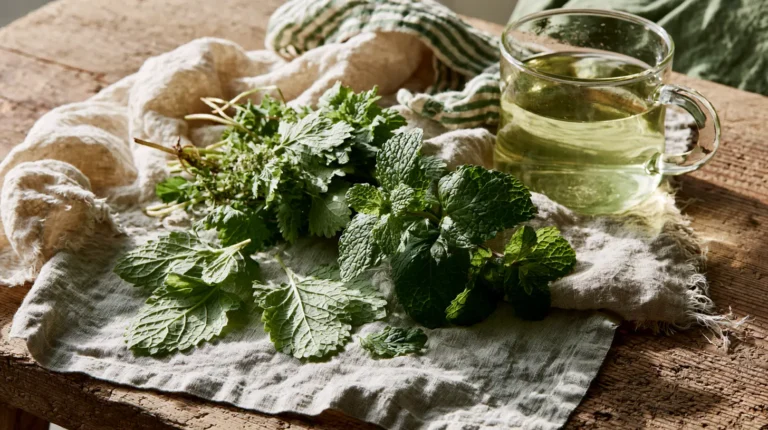
- Lemon Balm — Bright and citrusy, lemon balm is traditionally used to soothe nervous tension and lift a heavy mood.
- Lavender — Best known for its calming aroma, lavender is used both internally and externally to ease anxious tension and support relaxation.
- Passionflower — A go-to herb for a busy, overthinking mind, passionflower is traditionally used to quiet mental chatter and support restful sleep.
- Skullcap — This often-overlooked herb is used to release physical tension held in the body, particularly around the jaw, shoulders, and neck.
- Oatstraw — A nourishing nervine tonic, oatstraw is used to gently rebuild a depleted nervous system over time rather than sedate it in the moment.
- Holy Basil (Tulsi) — Straddling the line between nervine and adaptogen, tulsi is used to ease everyday stress while also supporting steady energy.
- Motherwort — Traditionally associated with calming a racing heart and easing emotional overwhelm, especially during hormonal shifts.
- Catnip — Not just for cats — this mild, gentle herb is used to soothe restlessness in both adults and children.
- Valerian — A stronger, more sedating nervine, valerian is traditionally used for occasional sleeplessness and deep muscular tension.
Nervine Recipes
Chamomile & Lemon Balm Evening Tea
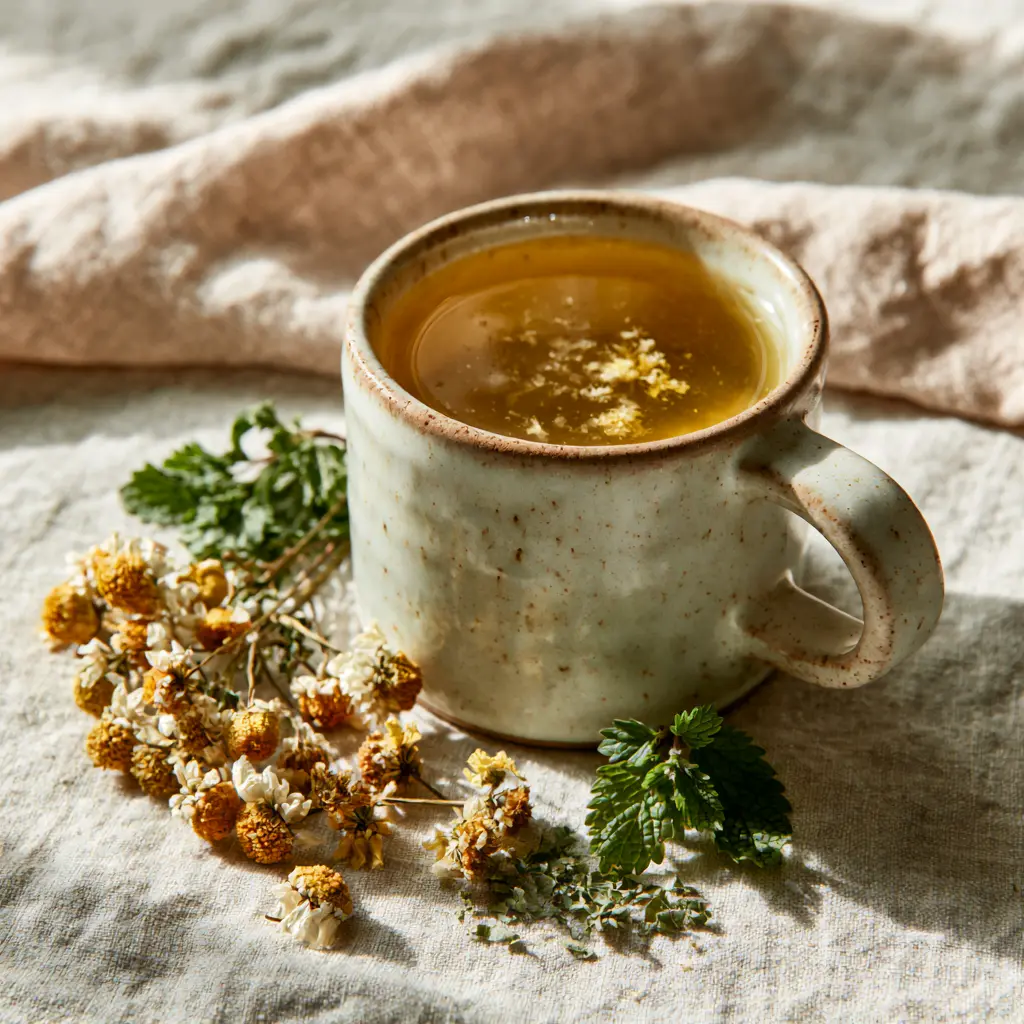
Herbs used: Chamomile, Lemon Balm
- Add 1 tablespoon each of dried chamomile and lemon balm to a mug or tea infuser.
- Pour 8oz of just-boiled water over the herbs and cover to steep for 8–10 minutes.
- Strain and sip slowly about 30–45 minutes before bed.
This simple two-herb blend is a great entry point if you’re new to nervines — both herbs are gentle, widely available, and pleasant-tasting, making it easy to build into a nightly wind-down rit
Explore 10+ Nervine Recipes




Herbal Products with Nervine Herbs
If steeping loose herbs isn’t your thing, nervines come in plenty of ready-to-use formats. Pre-blended calming teas make it easy to sip your way to a slower evening, while tinctures offer a fast-absorbing option for moments of acute stress. Capsules are a good fit if you prefer a no-fuss, flavor-free routine, and bath soaks blended with lavender or oatstraw turn self-care into a full-body ritual.
Calming Nervine Tea Blend
Stress-Ease Tincture
Nervine Capsule Blend
Bath Soaks
Learn More About Nervine Herbs
What are nervines? Nervines are a category of herbs traditionally used to support and nourish the nervous system. Herbalists generally divide them into two groups: relaxing nervines (like chamomile, lavender, and skullcap), which are used to ease tension and promote calm, and stimulating or tonic nervines (like tulsi and oatstraw), which are used to support a steady, resilient nervous system over time rather than sedate it.
How do they work? While research is still developing in this area, nervines are traditionally understood to interact gently with the body’s relaxation response, helping ease the physical and mental sensations associated with everyday stress.
How are they used? Nervines are most commonly taken as teas, tinctures, or capsules, and many — like lavender — are also used topically or aromatically through baths and oils.
Herb Comparison Table
| Herb | Best For | How to Use |
| Chamomile | Sleep, general restlessness | Tea |
| Lemon Balm | Mood, nervous tension | Tea, tincture |
| Lavender | Anxious tension, relaxation | Tea, bath, aromatherapy |
| Passionflower | Overthinking, racing mind | Tea, tincture |
| Skullcap | Physical tension | Tincture, tea |
| Oatstraw | Long-term nervous system support | Tea (infusion) |
| Holy Basil (Tulsi) | Everyday stress, steady energy | Tea, tincture |
| Motherwort | Emotional overwhelm, racing heart | Tincture, tea |
| Catnip | Mild restlessness | Tea |
| Valerian | Occasional sleeplessness | Tincture, capsule |
Nervines vs. Adaptogens
It’s easy to lump nervines and adaptogens together since both categories show up in “stress support” formulas — but they work quite differently. Nervines act directly and fairly quickly on the nervous system, easing tension or promoting calm in the moment, which is why they’re often used for occasional stress or trouble winding down at night. Adaptogens, on the other hand, work more gradually, supporting the body’s overall stress-response system over weeks of consistent use rather than providing an immediate calming effect. Many wellness routines actually combine both — a daily adaptogen for long-term resilience, paired with a nervine for in-the-moment support.
Q&A
Can I take nervine herbs every day? Many gentle nervines, like chamomile and lemon balm, are commonly used daily. Stronger nervines like valerian are typically reserved for occasional use rather than daily reliance.
Are nervines safe to combine with each other? Many nervines are traditionally blended together, such as chamomile with lemon balm or passionflower with skullcap. As always, start with small amounts when trying a new combination.
Can nervines replace medication for anxiety or sleep disorders? No. Nervines are traditionally used for everyday, mild nervous tension and are not a substitute for prescribed treatment of diagnosed conditions.
Are nervine herbs safe during pregnancy? Some nervines are not recommended during pregnancy. Always check with a qualified healthcare provider before using any herb while pregnant or breastfeeding.
How long does it take to feel the effects of a nervine? Relaxing nervines like chamomile or lavender are often felt within 30–60 minutes, while tonic nervines like oatstraw are traditionally used consistently over weeks to build a cumulative effect.
Can children take nervine herbs? Some gentle nervines like chamomile and catnip have a long history of use with children, but dosing and appropriateness should always be confirmed with a pediatrician or qualified herbalist first.
References
- National Center for Complementary and Integrative Health – Herbs at a Glance
- Penn State Extension – Herbal Teas and Their Uses
- American Botanical Council
- University of Michigan Health – Herbal Supplements
- PubMed – National Library of Medicine
Safety Tips
- Consult a healthcare provider before starting any new herb, especially if pregnant, breastfeeding, or managing a medical condition.
- Check for potential interactions if you take prescription medications, particularly sedatives or blood pressure medication.
- Start with a small amount of any new herb to check for sensitivity.
- Source herbs from reputable suppliers to ensure quality and purity.
- Discontinue use and consult a doctor if you experience any adverse reaction.
Disclaimer
This content is for educational purposes only and is not intended as medical advice. It is not meant to diagnose, treat, cure, or prevent any disease. Always consult a qualified healthcare provider before beginning any new herbal regimen, especially if you are pregnant, nursing, taking medication, or managing a health condition.