
The Herbs That Can Help You Come Back to Life
Burnout is a state of physical and emotional exhaustion that builds up after prolonged stress — the kind where rest doesn’t actually feel restful anymore. You know the feeling: you slept eight hours and still woke up tired. You used to love your job (or your life, or both), and now even small tasks feel like climbing a hill in wet cement. If “running on fumes” has become your permanent setting, you’re not lazy — you’re burnt out, and your body has been trying to tell you for a while now.
Herbs That Can Help
Herbs can’t erase an overloaded schedule or a demanding job, but many have a long history of use for supporting the body’s stress response, replenishing energy, and calming an overstimulated nervous system. Certain plants — known as adaptogens — are traditionally used to help the body adapt to stress rather than just numbing its effects. Below are some of the most well-regarded herbs for burnout support.
- Ashwagandha — An adaptogen used in Ayurvedic tradition for centuries to help the body cope with stress and support steady, sustained energy rather than jittery highs and crashes.
- Rhodiola Rosea — Traditionally used in Scandinavian and Russian herbalism to combat fatigue and mental fog, particularly during periods of prolonged physical or mental exertion.
- Holy Basil (Tulsi) — Revered in Ayurveda as an “elixir of life,” tulsi is traditionally used to promote calm, mental clarity, and resilience to everyday stress.
- Reishi Mushroom — A staple of traditional Chinese medicine, reishi is known as the “mushroom of immortality” and is traditionally used to support restful sleep and a calmer nervous system.
- Eleuthero (Siberian Ginseng) — Historically used to help the body maintain stamina and endurance under stress, without the overstimulating effect of caffeine.
- Schisandra Berry — A five-flavored berry used in traditional Chinese medicine to support mental focus and resilience, especially when fatigue feels both physical and mental.
- Lemon Balm — A gentle, lemony member of the mint family traditionally used to ease tension and support a calmer mood without sedation.
- Passionflower — Long used to quiet a racing mind, particularly helpful when burnout shows up as restlessness or difficulty winding down at night.
- Licorice Root — Traditionally used in small amounts to support adrenal function and sustained energy; often paired with adaptogens rather than used alone.
Most Popular Recipe
Adaptogenic Reset Tea
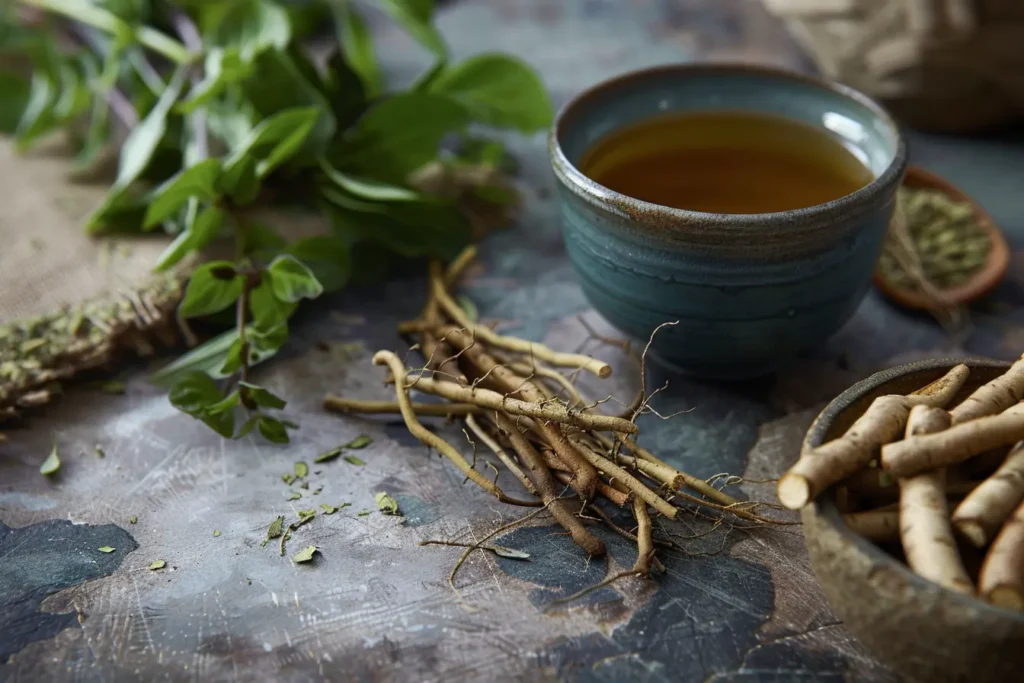
Herbs used: Holy Basil (Tulsi), Ashwagandha, Lemon Balm
- Combine 1 teaspoon dried tulsi, ½ teaspoon ashwagandha root powder (or a pre-made ashwagandha tea bag), and 1 teaspoon dried lemon balm in a mug or tea infuser.
- Pour freshly boiled water over the herbs and steep, covered, for 8–10 minutes to allow the deeper roots to fully infuse.
- Strain and sip slowly in the late afternoon or early evening as a gentle, grounding reset — a simple starting point if you’re new to herbs for burnout.
Explore Other Recipes
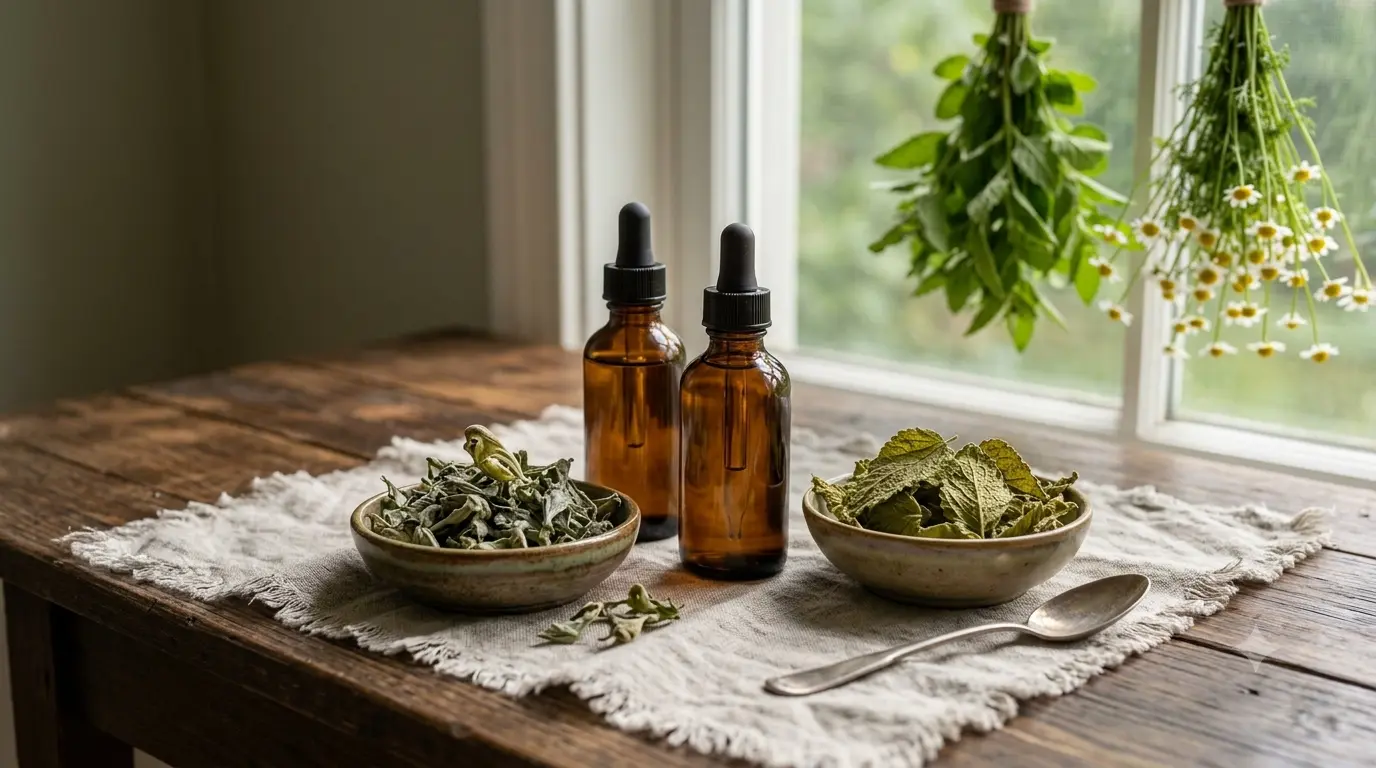
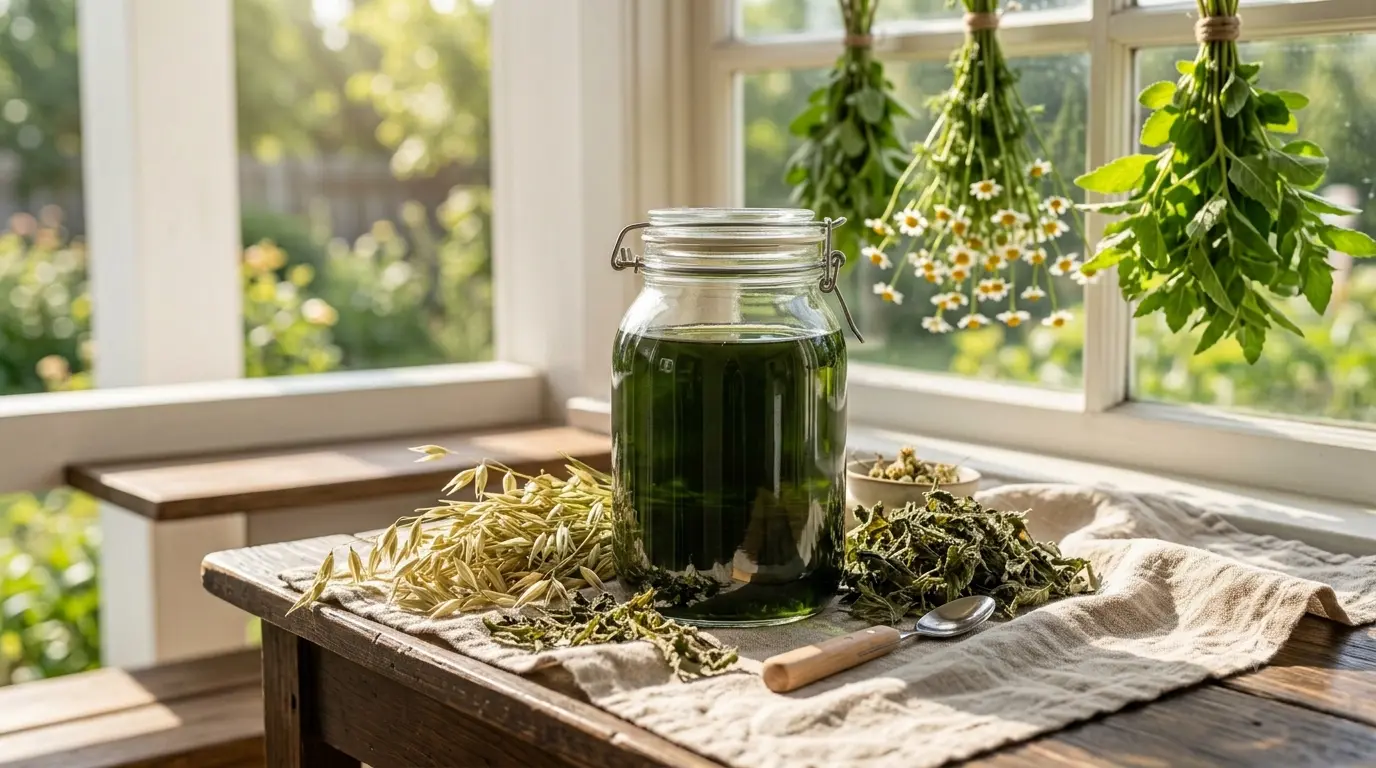
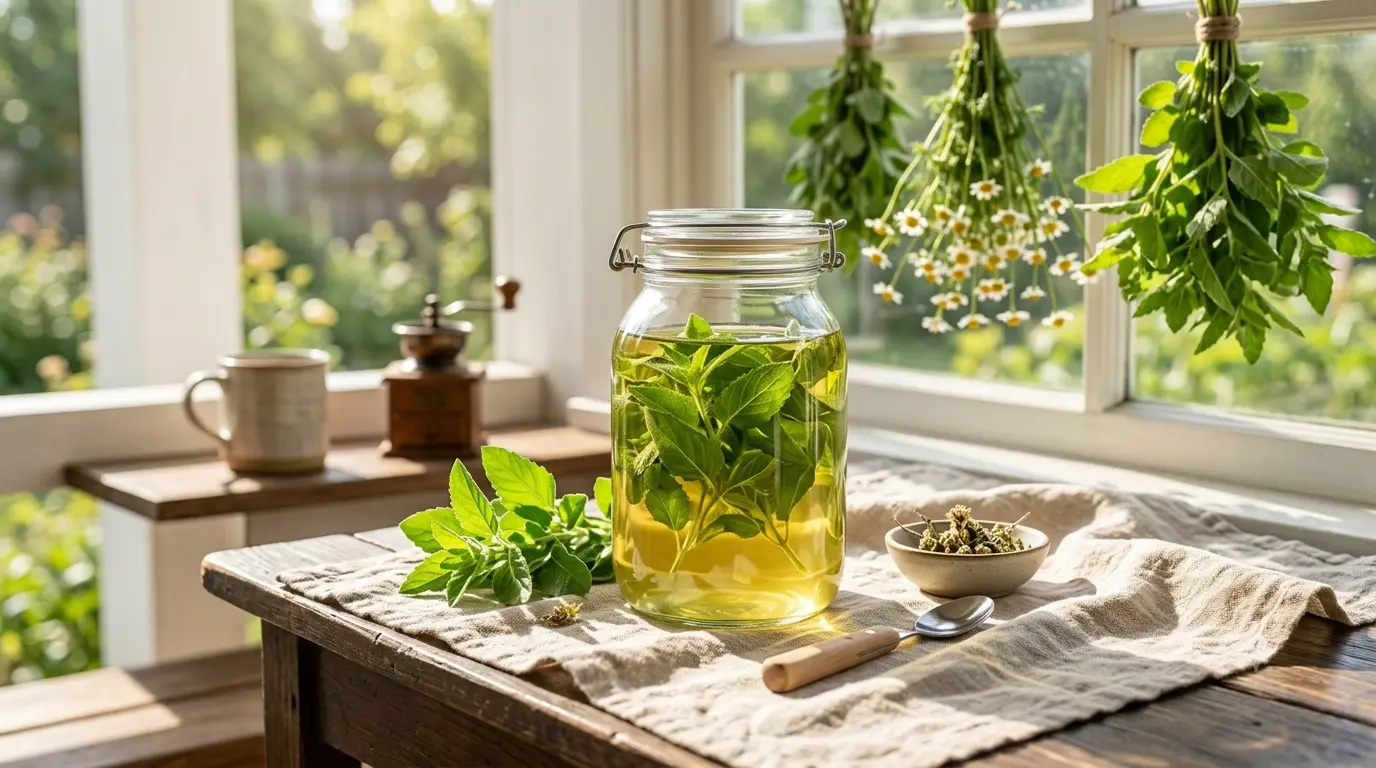
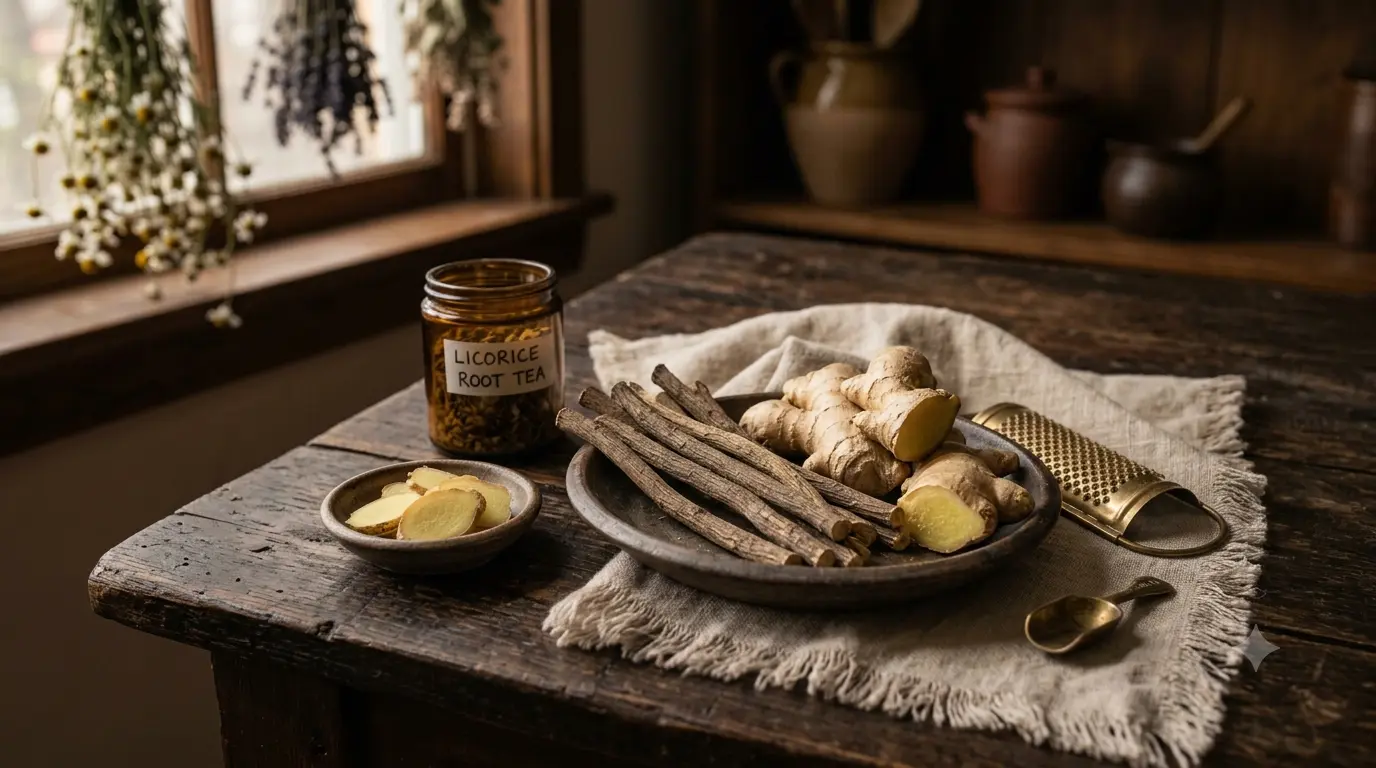
Herbal Products with Burnout Herbs
If steeping loose herbs isn’t your thing, most of the herbs above are also available as teas, tinctures, capsules, powders, and even bath soaks — making it easy to find a format that fits your routine.
- Adaptogen tea blends: [Product Link]
- Ashwagandha capsules: [Product Link]
- Rhodiola tincture: [Product Link]
- Reishi mushroom powder: [Product Link]
- Calming evening tea blends: [Product Link]
- Magnesium + herbal bath soaks: [Product Link]
Comparison of Herbs
| Herb | Best For | How to Use |
|---|---|---|
| Ashwagandha | Sustained energy, stress resilience | Capsule, powder in smoothies, or tea |
| Rhodiola Rosea | Mental fog, physical fatigue | Tincture or capsule, taken earlier in the day |
| Holy Basil (Tulsi) | Daily stress, mental clarity | Tea, enjoyed 1–3 times daily |
| Reishi Mushroom | Sleep support, nervous system calm | Powder in coffee/tea, or tincture in the evening |
| Eleuthero (Siberian Ginseng) | Stamina, endurance under stress | Capsule or tincture, morning use |
| Schisandra Berry | Mental focus, resilience | Tincture, powder, or dried berries |
| Lemon Balm | Tension relief, gentle mood support | Tea or tincture, anytime |
| Passionflower | Racing thoughts, evening wind-down | Tea or tincture before bed |
| Licorice Root | Adrenal support (short-term use) | Small amounts in tea blends |
Learn More About Burnout
What Burnout Is
Burnout is a state of chronic physical, emotional, and mental exhaustion caused by prolonged, unmanaged stress — most commonly linked to work, caregiving, or ongoing high-pressure demands. It’s distinct from everyday tiredness (which resolves with rest) and different from clinical anxiety or depression, though it can overlap with both. Burnout is specifically tied to depletion from sustained overload, often accompanied by cynicism or detachment from things you used to care about.
How It Shows Up
- Physical: persistent fatigue, disrupted sleep, headaches, muscle tension, getting sick more often
- Mental: brain fog, difficulty concentrating, forgetfulness, feeling mentally “flat”
- Emotional: irritability, cynicism, numbness, a sense of dread about responsibilities
- Behavioral: procrastination, withdrawing from others, reduced motivation, increased reliance on caffeine or other stimulants just to function
Why It Happens
Burnout is closely tied to prolonged activation of the body’s stress response system — the HPA (hypothalamic-pituitary-adrenal) axis. When stress hormones like cortisol stay elevated for too long without adequate recovery, the body’s ability to regulate energy, mood, and sleep gets disrupted. Over time, this dysregulation is what produces the classic burnout symptoms of exhaustion and depletion, even when the original stressor hasn’t gone away.
Types of Stress, Explained — Plus Herbal Support for Each
Q&A
Q: How long does it take to feel a difference from herbs? A: Adaptogens like ashwagandha and rhodiola are typically taken consistently for several weeks before effects become noticeable, since they work gradually with the body’s stress response rather than providing instant relief.
Q: Can I take more than one adaptogen at a time? A: Many people combine adaptogens (such as ashwagandha and rhodiola), but it’s wise to start with one at a time to see how your body responds before combining several.
Q: Are these herbs a substitute for addressing the cause of my burnout? A: No — herbs can support your nervous system and energy, but they work best alongside actual changes to workload, boundaries, sleep, and rest.
Q: Is it safe to take these herbs long-term? A: Some, like licorice root, are meant for short-term use only, while others like tulsi are traditionally used longer-term; check individual herb guidance and talk to a healthcare provider for extended use.
Q: Can these herbs interact with medications? A: Yes, particularly herbs that affect cortisol, thyroid, blood sugar, or sedation — always check with a healthcare provider if you take medication, especially antidepressants, sedatives, or thyroid medication.
Q: Should I take energizing or calming herbs for burnout? A: It depends on how your burnout shows up — wired-but-tired often benefits from calming herbs like lemon balm and passionflower, while flat fatigue may respond better to gentler energizing adaptogens like rhodiola or eleuthero.
References
- National Center for Complementary and Integrative Health (NCCIH) — Ashwagandha
- Mount Sinai — Rhodiola
- Memorial Sloan Kettering — Reishi Mushroom
- World Health Organization — Burn-out an “occupational phenomenon”
- American Botanical Council
- National Institutes of Health — PubMed
Safety Tips
- Herbs can interact with medications (especially antidepressants, sedatives, blood thinners, and thyroid or blood pressure medication) — check with a healthcare provider first.
- Pregnant or breastfeeding individuals should consult a doctor before using adaptogens or nervine herbs.
- Start with one herb at a time and a lower dose to assess tolerance.
- Licorice root should not be used long-term or by those with high blood pressure without medical guidance.
- Persistent burnout symptoms, or signs of depression or anxiety, warrant a conversation with a healthcare provider — herbs are a support, not a replacement for care.
Disclaimer
This article is for educational purposes only and is not intended as medical advice. It is not a substitute for professional diagnosis or treatment. Always consult a qualified healthcare provider before starting any new herbal regimen, especially if you are pregnant, nursing, taking medication, or managing a health condition.