


Elderberry is the small, dark purple-black fruit of the elder tree, a shrub traditionally used in European and North American folk herbalism. It is best known today as a seasonal wellness herb, especially in syrups, teas, gummies, and capsules.
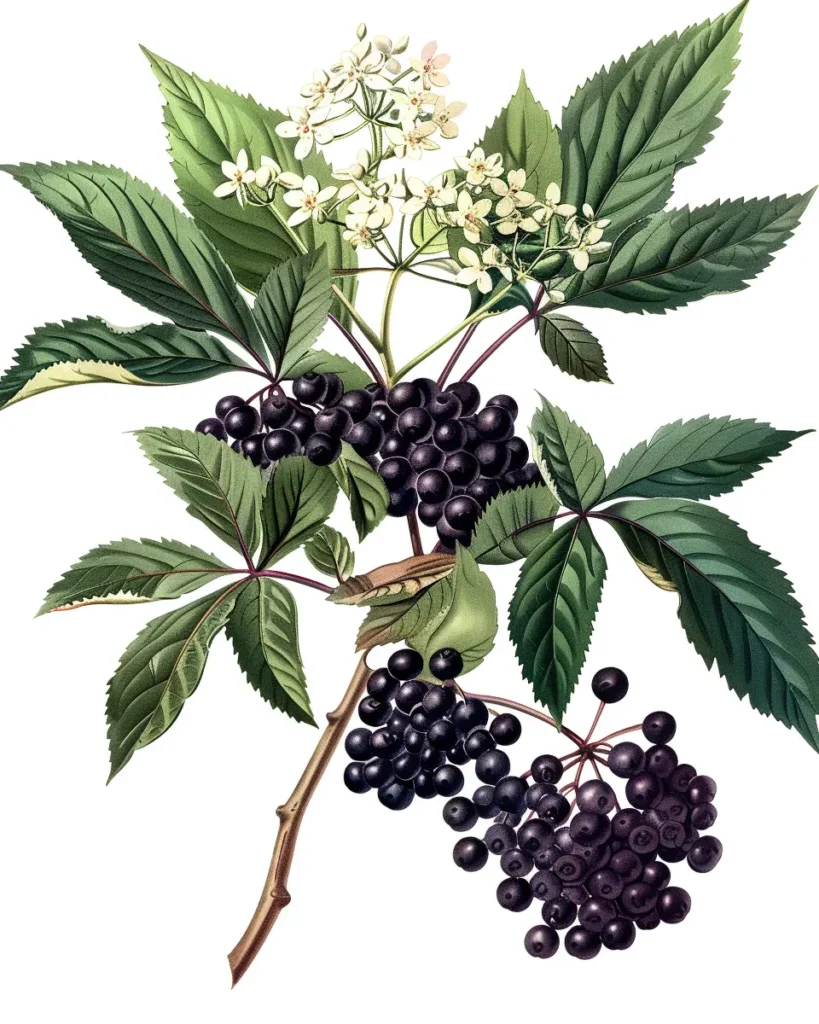
Elderberry (Sambucus nigra)
Traditional Uses of Elderberry
Seasonal Wellness: Elderberry fruit has a long tradition of use during cold-weather seasons, especially in syrups and warm preparations.
Immune Support: Its dark pigments, especially anthocyanins, are studied for antioxidant and immune-related activity.
Respiratory Comfort: Elderberry preparations are often used traditionally when people want soothing seasonal support for the throat and upper respiratory system.
Antioxidant Nutrition: Like many dark berries, elderberry contains polyphenols that help explain its rich color and research interest.
“Elderberry is the cozy scarf of the herbal pantry — dark, comforting, and always welcome when the air turns crisp.”
Available Elderberry Products
Dried Elderberry
Dried elderberries are commonly used for teas, decoctions, syrups, and herbal blends. They should be fully ripe, dark purple-black, and sourced from a reputable supplier because raw, unripe, or poorly prepared elder plant parts can cause digestive upset.
Elderberry Syrup
Elderberry syrup is one of the most common market forms. It is usually made by simmering dried or fresh ripe berries with water, then combining the strained liquid with honey or another sweetener.
Elderberry Tea
Elderberry tea is usually prepared as a decoction rather than a quick infusion because the berries are dense. Simmering helps extract color, flavor, tannins, anthocyanins, and other water-soluble compounds.
Elderberry Tincture
Elderberry tinctures are alcohol-water extracts made from the fruit. They are convenient and shelf-stable, though many people prefer syrup because elderberry’s tart fruit flavor works naturally with honey.
Elderberry Capsules
Capsules may contain powdered elderberry or standardized elderberry extract. Look for the botanical name, part used, extract ratio, and whether the product uses fruit rather than leaf, bark, or stem.
Elderberry Gummies
Gummies are common, especially for families, but they vary widely in quality and sugar content. A good label should clearly state the amount of elderberry extract per serving rather than only saying “proprietary blend.”
Elderberry Powder
Elderberry powder can be added to smoothies, yogurt, oatmeal, or herbal formulas. Because powders expose more surface area to air and moisture, they lose quality faster than whole dried berries.
Elderberry Juice or Concentrate
Elderberry juice and concentrate are food-like preparations made from cooked ripe berries. Concentrates are stronger than regular juice, so serving size matters.
Key Herbal Actions
Elderberry is known as an antioxidant, immune-supportive berry, diaphoretic, antiviral-supportive herb, astringent, nutritive berry, and mild respiratory support herb.
Antioxidant
Elderberry is rich in anthocyanins and other polyphenols, which are studied for antioxidant activity. These compounds help explain why elderberry has such a deep purple-black color.
Immune-Supportive Berry
In herbal language, elderberry is often described as supporting immune resilience, especially during seasonal changes. This does not mean it prevents or cures infections, but it helps explain its traditional role in cold-weather herbal routines.
Diaphoretic
A diaphoretic is an herb traditionally used to support the body’s natural sweating response. Elder flowers are more famous for this action, but elderberry preparations are often included in seasonal formulas alongside elderflower, yarrow, ginger, or peppermint.
Antiviral-Supportive Herb
Elderberry has been studied in relation to viral upper respiratory symptoms, especially in small clinical trials and reviews. The evidence is interesting but not strong enough to claim that elderberry treats, cures, or prevents viral illness.
Astringent
Elderberry fruit contains tannins, which give a mild puckering quality. Astringent herbs are traditionally understood to tone tissues and add a drying quality.
Nutritive Berry
Elderberry contains natural fruit acids, fiber, vitamin C, minerals, and colorful polyphenols. In simple terms, it is a dark berry with a long herbal history and a strong nutritional personality.
Mild Respiratory Support
Elderberry is traditionally used in seasonal formulas for throat and upper respiratory comfort. It is best understood as supportive, not as a substitute for medical care.
Active Compounds and Extraction
Elderberry contains anthocyanins, flavonoids, phenolic acids, tannins, organic acids, pectin, vitamin C, minerals, and cyanogenic glycosides in raw or unripe plant material.
Anthocyanins
Anthocyanins are water-soluble pigments that give elderberries their deep purple-black color. Elderberry fruit is especially known for cyanidin-based anthocyanins, including cyanidin-3-glucoside and cyanidin-3-sambubioside.
These compounds are studied for antioxidant activity and immune-related signaling. They are also sensitive to heat, light, oxygen, and long storage, so fresh preparation and careful storage matter.
Best extraction: water decoction, syrup, juice, glycerite, tincture, and standardized extract.
To make elderberry decoction, use 1 tablespoon dried elderberries per cup of water. Simmer gently for 15–20 minutes, strain well, and use the liquid as tea or as the base for syrup.
Flavonoids
Flavonoids are plant compounds that often work alongside anthocyanins in berries. Elderberry contains flavonoids such as quercetin and rutin derivatives, which are studied for antioxidant and vascular-supportive activity.
Best extraction: hot water, alcohol-water tincture, juice, syrup, and powder.
A covered simmer is helpful because it extracts water-soluble compounds while limiting loss from excess evaporation.
Phenolic Acids
Phenolic acids are antioxidant compounds found in many fruits, herbs, and spices. In elderberry, they contribute to the berry’s overall polyphenol profile.
Best extraction: water, juice, syrup, tincture, and powder.
A syrup made from a decoction captures many water-soluble phenolics, though very high heat and long cooking can reduce some delicate compounds.
Tannins
Tannins create a mild drying, puckering taste. In elderberry, they contribute to the fruit’s traditional astringent quality.
Best extraction: hot water decoction and tincture.
A 15–20 minute simmer extracts tannins from dried berries. Avoid excessive amounts because very tannic preparations may feel drying or upset sensitive stomachs.
Organic Acids and Pectin
Organic acids give elderberry its tart flavor, while pectin is a soluble fiber naturally found in fruits. These compounds make elderberry feel like both food and herb.
Best extraction: cooked fruit, syrup, juice, jam, powder, and decoction.
For a simple syrup, simmer dried elderberries in water, strain thoroughly, cool slightly, and mix the liquid with honey. Refrigerate and use within a few weeks unless properly preserved.
Vitamin C and Minerals
Elderberries contain vitamin C and minerals, though amounts vary depending on species, ripeness, processing, and storage. Heat can reduce vitamin C, so elderberry syrup should be appreciated more for its overall berry polyphenol profile than as a guaranteed vitamin C source.
Best extraction: food use, juice, syrup, powder, and cooked berries.
Eating prepared elderberry products keeps more of the whole-fruit matrix than strained tea alone.
Cyanogenic Glycosides
Raw elderberries, unripe berries, seeds, leaves, stems, and bark may contain cyanogenic glycosides, which can release cyanide compounds. Improperly prepared elderberry can cause nausea, vomiting, diarrhea, and other symptoms.
Best handling method: proper cooking and careful plant-part selection.
Use only ripe elderberries from a reliable source, remove stems, and cook the berries thoroughly. Do not use elder leaves, bark, stems, or roots for casual home preparations.
Harvesting and Storing Right
Elderberries are usually harvested in late summer to early fall when the berry clusters are fully dark purple-black and heavy. The best time of day is late morning after dew has dried, because wet berries spoil more quickly.
Harvest whole clusters, then remove the berries from the stems before cooking or drying. Freezing the clusters briefly can make de-stemming easier.
Fresh elderberries should be cooked promptly, frozen, or dried. They are delicate and can ferment or mold if left sitting too long.
Dried elderberries should be stored in an airtight jar away from heat, light, and moisture. A typical shelf life is about 1 year if color, aroma, and flavor remain strong.
Elderberry syrup should be refrigerated and used within a few weeks unless it is made with proper preservation methods. Commercial syrups should be stored according to the label.
Elderberry tincture usually keeps for several years when made with adequate alcohol and stored in a cool, dark place. Powders are best used within 6–12 months.
Body Functions Elderberry Can Support
Elderberry can support Immune system, Respiratory system, Circulation, Skin, Digestion system, Energy and vitality, and Metabolism.
Immune System
Elderberry is best known for seasonal immune support. Its anthocyanins and other polyphenols are studied for antioxidant activity and immune-related effects, but the evidence should be described as supportive rather than conclusive.
Some small studies and reviews suggest elderberry preparations may influence the duration or severity of upper respiratory symptoms, but research quality and product differences vary. Elderberry should not replace vaccination, prescribed medications, or medical care when illness is serious.
Respiratory System
Elderberry is commonly used in seasonal syrups and teas for upper respiratory comfort. Its traditional role is often paired with warming or relaxing herbs such as ginger, cinnamon, elderflower, yarrow, or peppermint.
This use is best framed as comfort and seasonal support. Difficulty breathing, chest pain, high fever, dehydration, or worsening symptoms require medical attention.
Circulation
Elderberry’s flavonoids and anthocyanins are studied for antioxidant and vascular-related activity. These compounds are relevant to circulation because blood vessels are sensitive to oxidative stress and inflammatory signaling.
This does not mean elderberry treats cardiovascular disease. It simply means elderberry belongs to the group of dark polyphenol-rich fruits that researchers study for vascular wellness.
Skin
Elderberry may support skin wellness indirectly through antioxidant nutrition. Skin is exposed to oxidative stress from sunlight, pollution, inflammation, and normal metabolism.
Elderberry is usually used internally as a cooked fruit, syrup, juice, tea, powder, or extract. It is not commonly used as a primary topical skin herb.
Digestion System
Prepared elderberries contain fruit acids, pectin, and mild tannins. These compounds can make elderberry feel tart, slightly puckering, and food-like.
Because elderberry can upset the stomach when raw, unripe, or improperly prepared, cooking is especially important. Sensitive individuals may do better with small amounts.
Energy and Vitality
Elderberry may support energy indirectly during seasonal wellness routines by offering warm, flavorful, antioxidant-rich nourishment. It is not a stimulant and should not be described as an energy booster.
Think of it more as a supportive pantry berry — useful when the body appreciates warmth, fluids, and gentle nourishment.
Metabolism
Elderberry polyphenols have been studied in relation to metabolic and inflammatory markers, but evidence is still developing. It is not appropriate to claim elderberry lowers blood sugar, cholesterol, or body weight.
In practical terms, elderberry can be part of a colorful, plant-rich diet. Concentrated supplements should be used more cautiously than food preparations.
Safety and Practical Considerations
Use only properly prepared ripe elderberries. Raw elderberries, unripe berries, seeds, leaves, stems, bark, and roots may contain compounds that can cause nausea, vomiting, diarrhea, and other symptoms.
Cooking is important. Most traditional elderberry syrups and decoctions begin by simmering the berries, then straining carefully to remove solids.
People who are pregnant, breastfeeding, immunocompromised, managing autoimmune conditions, taking immune-suppressing medication, using diabetes medication, or preparing for surgery should speak with a qualified healthcare professional before using elderberry supplements.
Elderberry may cause digestive upset in sensitive people, especially in larger amounts. Gummies and syrups may also contain significant sugar, which matters for people monitoring blood sugar.
Children should only use age-appropriate elderberry products with guidance from a healthcare professional. Avoid homemade elderberry preparations for very young children unless a pediatric clinician approves.
Pet use should be guided by a veterinarian. Elder plant parts can be unsafe for animals, and essential oils or concentrated extracts are not appropriate for casual pet use.
FAQ
What does elderberry taste like?
Elderberry tastes tart, dark, earthy, and slightly fruity. It is less sweet than blueberry and often tastes better when cooked into syrup with honey, cinnamon, ginger, or clove.
When is the best time to use elderberry?
Elderberry is most often used during fall and winter or at the first sign that someone wants extra seasonal support. It can also be used as a food-like berry preparation in syrups, teas, jams, and concentrates.
Is fresh or dried elderberry better?
Fresh elderberries are excellent when ripe, properly de-stemmed, and cooked. Dried elderberries are more convenient and shelf-stable, making them the most common home herbal form.
Is elderberry tea, syrup, or capsule better?
Tea is simple and warm, syrup is traditional and pleasant, and capsules are convenient. The best form depends on the person, but all should come from properly prepared ripe berries.
Can elderberry be used daily?
Some people use elderberry seasonally, but daily use is not necessary for everyone. Concentrated supplements should be used more cautiously, especially with medications or health conditions.
How should elderberry be stored?
Dried elderberries should be kept in an airtight container away from heat, light, and moisture. Syrup should be refrigerated unless the product label says otherwise.
Does elderberry combine well with other herbs?
Yes. Elderberry combines well with elderflower, ginger, cinnamon, clove, rosehip, hibiscus, echinacea, yarrow, peppermint, and thyme depending on the goal of the blend.
Is elderberry safe for everyone?
No herb is safe for everyone. Elderberry fruit must be properly cooked, and concentrated products may not be suitable for pregnancy, breastfeeding, autoimmune conditions, immunosuppressant use, diabetes medication use, or sensitive digestion.
Is elderberry the same as elderflower?
No. Elderberry is the fruit, while elderflower is the flower of the elder plant. They overlap in seasonal traditions, but they have different flavors, preparations, and herbal personalities.
Can elderberry be used for pets?
Pet use should be guided by a veterinarian. Elder plant parts can be unsafe, and homemade syrups may contain ingredients that are not appropriate for animals.
Disclaimer
This content is educational only. It is not medical advice, diagnosis, or treatment. Herbs may interact with medications or health conditions. People who are pregnant, breastfeeding, managing a medical condition, taking prescription medications, or preparing for surgery should consult a qualified healthcare professional before using herbs.
References
Memorial Sloan Kettering Cancer Center: Elderberry
PubMed: Elderberry Supplementation Reduces Cold Duration and Symptoms in Air Travellers
PubMed: Elderberry for Prevention and Treatment of Viral Respiratory Illnesses: A Systematic Review
PubMed: Black Elderberry Extract and Upper Respiratory Symptoms: Meta-Analysis