

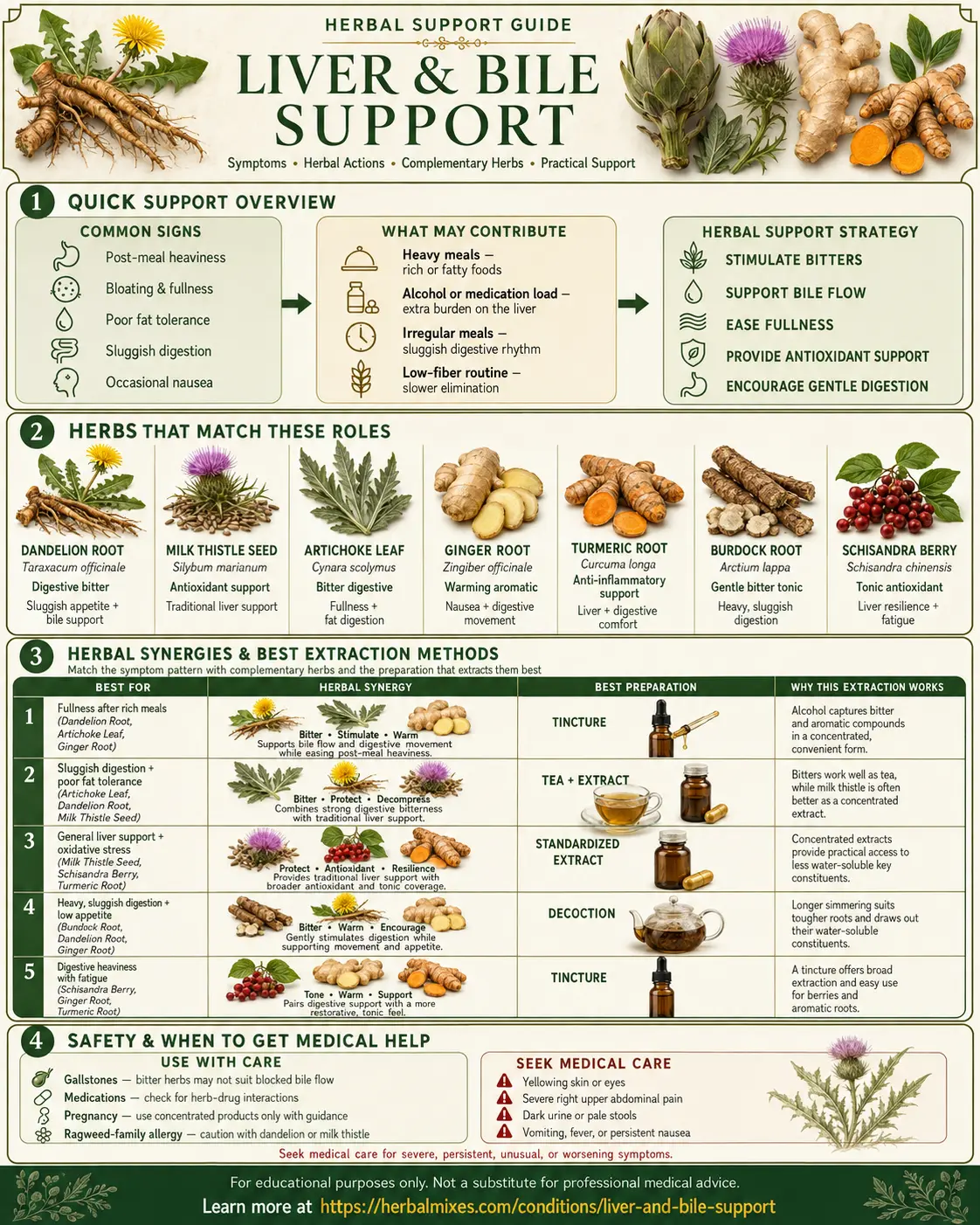
Herbal support for a sluggish liver generally combines a hepatoprotective herb for cellular support with bitter, bile-stimulating herbs that get digestion and bile flow moving. The dominant symptom pattern — heaviness after meals versus general sluggishness — helps determine which herb leads the approach.
Learn more about these herb:

Available Ready-to-Use Products
If you prefer a ready-made option, these commercially available products contain herbs relevant to the approaches discussed above.
Daily Liver-Cell Support — A standardized milk thistle extract for general antioxidant liver support. Gaia Herbs — Milk Thistle Seed — Concentrated to preserve silymarin content, this closely matches the hepatoprotective strategy discussed above.
Everyday Bile & Digestion Support — A roasted dandelion root tea for bile flow and digestion. Traditional Medicinals — Roasted Dandelion Root Tea — Made from dandelion root alone, this closely matches the choleretic, bitter-digestive strategy for everyday use.
Post-Meal Heaviness Support — An artichoke leaf and milk thistle capsule for fat digestion and liver support. Nature’s Way — Artichoke — Combines artichoke leaf extract with milk thistle seed extract, matching the choleretic strategy for heaviness after rich meals.
Herbal Synergies & Best Extraction Methods
Milk Thistle + Dandelion Root Best for: General sluggish-liver support with fatigue, heaviness, or occasional digestive discomfort. Milk thistle offers antioxidant support for liver cells while dandelion stimulates bile production and broader digestion. Best Preparation: Standardized Extract (capsule) + Tea. Milk thistle is best taken as a standardized silymarin extract, while dandelion root works well as a daily tea.
Artichoke Leaf + Dandelion Root Best for: Heaviness or bloating after fatty or rich meals, sluggish fat digestion. Both herbs are choleretic, working together to stimulate bile production and improve the breakdown of dietary fat. Best Preparation: Standardized Extract (capsule), taken with meals for the most direct digestive benefit.
Milk Thistle + Turmeric Best for: General antioxidant and anti-inflammatory support alongside liver-cell protection. Milk thistle’s silymarin and turmeric’s curcumin work through complementary antioxidant and anti-inflammatory pathways. Best Preparation: Standardized Extract (capsule). Curcumin absorption improves when paired with black pepper extract (piperine) or taken with a fat-containing meal.
Dandelion Root + Burdock Root Best for: Sluggish digestion with a general “stuck” or heavy feeling, especially when tied to a diet low in bitter or fibrous foods. This classic bitter-root pairing stimulates digestive secretions and supports the body’s natural elimination processes. Best Preparation: Decoction. Both are hard roots that benefit from a longer simmer to draw out their bitter, digestive-stimulating compounds.
Schisandra Berry + Milk Thistle Best for: Liver support alongside stress or fatigue, when resilience and cellular protection are both relevant. Schisandra’s traditional adaptogenic use complements milk thistle’s antioxidant action on liver cells. Best Preparation: Tincture. Schisandra’s complex flavor profile is often better tolerated as a tincture than as a tea.
Herbal Properties Required
For liver and bile support, the most useful herbal properties are typically hepatoprotective, choleretic (bile-producing), cholagogue (bile-moving), bitter digestive, and antioxidant. Hepatoprotective herbs support the liver’s cells against oxidative stress, while choleretic and cholagogue herbs encourage healthy bile production and flow — important for digesting fats and easing post-meal heaviness. Bitter digestive herbs stimulate the broader digestive process from the first bite.





Herbs With These Properties
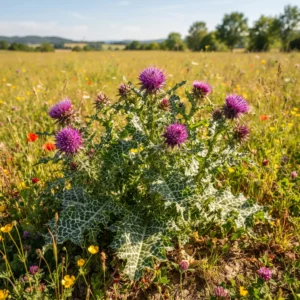
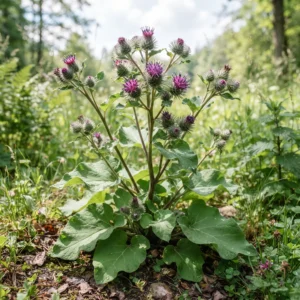
Milk Thistle (Silybum marianum) — Hepatoprotective + antioxidant. Its main constituent, silymarin, is traditionally used to support liver cell health; it’s the most researched herb in this category, though clinical evidence for specific liver diseases remains mixed.
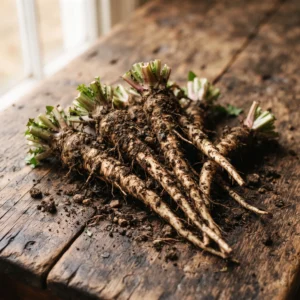
Dandelion Root (Taraxacum officinale) — Choleretic + bitter digestive. Traditionally used to stimulate bile production and support the broader digestive process; its bitter taste is part of its traditional mechanism.
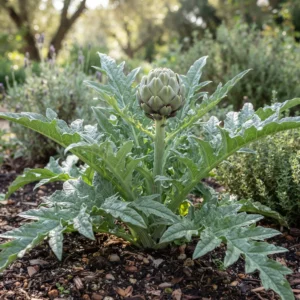
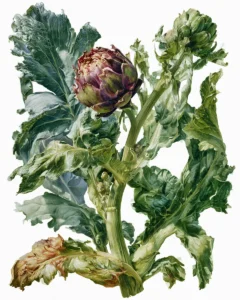
Artichoke Leaf (Cynara scolymus) — Choleretic + cholagogue. Contains cynarin and other compounds traditionally associated with increased bile production and improved fat digestion.
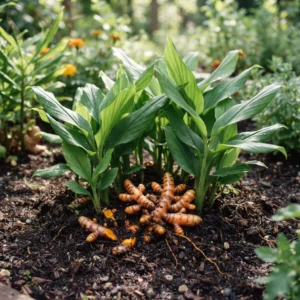
Turmeric (Curcuma longa) — Anti-inflammatory + antioxidant. Curcumin has been studied for modest support of liver enzyme markers, particularly in the context of fatty liver–related research.
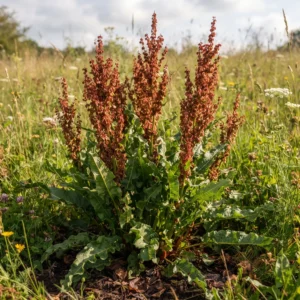
Burdock Root (Arctium lappa) — Bitter digestive + antioxidant. Traditionally used alongside dandelion to support digestion and the body’s broader elimination processes.
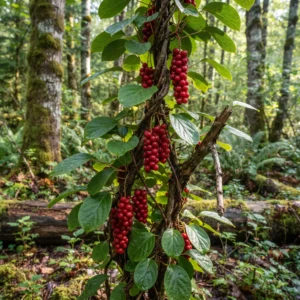
Schisandra Berry (Schisandra chinensis) — Hepatoprotective + adaptogenic. Used in traditional Chinese medicine for liver support; some early research points to protective effects, though large-scale trials are limited.
Use With Care
Dandelion, milk thistle, and artichoke all belong to the Asteraceae (daisy) family and may trigger allergic reactions in people sensitive to ragweed, chrysanthemums, or related plants. Choleretic and cholagogue herbs like dandelion and artichoke should be avoided by people with bile duct obstruction or active gallstone disease, since stimulating bile flow can worsen these conditions. Turmeric/curcumin may increase the effect of blood-thinning medications and should be used cautiously alongside them. Milk thistle has not shown clear benefit in clinical trials for viral hepatitis and should not replace prescribed treatment for diagnosed liver disease. These herbs are not recommended during pregnancy or breastfeeding without medical guidance, and dandelion in particular is typically limited to short courses of use with breaks in between.
If you take prescription medication, are pregnant or breastfeeding, or have a medical condition, check with a qualified healthcare professional before using concentrated herbal products.
When to Get Medical Help
Seek medical evaluation if you experience:
- Yellowing of the skin or eyes (jaundice)
- Persistent or severe pain in the upper right abdomen
- Dark urine, pale stools, or unexplained itching
- Unexplained fatigue, swelling, or weight loss that doesn’t improve
- Nausea or vomiting that persists alongside digestive discomfort
Persistent, severe, unusual, or worsening symptoms should be evaluated by a healthcare professional.
Frequently Asked Questions
What’s the most researched herb for liver support? Milk thistle (silymarin) is the most studied, though NCCIH notes there isn’t enough high-quality evidence to draw firm conclusions about its effects on specific liver diseases.
Can I combine milk thistle with dandelion or artichoke? Yes — this is a common combination, with milk thistle offering antioxidant support and dandelion or artichoke supporting bile flow and digestion.
Which preparation works best for bile support? Standardized capsules or a bitter tea taken before or with meals tend to work best for choleretic herbs like dandelion and artichoke, since the bitter taste itself is part of the traditional mechanism.
Is it safe to use these herbs long-term? Herbs like dandelion are traditionally used in short courses with breaks in between, while milk thistle is more commonly used on an ongoing basis — but any long-term use should be discussed with a healthcare provider, especially if you take medication.
Should herbal support replace liver disease treatment? No — these herbs are intended for general, non-diagnosed sluggishness. Diagnosed liver conditions require medical evaluation and appropriate treatment.
References
National Center for Complementary and Integrative Health — Milk Thistle: Usefulness and Safety https://www.nccih.nih.gov/health/milk-thistle
National Center for Complementary and Integrative Health — Hepatitis C and Dietary Supplements https://www.nccih.nih.gov/health/hepatitis-c-and-dietary-supplements
National Cancer Institute — Milk Thistle (PDQ): Patient Version https://www.cancer.gov/about-cancer/treatment/cam/patient/milk-thistle-pdq
Soleimani, V. et al. — Safety and Toxicity of Silymarin, the Major Constituent of Milk Thistle Extract: An Updated Review (Phytotherapy Research, cited via NCCIH) https://www.nccih.nih.gov/health/milk-thistle
NCCIH Clinical Digest — Hepatitis C and Dietary Supplements https://nccih.nih.gov/health/providers/digest/hepatitisC
Disclaimer
For educational purposes only. This information is not intended to diagnose, treat, cure, or prevent disease. Herbal products may cause side effects or interact with medications. Consult an appropriate healthcare professional if you have a medical condition, take medication, are pregnant or breastfeeding, or have persistent or concerning symptoms.