


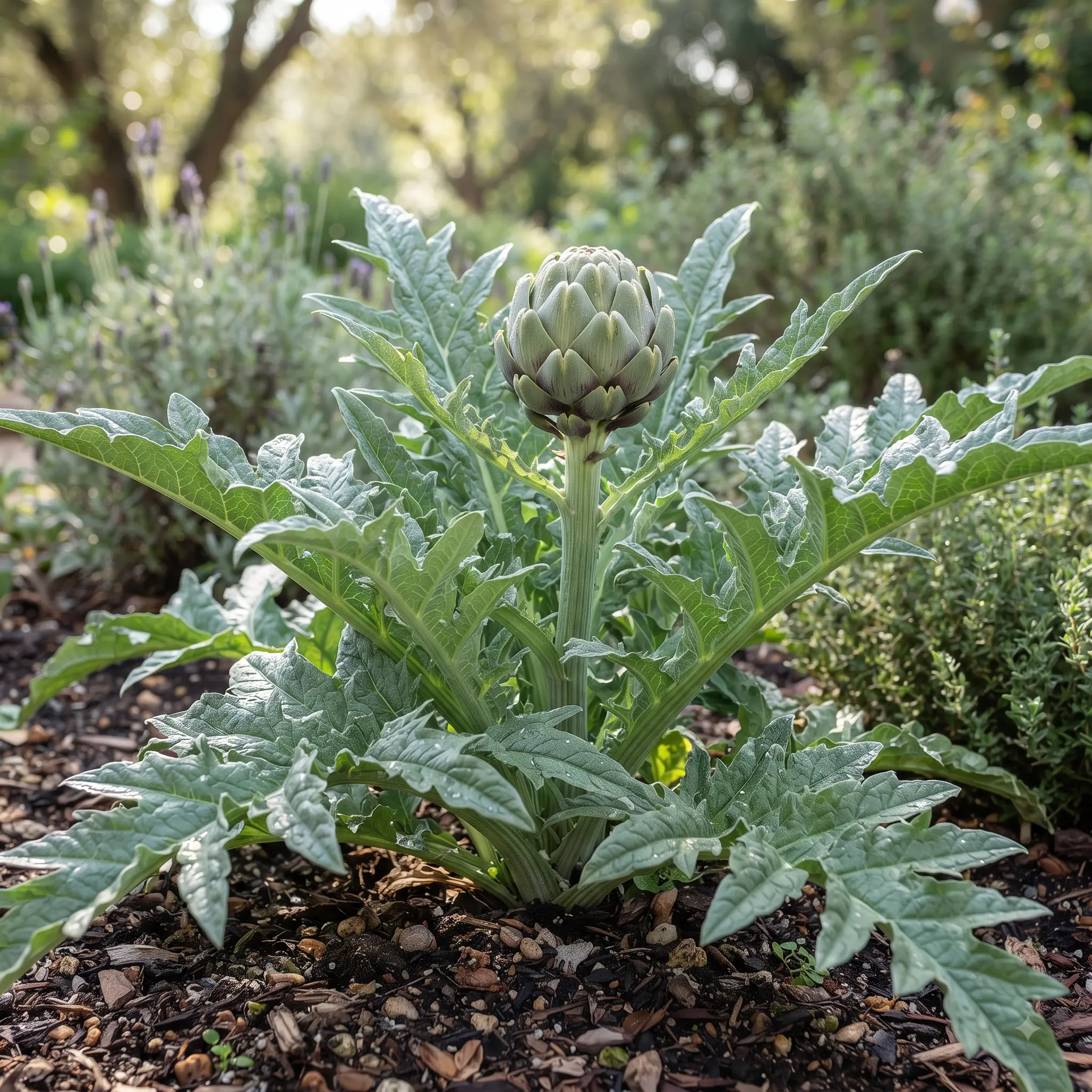
Traditionally, artichoke leaf has been used primarily as a liver and digestive support herb, especially when sluggish digestion, occasional bloating, or a heavy feeling after fatty meals are involved. It is commonly prepared as a tea, tincture, or standardized capsule made from the leaf.
Common Name: Artichoke Leaf Latin Name: Cynara scolymus Alternate Names: Globe Artichoke Leaf
- Parts used: Leaves
- Primary properties: Bitter, cholagogue, choleretic, hepatic
- Common preparations: Tea, tincture, capsules
- Best known for: Supporting liver and bile function after rich or fatty meals
What It Helps With
Health conditions this herb is commonly used to support.
Related Buying Guides
Featured Recipes
Explore and try simple ways to prepare and use this herb at home.
Active Compounds
The tiny plant chemistry doing all the heavy lifting.
Key Herbal Properties
What this herb is known for, herbally speaking.



Herbal Synergies
Other herbs that pair especially well with this one — together, their combined properties work better than either herb does alone.
Health Conditions Artichoke Leaf Helps With
- Sluggish digestion after fatty meals — Artichoke leaf’s core traditional use; it’s taken to help support the digestion of rich or heavy food.
- Occasional bloating and fullness — Traditionally used as a bitter digestive herb to ease post-meal discomfort.
- Mild liver sluggishness — Long-standing traditional use as a liver-supportive herb, particularly around occasional overindulgence.
- Support for healthy cholesterol levels — Some traditional use associates artichoke leaf with supporting already-normal cholesterol levels as part of a general wellness routine.
Compounds
- Cynarin — A key compound traditionally credited with artichoke leaf’s bitter taste and its bile-stimulating, digestive reputation.
- Chlorogenic acid — A phenolic compound contributing to artichoke leaf’s traditional liver-supportive and antioxidant reputation.
- Flavonoids (including luteolin) — Plant compounds traditionally associated with artichoke leaf’s general wellness and antioxidant profile.
Properties
- Bitter — Artichoke leaf’s foundational property; its bitterness traditionally stimulates digestive secretions before or after meals.
- Cholagogue — Traditionally used to encourage the release of stored bile.
- Choleretic — Traditionally understood to support the liver’s own bile production.
- Hepatic — Broadly supportive of liver function in traditional herbal use.
Recipes Using Artichoke Leaf
- Post-meal digestive tea — Dried artichoke leaf steeped alone or blended with dandelion root for a bitter after-meal tea.
- Liver support tincture blend — Artichoke leaf combined with milk thistle in a traditional liver-supportive tincture formula.
Products Featuring Artichoke Leaf
- Standardized capsules — A convenient, consistent-dose option for those who don’t enjoy the bitter taste.
- Tincture — A concentrated liquid extract useful for a quick pre- or post-meal dose.
- Dried loose leaf — Used for brewing tea, often blended with other bitter or liver-supportive herbs.
Synergies
- Milk Thistle — A classic liver-support pairing, often combined with artichoke leaf in traditional formulas.
- Dandelion Root — Shares a bitter, liver-supportive profile, frequently blended together in digestive bitters.
- Fennel — Complements artichoke leaf’s digestive support with its own carminative properties.
Safety & Precautions
Artichoke leaf is generally well-tolerated by most healthy adults, though some people experience mild gas or digestive upset when first starting it, since it stimulates digestive activity. People with bile duct obstruction or gallstones should avoid artichoke leaf, as its bile-stimulating action could worsen these conditions — anyone with known gallbladder issues should check with a healthcare provider before use.
Those with a known allergy to plants in the Asteraceae family (ragweed, daisies, marigolds, chrysanthemums) should approach artichoke leaf with caution, as cross-reactivity is possible. Because artichoke leaf may have a mild effect on blood sugar and cholesterol, anyone taking diabetes medication or cholesterol-lowering medication should talk to a healthcare provider before regular use. There isn’t well-established safety data for concentrated use during pregnancy or breastfeeding, so professional guidance is recommended in that context.
There isn’t well-established traditional guidance for using artichoke leaf with pets, so it should not be given to an animal without veterinary advice.
Q&A
Does artichoke leaf taste bitter?
Yes, artichoke leaf has a notably bitter, slightly earthy taste, which is part of why it’s traditionally used as a digestive bitter — that bitterness is understood to help stimulate digestive function. It’s more bitter than the edible artichoke heart most people are familiar with from cooking.
If the taste on its own isn’t appealing, capsules are a common way to get the same traditional support without tasting it.
Can artichoke leaf be used every day?
Small daily amounts, such as a standardized capsule or a cup of tea after meals, are commonly used as part of a traditional liver and digestive support routine by healthy adults. Long-term daily use of concentrated extracts hasn’t been extensively studied, so it’s reasonable to periodically reassess use or check in with a healthcare provider for extended regular use.
Anyone with gallbladder issues or on relevant medications should talk to a provider before daily use of any kind.
Is artichoke leaf the same as the artichoke you eat?
They come from the same plant, but artichoke leaf preparations (tea, tincture, capsules) use the leaves specifically for their concentrated bitter compounds, while the edible artichoke is the flower bud eaten as a vegetable. The leaf has a much stronger, more concentrated bitter profile than the mild-tasting heart most people eat.
Eating the vegetable occasionally is very different from using concentrated leaf preparations regularly, so the safety considerations aren’t quite the same.
Does artichoke leaf interact with medications?
Artichoke leaf may have a mild effect on blood sugar and cholesterol levels, so it can be relevant for anyone taking diabetes medication or cholesterol-lowering medication. Because of its bile-stimulating action, it’s also not appropriate for anyone with gallstones or bile duct obstruction.
If you take any prescription medication regularly, it’s worth mentioning artichoke leaf to your healthcare provider before starting consistent use.
Is fresh or dried artichoke leaf better?
Dried leaf is the more common and practical form for tea, tincture-making, and standardized products, since it stores well and provides a consistent concentration of bitter compounds. Fresh leaf isn’t typically used the way fresh culinary herbs are, since it’s tougher and more intensely bitter in its raw state.
For most people, a standardized capsule or a tea made from properly dried leaf is the more practical and reliable choice.
References
- Plants of the World Online: Cynara scolymus
- PubMed: Scientific Literature on Cynara scolymus
- National Library of Medicine: Chemical Constituents from Cynara scolymus
- Wikipedia: Cynara scolymus
- ScienceDirect Topics: Cynara scolymus Research
- Memorial Sloan Kettering Cancer Center: About Herbs — Artichoke
- PubMed: Cynarin and Chlorogenic Acid Bioactivity
This information is for educational purposes only and is not intended as medical advice. Consult a qualified healthcare professional before using any herb, especially if pregnant, breastfeeding, taking medications, or managing a health condition.