

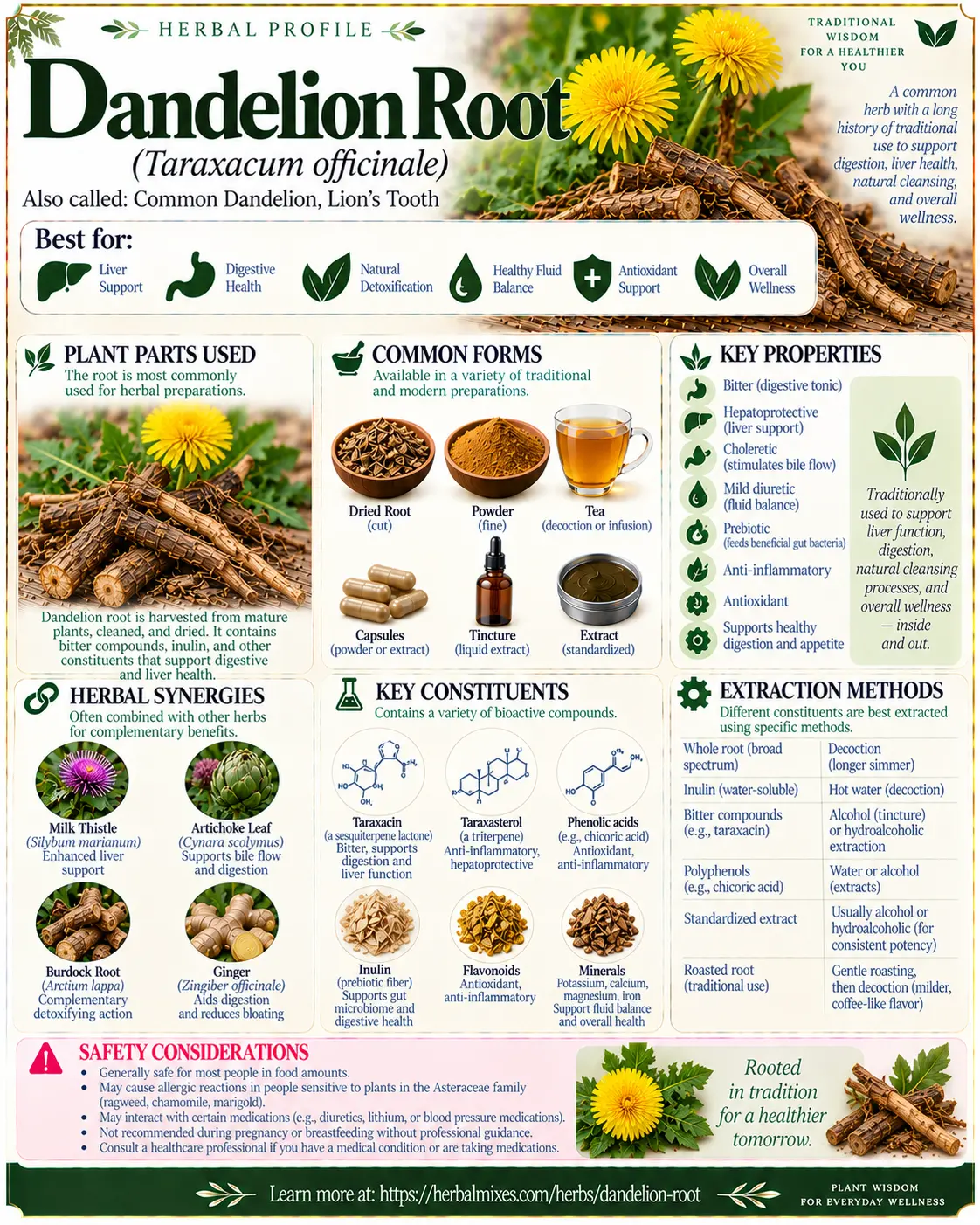
What Dandelion Root Is Good For
Liver Cleansing & Hepatic Support — Dandelion root is globally renowned as a premier hepatic and alterative herb that supports normal liver detoxification pathways, tissue repair, and overall metabolic clearance.
Bile Production & Flow (Choleretic) — Its active bitter principles stimulate the liver to produce bile and encourage the gallbladder to release it, significantly improving fat digestion and assimilation.
Digestive Bitters & Enzyme Output — Awakens upper digestive secretions, priming gastric juices and easing sluggish post-meal digestion.
Prebiotic Gut Health (Inulin) — Rich in inulin, a soluble storage polysaccharide that acts as a powerful prebiotic, nourishing beneficial gut microflora and supporting a thriving microbiome.
Gentle Detoxification & Skin Clarity — Traditionally employed as a spring blood-cleansing tonic to clear metabolic waste, supporting clear skin and systemic vitality.
Available Herbal Products
Buying Guides for Available Dandelion Root Products
Organic Roasted Dandelion Root Granules – Dark roasted root pieces. The absolute gold standard for brewing a rich, coffee-like morning beverage or deep bitter decoction. Seller: Mountain Rose Herbs – View Mountain Rose Herbs Roasted Dandelion Root →
Organic Raw Dandelion Root Cut – Dried raw root pieces. Ideal for simmering into traditional bitter herbal decoctions or formulating custom liver-supportive tea blends. Seller: Mountain Rose Herbs – View Mountain Rose Herbs Raw Dandelion Root →
Dandelion Root Liquid Extract – Hydroalcoholic tincture. A fast-absorbing liquid format designed for pre-meal dosing to stimulate digestive bile flow and support liver clearance. Seller: Herb Pharm – View Herb Pharm Dandelion Root Extract →
Liver & Detox Support Formula – Concentrated capsules combining dandelion root with milk thistle seed and burdock root. Designed to provide comprehensive hepatic restoration. Seller: Gaia Herbs – View Gaia Herbs Liver Formulas →
Herbal Synergies
Dandelion root pairs especially well with Milk Thistle Seed, Burdock Root, and Chicory Root, depending on the goal of the formula.
Dandelion Root + Milk Thistle – Seed Best for: Comprehensive liver protection, cellular regeneration, and deep metabolic detoxification Dandelion root stimulates bile flow and hepatic clearance, while milk thistle seed delivers silymarin to protect liver cell membranes and encourage tissue regeneration. Together, they form the premier modern liver-restoration duo. Best extraction: Decoction combined with tincture. Simmering dandelion root while taking milk thistle extract captures both water-soluble bitters and alcohol-soluble silymarin.
Dandelion Root + Burdock Root – Best for: Deep alterative blood cleansing, skin clarity, and lymphatic waste clearance Dandelion root supports liver and gallbladder function, whereas burdock root acts as a deep root alterative that purifies the blood and clears metabolic stagnation. Best extraction: Long-simmered decoction. Simmering these dense taproots extracts their active minerals, inulin, and bitter glycosides.
Dandelion Root + Chicory Root – Best for: Crafting rich caffeine-free coffee alternatives, supporting digestion, and feeding gut flora Dandelion root provides deep bitter liver stimulation, while chicory root supplies rich roasted flavor and abundant inulin prebiotics. Best extraction: Roasted root decoction or brewed beverage. Both roots blend seamlessly into a robust morning tonic.
Key Herbal Properties
Hepatic — Tonifies, supports, and protects normal liver tissue, encouraging efficient metabolic processing.
Choleretic / Cholagogue — Stimulates the liver to produce bile and encourages the gallbladder to release it into the digestive tract.
Bitter Tonic — Stimulates upper digestive secretions, appetite regulation, and enzymatic activity.
Alterative (Blood Purifier) — Gradually supports metabolic function and tissue health by encouraging waste elimination.
Prebiotic — High in inulin fiber, which selectively feeds beneficial probiotic bacteria in the colon.







Active Compounds
Sesquiterpene Lactones (including Taraxacin and Taraxacoside) Found mainly in: Dried and fresh root The bitter bioactive principles responsible for dandelion root’s powerful digestive-stimulating, liver-supportive, and choleretic actions. Best extraction: Alcohol-water extract or water decoction. Bitter principles extract efficiently in hydroalcoholic solvents and simmering water.
Inulin (Prebiotic Soluble Fiber and Polysaccharide) Found mainly in: Root tissues A storage carbohydrate that provides prebiotic nourishment for gut bacteria and imparts a mildly sweet undertone to the root. Best extraction: Water decoction or hot water brewing. Inulin dissolves readily in warm or simmering water.
Triterpenes and Phytosterols (including Taraxasterol) Found mainly in: Root bark Contribute to the root’s anti-inflammatory and cellular-protective properties. Best extraction: High-proof alcohol extraction. Soluble in alcohol solutions.
FAQ
What is dandelion root best used for? Dandelion root is primarily used as a bitter tonic to stimulate liver function and bile flow, support healthy digestion, and act as a prebiotic for gut health.
Does roasted dandelion root taste like coffee? Yes, when dark roasted and ground, dandelion root develops a deep, rich, nutty, and pleasantly bitter flavor profile that remarkably resembles coffee without any caffeine.
Can dandelion root cause gas when you first start taking it? Because dandelion root contains inulin prebiotics, individuals unaccustomed to high-fiber prebiotics may experience temporary mild gas as their gut microbiome adjusts; start with small amounts and increase gradually.
Can dandelion root be taken every day? Yes, culinary and moderate daily amounts of dandelion root tea or coffee alternatives are safely enjoyed by the vast majority of people as part of a wellness routine.
Is dandelion safe for people with gallstones? Individuals with active gallstones, complete bile duct obstructions, or acute gallbladder inflammation should consult a physician before using strong bitter cholagogues that stimulate bile release.
Safety & Precautions
Gallbladder & Bile Duct Obstruction: Individuals with active gallstones, acute gallbladder inflammation, or complete bile duct obstruction should consult a physician before using strong bitter cholagogues.
Asteraceae Allergy: Individuals with known severe allergies to plants in the Asteraceae (daisy/ragweed) family—such as ragweed, marigolds, or daisies—should exercise caution.
Gastrointestinal Sensitivity: Excessive intake of raw, bitter root preparations can occasionally cause mild gastric irritation or loose stools in sensitive individuals.
Pregnancy & Breastfeeding: Culinary amounts are generally safe, but therapeutic medicinal doses should be used with professional guidance.
Consult a qualified healthcare professional before using dandelion root therapeutically, especially if you manage underlying medical conditions or take prescription drugs.
References
National Center for Complementary and Integrative Health (NCCIH)
PubMed Central – Taraxacum officinale (Dandelion Root) Phytochemistry and Hepatic Pharmacology
European Medicines Agency (EMA) Monograph on Taraxacum officinale L., radix
World Health Organization (WHO) Monographs on Selected Medicinal Plants
Mountain Rose Herbs Dandelion Root Monograph
Herb Pharm Dandelion Root Profile
Disclaimer
Disclaimer: This article is for educational purposes only and is not intended to diagnose, treat, cure, or prevent any disease. Herbal products can cause side effects and interact with medications. Consult a qualified healthcare professional before using herbs therapeutically, especially if you are pregnant, breastfeeding, taking prescription medications, or managing a medical condition.