

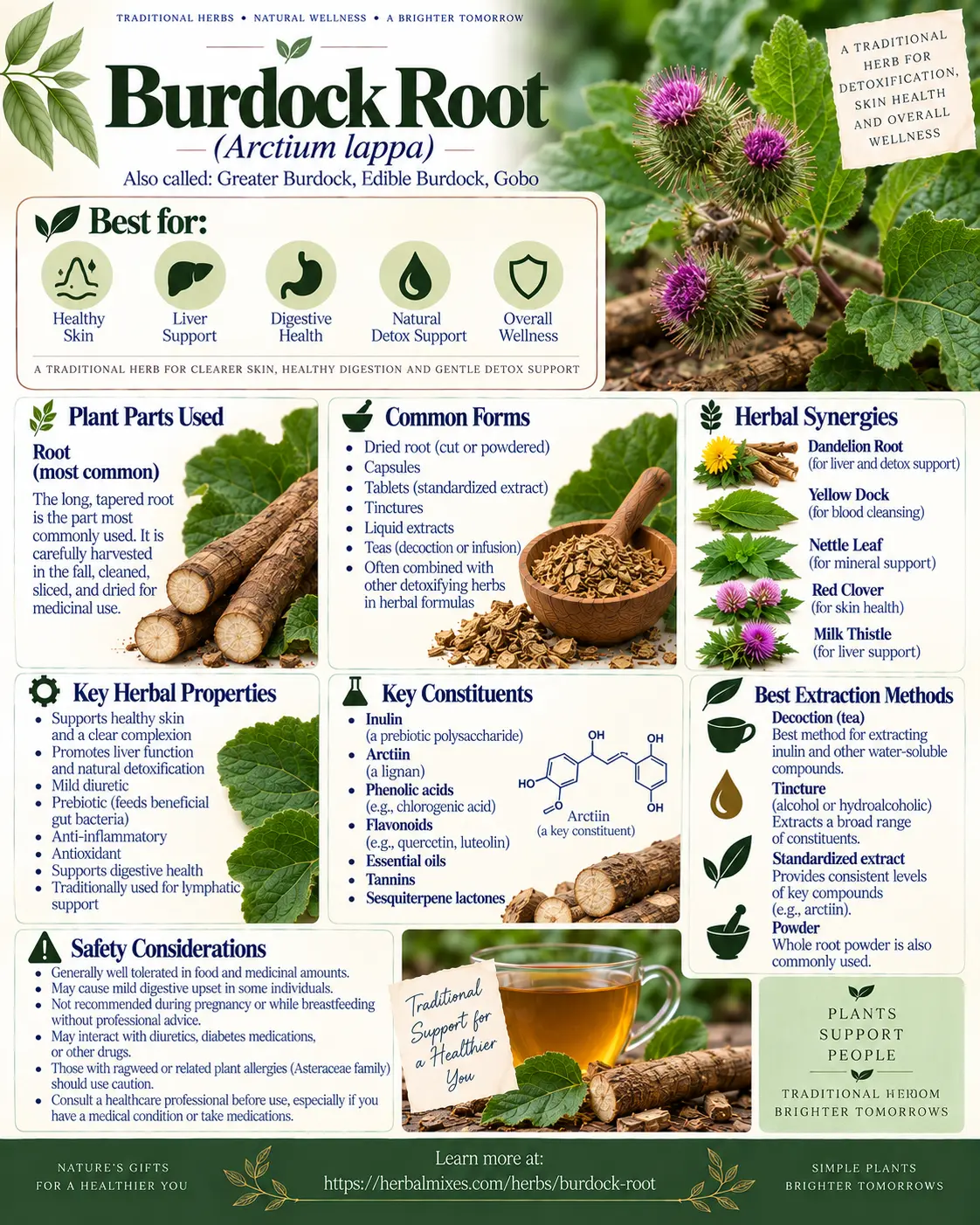
What Burdock Root Is Good For
Skin Clarity & Health — Burdock root is widely renowned as a premier alterative blood purifier traditionally used to support clear, healthy skin and soothe chronic cutaneous irritations.
Gentle Detoxification & Lymphatic Drainage — Helps support the body’s natural elimination pathways, encouraging liver clearance and gentle lymphatic movement.
Prebiotic Gut Health — Rich in inulin, a soluble prebiotic fiber that nourishes beneficial gut flora and supports overall digestive wellness.
Metabolic & Joint Support — Traditionally employed to help clear metabolic waste and support joint comfort by maintaining normal inflammatory balance.
Antioxidant Defense — Packed with polyphenols and arctigenin that help protect cells from oxidative stress and free radical damage.
Available Herbal Products
Organic Burdock Root Cut – Dried root pieces. An authentic, traditional choice for simmering into long-term decoctions, daily root teas, or nutrient-dense bone broths. Seller: Mountain Rose Herbs – View Mountain Rose Herbs Burdock Root →
Burdock Root Liquid Extract – Hydroalcoholic tincture. A convenient, fast-absorbing liquid format that allows for precise daily dosing to support skin clarity and gentle metabolic cleansing. Seller: Herb Pharm – View Herb Pharm Burdock Extract →
Skin Clear Botanical Capsules – Standardized root extract capsules. Formulated to provide a reliable concentration of active burdock constituents for daily skin and lymphatic support. Seller: Gaia Herbs – View Gaia Herbs Burdock →
Organic Cleansing Herbal Tea – Herbal tea bags combining burdock root with dandelion root and red clover. Designed to provide synergistic support for gentle internal cleansing and skin health. Seller: Traditional Medicinals – View Traditional Medicinals Cleansing Teas →
Herbal Synergies
Burdock root pairs especially well with Dandelion Root, Red Clover, and Yellow Dock, depending on the goal of the formula.
Burdock Root + Dandelion Root – Best for: Comprehensive liver cleansing, metabolic support, and gentle detoxification Burdock root acts as a deep alterative blood cleanser and lymphatic mover, while dandelion root provides rich bitter glycosides to stimulate bile flow and liver clearance. Together, they create the ultimate spring tonic. Best extraction: Long-simmered decoction. Both dense roots require a 20-to-30-minute simmer in water to release their inulin and active mineral constituents.
Burdock Root + Red Clover Blossoms – Best for: Promoting skin clarity, blood purification, and lymphatic drainage Burdock supports metabolic waste elimination through the skin and kidneys, whereas red clover supplies rich isoflavones that soothe lymphatic stagnation and skin irritation. Best extraction: Decoction combined with infusion. Simmer the burdock root first, then pour the hot liquid over red clover blossoms off the heat.
Burdock Root + Yellow Dock Root – Best for: Iron support, clear skin, and digestive-hepatic clearance Burdock provides deep nutritive alterative action, while yellow dock supplies bioavailable iron and gentle laxative properties that encourage efficient waste elimination. Best extraction: Simmered decoction or tincture blend. Both roots combine efficiently into rich, earthy liquid preparations.
Key Herbal Properties
Alterative (Blood Purifier) — Gradually restores metabolic function, supports tissue health, and encourages the elimination of waste products.
Lymphagogue — Stimulates and supports the flow of lymph fluid, helping clear lymphatic congestion.
Diuretic — Encourages healthy fluid balance and renal elimination of metabolic byproducts.
Prebiotic — High in inulin, which feeds beneficial bacteria in the colon.
Antioxidant — Scavenges free radicals and protects cells from oxidative damage.




Active Compounds
Inulin (Prebiotic Fiber and Polysaccharide) Found mainly in: Fresh and dried taproot A soluble dietary fiber that nourishes gut microbiota and supports metabolic wellness. Best extraction: Water decoction or whole root powder. Inulin dissolves readily in warm or simmering water.
Arctiin and Arctigenin (Lignans) Found mainly in: Root and seeds Bioactive lignan compounds responsible for burdock’s antioxidant, anti-inflammatory, and cellular-protective properties. Best extraction: Alcohol-water tincture or decoction. These compounds extract efficiently in hydroalcoholic solvents.
Polyacetylenes and Volatile Oils Found mainly in: Fresh root Contribute to burdock’s antimicrobial, skin-supportive, and antifungal actions. Best extraction: Fresh root alcohol tincture. Freshly harvested roots capture the highest concentration of volatile polyacetylenes.
-
FAQ
What is burdock root best used for? Burdock root is primarily used as a blood-purifying alterative to support clear skin, encourage lymphatic drainage, and promote gentle internal detoxification.
How does burdock root taste? Burdock root has a rich, earthy, slightly sweet, and nutty flavor profile reminiscent of parsnip or lotus root, making it delicious when sliced and added to soups.
Can burdock root be eaten as a vegetable? Yes, in Asian culinary traditions (where it is known as gobo), fresh burdock root is enjoyed as a crisp, nourishing root vegetable in stir-fries, stews, and broths.
How long does it take for burdock root to clear skin? Because alterative herbs work gradually by supporting systemic metabolic pathways, visible improvements in skin clarity typically require 4 to 8 weeks of consistent daily use.
Is burdock root safe to use during pregnancy? Culinary amounts are generally safe, but concentrated therapeutic use during pregnancy should be approached with professional medical guidance.
Safety & Precautions
Asteraceae Allergy: Individuals with known allergies to plants in the Asteraceae (daisy/ragweed) family—such as ragweed, marigolds, or chrysanthemums—should exercise caution.
Diuretic Effects: Because burdock acts as a mild diuretic, individuals taking diuretic medications should monitor their fluid and electrolyte balance.
Blood Sugar Monitoring: Burdock contains inulin and may gently influence blood glucose; individuals managing diabetes medications should consult a healthcare provider.
Pregnancy & Breastfeeding: While food-grade culinary use is safe, consult a qualified herbalist before using high-dose therapeutic extracts during pregnancy or nursing.
Consult a qualified healthcare professional before using burdock root therapeutically, especially if you manage underlying medical conditions or take prescription drugs.
References
National Center for Complementary and Integrative Health (NCCIH)
PubMed Central – Arctium lappa (Burdock) Phytochemistry and Skin Health Properties
European Medicines Agency (EMA) Monograph on Arctium lappa L., radix
World Health Organization (WHO) Monographs on Selected Medicinal Plants
Mountain Rose Herbs Burdock Root Monograph
Disclaimer
Disclaimer: This article is for educational purposes only and is not intended to diagnose, treat, cure, or prevent any disease. Herbal products can cause side effects and interact with medications. Consult a qualified healthcare professional before using herbs therapeutically, especially if you are pregnant, breastfeeding, taking prescription medications, or managing a medical condition.