

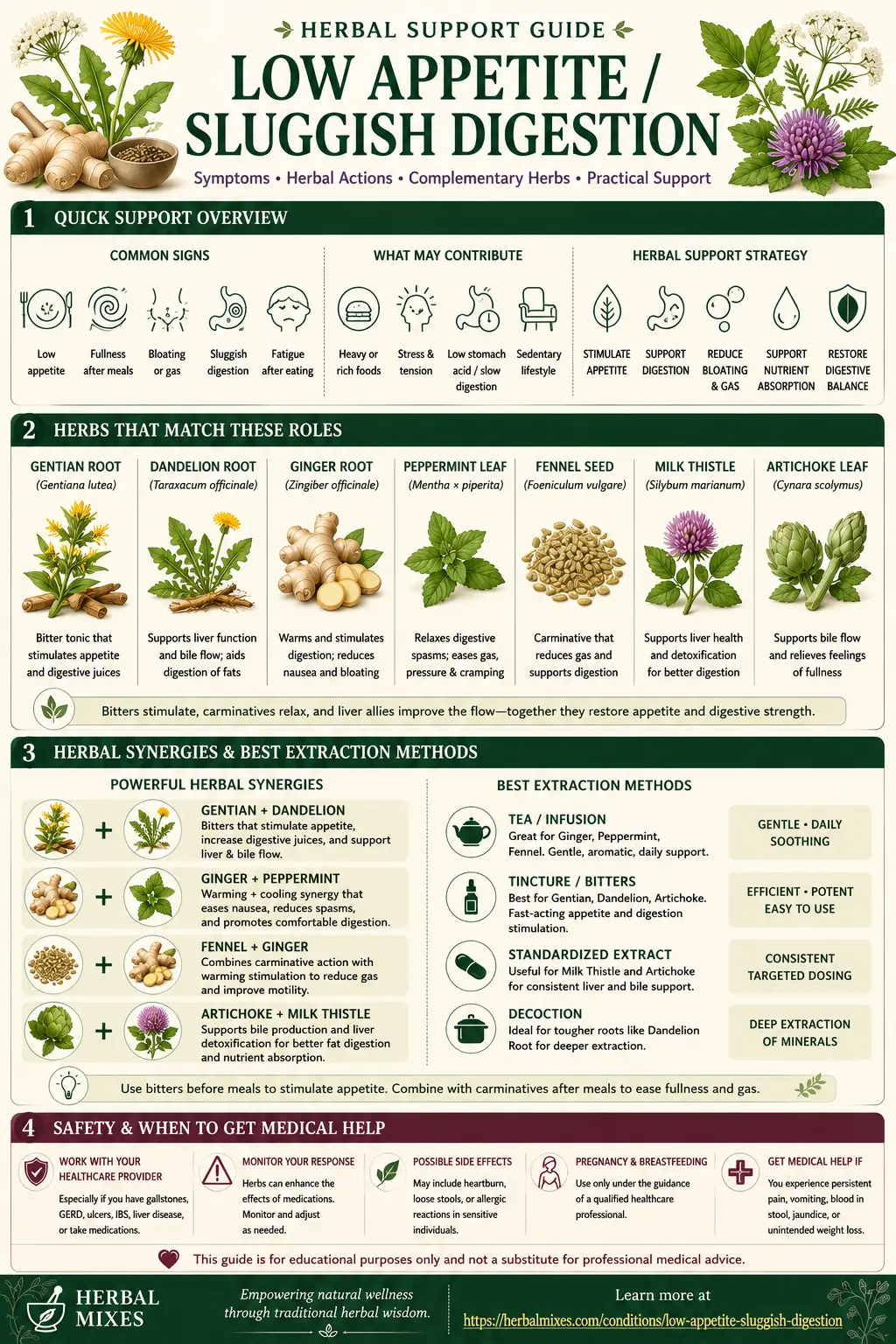
Low appetite and sluggish digestion involve supporting healthy digestive secretions, metabolic fire, and gastrointestinal motility through lifestyle and botanical interventions. Key contributing factors often include low stomach acid, chronic stress, sluggish liver function, and weak digestive enzymes, meaning different symptom patterns and eating reluctance require targeted botanical approaches
Herbal Support Strategy
Herbal support for sluggish digestion combines bitter herbs to prime gastric secretions, warming carminatives to soothe bloating, and hepatic tonics to support liver and gallbladder function. The specific choice of herbs depends heavily on whether pre-meal appetite sluggishness, post-meal heaviness, or stress-induced digestive shut-down is the primary focus.
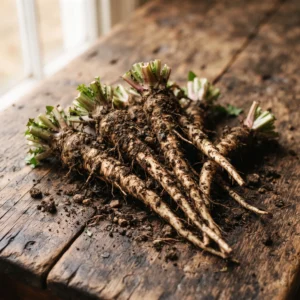


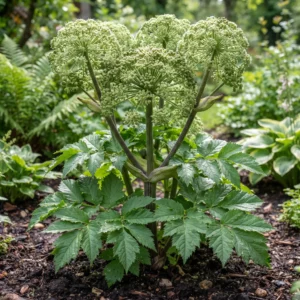
Gentian (Gentiana lutea) — Powerful bitter tonic + digestive secretion stimulator. A deeply bitter European root containing gentiopicrin; traditionally used before meals to reflexively trigger stomach acid, digestive enzymes, and appetite.
Ginger (Zingiber officinale) — Warming carminative + digestive motility. A pungent underground rhizome containing gingerols; helps accelerate gastric emptying, ease post-meal heaviness, and warm a sluggish digestive tract.
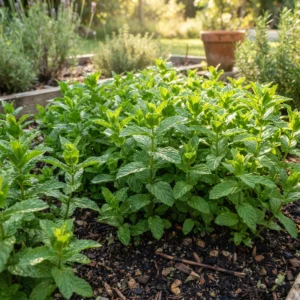
Peppermint (Mentha piperita) — Carminative antispasmodic + soothing mint. A refreshing aromatic leaf containing menthol; relaxes intestinal smooth muscle to relieve trapped gas, cramping, and upper digestive bloating.
Dandelion Root (Taraxacum officinale) — Cholagogue liver tonic + gentle bitter. A nutrient-rich taproot containing inulin and sesquiterpene lactones; supports healthy bile flow from the liver and gallbladder to improve fat digestion and metabolic clearance.
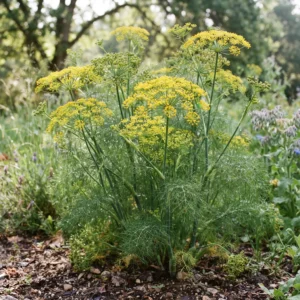
Fennel (Foeniculum vulgare) — Carminative seed + digestive comfort. An aromatic anise-scented seed containing anethole; traditionally chewed or sipped after meals to ease abdominal fullness, gas, and sluggish processing.
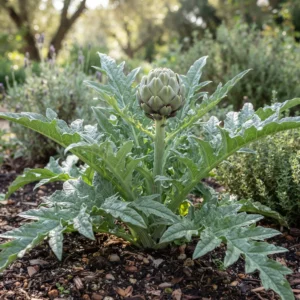
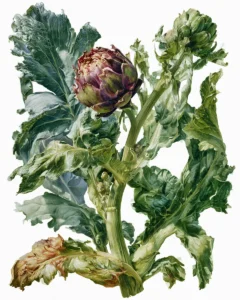
Artichoke Leaf (Cynara cardunculus) — Bile production support + lipid processing. A bitter green botanical leaf containing cynarin; helps stimulate hepatic bile secretion and supports comfortable digestion after heavy meals.
Herbal Synergies & Best Extraction Methods
Gentian + Ginger + Dandelion Root
Best for: Profound lack of appetite, feeling overly full after just a few bites, and sluggish upper digestive fire. Gentian acts as a deep bitter to wake up gastric secretions, ginger speeds up stomach emptying, and dandelion supports liver and bile flow. Best Preparation: Tincture (Taken 15–20 minutes before meals). Taking bitter tinctures on the tongue activates taste receptors that immediately signal the stomach to prepare for food.
Peppermint + Fennel + Ginger
Best for: Post-meal bloating, trapped gas, feeling sluggish and weighed down after eating, and mild cramping. Peppermint and fennel relax intestinal smooth muscle to release gas, while ginger stimulates overall digestive transit and warmth. Best Preparation: Covered Infusion (Tea). Captures volatile aromatic oils from crushed seeds and leaves into a soothing post-meal digestive cup.
Artichoke Leaf + Dandelion Root + Gentian
Best for: Sluggish fat digestion, feeling sluggish after rich or oily meals, and mild gallbladder or liver sluggishness. Artichoke and dandelion stimulate bile production and release, supported by gentian’s robust activation of upper digestive enzymes. Best Preparation: Standardized Extract or Decoction. Bitter roots and dense leaves require simmering or concentrated extraction to fully capture active lactones and cynarin.
Ginger + Fennel + Gentian
Best for: Stress-induced digestive shut-down, cold or stagnant digestion, and poor appetite accompanied by bloating. Gentian primes the digestive pump, ginger adds essential warmth, and fennel eases the resulting gas and tension. Best Preparation: Tincture + Infusion Blend. Combining a pre-meal bitter tincture with a soothing post-meal fennel tea for comprehensive digestive care.
Available Ready-to-Use Products
If you prefer a ready-made option, these commercially available products contain herbs relevant to the approaches discussed above.
Pre-Meal Bitter Tonic — Traditional European herbal formula designed to stimulate appetite and prime digestion. Urban Moonshine — Original Digestif Bitter — Combines gentian, dandelion, burdock, and aromatic spices to support healthy digestive secretions and ease post-meal heaviness.
Post-Meal Comfort & Carminative Tea — Organic herbal blend soothing occasional bloating and digestive sluggishness. Traditional Medicinals — Organic Fennel — Pure organic fennel seeds provide classic carminative support for comfortable digestion after meals.
Digestive & Liver Support Tonic — Botanical extract targeting liver function, bile flow, and metabolic processing. Gaia Herbs — Liver Health — Concentrated dandelion, artichoke, and schisandra support healthy liver detoxification and digestive vitality.
Warming Digestive Relief — Organic herbal tea for warming a sluggish stomach and easing post-eating fullness. Yogi Tea — Ginger — Warming organic ginger root supports healthy circulation and digestion throughout the gastrointestinal tract.
Herbal Properties Required
For low appetite and sluggish digestion, the most useful herbal properties are typically digestive bitter, carminative, stimulant, cholagogue, and nervine. Digestive bitters stimulate reflex gastric juices to awaken appetite, while carminatives ease gas and bloating, and cholagogues encourage healthy bile flow to support fat digestion and metabolic processing.





Use With Care
- Avoid strong bitter tonics like gentian if you have active gastric or duodenal ulcers, hyperacidity, or severe acid reflux, as stimulating stomach acid can aggravate inflamed tissue.
- Exercise caution with cholagogue herbs like artichoke and dandelion if you have diagnosed gallstones or a complete bile duct obstruction.
- Ensure herbal bitters are tasted on the tongue rather than swallowed immediately in capsules, as the bitter taste receptors in the mouth are essential for triggering the reflex digestive cascade.
- Consult a healthcare professional if low appetite or sluggish digestion persists unexplainably over several weeks.
- If you take prescription medication, are pregnant or breastfeeding, or have a medical condition, check with a qualified healthcare professional before using concentrated herbal products.
When to Get Medical Help
Seek medical evaluation if you experience:
- Unintentional, rapid weight loss accompanied by a persistent loss of appetite.
- Severe, unremitting abdominal pain, persistent vomiting, or difficulty swallowing food.
- Black, tarry stools or blood in the stool, which can indicate gastrointestinal bleeding.
- Persistent jaundice (yellowing of the skin or eyes) alongside digestive sluggishness. Persistent, severe, unusual, or worsening symptoms should be evaluated by a healthcare professional.
Frequently Asked Questions
Why must bitter herbs be tasted to work effectively?
Bitter taste receptors located on the back of the tongue send immediate neural signals to the brain and vagus nerve, which in turn commands the stomach, pancreas, and liver to release digestive juices. Swallowing bitters in a capsule bypasses these receptors, significantly reducing their effectiveness.
How do carminative herbs like fennel and peppermint help bloating?
Carminative herbs contain volatile aromatic oils that relax the smooth muscle tissue of the gastrointestinal tract. This relaxation allows trapped gas to disperse easily and relieves the pressure and cramping associated with sluggish digestion.
What is the difference between a bitter and a carminative?
Bitters (like gentian and dandelion) are taken before a meal to stimulate stomach acid, digestive enzymes, and appetite. Carminatives (like fennel, peppermint, and ginger) are typically taken after a meal to warm the digestive tract, ease gas, and encourage smooth motility.
Why are dandelion and artichoke helpful for heavy meals?
Both herbs act as cholagogues, meaning they stimulate the liver to produce bile and prompt the gallbladder to release it into the small intestine. Adequate bile is essential for breaking down and digesting dietary fats efficiently.
References
National Center for Complementary and Integrative Health (NCCIH) — Digestive Health Supplements Overview: NCCIH Overview PubMed — Bitter Taste Receptors and Gastrointestinal Regulation: [PubMed Central Review](https://pmc.ncbi.nlm.nih.gov/articles/PMC4630561 /) PubMed — Ginger in Gastrointestinal Motility and Digestion: PubMed Study American Botanical Council — Gentian Root Monograph and Bitter Actions: HerbalGram Reference
Disclaimer
For educational purposes only. This information is not intended to diagnose, treat, cure, or prevent disease. Herbal products may cause side effects or interact with medications. Consult an appropriate healthcare professional if you have a medical condition, take medication, are pregnant or breastfeeding, or have persistent or concerning symptoms.