

What Fennel Is Good For
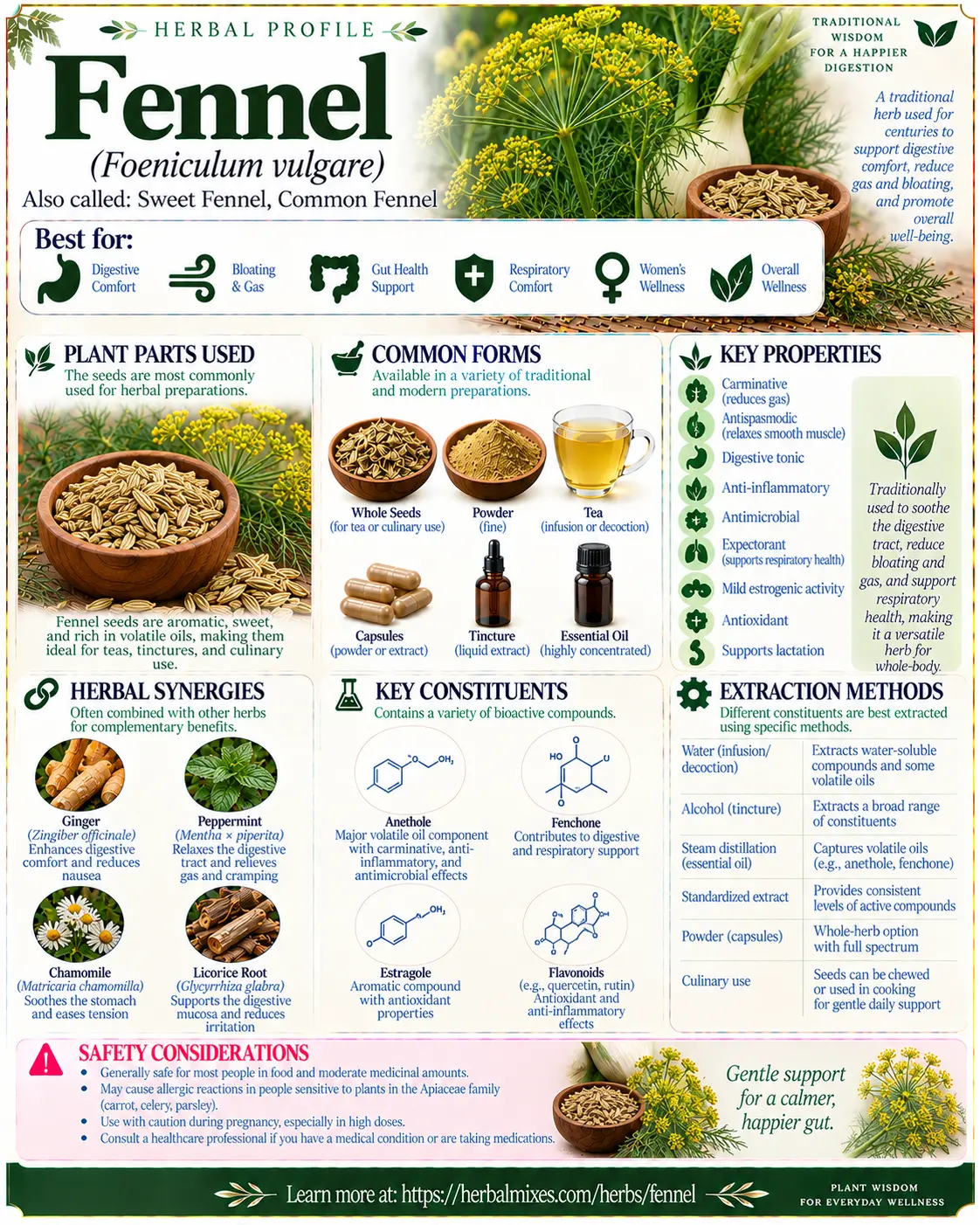
Digestive Comfort & Carminative Relief — Fennel is globally renowned as a premier carminative spice, traditionally used to dispel intestinal gas, ease post-meal bloating, and soothe upper abdominal discomfort.
Spasmodic Colic & Cramp Relief — Relaxes smooth muscle spasms in the digestive tract, making it exceptionally effective for easing infant colic, gripping abdominal cramps, and digestive tension.
Lactation & Galactagogue Support — Traditionally employed as a gentle galactagogue to support healthy breast milk production and flow in nursing mothers.
Upper Respiratory Expectorant — Its warm, aromatic volatile oils help relax bronchial smooth muscle and clear minor respiratory mucus.
Appetite & Salivary Stimulation — Chewing fennel seeds after meals stimulates salivary flow and gastric secretions, gently concluding digestion.
Available Herbal Products
Buying Guides for Available Fennel Products
Organic Sweet Fennel Seed – Whole aromatic seeds. The absolute best choice for crushing fresh at home, steeping into a soothing carminative tea, or chewing after meals to aid digestion. Seller: Mountain Rose Herbs – View Mountain Rose Herbs Fennel Seed →
Fennel Seed Liquid Extract – Hydroalcoholic tincture. A fast-absorbing liquid format designed for rapid drop-by-drop dosing to soothe acute gas, bloating, and indigestion. Seller: Herb Pharm – View Herb Pharm Fennel Extract →
Digestive & Carminative Herbal Tea Blend – Loose leaf tea combining fennel seed with peppermint leaf, chamomile flowers, and ginger. Designed to provide comprehensive after-meal relief. Seller: Traditional Medicinals – View Traditional Medicinals Teas →
Pure Sweet Fennel Essential Oil – Concentrated steam-distilled aromatic oil. Rich in anethole; an ideal choice for dilution in carrier oils for soothing abdominal massage oils. Seller: Eden Botanicals – View Eden Botanicals Fennel Oil →
Herbal Synergies
Fennel seed pairs especially well with Peppermint Leaf, Chamomile Flowers, and Ginger Root, depending on the goal of the formula.
Fennel Seed + Peppermint Leaf – Best for: Comprehensive digestive comfort, eliminating gas, easing bloating, and cooling stomach heat Fennel provides sweet aromatic volatile oils that relax digestive smooth muscle and expel trapped gas, while peppermint leaf supplies cooling menthol that relieves cramping and settles nausea. Together, they form the classic after-meal digestive tea duo. Best extraction: Covered hot infusion (tea). Steeping these crushed seeds and leaves under a lid traps their valuable volatile oils.
Fennel Seed + Chamomile Flowers – Best for: Soothing infant colic, calming nervous indigestion, and easing abdominal tension Fennel warms and relaxes the digestive tract to expel gas, whereas chamomile flowers deliver gentle antispasmodic flavonoids that quiet nervous stomach upset and stress. Best extraction: Warm herbal tea infusion. Gentle and safe for nursing mothers and older infants (under professional guidance).
Fennel Seed + Ginger Root – Best for: Igniting digestive fire, preventing post-meal sluggishness, and warming cold digestion Fennel dispels gas and relaxes intestinal spasms, while ginger root accelerates gastric emptying and stimulates digestive enzyme output. Best extraction: Simmered decoction or tincture blend. Combines sweet carminative oils with warming oleoresins.
Key Herbal Properties
Carminative — Relieves flatulence, gas buildup, and intestinal cramping by relaxing digestive smooth muscle.
Galactagogue — Supports and encourages healthy breast milk volume and flow in nursing mothers.
Antispasmodic — Relaxes smooth muscle tissue throughout the gastrointestinal tract and uterus.
Expectorant (Mild) — Relaxes bronchial airways and assists clear breathing.
Aromatic Digestive Tonic — Stimulates upper digestive secretions and primes metabolic assimilation.





Active Compounds
Anethole (Volatile Phenylpropene Essential Oil — accounts for ~50-80% of seed oil) Found mainly in: Crushed seeds The primary bioactive aromatic compound responsible for fennel’s distinct sweet licorice-like aroma, carminative spasm-relaxing action, and mild estrogenic support. Best extraction: Covered hot water infusion (tea) or alcohol-water extract. (Note: Always brew fennel tea with a lid to trap its delicate volatile oils).
Fenchone and Estragole (Volatile Essential Oils) Found mainly in: Seeds and aerial parts Contribute to the plant’s bitter-sweet flavor profile and digestive-stimulating properties. Best extraction: Hydroalcoholic tincture or warm water infusion. Soluble in alcohol and warm water.
Flavonoids (including Quercetin and Rutin) Found mainly in: Seeds and leaves Antioxidant compounds that protect cellular tissues and support anti-inflammatory pathways. Best extraction: Hot water infusion. Soluble in warm water.
FAQ
What is fennel best used for? Fennel is primarily used as a carminative spice to relieve intestinal gas and bloating, ease digestive colic, and support lactation in nursing mothers.
Why must fennel tea be brewed covered? Because fennel’s active carminative volatile oils (like anethole) evaporate easily with steam, brewing the tea in a covered vessel ensures those medicinal oils condense back into your cup rather than escaping into the air.
Does fennel taste like licorice? Yes, fennel has a sweet, warm, aromatic flavor profile very reminiscent of anise and licorice due to its shared anethole content.
Can fennel help with infant colic? Traditionally, weak fennel seed tea (often given to nursing mothers or administered in small amounts to infants under professional guidance) has been used for generations to ease griping infant colic and gas.
Can fennel be taken every day? Yes, culinary amounts and daily cups of fennel tea are safely enjoyed by most people as part of a healthy meal routine.
Safety & Precautions
Hormone-Sensitive Conditions: Because anethole exhibits mild estrogen-like activity, individuals with estrogen-sensitive cancers or conditions should consult a physician before using concentrated therapeutic fennel extracts long-term.
Allergies: Individuals with known sensitivities to plants in the Apiaceae (carrot/parsley) family should exercise mild caution.
Essential Oil Toxicity: Pure fennel essential oil is extremely concentrated and should never be ingested internally or applied undiluted, as high doses of estragole can be toxic; always use whole seeds, teas, or professional extracts.
Pregnancy & Breastfeeding: Culinary amounts are exceptionally safe and traditional during lactation, but concentrated therapeutic medicinal extracts should be avoided during pregnancy due to uterine-stimulating potential.
Consult a qualified healthcare professional before using fennel therapeutically, especially if you manage underlying medical conditions or take prescription drugs.
References
National Center for Complementary and Integrative Health (NCCIH)
PubMed Central – Foeniculum vulgare (Fennel) Anethole and Gastrointestinal Pharmacology
European Medicines Agency (EMA) Monograph on Foeniculum vulgare fructus
World Health Organization (WHO) Monographs on Selected Medicinal Plants
Mountain Rose Herbs Fennel Seed Monograph
Disclaimer
Disclaimer: This article is for educational purposes only and is not intended to diagnose, treat, cure, or prevent any disease. Herbal products can cause side effects and interact with medications. Consult a qualified healthcare professional before using herbs therapeutically, especially if you are pregnant, breastfeeding, taking prescription medications, or managing a medical condition.