

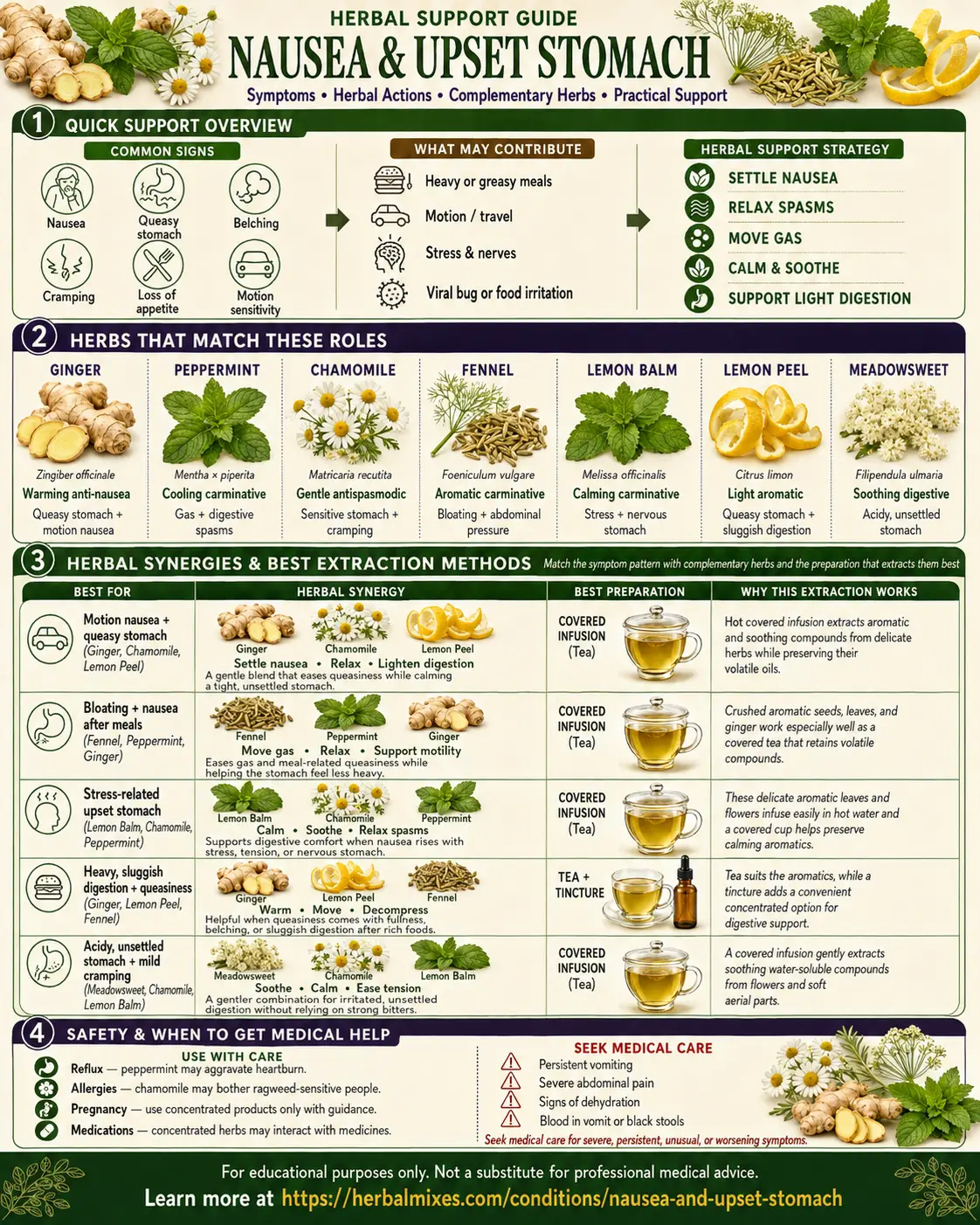
Nausea and upset stomach can show up as queasiness, bloating, cramping, a churning gut, or the urge to vomit, and they often stem from different roots — motion, stress, a heavy meal, pregnancy, or a sluggish digestive system. Common signs include a rolling or “seasick” sensation, excess gas or bloating, stomach tightness, loss of appetite, and general digestive discomfort. Because the underlying pattern varies so much from person to person, different herbal approaches tend to work better for different triggers.
Herbal Support Strategy
Herbal support for nausea generally combines warming, settling herbs for general queasiness with antispasmodic herbs for cramping and calming herbs for stress-linked stomach upset. Which herb leads the formula depends on whether the trigger is motion, tension, or a heavy meal.




Ginger (Zingiber officinale) — Settling + circulatory warming. The most researched herb for nausea; its gingerols and shogaols are traditionally used to ease queasiness from motion, pregnancy, and digestive upset.
Peppermint (Mentha piperita) — Antispasmodic + carminative. Menthol relaxes gripping digestive muscles, making it useful for nausea that comes with cramping, bloating, or indigestion.
Chamomile (Matricaria chamomilla) — Calming + mild digestive relaxant. A gentle nervine that may help when nausea overlaps with stress, tension, or a generally unsettled stomach.
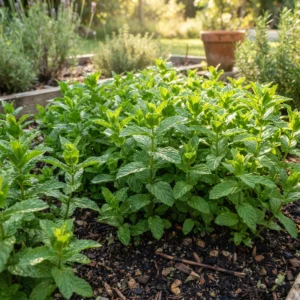
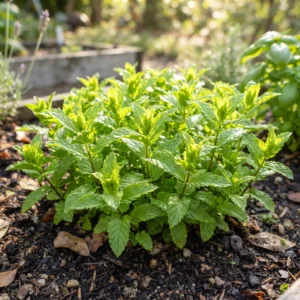
Lemon Balm (Melissa officinalis) — Nervine + gentle digestive ease. Calming and mildly carminative; pairs well with chamomile for nervous-stomach patterns.
Fennel (Foeniculum vulgare) — Carminative. Traditionally used to relieve trapped gas and bloating that often accompanies an upset stomach.
Cardamom (Elettaria cardamomum) — Warming digestive aromatic. Supports sluggish digestion and may help ease nausea after rich or heavy meals.
Herbal Synergies & Best Extraction Methods
Ginger + Peppermint + Fennel Best for: Motion sickness, travel-related queasiness, and general digestive upset with gas or bloating. Ginger settles the stomach while peppermint and fennel work together to ease trapped gas and gripping discomfort. Best Preparation: Tea + Tincture. A covered infusion works well before travel, while a tincture or ginger chew offers a fast-acting option once queasiness has started.
Chamomile + Lemon Balm + Fennel Best for: Stress-related or nervous stomach upset, tension-driven queasiness. Chamomile and lemon balm calm the nervous system while fennel eases any accompanying gas or tightness. Best Preparation: Covered Infusion (Tea). Gentle enough for regular use and well suited to these soft aerial herbs.
Ginger + Cardamom + Fennel Best for: Nausea after heavy, greasy, or rich meals, and sluggish post-meal digestion. These warming, aromatic herbs support digestive movement and help settle a stomach overwhelmed by a large meal. Best Preparation: Covered Infusion (Tea) or Powder/Capsule, depending on convenience.
Peppermint + Ginger Best for: Nausea accompanied by cramping or spasms, including IBS-type digestive upset. Enteric-coated peppermint targets the intestines directly for cramping, while ginger addresses the nausea itself. Best Preparation: Standardized Extract (enteric-coated capsule) + Tea. The enteric coating helps peppermint oil reach the intestines rather than being absorbed too early.
Ginger + Chamomile Best for: Pregnancy-related nausea or a gentle, everyday option for mild queasiness. A simple, well-tolerated pairing that combines ginger’s settling action with chamomile’s mild calming effect. Best Preparation: Covered Infusion (Tea). A mild, low-intensity option suited to sensitive stomachs.
Available Ready-to-Use Products
If you prefer a ready-made option, these commercially available products contain herbs relevant to the approaches discussed above.
Motion & Travel Support — A warming ginger tea for queasiness tied to travel or after meals. Traditional Medicinals — Ginger Aid Tea — Built around organic ginger, this blend closely matches the motion-related settling strategy discussed above.
On-the-Go Nausea Relief — A portable ginger chew for quick relief during travel or sudden queasiness. The Ginger People — Gin Gins Original Ginger Chews — Made with real ginger, these offer a fast, convenient alternative to tea when brewing isn’t practical.
Cramping & IBS-Type Upset — Enteric-coated peppermint oil for nausea with cramping or spasms. Nature’s Way — Pepogest Peppermint Oil — The enteric coating targets the intestines, aligning with the antispasmodic strategy for gripping digestive discomfort.
Stress-Related Stomach Upset — A calming tea blend for nervous, tension-related queasiness. Traditional Medicinals — Chamomile with Lavender Tea — Chamomile, lavender, and lemon balm together closely match the calming, nervine-focused approach for stress-linked nausea.
Herbal Properties Required
For nausea and upset stomach, the most useful herbal properties are typically carminative, antispasmodic, calming/nervine, and warming digestive support. Carminative herbs help ease trapped gas and bloating, antispasmodic herbs relax gripping or crampy digestive muscles, and nervines become especially relevant when nausea is tied to stress or nervous tension. Warming digestive herbs support sluggish digestion after heavy or rich meals.




Use With Care
Ginger may interact with blood-thinning medications and is generally limited to about 1 gram per day during pregnancy — check with a healthcare provider first. Peppermint oil, especially enteric-coated capsules, may worsen symptoms in people with GERD, acid reflux, or a hiatal hernia. Chamomile is part of the ragweed family and may trigger allergic reactions in sensitive individuals. Peppermint essential oil should not be used near the face of infants or young children due to menthol sensitivity. Herbal teas can be soothing, but they are not a substitute for hydration and electrolyte replacement during significant vomiting or diarrhea.
If you take prescription medication, are pregnant or breastfeeding, or have a medical condition, check with a qualified healthcare professional before using concentrated herbal products.
When to Get Medical Help
Seek medical evaluation if you experience:
- Vomiting that lasts more than 24–48 hours or that you cannot keep any fluids down
- Signs of dehydration, such as dizziness, dark urine, or reduced urination
- Blood in vomit or stool, or vomit that looks like coffee grounds
- Severe abdominal pain, high fever, or chest pain alongside nausea
- Unexplained or unintentional weight loss with ongoing nausea
Persistent, severe, unusual, or worsening symptoms should be evaluated by a healthcare professional.
Frequently Asked Questions
What’s the single best herb for nausea? Ginger has the strongest research support across motion sickness, pregnancy-related nausea, and chemotherapy-related nausea, making it a reasonable first choice for most people.
Can I combine ginger and peppermint? Yes — they’re commonly combined, with ginger addressing general queasiness and peppermint easing any accompanying cramping or bloating.
Which preparation works fastest? A tincture, ginger chew, or enteric-coated capsule tends to act faster than tea, since less time is needed for preparation and absorption begins more quickly.
Is it safe to use these herbs regularly? Occasional use of teas like ginger or chamomile is generally well tolerated, but regular or high-dose use of concentrated extracts should be discussed with a healthcare provider, especially alongside medication.
Should I use herbs instead of seeing a doctor? No — herbal support is best for mild, occasional nausea. Persistent, severe, or unexplained symptoms need medical evaluation.
References
National Center for Complementary and Integrative Health — Ginger https://www.nccih.nih.gov/health/ginger
National Center for Complementary and Integrative Health — Peppermint Oil: Usefulness and Safety https://www.nccih.nih.gov/health/peppermint-oil
National Center for Complementary and Integrative Health — Chamomile: Usefulness and Safety https://www.nccih.nih.gov/health/chamomile
National Center for Complementary and Integrative Health — Irritable Bowel Syndrome: What You Need To Know https://www.nccih.nih.gov/health/irritable-bowel-syndrome-what-you-need-to-know
Lete, I. & Allué, J. — The Effectiveness of Ginger in the Prevention of Nausea and Vomiting during Pregnancy and Chemotherapy (Integrative Medicine Insights, PMC) https://pmc.ncbi.nlm.nih.gov/articles/PMC4818021/
Saberi, F. et al. — Effect of Ginger on Relieving Nausea and Vomiting in Pregnancy: A Randomized, Placebo-Controlled Trial (PMC) https://pmc.ncbi.nlm.nih.gov/articles/PMC4228518/
Modi, M. & Modi, K. — Ginger Root (StatPearls, NCBI Bookshelf) https://www.ncbi.nlm.nih.gov/books/NBK565886/
Disclaimer
For educational purposes only. This information is not intended to diagnose, treat, cure, or prevent disease. Herbal products may cause side effects or interact with medications. Consult an appropriate healthcare professional if you have a medical condition, take medication, are pregnant or breastfeeding, or have persistent or concerning symptoms.