

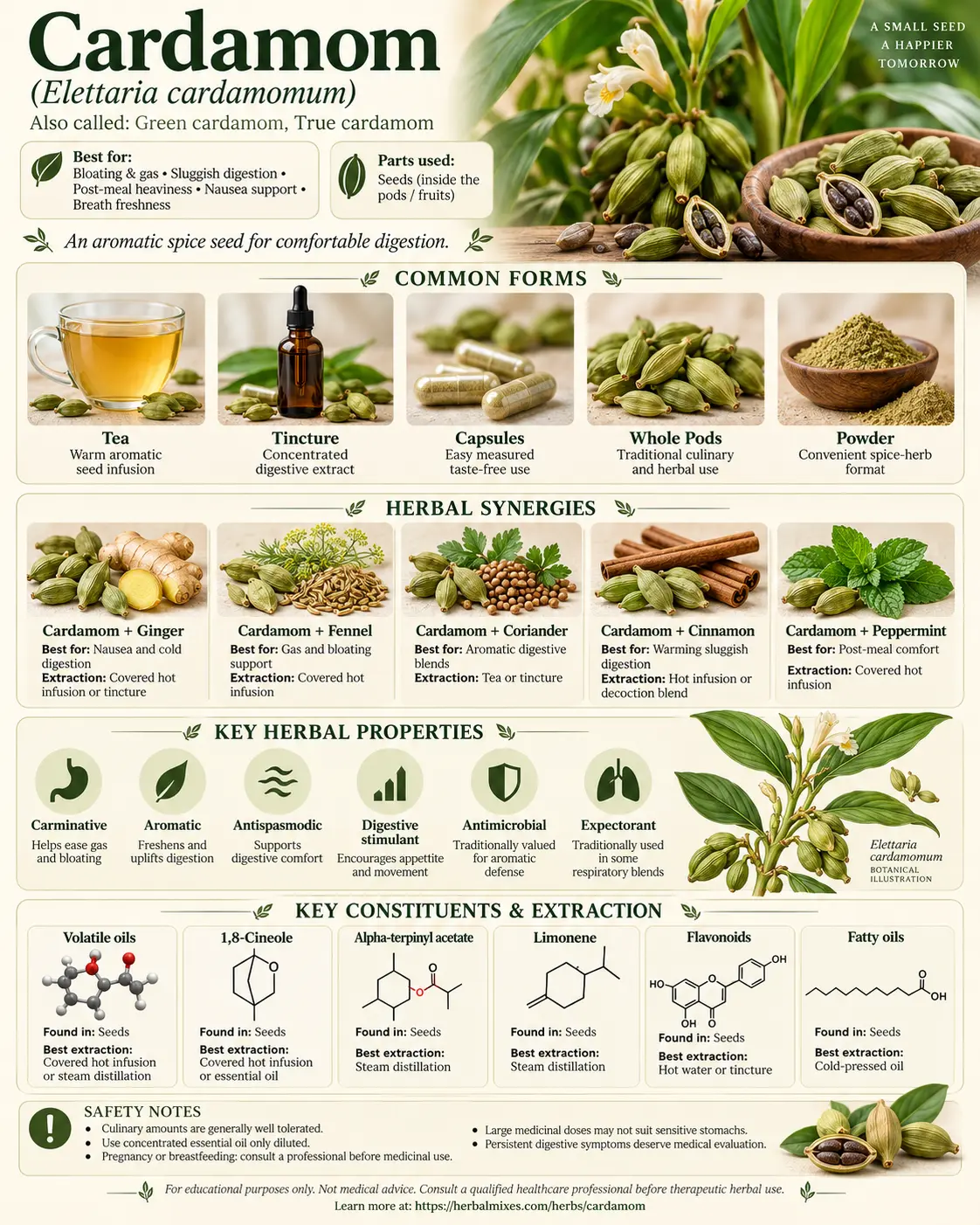
What Cardamom Is Good For
Digestive Comfort & Carminative Relief — Cardamom is a premier warming carminative traditionally used to dispel intestinal gas, ease bloating, and soothe post-meal indigestion.
Breath Freshening & Oral Hygiene — Its rich, volatile aromatic oils naturally neutralize bad breath and support a healthy microbial balance in the oral cavity.
Warming Circulation — Stimulates peripheral blood flow, bringing gentle internal warmth to chilled extremities and sluggish circulation.
Upper Respiratory Support — Traditionally valued for helping clear chest congestion and relax bronchial passages through its aromatic volatile compounds.
Digestive Enzyme Stimulation — Its pungent essential oils stimulate salivary flow and gastric enzyme secretion, priming the gut for nutrient assimilation.
Available Herbal Products
Buying Guides for Available Cardamom Products
Organic Whole Green Cardamom Pods – Dried aromatic pods. The absolute best choice for cracking fresh at home just before steeping into tea or culinary dishes to preserve maximum volatile oils. Seller: Mountain Rose Herbs – View Mountain Rose Herbs Cardamom Pods →
Cardamom Seed Liquid Extract – Hydroalcoholic tincture. A fast-absorbing liquid format that allows for convenient, adjustable dosing after meals to ease sudden indigestion and gas. Seller: Herb Pharm – View Herb Pharm Cardamom Extract →
Digestive Spiced Chai Tea Blend – Loose leaf tea combining cardamom pods with cinnamon, ginger, clove, and black tea. Designed to provide warming, carminative post-meal support. Seller: Traditional Medicinals – View Traditional Medicinals Chai Teas →
Organic Cardamom Seed Powder – Finely ground aromatic seeds. A versatile option for baking, crafting custom digestive capsules, or blending into warm wellness tonics. Seller: Starwest Botanicals – View Starwest Botanicals Cardamom →
Herbal Synergies
Cardamom pairs especially well with Fennel Seed, Ginger Root, and Cinnamon Bark, depending on the goal of the formula.
Cardamom Pods + Fennel Seed – Best for: Comprehensive digestive comfort, eliminating gas, and soothing infant or adult colic Cardamom provides warming, aromatic carminative action to dispel trapped upper GI gas, while fennel seed offers sweet, relaxing essential oils that soothe smooth muscle spasms throughout the lower bowel. Together, they form an exceptionally balanced digestive tea. Best extraction: Covered hot infusion (tea). Crushing cardamom pods and fennel seeds slightly before steeping releases their volatile oils efficiently into hot water.
Cardamom Pods + Ginger Root – Best for: Warming core digestion, stimulating metabolism, and relieving nausea Cardamom dispels upper abdominal bloating and refreshes the palate, whereas ginger delivers pungent oleoresins that accelerate gastric emptying and warm sluggish digestion. Best extraction: Simmered decoction or warming tincture. Simmering these warming spices together extracts their active oils and pungent resins.
Cardamom Pods + Ceylon Cinnamon Bark – Best for: Enhancing circulation, balancing blood sugar, and creating a comforting digestive tonic Cardamom stimulates peripheral microcirculation, while cinnamon supplies warming polyphenols that support healthy metabolic function and flavor harmony. Best extraction: Decoction or spiced herbal milk. Simmering these aromatics extracts their deep, comforting constituents.
Key Herbal Properties
Carminative — Relieves flatulence, gas buildup, and bloating by relaxing gastrointestinal sphincters and expelling trapped air.
Digestive Stimulant — Promotes the secretion of gastric juices, salivary flow, and digestive enzymes.
Antimicrobial / Freshener — Inhibits oral bacteria and neutralizes volatile sulfur compounds responsible for bad breath.
Circulatory Stimulant — Promotes peripheral blood flow and brings internal warmth to the body.
Expectant / Aromatic — Volatile oils help clear upper respiratory passages and ease minor chest congestion.





Active Compounds
Volatile Oils (including Terpinyl Acetate and 1,8-Cineole) Found mainly in: Seeds within the pods The primary bioactive aromatic compounds responsible for cardamom’s distinct fragrance, carminative action, and respiratory-opening properties. Best extraction: Steam distillation or high-proof alcohol tincture. Volatile oils dissolve efficiently in alcohol and warm water.
Flavonoids and Polyphenols Found mainly in: Seed kernels Antioxidant compounds that protect cellular tissues from oxidative stress and support healthy inflammatory balance. Best extraction: Hot water infusion or alcohol-water extract. Soluble in both warm water and hydroalcoholic solvents.
Fixed Oils and Plant Resins Found mainly in: Seeds Contribute to the nutritive and warming profile of the spice. Best extraction: Alcohol or lipid solvent. Extracted effectively in hydroalcoholic solutions.
FAQ
What is cardamom best used for? Cardamom is primarily used as a culinary spice and medicinal carminative herb to relieve intestinal gas, soothe indigestion, and freshen breath.
Why should cardamom pods be bought whole instead of pre-ground? Whole pods protect the delicate volatile oils inside the seeds; once ground, cardamom rapidly loses its therapeutic potency and aromatic flavor as its essential oils evaporate.
Can cardamom be chewed after meals? Yes, chewing a whole cardamom seed or pod after a heavy meal is a traditional practice across many cultures used to stimulate digestion and sweeten the breath.
Can cardamom be taken every day? Yes, culinary and moderate daily amounts are safely enjoyed by the vast majority of people as part of a balanced diet or digestive tea.
Is cardamom safe during pregnancy? Culinary amounts are very safe, but concentrated therapeutic essential oils should be avoided during pregnancy due to high potency.
Safety & Precautions
Gastrointestinal Sensitivity: High therapeutic doses or concentrated essential oils may occasionally cause mild gastric irritation in sensitive individuals with ulcers or severe acid reflux.
Gallstones: Individuals with active gallstones or acute bile duct obstruction should exercise caution with strong cholagogue-like aromatic spices, though culinary amounts are well-tolerated.
Allergies: True allergic reactions to cardamom are rare, but individuals sensitive to members of the Zingiberaceae (ginger) family should monitor tolerance.
Essential Oil Toxicity: Pure cardamom essential oil is highly concentrated and should never be ingested internally without professional clinical supervision; always use whole seeds, teas, or diluted extracts.
Consult a qualified healthcare professional before using cardamom therapeutically, especially if you manage underlying medical conditions or take prescription drugs.
References
National Center for Complementary and Integrative Health (NCCIH)
PubMed Central – Elettaria cardamomum (Cardamom) Phytochemistry and Gastrointestinal Pharmacology
European Medicines Agency (EMA) Herbal Documentation
World Health Organization (WHO) Monographs on Selected Medicinal Plants
Mountain Rose Herbs Cardamom Pods Monograph
Disclaimer
Disclaimer: This article is for educational purposes only and is not intended to diagnose, treat, cure, or prevent any disease. Herbal products can cause side effects and interact with medications. Consult a qualified healthcare professional before using herbs therapeutically, especially if you are pregnant, breastfeeding, taking prescription medications, or managing a medical condition.