


Calendula is a bright orange or yellow flower in the Asteraceae family, traditionally used as a gentle skin, lymphatic, digestive, and mucous membrane herb. In herbalism, the flower heads are the main part used, especially the sticky green resinous base and colorful petals.
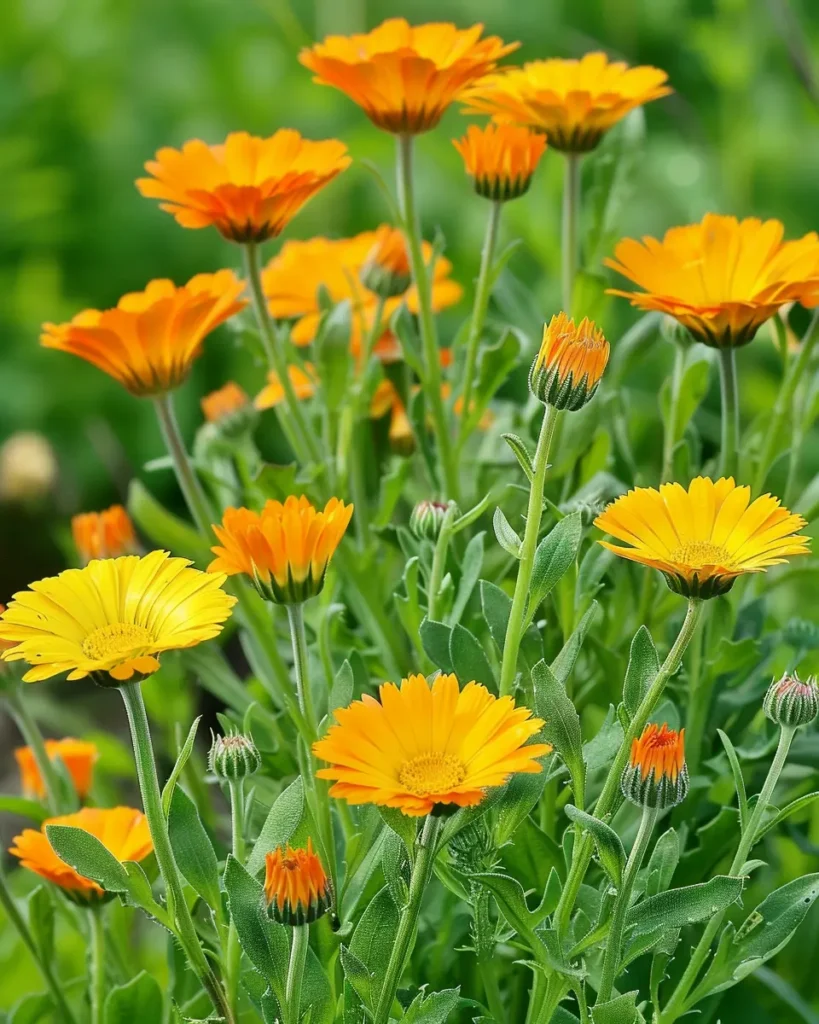
Calendula (Calendula officinalis) – Common names include calendula, pot marigold, garden marigold, and Mary’s gold. It should not be confused with ornamental marigolds from the Tagetes genus.
Traditional uses of calendula:
Skin Support: Calendula is one of the classic herbs for dry, irritated, rough, or weather-stressed skin. Herbalists often prepare it as an infused oil, salve, cream, wash, or compress.
Mucous Membrane Support: Calendula is traditionally used for delicate tissues of the mouth, throat, digestive tract, and skin folds, especially when mild irritation is present.
Lymphatic Support: In traditional herbalism, calendula is often described as a gentle lymphatic herb, especially when tissues feel stagnant, puffy, or slow to clear.
Digestive Comfort: Calendula tea has a mild bitter-aromatic quality and is traditionally used to support digestion and soothe irritated digestive tissues.
Calendula is sunny, practical, and not at all interested in being just a pretty face.
“Calendula is sunshine with sleeves rolled up: bright, gentle, and ready to help.”
Available Calendula Products
Calendula Salve — Topical Salve/Balm
A healing ointment made with calendula-infused oil, used for soothing minor cuts, scrapes, eczema, and dry or irritated skin.
Buy Calendula Salve
Calendula Tincture — Tincture/Liquid Extract
A liquid extract of fresh calendula flowers, traditionally taken in water or juice, or used as a mouth rinse for oral wellness.
Buy Calendula Tincture
Calendula Oil — Infused Carrier Oil
Calendula-infused oil applied topically to soothe sensitive or irritated skin and support natural moisture.
Buy Calendula Oil
Calendula Tea — Tea/Loose Petals
A caffeine-free herbal tea made from dried calendula petals, traditionally enjoyed for skin, digestive, and general wellness support.
Buy Calendula Tea
Calendula Capsules — Capsules/Tablets
A dried-flower extract capsule taken orally to support the immune system and general wellness as part of a daily routine.
Buy Calendula Capsules
Calendula Dried Whole Flowers — Raw/Dried Herb
Whole dried calendula petals for brewing tea, making your own infused oils and salves, or culinary garnish.
Buy Calendula Dried Flowers
⚠️ These are dietary supplements/topical products — not evaluated by the FDA for treating disease. Calendula is a member of the daisy (Asteraceae) family, so those allergic to ragweed, marigolds, or chrysanthemums may also react to it. Not generally recommended internally during pregnancy without medical guidance. Discontinue topical use if irritation occurs, and check with a healthcare provider before internal use.
Key Herbal Actions
Calendula is known as a vulnerary, anti-inflammatory-supportive herb, lymphatic, alterative, antimicrobial-supportive herb, astringent, demulcent, cholagogue-supportive herb, antioxidant, and emollient.
Vulnerary
A vulnerary herb is traditionally used to support the natural comfort and repair of skin and tissues. Calendula is one of the classic vulnerary herbs in Western herbalism. It is especially associated with topical preparations such as oils, salves, creams, washes, and compresses.
Anti-inflammatory-Supportive Herb
Calendula flower contains triterpenoids and flavonoids studied for anti-inflammatory activity. The EMA recognizes traditional topical use of calendula flower preparations for minor skin inflammation and small wounds. This supports calendula’s long-standing reputation as a skin-soothing herb.
Lymphatic
A lymphatic herb is traditionally used to support the body’s natural movement of lymphatic fluid. Calendula is often included in formulas for sluggish tissue states, mild swelling, or slow-moving skin situations. This is a traditional herbal concept, not a claim that calendula treats lymphatic disease.
Alterative
An alterative is traditionally understood as an herb that supports the body’s natural processes of cleansing, nourishment, and tissue maintenance over time. Calendula’s alterative reputation connects to skin, mucous membranes, and lymphatic movement. It is gentle and usually used consistently rather than dramatically.
Antimicrobial-Supportive Herb
Calendula has been studied in laboratory settings for activity against certain microbes. In herbal practice, this supports its traditional use in washes, gargles, and topical preparations. It should not be used as a replacement for medical care when infection is suspected.
Astringent
Astringent herbs gently tone tissues. Calendula contains tannins and polyphenols that contribute to mild astringency. This action is useful in mouth rinses, skin washes, and preparations for delicate irritated tissue.
Demulcent
Calendula is not as slippery as marshmallow root or slippery elm, but it has a soothing quality for mucous membranes. In teas and washes, it is traditionally used to comfort tender tissues. Its demulcent-like effect works alongside its vulnerary and anti-inflammatory-supportive actions.
Cholagogue-Supportive Herb
Calendula has a mild bitter quality and is traditionally described as supporting bile flow and digestion. This is a gentle digestive action, not a strong liver or gallbladder intervention. People with gallbladder disease should use caution and seek professional guidance.
Antioxidant
Calendula contains flavonoids, carotenoids, phenolic acids, and other antioxidant compounds. These help explain its colorful flowers and tissue-supportive reputation. Antioxidants support protection from oxidative stress, but they do not make calendula a magic orange shield.
Emollient
Externally, calendula infused oil and creams soften and protect the skin. This emollient action comes partly from the carrier oil and partly from calendula’s resinous and soothing compounds. It is one reason calendula is so common in balms and baby-care products.
Active Compounds and Extraction
Calendula contains triterpenoids, faradiol esters, flavonoids, carotenoids, polysaccharides, saponins, phenolic acids, tannins, coumarins, volatile compounds, resins, and small amounts of essential oil.
Triterpenoids
Triterpenoids are one of calendula’s most important compound groups. They are studied for anti-inflammatory and tissue-supportive activity. Faradiol monoesters are especially discussed in relation to calendula’s topical effects.
Best extraction: Oil infusion, alcohol-water tincture, salve, cream.
To make calendula infused oil, fill a clean jar about halfway with dried calendula flower heads. Cover completely with carrier oil, stir to release air bubbles, cap, and steep in a warm place for 2–4 weeks. Strain well and store away from heat and light.
Faradiol Esters
Faradiol esters are triterpenoid compounds associated with calendula’s anti-inflammatory activity. They are considered important markers in calendula flower preparations. They are especially relevant for topical oils, ointments, and extracts.
Best extraction: Oil infusion, alcohol extract, CO2 extract.
For home use, oil infusion is the most practical method. Use dried flowers rather than fresh flowers to reduce moisture and mold risk.
Flavonoids
Flavonoids are plant compounds studied for antioxidant and tissue-supportive activity. Calendula contains flavonoids such as quercetin and isorhamnetin derivatives. These compounds contribute to calendula’s traditional use for skin, mucous membranes, and general tissue comfort.
Best extraction: Hot infusion, tincture, glycerite.
To make calendula tea, use 1–2 teaspoons dried flowers per cup of hot water. Cover and steep 10–15 minutes. The tea can be used internally or cooled and applied externally as a wash.
Carotenoids
Carotenoids are orange and yellow pigments that give calendula flowers their bright color. Calendula contains carotenoids such as lutein, zeaxanthin, beta-carotene, and related pigments. These compounds contribute antioxidant activity and are part of why deep-orange calendula flowers are often preferred.
Best extraction: Oil infusion, food use, alcohol-water extract.
Carotenoids are fat-soluble, so oil infusion is a good method. This is one reason calendula infused oil becomes golden-orange.
Polysaccharides
Polysaccharides are larger carbohydrate compounds that can support immune and tissue activity in herbs. Calendula polysaccharides have been studied for immunomodulating effects in laboratory research. They are water-soluble and contribute to the broader profile of calendula tea.
Best extraction: Hot infusion, decoction, water extract.
A strong infusion can be made with 1 tablespoon dried calendula per cup of hot water, steeped for 15–20 minutes. For external use, cool and strain very well.
Saponins
Saponins are plant compounds that can foam slightly in water and interact with cell membranes. Calendula contains triterpenoid saponins that may contribute to its tissue and immune-supportive activity. They are part of calendula’s complex chemistry rather than a single “active ingredient.”
Best extraction: Hot infusion, tincture.
Water and alcohol-water preparations are suitable. A tea extracts some saponins, while a tincture may extract a broader range of constituents.
Phenolic Acids
Phenolic acids are antioxidant compounds found in many herbs. In calendula, they contribute to antioxidant and tissue-supportive activity. They work alongside flavonoids and carotenoids.
Best extraction: Hot infusion, tincture, glycerite, vinegar.
A calendula vinegar can be made by steeping dried calendula flowers in apple cider vinegar for 2–4 weeks. Strain and use diluted in culinary or external preparations.
Tannins
Tannins are astringent compounds that gently tone tissues. Calendula’s tannins help explain its use in mouth rinses, throat gargles, and skin washes. The astringency is mild, not harsh.
Best extraction: Hot infusion, tincture, compress.
For a calendula mouth rinse or gargle, prepare a strong tea, cool it fully, strain carefully, and use fresh. Do not swallow large amounts of a preparation intended as a rinse.
Resins
Calendula flower heads contain sticky resinous compounds, especially in the green base of the flower. These are important for topical preparations. This is why whole flower heads are often better than petals alone for infused oils and salves.
Best extraction: Oil infusion, alcohol tincture.
Oil is excellent for resinous topical constituents. Alcohol-water tincture can also extract resinous compounds for concentrated herbal preparations.
Harvesting and Storing Right
Calendula flowers are harvested when fully open, usually from late spring through autumn depending on climate. The best time of day is late morning after dew has dried but before strong afternoon heat. Dry flowers are less likely to mold during drying.
Harvest whole flower heads, not just petals, when making oils and salves. The sticky green base contains important resinous compounds. For tea or culinary decoration, petals alone may be used.
Calendula is generous: frequent picking encourages more blooming. The plant is basically saying, “Fine, take these flowers, I’ll make more.”
Dry calendula quickly in a shaded, warm, well-ventilated area. Spread flower heads in a single layer because the centers hold moisture. They are fully dry when the green base feels crisp and no coolness or softness remains.
Store dried calendula in an airtight container away from heat, light, and moisture. Dried flowers are usually best used within 1 year. Calendula infused oil is typically best within 6–12 months, depending on the carrier oil used. Salves usually keep for 6–12 months if made and stored properly. Water-based preparations, such as tea or washes, should be used fresh or refrigerated and used within 24–48 hours.
Body Functions Calendula Can Support
Calendula can support skin, lymphatic system, digestion system, dental oral wellness, immune system, reproductive system female, liver support, circulation, and respiratory system.
Skin
Calendula’s strongest traditional use is skin support. Its triterpenoids, flavonoids, carotenoids, and resinous compounds make it especially useful in infused oils, salves, creams, and washes. It is commonly used for dry, rough, chapped, or irritated skin.
Lymphatic System
Calendula is traditionally used as a gentle lymphatic herb. Herbalists often include it when the skin and tissues seem slow to clear or mildly congested. This is a traditional support concept and should not be confused with treating lymphatic disease.
Digestion System
Calendula tea has a mild bitter-aromatic taste and is traditionally used for digestive comfort. Its flavonoids, polysaccharides, and soothing qualities may support irritated mucous membranes. It is often paired with chamomile, plantain, marshmallow root, or yarrow.
Dental Oral
Calendula tea can be used as a cooled mouth rinse or gargle. Its mild astringent, soothing, and antimicrobial-supportive qualities make it relevant for oral tissue comfort. It does not replace dental care, but it can be a gentle supportive rinse.
Immune System
Calendula contains polysaccharides and other compounds studied for immune-modulating activity in early research. Traditionally, it is used to support the body’s natural tissue defenses, especially at the skin and mucous membrane level. It is gentle rather than aggressively stimulating.
Reproductive System Female
Calendula has traditional use in washes, sitz baths, and formulas for external feminine comfort. It is often included when tissues feel tender or irritated. Internal use during pregnancy should be guided by a qualified professional.
Liver Support
Calendula is traditionally described as a mild bitter and cholagogue-supportive herb. This means it may gently support digestive secretions and bile flow. It should not be used as a treatment for liver or gallbladder disease.
Circulation
Calendula’s tissue-supportive and anti-inflammatory-supportive actions make it relevant in some topical circulation-related skin formulas. It is not a primary cardiovascular herb. Its role is more local and tissue-focused.
Respiratory System
Calendula may be used in throat gargles and mucous membrane formulas. Its soothing and astringent qualities are relevant for irritated throat tissue. It is not a primary expectorant, but it can complement respiratory tea blends.
Safety and Practical Considerations
Calendula is generally considered gentle when used topically or as tea, but it is not appropriate for everyone.
People allergic to plants in the Asteraceae family should use caution. This family includes ragweed, chamomile, echinacea, arnica, daisies, and chrysanthemums. Anyone with known sensitivity should patch test topical products or avoid calendula.
Pregnant or breastfeeding people should consult a qualified healthcare professional before using calendula medicinally, especially internally. Food-level use of petals as garnish is different from concentrated extracts.
Calendula may theoretically add to the effects of sedative herbs or medications, though this concern is not as well established as with stronger sedative herbs. People taking prescription medications should ask a healthcare professional before using concentrated calendula products.
Calendula should not be applied to deep, infected, or serious wounds without medical guidance. Signs such as spreading redness, heat, pus, fever, severe pain, red streaks, or wounds that do not improve need professional care.
For topical oils and salves, use dried flowers rather than fresh to reduce moisture and spoilage risk. If making creams or lotions that contain water, proper preservation is necessary. Homemade water-based products can grow microbes quickly.
Children, older adults, and sensitive individuals should use simple, mild preparations. For pets, calendula may appear in some topical pet products, but use should be guided by a veterinarian or qualified animal herbalist.
FAQ
What does calendula taste like?
Calendula tastes mild, earthy, slightly bitter, and faintly peppery. It is not sweet like its bright color might suggest. In tea blends, it usually plays a gentle background role.
When is the best time to use calendula?
Calendula tea can be used during the day, especially in digestive or mucous membrane support blends. Topical calendula oils and salves can be used when skin feels dry, rough, or weather-stressed. Use water-based washes fresh.
Is fresh or dried calendula better?
Fresh calendula is lovely for fresh poultices and immediate use. Dried calendula is better for infused oils because it reduces the risk of mold and spoilage. For tea, both fresh and dried flowers can work.
Is calendula tea, tincture, or oil better?
It depends on the goal. Tea is best for water-soluble compounds and gentle internal or external washes. Tincture is more concentrated and shelf-stable. Infused oil is the classic choice for skin preparations.
Can calendula be used daily?
Calendula tea and topical preparations are used regularly by many people, but daily use is not ideal for everyone. People with Asteraceae allergies, pregnancy, breastfeeding, medication use, or chronic medical conditions should seek guidance. Topical use should stop if irritation develops.
How should calendula be stored?
Store dried calendula in an airtight container away from heat, light, and moisture. Whole flower heads should be fully dry before storage. Calendula oil should be kept in a cool, dark place and used within the freshness window of the carrier oil.
Does calendula combine well with other herbs?
Yes. Calendula blends well with chamomile, plantain, marshmallow root, yarrow, comfrey leaf for external use, lavender, rose, violet leaf, and chickweed. For salves, it pairs beautifully with plantain and lavender. For tea, it works well with chamomile and marshmallow root.
Is calendula safe for everyone?
No. People allergic to Asteraceae plants should be cautious. Pregnant or breastfeeding people and anyone taking medications should consult a qualified healthcare professional before medicinal use. Serious wounds or infections require medical care.
Can calendula be used for pets?
Calendula is sometimes used in pet skin products and animal herbalism, but pet use should be guided by a veterinarian or qualified animal herbalist. Pets may lick topical products, and some ingredients in salves may not be appropriate for them. Avoid essential oils and strong extracts unless professionally guided.
Is calendula the same as marigold?
Calendula is often called pot marigold, but it is not the same as common ornamental marigolds in the Tagetes genus. Herbal calendula refers to Calendula officinalis. For herbal use, always check the botanical name.
Disclaimer
This content is educational only. It is not medical advice, diagnosis, or treatment. Herbs may interact with medications or health conditions. People who are pregnant, breastfeeding, managing a medical condition, taking prescription medications, or preparing for surgery should consult a qualified healthcare professional before using herbs.
References
EMA: Assessment Report on Calendula officinalis L., flos
PubMed: A Systematic Review of Calendula officinalis Extract for Wound Healing
PMC: An Updated Review on the Multifaceted Therapeutic Potential of Calendula officinalis
PMC: A Review on Phytochemistry and Ethnopharmacological Aspects of Calendula officinalis
PMC: Evaluation of Biologically Active Compounds from Calendula officinalis Flowers
PMC: Treatment of Acute Wounds in Hand with Calendula officinalis L.
PMC: Evaluation of Calendula officinalis as an Anti-Plaque and Anti-Gingivitis Agent