


Rosehip is the small red-orange fruit-like part that forms after a rose flower has been pollinated and the petals fall away. Technically, it is not a true fruit in the simple botanical sense, but in everyday herbal life, it behaves like one: tart, colorful, nourishing, and very useful.
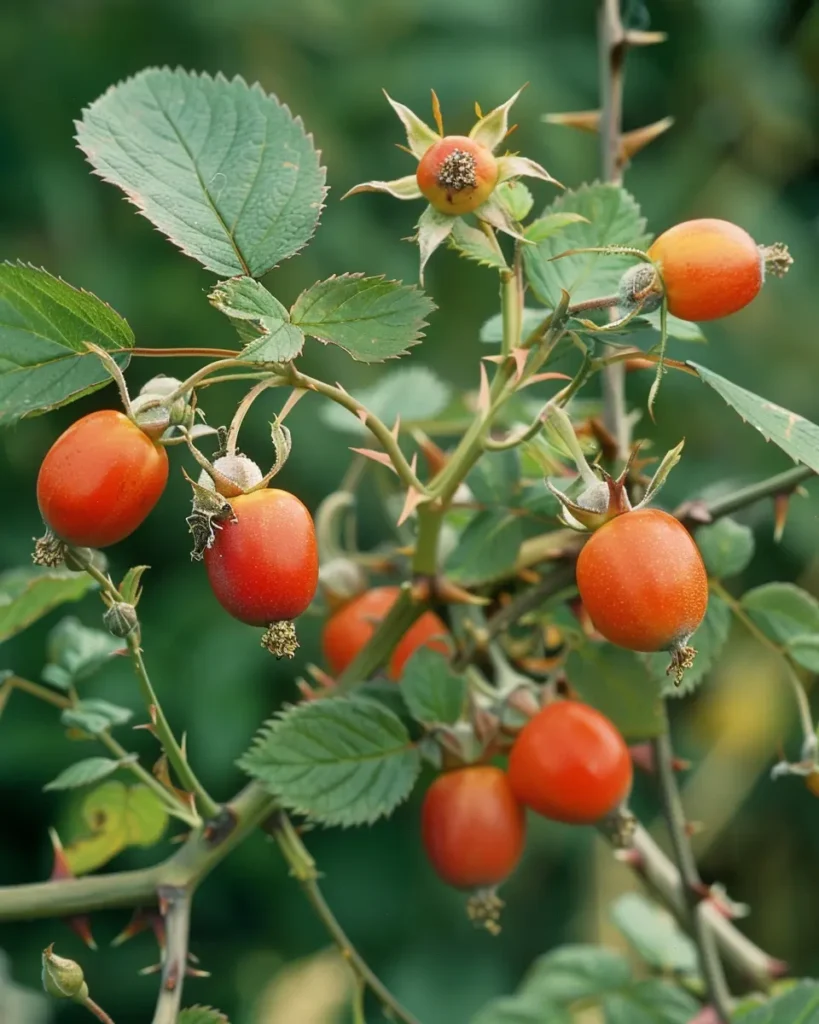
Rosehip (Rosa spp.) – Common herbal species include Rosa canina, Rosa rugosa, Rosa rubiginosa, Rosa moschata, and Rosa damascena. In herbal products, Rosa canina is one of the most commonly studied species.
Traditional uses of rosehip:
Immune & Seasonal Wellness: Rosehips are traditionally used as a vitamin-rich, antioxidant tea during colder months.
Joint & Mobility Support: Rosehip powder, especially from Rosa canina, has been studied for comfort and mobility support in people with osteoarthritis, though effects are modest and product quality varies.
Skin Support: Rosehip seed oil is widely used in skin care because it contains fatty acids and antioxidant compounds that support the skin barrier.
Digestive & Nutritive Support: Rosehips contain pectin, organic acids, fiber, carotenoids, and polyphenols, making them more like a tart food-herb than a dramatic “take this and everything changes” herb.
Rosehip is basically the rose plant’s practical little lunchbox: bright, nourishing, and packed with useful things.
“Rosehip is the rose’s way of saying beauty can become nourishment.”
Available Rosehip Products
Dried Rosehips
Dried rosehips are one of the most common forms. They may be sold whole, cut-and-sifted, seedless, or powdered. Cut seedless rosehips are often easiest for tea because whole hips contain tiny internal hairs around the seeds that can irritate the throat if not strained properly.
Look for rosehips with a deep red-orange color, tart fruity aroma, and no musty smell. Very brown or faded rosehips may be old or poorly stored.
Rosehip Tea
Rosehip tea is a classic preparation. It has a tart, fruity flavor, often compared to cranberry, apple peel, or hibiscus. It combines beautifully with hibiscus, orange peel, cinnamon, ginger, elderberry, hawthorn, and nettle.
A simple rosehip tea can be made with 1 tablespoon dried rosehips per cup of hot water. Steep covered for 10–15 minutes, then strain very well.
Rosehip Tincture
Rosehip tincture is less common than tea or powder, but it can be used when a concentrated liquid form is preferred. A water-alcohol tincture extracts some flavonoids, organic acids, and phenolic compounds. It is not the best way to preserve vitamin C, which is sensitive to heat, oxygen, and storage.
Rosehip Capsules
Rosehip capsules usually contain powdered rosehip or rosehip extract. Capsules are convenient for people who dislike tart teas. Labels should identify the species, plant part, whether seeds are included, serving size, and whether the product is standardized.
Rosehip Glycerite
Rosehip glycerite is a sweet-tart alcohol-free liquid preparation. It may be useful for people avoiding alcohol or for formulas where taste matters. Glycerites can extract some water-soluble compounds, especially when water is included in the preparation.
Rosehip Powder
Rosehip powder is commonly used in capsules, smoothies, yogurt, oatmeal, herbal honeys, and food blends. It provides more whole-plant material than tea because the powder is consumed rather than strained out. It should be stored carefully because vitamin C and carotenoids degrade with air, light, and time.
Rosehip Syrup
Rosehip syrup is made by preparing a strong infusion or decoction, straining very well, and combining the liquid with honey or sugar. It is a traditional seasonal preparation. Because vitamin C is heat-sensitive, gentle heat and shorter cooking times are preferred when the goal is nutrient preservation.
Rosehip Seed Oil
Rosehip seed oil is pressed from the seeds inside rosehips. It is used externally in skin care and is not the same as rose essential oil. It contains fatty acids such as linoleic acid and alpha-linolenic acid, along with antioxidant compounds. Choose cold-pressed, fresh oil in dark glass when possible.
Rosehip Extract
Rosehip extracts may be found in joint-support, antioxidant, skin, and wellness supplements. Some products are standardized or processed in specific ways. Extracts are more concentrated than tea, so they require more attention to dose, interactions, and product quality.
Rosehip Jam, Jelly, and Food Products
Rosehips are used in jams, jellies, sauces, soups, fruit leathers, and syrups. Food preparations are traditional in many regions. The tiny hairs around the seeds must be removed or strained carefully because they are irritating.
Key Herbal Actions
Rosehip is known as a nutritive, antioxidant, anti-inflammatory-supportive herb, mild astringent, sour tonic, vulnerary, mild diuretic, and connective-tissue-supportive food herb.
Nutritive
A nutritive herb provides meaningful food-like compounds such as vitamins, minerals, fiber, and phytonutrients. Rosehips are valued for vitamin C, carotenoids, polyphenols, pectin, and organic acids. This makes them useful as a daily wellness tea or food ingredient.
Antioxidant
Rosehips contain antioxidant compounds, including vitamin C, flavonoids, carotenoids, and phenolic acids. Antioxidants help protect cells from oxidative stress. This does not make rosehip a miracle shield, but it does explain why it has such a strong reputation as a seasonal wellness herb.
Anti-inflammatory-Supportive
Rosehip powder and extracts have been studied for inflammatory pathways, especially in relation to joint comfort. Human studies suggest possible modest benefit for osteoarthritis symptoms, but results depend on preparation type and study quality. This is supportive use, not a replacement for medical care.
Mild Astringent
Rosehips contain tannins and polyphenols that give a mild astringent quality. Astringent herbs gently tone tissues. In rosehip, this action is balanced by fruit acids and pectin, so the overall effect is tart and toning rather than strongly drying.
Sour Tonic
A sour tonic herb has a bright acidic flavor that can support appetite and digestion through taste. Rosehips contain organic acids that create their tartness. This makes rosehip tea refreshing and pleasant after meals.
Vulnerary
A vulnerary herb is traditionally used to support the natural comfort and repair of tissues. Rosehip seed oil is often used externally for dry, weathered, or mature skin. Its fatty acids support the skin barrier and give it a soft, nourishing quality.
Mild Diuretic
Rosehip has traditional use as a mild diuretic, meaning it may support normal fluid movement. This action is gentle and food-like. It should not be treated as a strong urinary or kidney intervention.
Connective-Tissue-Supportive Food Herb
Vitamin C is needed for normal collagen formation, and rosehips are traditionally valued in this context. Rosehips also contain carotenoids and polyphenols that support general tissue wellness. The key is to use rosehip as nourishment, not as a dramatic repair promise.
Active Compounds and Extraction
Rosehip contains vitamin C, carotenoids, flavonoids, phenolic acids, galactolipids, pectin, tannins, organic acids, minerals, fiber, and fatty acids in the seeds.
Vitamin C
Rosehips are famous for vitamin C, although the amount varies widely by species, harvest time, drying method, storage, and preparation. Published research reports a broad range, with Rosa canina hips containing roughly 30–1300 mg vitamin C per 100 g in some analyses. Drying, heat, oxygen, and long storage can reduce vitamin C.
Best extraction: Short hot infusion, cold infusion, powder, syrup with gentle heat.
To make a vitamin-conscious rosehip infusion, use 1 tablespoon dried rosehips per cup of hot water, cover, steep 10–15 minutes, and strain well. For a gentler method, soak rosehips in cool water for several hours, then strain.
Carotenoids
Carotenoids are orange-red pigments such as beta-carotene, lycopene, lutein, and zeaxanthin. They contribute to rosehip’s color and antioxidant profile. Because carotenoids are fat-soluble, they are better absorbed when rosehip is consumed with food that contains some fat.
Best extraction: Powder in food, oil-containing foods, syrup, jam, whole-food preparations.
Add rosehip powder to yogurt, oatmeal, smoothies, or herbal honey. A small amount of fat in the meal may help with carotenoid absorption.
Flavonoids
Flavonoids are plant compounds studied for antioxidant and tissue-supportive effects. Rosehips contain flavonoids such as quercetin and catechin-related compounds. They contribute to rosehip’s broader wellness profile, including circulation and connective tissue support.
Best extraction: Hot infusion, tincture, glycerite, vinegar.
A regular hot infusion extracts flavonoids well. Cover the cup while steeping to protect the aroma and prevent unnecessary loss of delicate compounds.
Phenolic Acids
Phenolic acids are antioxidant compounds found in many fruits and herbs. Rosehips may contain compounds such as gallic, caffeic, ellagic, and p-coumaric acids, depending on species and preparation. These compounds support rosehip’s antioxidant activity.
Best extraction: Hot infusion, tincture, glycerite, vinegar.
A rosehip vinegar can be made by covering dried rosehips with apple cider vinegar and steeping for 2–4 weeks. Strain well before use.
Galactolipids
Galactolipids are fat-related compounds found in rosehip powder and extracts. They have been studied in relation to joint comfort and inflammatory pathways. These compounds may be one reason whole rosehip powder has been researched for osteoarthritis support.
Best extraction: Whole powder, standardized extract, food preparations.
Galactolipids are not best extracted in a simple tea. Consuming whole rosehip powder or using a quality extract is more relevant when this compound group is the focus.
Pectin
Pectin is a soluble fiber that helps thicken fruit preparations. Rosehips contain pectin, which is why they work well in jams, syrups, and fruit spreads. Pectin also gives rosehips a nourishing, food-like quality.
Best extraction: Decoction, syrup, jam, whole-food use.
To make rosehip syrup, simmer rosehips gently in water for 10–15 minutes, strain very well, then combine the liquid with honey. Avoid aggressive boiling if preserving delicate nutrients is important.
Tannins
Tannins are astringent compounds that gently tone tissues. Rosehips contain mild tannins, which contribute to their dry-tart finish. This is one reason rosehip tea feels refreshing rather than simply sour.
Best extraction: Hot infusion, tincture, vinegar.
A stronger infusion extracts more tannins. If the tea tastes too dry or puckering, use less herb or steep for a shorter time.
Organic Acids
Organic acids give rosehip its bright tart flavor. These acids help make rosehip tea refreshing and support its traditional use as a sour tonic. They also make rosehip blend nicely with sweet, spicy, and warming herbs.
Best extraction: Water, syrup, vinegar, food preparations.
Rosehip tea, syrup, and vinegar all extract organic acids well. For a simple daily tea, hot water is enough.
Fatty Acids
Rosehip seeds contain fatty acids, including linoleic acid and alpha-linolenic acid. These are important in rosehip seed oil, which is used externally for skin barrier support. Rosehip seed oil is not a vitamin C oil; vitamin C is water-soluble and is found mainly in the fleshy hip, not the pressed seed oil.
Best extraction: Cold-pressed seed oil.
Use rosehip seed oil externally. Store it in dark glass away from heat and light, and refrigerate if recommended by the manufacturer.
Harvesting and Storing Right
Rosehips are usually harvested in late summer through autumn, after they turn red, orange, or deep reddish-purple depending on species. Many herbalists prefer harvesting after the first light frost because the flavor may become sweeter and softer. However, hips can be harvested before frost if they are fully ripe.
Harvest on a dry morning after dew has evaporated. Choose firm, colorful hips from unsprayed plants. Avoid hips from roadsides or chemically treated landscapes.
To dry rosehips, remove stems and blossom ends, then dry whole or split. If splitting, remove the seeds and irritating hairs if possible. Dry thoroughly with good airflow.
Store dried rosehips in an airtight container away from light, heat, and moisture. Whole or cut dried hips are usually best used within 1 year. Rosehip powder is best used within 6 months. Rosehip seed oil is more delicate and should be used within the freshness period on the label, often within 6–12 months after opening.
Body Functions Rosehip Can Support
Rosehip can support the immune system, skin, circulation, muscles and joint, digestion system, urinary system, liver support, metabolism, energy and vitality, vision, and dental oral wellness.
Immune System
Rosehips are traditionally used for seasonal wellness because they contain vitamin C, polyphenols, and carotenoids. Their role is nourishing and antioxidant-rich rather than strongly stimulating. Rosehip tea is a classic cold-season beverage for this reason.
Skin
Rosehip supports skin in two different ways. Rosehip tea and powder provide antioxidant compounds, while rosehip seed oil supports the skin barrier externally with fatty acids. The oil is commonly used for dryness, uneven texture, and mature skin care, though individual results vary.
Circulation
Rosehips contain vitamin C, flavonoids, and other antioxidant compounds that support general vascular wellness. Vitamin C is involved in normal collagen formation, including collagen in blood vessels. Rosehip should be viewed as nutritional support, not a treatment for cardiovascular disease.
Muscles and Joint
Rosehip powder and extracts have been studied for joint comfort, especially in osteoarthritis research. Reviews suggest possible small to moderate benefits in some studies, but product differences make conclusions less simple. It is best framed as supportive, not curative.
Digestion System
Rosehips contain organic acids, pectin, and fiber-like compounds that support their traditional use as a tart digestive food-herb. Rosehip tea may be pleasant after meals. Large amounts of powder may bother sensitive digestion, so start modestly.
Urinary System
Rosehip has traditional use as a mild diuretic and refreshing tea. It may support normal fluid movement through the urinary system. It should not be used as a substitute for medical care when urinary symptoms are painful or persistent.
Liver Support
Rosehips are studied for antioxidant activity, and some research explores liver-related protective effects in early models. In practical herbalism, rosehip is best understood as a nourishing antioxidant food-herb rather than a direct liver remedy. It pairs well with other nutritive herbs in general wellness blends.
Metabolism
Rosehip contains fiber, polyphenols, and organic acids that may support metabolic wellness as part of a balanced diet. Some studies explore effects on lipids and glucose markers, but evidence is not strong enough for treatment claims. Unsweetened rosehip tea is a better daily choice than sugary fruit drinks.
Energy and Vitality
Rosehip provides tart flavor, antioxidants, and food-like nourishment without caffeine. It can be used in daily teas, syrups, and powders for gentle vitality support. Think bright and steady, not “rocket fuel in a teacup.”
Vision
Rosehips contain carotenoids such as beta-carotene, lutein, and zeaxanthin, which are associated with eye and antioxidant nutrition. Rosehip is not an eye treatment, but it can contribute carotenoid-rich plant compounds to the diet. This support is nutritional and general.
Dental Oral
Rosehip tea is tart and refreshing, but its acidity can be a concern for tooth enamel if sipped constantly. It may be better to drink it with meals, avoid holding it in the mouth, and rinse with water afterward. This is especially useful if drinking strong rosehip tea often.
Safety and Practical Considerations
Rosehip is commonly used as food and tea, but concentrated products still deserve thoughtful use.
The tiny hairs around rosehip seeds can irritate the mouth, throat, and digestive tract. Whole hips should be strained very well, and powders should come from reputable suppliers who process the material properly.
Rosehip is naturally acidic and may bother people with reflux, gastritis, sensitive digestion, or tooth enamel concerns. Drinking it with meals and rinsing the mouth with water afterward can help reduce enamel exposure.
People with kidney stones or conditions requiring oxalate management should ask a healthcare professional before using large amounts of rosehip, especially powders or extracts. Rosehips contain vitamin C, and high vitamin C intake may be a concern for some people.
People taking blood thinners, diabetes medications, iron-related treatments, or medications affected by vitamin C intake should consult a qualified healthcare professional before using rosehip supplements regularly. Food-level tea is different from concentrated extracts.
Pregnant or breastfeeding people should use rosehip medicinally only with professional guidance. Food-level use is common in many traditions, but concentrated extracts and high-dose powders are different.
People with allergies to the Rosaceae family should use caution. This family includes rose, apple, peach, cherry, almond, raspberry, strawberry, hawthorn, and many other plants.
Rosehip seed oil is for external use. Patch test before using it widely, especially on sensitive or acne-prone skin. Store it carefully because delicate oils can become rancid.
FAQ
What does rosehip taste like?
Rosehip tastes tart, fruity, and slightly sweet, often compared to cranberry, apple peel, or hibiscus. The flavor varies by species and preparation. Older rosehips can taste dull or flat.
When is the best time to use rosehip?
Rosehip tea can be used any time of day because it is caffeine-free. Many people enjoy it in the morning, after meals, or during colder seasons. Rosehip seed oil is usually applied externally in evening skin routines.
Is fresh or dried rosehip better?
Fresh rosehips are wonderful for syrups, jams, and fresh preparations when available. Dried rosehips are more convenient and practical for tea. For vitamin C, freshness and proper storage matter a lot.
Is rosehip tea, powder, or capsule better?
Rosehip tea is best for a gentle, tart daily beverage. Powder provides more whole-plant material, including fiber and compounds not fully extracted in tea. Capsules are convenient but depend heavily on product quality.
Can rosehip be used daily?
Many people use rosehip tea regularly as a food-like herb. Daily use of powders, capsules, or extracts should be more thoughtful, especially for people with medications, kidney stone history, reflux, pregnancy, or breastfeeding. Moderate tea is not the same as concentrated extract.
How should rosehip be stored?
Store dried rosehips in an airtight container away from light, heat, and moisture. Powder should be used faster because it oxidizes more quickly. Rosehip seed oil should be kept tightly closed in a cool, dark place.
Does rosehip combine well with other herbs?
Yes, rosehip blends beautifully with hibiscus, elderberry, hawthorn, ginger, cinnamon, orange peel, nettle, raspberry leaf, and lemon balm. It adds tartness, color, and a fruit-like flavor. It is especially useful in seasonal tea blends.
Is rosehip safe for everyone?
No herb or food-herb is safe for absolutely everyone. Rosehip may not be appropriate for people with Rosaceae allergies, reflux, kidney stone concerns, certain medication use, or sensitivity to acidic foods. Concentrated extracts require more caution than tea.
Can rosehip be used for pets?
Rosehip appears in some animal supplements, especially for joint and antioxidant support. Pet use should be guided by a veterinarian or qualified animal herbalist. Dose, species, size, medications, and health history all matter.
Is rosehip seed oil the same as rose oil?
No. Rosehip seed oil is pressed from rosehip seeds and is used mainly as a skin oil. Rose essential oil comes from rose petals and is highly aromatic and concentrated. They are completely different products.
Disclaimer
This content is educational only. It is not medical advice, diagnosis, or treatment. Herbs may interact with medications or health conditions. People who are pregnant, breastfeeding, managing a medical condition, taking prescription medications, or preparing for surgery should consult a qualified healthcare professional before using herbs.
References
PMC: Bioactive Compounds and Antioxidant Activity of Rosa canina
PMC: Comparative Study of Bioactive Compounds and Biological Properties of Rosehips
Osteoarthritis and Cartilage: Rosa canina Fruit Rosehip for Osteoarthritis
PubMed: The Clinical Effectiveness of Rosehip Powder in Patients with Osteoarthritis
PMC: Recent Advances and Insights into the Bioactive Properties of Rosehip
PMC: Bioavailability of Rosehip Infusion Phenolics
PMC: Quantification of Fatty Acids in Seed Oil and Bioactive Compounds in Rosehips