


Chaste Tree Berry, also called vitex, chaste tree berry, or monk’s pepper, is the small dark fruit of a Mediterranean shrub in the mint family. The berries look a little like peppercorns and have a sharp, peppery, slightly bitter taste. Traditionally, Chaste Tree Berry has been used to support menstrual rhythm, PMS-related discomfort, breast tenderness before menstruation, and women’s hormonal wellness. It is not a quick “take it tonight and feel it tomorrow” herb.
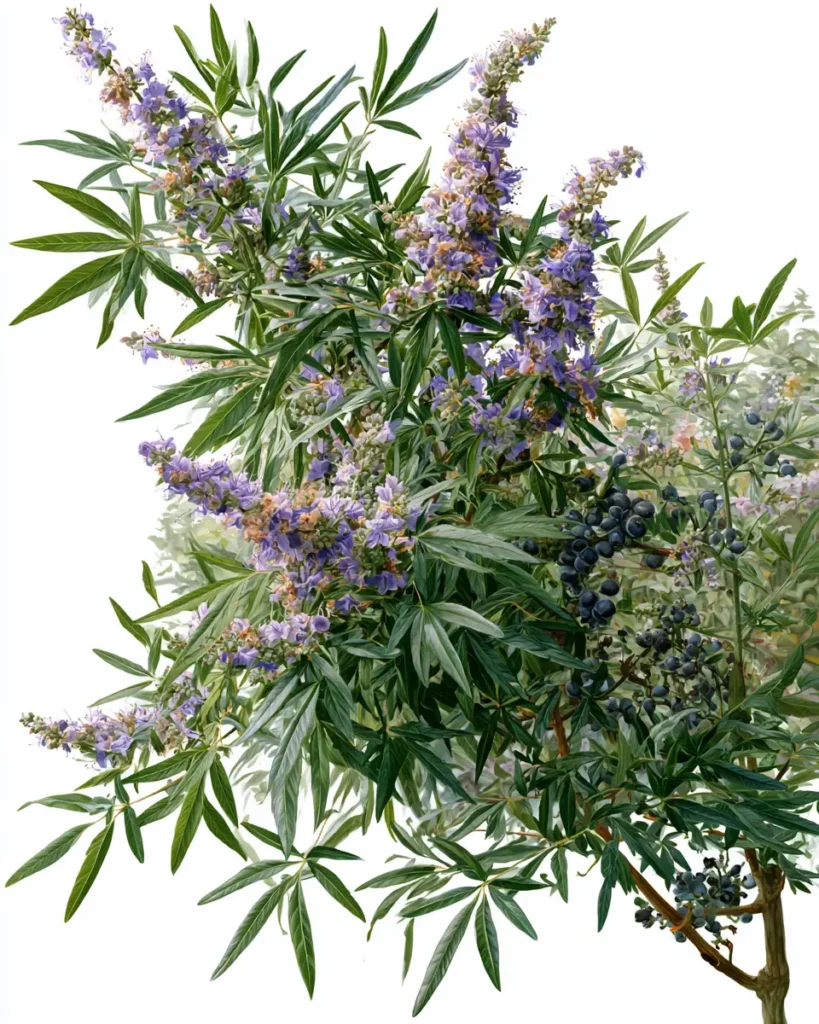
Chasteberry (Vitex agnus-castus)
Traditional Uses of Chaste Tree Berry
Menstrual Cycle Support: Chaste Tree Berryis traditionally used to support regular cycle rhythm and menstrual wellness.
PMS Support: It has a long history of use for premenstrual changes such as mood shifts, breast tenderness, and cycle-related discomfort.
Female Reproductive Wellness: Herbalists often use chasteberry when the goal is to support hormonal communication rather than directly add hormones.
Menopause Transition Support: Chaste Tree Berry sometimes appears in formulas for women’s wellness during midlife, though evidence in this area is still limited.
“Chaste Tree Berry is the herb that reminds the body that rhythm matters.”
Available Chaste Tree Berry Products
Chaste Tree Berry (Vitex) Capsules — Capsules/Tablets
A standardized extract supplement traditionally used to support hormonal balance and a healthy, regular menstrual cycle.
Buy Chaste Tree Berry Capsules
Chaste Tree Berry Liquid Extract — Tincture/Liquid Extract
A warming, astringent tincture made from fresh chaste tree berries, traditionally taken in water or juice to support women’s reproductive and hormonal health.
Buy Chaste Tree Berry Liquid Extract
Chaste Tree Berry Tea — Tea/Loose Herb
Dried chasteberry brewed as an herbal infusion, traditionally used as part of women’s wellness routines to support hormonal balance.
Buy Chaste Tree Berry Tea
Chaste Tree Berry Powder — Powder
Ground dried chaste tree berries used for encapsulation, tincturing, or infusions, or sprinkled on food for a peppery flavor.
Buy Chaste Tree Berry Powder
Chaste Tree Berry Dried Whole Fruit — Raw/Dried Herb
Whole dried berries for making your own tea, tinctures, or homemade wellness blends.
Buy Chaste Tree Berry Dried Whole Fruit
⚠️ These are dietary supplements — not evaluated by the FDA for treating disease. Chaste tree berry works by influencing hormone levels (including progesterone), so it’s not recommended alongside hormonal birth control, hormone therapy, or during pregnancy/breastfeeding. It may also interact with dopamine-related medications. Check with a healthcare provider before use, especially if you’re on hormonal medications.
Key Herbal Actions
Chaste Tree Berry is known as an endocrine-modulating herb, reproductive tonic, dopaminergic-supportive herb, prolactin-modulating herb, menstrual cycle support herb, mild nervine, bitter aromatic, and antioxidant herb.
Endocrine-Modulating Herb
An endocrine-modulating herb supports hormonal communication rather than acting as a hormone itself. Chaste Tree Berry is traditionally used for rhythm and balance in female reproductive cycles.
Reproductive Tonic
A reproductive tonic is used over time to support the function of the reproductive system. Chaste Tree Berry is usually taken consistently for several cycles rather than used as a one-time herb.
Dopaminergic-Supportive Herb
Chaste Tree Berry appears to influence dopamine-related pathways in the body. This is important because dopamine signaling is connected with prolactin regulation.
Prolactin-Modulating Herb
Chaste Tree Berry is best known for its relationship with prolactin, a pituitary hormone involved in breast tissue changes and lactation. This is one reason chasteberry is often discussed for cyclic breast tenderness.
Menstrual Cycle Support Herb
Chaste Tree Berry is traditionally used to support normal menstrual rhythm. It is not a hormone replacement herb, but it may support the body’s own regulatory patterns.
Mild Nervine
Because cycle changes can affect mood and emotional steadiness, chasteberry is sometimes used in broader women’s wellness formulas. It is not a primary calming herb like lemon balm or passionflower, but it may support mood indirectly through cycle support.
Bitter Aromatic
Chaste Tree Berry has a peppery, bitter taste. Bitter aromatic herbs can gently stimulate digestive awareness, though digestion is not chasteberry’s main herbal focus.
Antioxidant Herb
Chaste Tree Berry contains flavonoids and phenolic compounds that contribute to antioxidant activity in research settings. These compounds are part of the berry’s wider plant chemistry.
Active Compounds and Extraction
Chaste Tree Berry contains diterpenes, iridoid glycosides, agnuside, aucubin, flavonoids, casticin, essential oil constituents, fatty acids, alkaloids in trace amounts, and phenolic compounds.
Diterpenes
Diterpenes are plant compounds believed to contribute to chasteberry’s influence on dopamine-related pathways. They are one reason chasteberry is studied for hormone-rhythm support.
Best extraction: Alcohol-water tincture or standardized extract.
To make a tincture, lightly crush dried chasteberries, cover them with an alcohol-water mixture in a clean jar, and let them macerate for several weeks. Shake regularly, then strain and store in dark glass.
Iridoid Glycosides
Iridoid glycosides are bitter plant compounds found in many medicinal herbs. In chasteberry, agnuside and aucubin are two important iridoid glycosides used as quality markers.
Best extraction: Hot water decoction or alcohol-water tincture.
For a simple decoction, lightly crush 1 teaspoon dried chasteberries, simmer gently in 1 cup water for 10–15 minutes, then strain. The taste is peppery, bitter, and very “herbal cabinet.”
Agnuside
Agnuside is one of the main marker compounds used in chasteberry quality testing. It helps confirm the identity and consistency of chasteberry preparations.
Best extraction: Tincture, decoction, or standardized capsules.
Agnuside is water-soluble enough for decoction but is also present in many alcohol-water extracts and standardized products.
Aucubin
Aucubin is another iridoid glycoside found in chasteberry. It contributes to the plant’s bitter profile and broader phytochemical activity.
Best extraction: Decoction or tincture.
Crushing the berries before extraction helps expose the inner material and improves extraction.
Flavonoids
Flavonoids are antioxidant plant compounds. Chaste Tree Berry contains flavonoids such as casticin, which is often discussed in relation to plant quality and biological activity.
Best extraction: Alcohol-water tincture or standardized extract.
Flavonoids often extract well in mixed alcohol-water preparations. Capsules made from standardized extracts may also provide measured amounts.
Casticin
Casticin is a flavonoid compound found in chasteberry. It is one of the compounds researchers use to study and identify the herb’s chemical profile.
Best extraction: Alcohol-water tincture or concentrated extract.
Casticin is better captured in alcohol-containing preparations than in plain water alone.
Essential Oil Constituents
Chaste Tree Berry contains small amounts of volatile oil, including aromatic terpenes. These compounds contribute to its peppery scent and flavor.
Best extraction: Tincture or freshly crushed berry preparations.
A covered decoction can preserve some aroma, but chasteberry is not usually used as an essential oil herb.
Fatty Acids
Chaste Tree Berry fruits contain lipophilic compounds, including fatty acids. These may contribute to the overall activity of full-spectrum extracts.
Best extraction: Alcohol-water extract or whole powdered berry.
Whole berry powder keeps more of the full fruit profile, while tinctures extract a broad range of constituents.
Harvesting and Storing Right
Chaste Tree Berry is harvested when the fruits mature and turn dark brown to black, usually in late summer to autumn depending on climate. The best time of day is late morning after dew has dried.
Harvest from clean, unsprayed shrubs only when the plant is correctly identified. The berries are usually dried whole or lightly crushed after drying. They should be fully dry before storage to prevent mold.
Store dried chasteberries in an airtight jar away from heat, light, and moisture. Whole berries usually keep better than powder and are best used within about 1–2 years. Powder is best used within about 6 months. Tinctures generally keep for several years when made and stored properly.
Body Functions Chaste Tree Berry Can Support
Chaste Tree Berry can support hormonal balance, reproductive system female, menstrual cycle rhythm, breast comfort before menstruation, skin, nervous system, brain, adrenal stress response, and digestion system.
Hormonal Balance
Chaste Tree Berry is most strongly associated with hormonal rhythm. It does not contain human hormones, but it appears to influence signaling pathways connected with the pituitary gland and prolactin.
Reproductive System Female
Chaste Tree Berry is traditionally used for female reproductive wellness, especially cycle-related patterns. It is usually considered a slow-building herb that works best with consistent use over several cycles.
Menstrual Cycle Rhythm
Herbalists often use Chaste Tree Berry when the goal is to support regular cycle rhythm. It should not be used to ignore sudden menstrual changes, heavy bleeding, severe pain, or missed periods that need medical evaluation.
Breast Comfort Before Menstruation
Chaste Tree Berry is commonly discussed for cyclic breast tenderness. Its relationship with prolactin is one reason researchers and herbalists pay attention to this area.
Skin
Chaste Tree Berry has traditional use for hormone-associated skin changes. This does not mean it treats acne, but it may be included in wellness plans when breakouts seem tied to cycle rhythm.
Nervous System
Chaste Tree Berry is not a classic sedative, but cycle-related hormonal shifts can influence mood and emotional tone. By supporting cycle rhythm, it may indirectly support nervous system steadiness for some people.
Brain
The pituitary gland, dopamine signaling, and hormonal feedback loops all involve brain-based communication. Chaste Tree Berry’s studied dopamine-related activity makes it relevant to the brain-hormone conversation.
Adrenal Stress Response
Stress can affect cycle rhythm, and cycle changes can affect stress resilience. Chaste Tree Berry is not an adaptogen, but it may be part of a broader routine supporting regularity and body rhythm.
Digestion System
Chaste Tree Berry’s bitter, peppery taste gives it mild digestive qualities, though this is not its main use. It may be taken with a small amount of water or food if it causes mild stomach upset.
Safety and Practical Considerations
Chaste Tree Berry is not appropriate for everyone because it can influence hormone-related pathways. People who are pregnant, trying to become pregnant, breastfeeding, taking hormonal contraceptives, using hormone replacement therapy, taking fertility medications, or managing hormone-sensitive conditions should consult a qualified healthcare professional before using it.
Extra caution is also needed with conditions such as breast, uterine, or ovarian cancer, endometriosis, uterine fibroids, pituitary disorders, Parkinson’s disease, schizophrenia, or use of dopamine-related medications. Chasteberry may interact with dopamine agonists, dopamine antagonists, antipsychotic medications, and hormonal medications.
Chaste Tree Berry is usually taken consistently for several weeks to months. It is not a “more is better” herb. Side effects may include nausea, digestive upset, headache, dizziness, itching, rash, acne-like changes, or menstrual cycle changes.
Stop using Chaste Tree Berry and seek professional advice if you notice unusual bleeding, missed periods, severe symptoms, allergic reactions, or mood changes. Children, teens, older adults, and sensitive individuals should use extra caution and professional guidance.
FAQ
What does Chaste Tree Berry taste like?
Chaste Tree Berry tastes peppery, bitter, earthy, and slightly aromatic. Its nickname “monk’s pepper” makes sense once you taste the berries.
Is Chaste Tree Berry the same as vitex?
Yes. Chaste Tree Berry and vitex usually refer to the same herb, Vitex agnus-castus. Chaste Tree Berry refers specifically to the fruit used in herbal preparations.
When is the best time to use Chaste Tree Berry?
Chaste Tree Berry is usually taken in the morning in many herbal traditions, though label directions vary. Consistency matters more than the exact time of day.
Is fresh or dried Chaste Tree Berry better?
Dried Chaste Tree Berry is the standard market form and is most practical for tinctures, capsules, and decoctions. Fresh berries can be used by experienced herbalists when correctly identified and harvested.
Is chasteberry tea, tincture, or capsule better?
Capsules and tablets are convenient and often standardized. Tincture allows flexible dosing. Tea or decoction is traditional but less common because the berries are hard and the taste is strong.
Can Chaste Tree Berry be used daily?
Chaste Tree Berry is often used daily for several menstrual cycles in traditional and research settings. Daily use should be guided by a healthcare professional when medications, hormonal concerns, pregnancy plans, or medical conditions are involved.
How should chasteberry be stored?
Store whole dried berries in a sealed jar away from heat, light, and moisture. Powder should be used more quickly because it loses freshness faster.
Does Chaste Tree Berry combine well with other herbs?
Yes. It is often combined with herbs such as red raspberry leaf, nettle, dandelion root, milk thistle, lemon balm, motherwort, or black cohosh depending on the formula goal. Hormone-focused formulas should be chosen carefully.
Is Chaste Tree Berry safe for everyone?
No. Chasteberry is not suitable for everyone, especially people who are pregnant, breastfeeding, using hormonal medications, taking dopamine-related medications, or managing hormone-sensitive conditions.
Can Chaste Tree Berry be used for pets?
Pet use should be guided by a veterinarian or qualified animal herbalist. Hormone-active herbs should not be used casually with animals.
Disclaimer
This content is educational only. It is not medical advice, diagnosis, or treatment. Herbs may interact with medications or health conditions. People who are pregnant, breastfeeding, managing a medical condition, taking prescription medications, or preparing for surgery should consult a qualified healthcare professional before using herbs.
References
EMA: European Union Herbal Monograph on Vitex agnus-castus Fruit
EMA: Assessment Report on Vitex agnus-castus Fruit
PubMed: Vitex agnus-castus in Premenstrual Syndrome – Meta-Analysis
PubMed: Chasteberry and Cyclic Mastalgia Review
PubMed: Narrative Review of Vitex agnus-castus in Gynecology
NCBI Bookshelf: LactMed – Chasteberry