


Traditionally, dill has been used to support digestion, ease gas and bloating, freshen the breath, support gentle respiratory comfort, and bring light aromatic warmth to meals. It is a friendly herb: soft enough for soup, strong enough to remind lentils who is in charge.
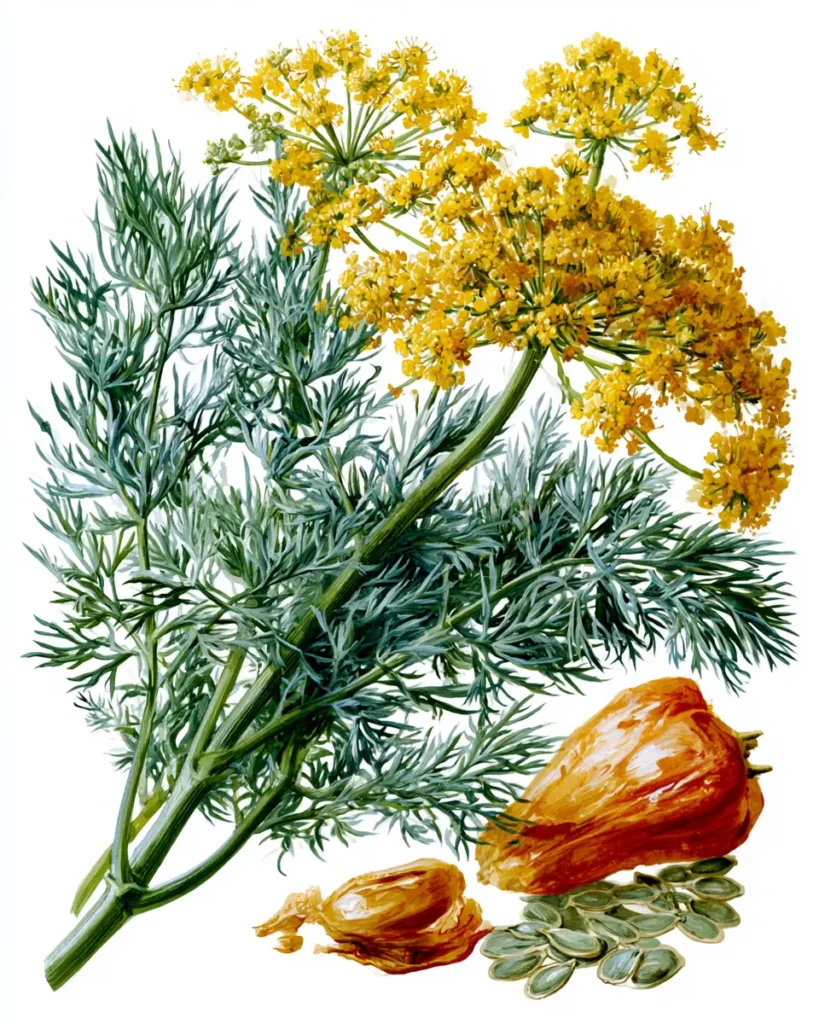
Dill (Anethum graveolens)
Traditional Uses of Dill
Digestive Support: Dill seed is traditionally used after meals to support comfortable digestion, especially when gas or heaviness is present.
Gas and Bloating: Its aromatic oils make dill a classic carminative herb, traditionally used to help the body release trapped digestive gas.
Oral Freshness: Dill seed has been chewed after meals in some traditions to freshen the mouth and support digestion.
Culinary Wellness: Dill leaf is widely used as a food herb, adding flavor while gently supporting appetite and digestion.
“Dill is the herb that makes digestion feel a little lighter and dinner taste a little brighter.”
Available Dill Products
Dill Seed Capsules — Capsules/Tablets
A dried-seed supplement traditionally used in Ayurveda to support digestion and ease bloating or gas.
Buy Dill Seed Capsules
Dill Weed Tincture — Tincture/Liquid Extract
A concentrated extract made from dried dill leaves (“weed”), traditionally used to support digestion.
Buy Dill Weed Tincture
Dill Seed Essential Oil — Essential Oil
A steam-distilled oil with a spiced, earthy aroma, used in aromatherapy and diluted topical blends.
Buy Dill Seed Essential Oil
Dried Dill Weed — Raw/Dried Herb (Leaf)
Dried, feathery dill leaves used to flavor soups, fish, eggs, and vegetables, or steeped for tea.
Buy Dried Dill Weed
Whole Dill Seeds — Raw/Whole Seed
Whole dried dill fruits (“seeds”) with a caraway-like flavor, used in pickling brines, breads, and Eastern European cuisine.
Buy Whole Dill Seeds
⚠️ These are dietary supplements/culinary products — not evaluated by the FDA for treating disease. Dill essential oil should always be diluted before topical use and internal use isn’t generally recommended without professional guidance. In typical culinary amounts, dill is considered safe, but concentrated medicinal doses may affect blood sugar or interact with certain medications. Check with a healthcare provider before use, especially if pregnant, nursing, or on medication.
Key Herbal Actions
Dill is known as a carminative, aromatic digestive, antispasmodic, mild galactagogue, appetite-supporting herb, expectorant, antimicrobial-supportive herb, antioxidant, and gentle warming spice.
Carminative
A carminative herb supports the movement and release of digestive gas. Dill seed is especially known for this action and is traditionally used after meals.
Aromatic Digestive
Aromatic digestives contain fragrant volatile oils that stimulate the senses and support digestion. Dill seed’s warm scent comes from essential oil compounds that help explain its digestive reputation.
Antispasmodic
Antispasmodic herbs are traditionally used to ease patterns of gripping or tightness. Dill seed is often used when digestion feels tense, gassy, or crampy.
Mild Galactagogue
A galactagogue is an herb traditionally used to support breast milk flow. Dill has this traditional reputation in some cultures, but breastfeeding use should be guided by a qualified healthcare professional.
Appetite-Supporting Herb
Dill’s light bitterness and aroma may support appetite and digestive readiness. Fresh dill leaf can make food more appealing without overwhelming it.
Expectorant
Dill has mild traditional use in respiratory formulas because of its aromatic oils. It is not a strong expectorant like thyme or elecampane, but it can add warmth and flavor to respiratory tea blends.
Antimicrobial-Supportive Herb
Dill essential oil and its aromatic compounds have been studied in laboratory settings for antimicrobial activity. This supports its traditional role in food, pickling, and digestive use, but it does not make dill a replacement for medical treatment.
Antioxidant
Dill contains flavonoids, phenolic compounds, and volatile oils that contribute to antioxidant activity in research settings. These compounds are part of dill’s broader plant chemistry.
Gentle Warming Spice
Dill seed is warm and aromatic but generally less hot than spices like clove, ginger, or ajwain. This makes it a friendly digestive spice for many people.
Active Compounds and Extraction
Dill contains carvone, limonene, alpha-phellandrene, dill apiol, anethofuran, flavonoids, phenolic acids, coumarins, tannins, fixed oils, fiber, minerals, and small amounts of protein.
Carvone
Carvone is a major aromatic compound in dill seed essential oil. It contributes to dill’s warm, slightly sweet scent and is studied for digestive and antimicrobial-related activity.
Best extraction: Covered hot infusion, tincture, or steam distillation.
To make dill seed tea, lightly crush 1 teaspoon of dill seed, pour over 1 cup hot water, cover, and steep for 10–15 minutes. Covering the cup helps preserve the aromatic oils.
Limonene
Limonene is a citrusy terpene found in dill and many aromatic plants. It contributes to dill’s bright scent and supports its carminative, digestive personality.
Best extraction: Tincture or covered infusion.
A covered infusion captures some limonene, while alcohol-water tincture extracts a broader aromatic profile.
Alpha-Phellandrene
Alpha-phellandrene is a volatile terpene found in dill essential oil. It contributes to the herb’s fresh, spicy aroma and is part of its warming aromatic action.
Best extraction: Essential oil, tincture, or covered hot infusion.
For everyday use, tea or culinary seed use is much gentler than essential oil.
Dill Apiol
Dill apiol is an aromatic compound found in dill seed oil. It contributes to dill’s distinctive chemistry and is one reason concentrated dill oil should be used cautiously.
Best extraction: Tincture or essential oil.
Dill essential oil is concentrated and should not be used internally without professional guidance. Tea and food use are much milder.
Flavonoids
Flavonoids are antioxidant plant compounds. Dill leaf and seed both contain flavonoid-type constituents that contribute to the herb’s wellness profile.
Best extraction: Hot water infusion or food use.
Fresh dill leaf in food provides flavonoids and flavor. Dill seed tea extracts some water-soluble flavonoids.
Phenolic Acids
Phenolic acids are plant compounds associated with antioxidant activity. They support dill’s broader protective plant chemistry.
Best extraction: Hot water infusion or tincture.
A simple covered tea works well for everyday use. Tincture offers a stronger extract.
Coumarins
Coumarins are aromatic plant compounds found in many Apiaceae herbs. In dill, they are part of the seed’s complex chemistry and should be considered when using concentrated extracts.
Best extraction: Tincture or infusion.
Normal culinary use is mild. Concentrated products should be used more cautiously, especially with medications.
Fixed Oils, Fiber, and Minerals
Dill seed contains fixed oils, fiber, and small amounts of minerals. These are most relevant when the seed is eaten whole, crushed, or powdered rather than strained out.
Best extraction: Whole food use or powder.
Use dill seed in pickles, breads, soups, legumes, and digestive spice blends. Light crushing before use releases more aroma.
Harvesting and Storing Right
Dill leaf is best harvested when the plant is young, green, and aromatic, before it becomes too woody or goes fully to seed. Morning is ideal after dew has dried but before strong afternoon heat.
Dill seed is harvested when the flower umbels dry and the seed-like fruits turn tan to light brown. Cut the seed heads into a paper bag and let them finish drying in a warm, airy place. Dill seeds can scatter easily, so the paper bag is not just tidy; it is self-defense.
Fresh dill leaf is best used quickly. It can be stored in the refrigerator wrapped lightly in a damp towel or standing in a jar with a little water. Dried dill leaf should be stored away from heat, light, and moisture and is best used within about 6–12 months.
Whole dill seed keeps longer, usually about 1–2 years when stored well. Ground dill seed is best used within about 6 months. Tinctures may keep for several years when properly made and stored.
Body Functions Dill Can Support
Dill can support digestion system, respiratory system, dental oral comfort, reproductive system female, immune system, metabolism, circulation, energy and vitality, and nervous system.
Digestion System
Dill seed is most strongly associated with digestion. Its carminative and antispasmodic actions make it a traditional choice for gas, bloating, and post-meal heaviness.
Respiratory System
Dill’s aromatic oils give it mild traditional use in respiratory comfort formulas. It may be used in teas where gentle warmth and pleasant flavor are desired.
Dental Oral
Chewing dill seed after meals has been used traditionally for breath freshness. Its aromatic compounds help explain why it appears in culinary and oral-freshening traditions.
Reproductive System Female
Dill has traditional use as a mild galactagogue in some cultures. Because this involves breastfeeding and infants, it should be approached with professional guidance rather than casual experimentation.
Immune System
Dill contains aromatic compounds and antioxidants that support general wellness. Laboratory studies on dill essential oil help explain traditional antimicrobial use, but dill should not be presented as a treatment for infection.
Metabolism
Dill supports metabolism indirectly through digestion. When food is better tolerated and digestion feels lighter, overall energy and post-meal comfort may improve.
Circulation
As a gentle warming aromatic herb, dill seed may create a mild sense of warmth and movement. This is a traditional energetic use, not a treatment claim for circulation disorders.
Energy and Vitality
Dill does not act like caffeine or an adaptogen. Instead, it may support vitality by helping heavy meals feel less burdensome and by making food more enjoyable.
Nervous System
Dill is not a primary nervine, but digestive comfort can influence nervous system comfort. A warm dill tea after a heavy meal can feel settling in a simple, practical way.
Safety and Practical Considerations
Dill used in normal food amounts is generally well tolerated by many people. Medicinal amounts, concentrated extracts, and essential oil require more caution.
People allergic to plants in the Apiaceae family, such as celery, carrot, fennel, anise, coriander, cumin, or parsley, should use dill cautiously. Allergic reactions are uncommon but possible.
Pregnant people should avoid medicinal amounts of dill seed or dill essential oil unless guided by a qualified professional. Culinary use in normal food amounts is different from strong extracts or essential oils. Breastfeeding people should also seek guidance before using dill specifically as a galactagogue.
Dill essential oil is concentrated and should not be taken internally without professional supervision. It should be properly diluted for topical use and kept away from children and pets.
People taking prescription medications, managing chronic illness, preparing for surgery, or using multiple supplements should consult a healthcare professional before using concentrated dill products.
FAQ
What does dill taste like?
Dill leaf tastes fresh, grassy, slightly sweet, and lightly tangy. Dill seed tastes warmer, more aromatic, slightly bitter, and more spice-like.
Is dill leaf the same as dill seed?
They come from the same plant, but they are used differently. Dill leaf is more culinary and fresh-tasting, while dill seed is stronger and more traditionally digestive.
When is the best time to use dill?
Dill leaf is best used in food whenever its fresh flavor fits. Dill seed tea is often used after meals for digestive comfort.
Is fresh or dried dill better?
Fresh dill leaf has the brightest flavor. Dried dill leaf is convenient but milder. Dill seed is usually used dried and keeps its aroma longer than dried leaf.
Is dill tea, tincture, or capsule better?
Tea is simple and traditional for digestive comfort. Tincture is stronger and more concentrated. Capsules are convenient but less common and should be used according to label directions.
Can dill be used daily?
Dill can be used daily in normal culinary amounts. Daily medicinal use, especially with concentrated extracts or essential oil, should be discussed with a qualified healthcare professional.
How should dill be stored?
Fresh dill should be refrigerated and used quickly. Dried dill leaf and dill seed should be stored in sealed containers away from heat, light, and moisture.
Does dill combine well with other herbs?
Yes. Dill combines well with fennel, caraway, coriander, cumin, peppermint, parsley, lemon balm, chamomile, garlic, and lemon peel. It is especially useful in digestive blends and food-based herbal support.
Is dill safe for everyone?
No herb is safe for absolutely everyone. People with Apiaceae allergies, pregnancy or breastfeeding considerations, medication use, or sensitive digestion should use extra caution with medicinal amounts.
Can dill be used for pets?
Pet use should be guided by a veterinarian or qualified animal herbalist. Small culinary exposure is different from giving concentrated dill products or essential oil.
Disclaimer
This content is educational only. It is not medical advice, diagnosis, or treatment. Herbs may interact with medications or health conditions. People who are pregnant, breastfeeding, managing a medical condition, taking prescription medications, or preparing for surgery should consult a qualified healthcare professional before using herbs.
References
Plants of the World Online: Anethum graveolens
University of Wisconsin-Madison: Dill, Anethum graveolens
PubMed: Anethum graveolens – An Overview
PubMed: Dill Essential Oil Composition and Antimicrobial Activity
PubMed: Anethum graveolens Pharmacological Properties Review
NCBI Bookshelf: Herbal Medicine Safety and Herb-Drug Interaction Considerations