


Echinacea is a North American prairie plant. The roots, aerial parts, and flowers have all been used in herbal preparations, depending on the species and product. Today, echinacea is best known as a seasonal immune-support herb. It is the kind of plant people often remember when everyone around them starts sneezing in stereo.
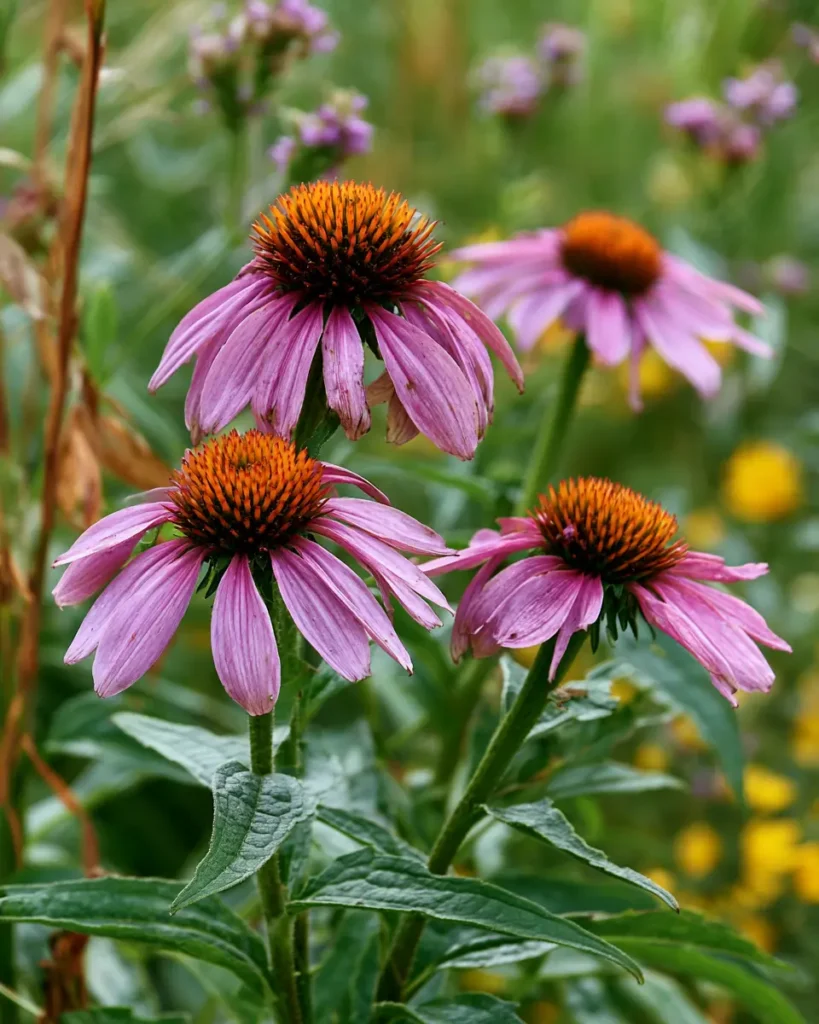
Echinacea (Echinacea purpurea, Echinacea angustifolia, Echinacea pallida)
Traditional Uses of Echinacea
Immune Support: Echinacea is traditionally used to support immune readiness during seasonal challenges.
Respiratory Season Support: Herbalists often include echinacea in short-term formulas for cold-weather and upper respiratory wellness routines.
Lymphatic Support: Echinacea has a traditional reputation as a lymphatic and alterative herb, especially in Western herbalism.
Skin and Tissue Support: Echinacea root and aerial parts have historically been used in external and internal formulas related to tissue resilience and minor skin concerns.
“Echinacea is the prairie flower that looks cheerful but knows how to stand guard.”
Available Echinacea Products
Echinacea Capsules — Capsules/Tablets
A concentrated extract of echinacea root, leaf, and flower, traditionally used to support immune function, especially during seasonal changes.
Buy Echinacea Capsules
Echinacea Liquid Extract — Tincture/Liquid Extract
A fast-absorbing tincture made from echinacea root and aerial parts, traditionally used for year-round immune support.
Buy Echinacea Liquid Extract
Echinacea Tea — Tea Bags
A caffeine-free herbal tea blend featuring echinacea, traditionally used to support the immune system during cold and flu season.
Buy Echinacea Tea
Echinacea Gummies — Gummies
A chewable, flavored alternative to capsules, combining echinacea with immune-supporting ingredients for kids and adults who dislike pills.
Buy Echinacea Gummies
Echinacea Dried Root (Cut & Sifted) — Raw/Dried Herb
Whole dried, cut echinacea root for brewing your own tea, tinctures, or infusions at home.
Buy Echinacea Dried Root
⚠️ These are dietary supplements — not evaluated by the FDA for treating disease. Echinacea is part of the daisy (Asteraceae) family, so those allergic to ragweed, marigolds, or chrysanthemums may also react to it. It’s generally not recommended for people with autoimmune conditions or those on immunosuppressant medications, and long-term continuous use isn’t typically advised (short courses are traditional). Check with a healthcare provider before use, especially in children or if pregnant/nursing.
Key Herbal Actions
Echinacea is known as an immune modulator, lymphatic, alterative, antimicrobial-supportive herb, vulnerary-supportive herb, sialagogue, anti-inflammatory-supportive herb, and antioxidant.
Immune Modulator
An immune modulator is an herb traditionally used to support normal immune function rather than simply “boost” it. Echinacea is best described this way because immune systems need balance, not just more volume.
Lymphatic
Lymphatic herbs are traditionally used to support lymph movement and tissue fluid balance. Echinacea has a long-standing role in Western herbalism as a lymphatic-support herb.
Alterative
Alteratives are herbs used over time to support the body’s natural cleansing and tissue-balancing processes. Echinacea is often included in alterative formulas, especially where skin, lymph, and immune support overlap.
Antimicrobial-Supportive Herb
Echinacea extracts have been studied for activity against microbes in laboratory settings. This does not mean echinacea treats infections, but it helps explain its traditional seasonal use.
Vulnerary-Supportive Herb
Vulnerary herbs are traditionally used to support tissue repair. Echinacea has been used historically in formulas for skin and tissue resilience, especially externally.
Sialagogue
A sialagogue stimulates saliva. Good-quality echinacea root often creates a tingling, mouth-watering sensation, especially because of alkylamides.
Anti-Inflammatory-Supportive Herb
Echinacea compounds have been studied for effects on inflammatory signaling. This action should be described as supportive research interest, not as a disease-treatment claim.
Antioxidant
Echinacea contains phenolic compounds, including caffeic acid derivatives, that contribute to antioxidant activity.
Active Compounds and Extraction
Echinacea contains alkylamides, caffeic acid derivatives, echinacoside, cichoric acid, polysaccharides, glycoproteins, flavonoids, volatile oils, polyacetylenes, and essential minerals.
Alkylamides
Alkylamides are important lipophilic compounds found especially in echinacea root, though amounts vary by species and plant part. They are associated with the tingling sensation that high-quality echinacea root can create in the mouth.
Alkylamides are studied for immune-modulating and inflammatory-response activity. They are one reason alcohol-water tinctures are popular for echinacea.
Best extraction: alcohol-water tincture, standardized extract, fresh root tincture, and capsules.
To make echinacea tincture, use dried root at about 1 part herb to 5 parts liquid with 50–60% alcohol. Let it sit for 4–6 weeks, shaking regularly, then strain.
Caffeic Acid Derivatives
Caffeic acid derivatives are antioxidant phenolic compounds found in echinacea. Important examples include cichoric acid, caftaric acid, chlorogenic acid, and echinacoside, depending on the species.
Best extraction: hot-water infusion, alcohol-water tincture, standardized extract, and powder.
Aerial-part tea can extract many water-soluble phenolic compounds. Use 1–2 teaspoons dried aerial parts per cup of hot water, cover, steep 10–15 minutes, and strain.
Echinacoside
Echinacoside is a caffeic acid derivative associated especially with Echinacea angustifolia and Echinacea pallida roots. It is often used as a marker compound in quality testing.
Best extraction: alcohol-water tincture, hot-water decoction, standardized extract, and powder.
For root decoction, simmer 1 teaspoon dried echinacea root per cup of water for 15–20 minutes, then strain.
Cichoric Acid
Cichoric acid is especially associated with Echinacea purpurea. It is studied for antioxidant and immune-related activity and is often measured in echinacea products.
Best extraction: hot-water infusion, alcohol-water tincture, fresh juice, and standardized extract.
Because cichoric acid can degrade with poor storage, dried echinacea should be fresh, aromatic, and stored away from heat and light.
Polysaccharides
Polysaccharides are complex carbohydrates that are studied for immune-related activity. They are more water-soluble and are especially relevant in teas, decoctions, and fresh-pressed preparations.
Best extraction: hot-water infusion, decoction, fresh juice, and glycerite.
A long infusion of aerial parts or a decoction of root can extract polysaccharides. Water-based preparations are especially appropriate for this compound group.
Glycoproteins
Glycoproteins are compounds made of protein and carbohydrate components. In echinacea, they are part of the herb’s immune-related research profile.
Best extraction: fresh juice, water-based preparations, and gentle infusions.
Fresh Echinacea purpurea juice products are sometimes used in European herbal traditions. At home, most people use tea or tincture instead.
Flavonoids
Flavonoids are plant compounds studied for antioxidant activity. In echinacea, they contribute to the overall plant profile, especially in the aerial parts.
Best extraction: hot-water infusion, tincture, powder, and whole-herb preparations.
A covered infusion is a simple way to extract flavonoids from leaves and flowers.
Volatile Oils
Echinacea contains small amounts of volatile oils that contribute to aroma and plant chemistry. They are not as dominant as in peppermint or thyme, but they add to the whole-herb profile.
Best extraction: fresh plant use, tincture, and covered infusion.
When making tea from aerial parts, cover the cup while steeping to preserve delicate aromatics.
Polyacetylenes
Polyacetylenes are bioactive plant compounds found in some echinacea species. They contribute to the plant’s complex chemistry but are not usually the main focus of product labels.
Best extraction: alcohol-water tincture and standardized extract.
A hydroalcoholic preparation captures a wider range of compounds than water alone.
Harvesting and Storing Right
Echinacea aerial parts are usually harvested during flowering, when leaves and flowers are fresh and vibrant. The best time of day is late morning after dew has dried.
Roots are typically harvested from mature plants in autumn, after the aerial parts begin to die back and energy moves into the root. Mature roots are preferred because they are more developed.
Dry aerial parts quickly in a shaded, well-ventilated place. Roots should be cleaned, chopped, and dried thoroughly to prevent mold.
Store dried echinacea in airtight containers away from heat, light, and moisture. Aerial parts are best used within about 1 year, while well-dried roots may keep for 1–2 years.
Echinacea tinctures made with adequate alcohol can keep for several years. Capsules, extracts, syrups, and lozenges should be stored according to product labels.
Body Functions Echinacea Can Support
Echinacea can support Immune system, Respiratory system, Lymphatic system, Skin, Dental oral, Digestion system, and Energy and vitality.
Immune System
Echinacea is best known for seasonal immune support. Its alkylamides, polysaccharides, caffeic acid derivatives, and glycoproteins are studied for immune-related activity.
Research on echinacea for colds is mixed, partly because studies use different species, plant parts, extracts, and doses. It is best described as a supportive herb, not a guaranteed way to prevent or treat illness.
Respiratory System
Echinacea is commonly used in seasonal upper respiratory wellness formulas. It may be combined with elderberry, elderflower, thyme, licorice, ginger, or yarrow.
This use should be framed as short-term seasonal support. Wheezing, difficulty breathing, chest pain, high fever, dehydration, or worsening symptoms require medical care.
Lymphatic System
Echinacea is a classic lymphatic-support herb in Western herbalism. Herbalists often use it where immune activity, tissue congestion, and skin concerns overlap.
This does not mean echinacea treats swollen lymph nodes, infections, or immune disorders. Persistent swelling, pain, fever, or unexplained lumps should be evaluated by a clinician.
Skin
Echinacea has traditional use in skin and tissue-support formulas, both internally and externally. Its vulnerary-supportive and immune-modulating traditions explain this connection.
Topical use should be limited to appropriate products and patch-tested. Do not rely on echinacea for serious wounds, infected skin, burns, or spreading rashes.
Dental Oral
Echinacea root’s tingling sialagogue effect can stimulate saliva and create a lively mouthfeel. Some traditional preparations use echinacea in oral and throat formulas.
This does not replace dental care or medical care for mouth infections, gum disease, or severe throat symptoms.
Digestion System
Echinacea has a slightly bitter, earthy, tingling taste that may gently stimulate digestive awareness. However, digestion is not its main traditional role.
Some people experience nausea, stomach upset, or unpleasant tingling from echinacea products. Taking it with food may help sensitive stomachs.
Energy and Vitality
Echinacea may support vitality indirectly during seasonal stress by supporting immune readiness and resilience. It is not a stimulant and does not provide caffeine-like energy.
It is usually used short-term rather than as a daily lifelong tonic. For long-term vitality, herbs like astragalus, nettle, oat straw, and medicinal mushrooms are often more appropriate.
Safety and Practical Considerations
Echinacea is generally well tolerated by many adults when used appropriately, but it is not suitable for everyone. Possible side effects include nausea, stomach upset, rash, dizziness, headache, unpleasant taste, mouth tingling, or allergic reactions.
People allergic to plants in the Asteraceae family should use caution or avoid echinacea. This family includes ragweed, daisies, chamomile, calendula, arnica, yarrow, and dandelion.
Echinacea may not be appropriate for people with autoimmune diseases, immune system disorders, organ transplant history, HIV/AIDS, tuberculosis, multiple sclerosis, lupus, rheumatoid arthritis, or those taking immunosuppressant medications unless guided by a qualified clinician.
People taking chemotherapy, immune-modulating medications, liver-metabolized drugs, sedatives, diabetes medications, or multiple prescriptions should ask a healthcare professional before using echinacea.
Pregnancy and breastfeeding safety data are not strong enough for casual supplement use. Anyone pregnant or breastfeeding should seek professional guidance before using echinacea products.
Echinacea is usually used short-term. Long-term daily use should be discussed with a qualified professional, especially when immune conditions or medications are involved.
Children, older adults, and sensitive individuals should use smaller amounts and avoid strong extracts unless professionally guided. Pet use should only be guided by a veterinarian.
FAQ
What does echinacea taste like?
Echinacea tastes earthy, slightly bitter, and sometimes sweet. Good-quality root often creates a tingling or mouth-watering sensation.
When is the best time to use echinacea?
Echinacea is commonly used during seasonal immune challenges or when someone wants short-term immune support. It is not usually used as a year-round daily tonic.
Is echinacea root or flower better?
Both are used, but they have slightly different chemistry. Roots are often richer in alkylamides, while aerial parts may provide more cichoric acid and water-soluble compounds.
Is echinacea tea, tincture, or capsule better?
Tincture is popular because it extracts alkylamides well. Tea is gentler and better for water-soluble compounds, while capsules are convenient but vary widely in quality.
Can echinacea be used daily?
Echinacea is usually used short-term rather than daily for long periods. Daily use should be discussed with a qualified professional, especially with immune conditions or medications.
How should echinacea be stored?
Store dried echinacea root and aerial parts in airtight containers away from heat, light, and moisture. Tinctures and extracts should be kept tightly closed in a cool, dark place.
Does echinacea combine well with other herbs?
Yes. Echinacea combines well with elderberry, elderflower, astragalus, yarrow, ginger, thyme, licorice, marshmallow root, mullein, calendula, and rosehip depending on the formula.
Is echinacea safe for everyone?
No. Echinacea may not be appropriate for people with Asteraceae allergies, autoimmune disease, immune-suppressing medication use, transplant history, pregnancy, breastfeeding, or complex medical conditions.
Is purple coneflower the same as echinacea?
Purple coneflower usually refers to Echinacea purpurea, one of the main medicinal echinacea species. However, not every coneflower product contains the same species or plant part.
Can echinacea be used for pets?
Pet use should only be guided by a veterinarian. Human echinacea products may contain alcohol, sweeteners, or doses that are not appropriate for animals.
Disclaimer
This content is educational only. It is not medical advice, diagnosis, or treatment. Herbs may interact with medications or health conditions. People who are pregnant, breastfeeding, managing a medical condition, taking prescription medications, or preparing for surgery should consult a qualified healthcare professional before using herbs.
References
Memorial Sloan Kettering Cancer Center: Echinacea
European Medicines Agency: Echinacea purpurea Herb
European Medicines Agency: Echinacea purpurea Root
European Medicines Agency: Echinacea angustifolia Root
PubMed: Echinacea for Preventing and Treating the Common Cold
PubMed: Echinacea Alkylamides and Immune Activity
PubMed: Echinacea Phytochemistry and Pharmacology