


Eyebright is a small flowering herb traditionally associated with the eyes, upper respiratory comfort, and mild mucous membrane support. Its name gives away its reputation rather clearly — herbalists were not being subtle with this one.
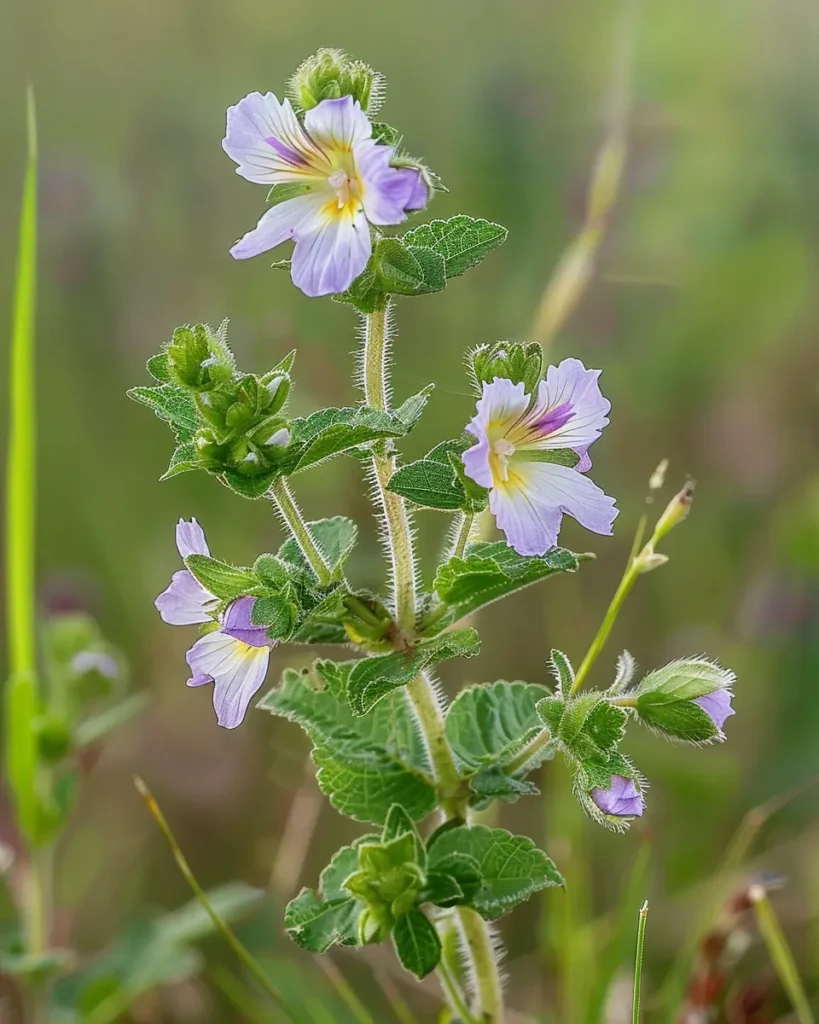
Eyebright (Euphrasia officinalis / Euphrasia rostkoviana)
Traditional Uses of Eyebright
Eye Comfort: Eyebright is traditionally known for supporting irritated, watery, or tired-feeling eyes, especially when used in properly prepared commercial sterile products or internal herbal preparations.
Seasonal Mucous Membrane Support: Herbalists often use eyebright when seasonal pollen, dust, or dry air leaves the eyes, nose, and throat feeling reactive.
Upper Respiratory Support: Eyebright has traditionally been used with herbs such as elderflower, yarrow, nettle, and goldenrod for mild seasonal sinus and nasal comfort.
Astringent Tissue Support: Its tannins give eyebright a drying, toning quality that herbalists associate with damp, watery, or overly relaxed tissues.
“Eyebright is the tiny meadow herb with a name that sounds like it came with its own herbal job description.”
Available Eyebright Products
Dried Eyebright
Dried eyebright is usually made from the aerial parts of the plant, meaning the leaves, stems, and flowers. It is commonly used for tea, tincture-making, and internal herbal blends.
Look for dried herb that still has a fresh green-brown color with small visible flower pieces. Avoid material that looks dusty, faded, musty, or overly stemmy.
Eyebright Tea
Eyebright tea is usually prepared as a short infusion. It has a mildly bitter, grassy, slightly tannic taste and is most often used in seasonal wellness blends.
Because homemade eye washes can carry contamination risk, eyebright tea is better used as a drink rather than placed into the eyes.
Eyebright Tincture
Eyebright tincture is a practical alcohol-water extract used in small amounts. Tinctures are convenient for people who want a shelf-stable form and do not want to brew tea each time.
Eyebright Capsules
Capsules usually contain powdered eyebright herb or extract. They are convenient, but the label should clearly identify the botanical name, part used, serving size, and whether the product is a plain powder or extract.
Eyebright Powder
Eyebright powder may be found in capsules or loose powder form. Since powdered herbs lose freshness faster than whole-cut dried herbs, smaller containers are usually better.
Sterile Eyebright Eye Drops
Some commercial products contain highly diluted, sterile eyebright preparations for eye use. These are very different from homemade teas or washes because they are manufactured for sterility and eye safety.
Do not put homemade eyebright tea, tincture, or powder into the eyes. The eye is delicate, and it has absolutely no interest in your kitchen experiment.
Key Herbal Actions
Eyebright is known as an astringent, anticatarrhal, mucous membrane tonic, mild anti-inflammatory herb, bitter tonic, and antioxidant herb.
Astringent
Astringent herbs contain tannins that create a drying, tightening quality. Eyebright’s astringency is traditionally linked to watery eyes, runny nose patterns, and damp mucous membrane states.
Anticatarrhal
Anticatarrhal herbs are traditionally used to support the body when excess mucus or watery secretions are present. Eyebright is often included in seasonal formulas for the nose, sinuses, and eyes.
Mucous Membrane Tonic
A mucous membrane tonic is an herb traditionally used to support the lining tissues of the eyes, nose, throat, and respiratory tract. Eyebright’s tannins, flavonoids, and iridoid glycosides help explain this traditional use.
Mild Anti-Inflammatory Herb
Eyebright has been studied in laboratory settings for anti-inflammatory activity, especially in relation to extracts and eye-related cell models. Human evidence remains limited, so this action should be described cautiously.
Bitter Tonic
Eyebright has a mild bitter taste. Bitter herbs are traditionally understood to gently wake up digestion, although eyebright is more famous for eye and mucous membrane traditions than for digestive use.
Antioxidant
Eyebright contains flavonoids and phenolic compounds that contribute to antioxidant activity. These compounds are common in many small flowering herbs.
Active Compounds and Extraction
Eyebright contains iridoid glycosides, aucubin, flavonoids, tannins, phenolic acids, lignans, and small amounts of volatile compounds.
Iridoid Glycosides
Iridoid glycosides are bitter plant compounds found in many traditional herbs. In eyebright, aucubin is one of the best-known iridoid glycosides.
These compounds are traditionally associated with bitter tonic activity and mucous membrane support. They are water-soluble and can be extracted in tea or alcohol-water tincture.
Best extraction: hot-water infusion and alcohol-water tincture.
To make eyebright tea, use about 1 teaspoon dried herb per cup of hot water. Cover and steep for 10–15 minutes, then strain well. Use it as a drink, not as a homemade eye rinse.
Aucubin
Aucubin is an iridoid glycoside found in eyebright and several other herbs. It is studied for biological activity, but research does not justify strong claims about treating eye disease.
Best extraction: water and alcohol-water preparations.
For tincture, use dried eyebright at about 1 part herb to 5 parts liquid with 40–50% alcohol. Let sit for 4–6 weeks, shake regularly, and strain carefully.
Flavonoids
Flavonoids are plant compounds studied for antioxidant and tissue-supportive activity. Eyebright contains flavonoids that may help explain its traditional use for delicate mucous membranes.
Best extraction: tea, tincture, and powdered herb.
A covered infusion is useful because it extracts water-soluble compounds while keeping the preparation simple and gentle.
Tannins
Tannins are responsible for the drying, puckering quality of astringent herbs. In eyebright, tannins are especially relevant to its traditional use in watery or damp tissue patterns.
Best extraction: hot-water infusion and tincture.
A 10–15 minute infusion is usually enough. Very strong, overly tannic preparations may feel drying or unpleasant for sensitive people.
Phenolic Acids
Phenolic acids are antioxidant compounds found in many herbs. In eyebright, they contribute to the plant’s broader polyphenol profile.
Best extraction: tea, tincture, and whole-herb powder.
Because phenolic acids are generally accessible through water-based preparations, a simple tea is a reasonable traditional method.
Lignans
Lignans are plant compounds found in many seeds, grains, and herbs. In eyebright, they are part of the herb’s complex chemistry but are not usually the main reason people choose it.
Best extraction: alcohol-water tincture and whole-herb powder.
A tincture may capture a broader range of compounds than tea alone, while powder keeps the whole herb matrix intact.
Harvesting and Storing Right
Eyebright is usually harvested when the plant is flowering, because the aerial parts are the main herbal material. Harvesting is best done on a dry morning after dew has evaporated.
The plant is small, and wild populations can be sensitive in some areas, so responsible sourcing matters. Many eyebright species are semi-parasitic plants that grow with grasses, which makes cultivation more complicated than common garden herbs.
Dry the aerial parts quickly in a shaded, well-ventilated place. Once fully dry, store the herb in an airtight jar away from heat, moisture, and direct light.
Dried eyebright is best used within about 1 year. Powdered eyebright should be used sooner, usually within 6–12 months, because powders lose quality faster.
Tinctures made with adequate alcohol can keep for several years when stored in a cool, dark place. Commercial sterile eye drops should be stored exactly according to the product label and discarded by the expiration date.
Body Functions Eyebright Can Support
Eyebright can support Vision, Respiratory system, Immune system, Digestion system, and Skin.
Vision
Eyebright is traditionally linked to eye comfort, especially watery, irritated, or tired-feeling eyes. Its name and long-standing folk use reflect this association clearly.
However, eye symptoms can have many causes, including infection, allergy, injury, dry eye disease, glaucoma, or other medical concerns. Eyebright should not be used as a substitute for professional eye care, and homemade preparations should not be placed in the eyes.
Respiratory System
Eyebright is often used in seasonal formulas for the nose, sinuses, and upper respiratory tract. Its anticatarrhal and astringent qualities make it relevant when tissues feel watery or reactive.
It is commonly paired with herbs such as elderflower, nettle, yarrow, peppermint, or goldenrod. This is traditional support, not treatment for respiratory disease.
Immune System
Eyebright may support seasonal immune routines indirectly through its use in mucous membrane formulas. Healthy mucous membranes are part of the body’s normal barrier system.
This does not mean eyebright “boosts” immunity or prevents illness. Its role is more specific and modest: supporting tissue tone and seasonal comfort.
Digestion System
Eyebright has a mild bitter and astringent taste. Traditionally, bitters are used to gently support digestive awareness and appetite, while tannins add a toning quality.
Eyebright is not a major digestive herb like ginger, fennel, or peppermint. Digestive support is a secondary role.
Skin
Eyebright contains flavonoids, tannins, and phenolic compounds that are sometimes discussed in relation to skin and tissue support. Traditional external use exists, but hygiene is important.
For home use, eyebright is better approached internally as tea or tincture rather than applied to sensitive areas. Any use near the eyes should be limited to sterile commercial products made for that purpose.
Safety and Practical Considerations
Eyebright should be used carefully because it is commonly associated with eye use. Do not put homemade eyebright tea, tincture, powder, or compresses into the eyes. Non-sterile preparations can introduce microbes or irritants.
Seek professional care for eye pain, vision changes, light sensitivity, discharge, injury, swelling, severe redness, or symptoms that do not improve quickly. Eyes are delicate, and guessing is not a great herbal strategy here.
People who wear contact lenses, have eye disease, recently had eye surgery, or use prescription eye drops should speak with an eye-care professional before using any eyebright eye product.
Internal use of eyebright tea or tincture is generally considered more traditional than strongly evidence-proven. People who are pregnant, breastfeeding, taking prescription medications, managing medical conditions, or preparing for surgery should ask a qualified healthcare professional before using it.
Eyebright may cause allergic reactions in sensitive individuals. Start with small amounts, especially if you are sensitive to herbal teas or plants.
Children, older adults, and sensitive individuals should use extra caution. Pet use should only be guided by a veterinarian.
FAQ
What does eyebright taste like?
Eyebright tastes mildly bitter, grassy, and slightly astringent. It is not usually considered delicious by itself, so it is often blended with more pleasant herbs.
When is the best time to use eyebright?
Eyebright is usually used during seasonal pollen periods, dry indoor air seasons, or when someone wants traditional mucous membrane support. It can be taken as tea or tincture according to product directions.
Is fresh or dried eyebright better?
Dried eyebright is the most common form on the market. Fresh eyebright is less commonly used because the plant is small, seasonal, and not as widely cultivated as common garden herbs.
Is eyebright tea, tincture, or capsule better?
Tea is simple and traditional, tincture is convenient, and capsules are easy for people who dislike herbal tastes. For eye products, only sterile commercial preparations made for eye use should be considered.
Can eyebright be used daily?
Some people use eyebright for short seasonal periods. Long-term daily use should be discussed with a qualified herbalist or healthcare professional, especially if medications or eye conditions are involved.
Can I use eyebright tea as an eye wash?
It is better not to use homemade eyebright tea as an eye wash. Homemade preparations are not sterile and may irritate or contaminate the eye.
How should eyebright be stored?
Dried eyebright should be stored in an airtight container away from heat, light, and moisture. Tinctures should be kept tightly closed in a cool, dark place.
Does eyebright combine well with other herbs?
Yes. Eyebright is often combined with elderflower, nettle, goldenrod, yarrow, peppermint, plantain leaf, or rosehip depending on the formula.
Is eyebright safe for everyone?
No. People with eye disease, eye surgery history, contact lens use, pregnancy, breastfeeding, medication use, or chronic health conditions should use caution and seek professional guidance.
Can eyebright be used for pets?
Pet use should only be guided by a veterinarian. Eye symptoms in pets should be evaluated professionally, and homemade herbal eye preparations should not be used casually.
Disclaimer
This content is educational only. It is not medical advice, diagnosis, or treatment. Herbs may interact with medications or health conditions. People who are pregnant, breastfeeding, managing a medical condition, taking prescription medications, or preparing for surgery should consult a qualified healthcare professional before using herbs.
References
PubMed: Assessment of Eyebright Extract Activity in Relation to Human Corneal Cells
PubMed: Protective Effects of Euphrasia officinalis Extract Against UVB-Induced Photoaging
PubMed: Euphrasia officinalis and Euphrasia rostkoviana in Herbal Medicine