Diarrhea means passing loose, watery stools three or more times a day. It can feel urgent, uncomfortable, draining, and frankly rude when your gut suddenly cancels your plans.
Learn more about Diarrhea
Why It Happens
Diarrhea usually happens when the intestines move contents too quickly or pull too much water into the stool. Common causes include viral infections, food poisoning, food intolerances, medication side effects, stress, and digestive conditions.
Main Types in Plain Language
Acute diarrhea comes on suddenly and often lasts a short time. Persistent diarrhea lasts longer, while chronic diarrhea continues for weeks and needs professional evaluation.
Watery diarrhea often feels urgent and draining. Crampy diarrhea may come with gas, spasms, or twisting discomfort. Loose stools after rich foods may point toward digestive sensitivity.
Common Triggers
Common triggers include contaminated food, new foods, travel, alcohol, excess caffeine, artificial sweeteners, dairy sensitivity, stress, and some antibiotics. Children, older adults, and people with weakened immune systems can become dehydrated more quickly.
How It Shows Up Daily
Diarrhea may bring urgency, frequent bathroom trips, belly rumbling, cramps, weakness, thirst, and low appetite. Dehydration signs can include dark urine, dizziness, dry mouth, and unusual tiredness.
Traditional Herbal View
Traditional herbalism often looks at diarrhea through patterns: excess looseness, irritation, cramping, weakness, or digestive heat. Herbalists commonly choose astringent herbs for watery looseness, demulcents for irritation, carminatives for gas, and gentle bitters only when digestion feels sluggish.
How Herbs Can Help Diarrhea
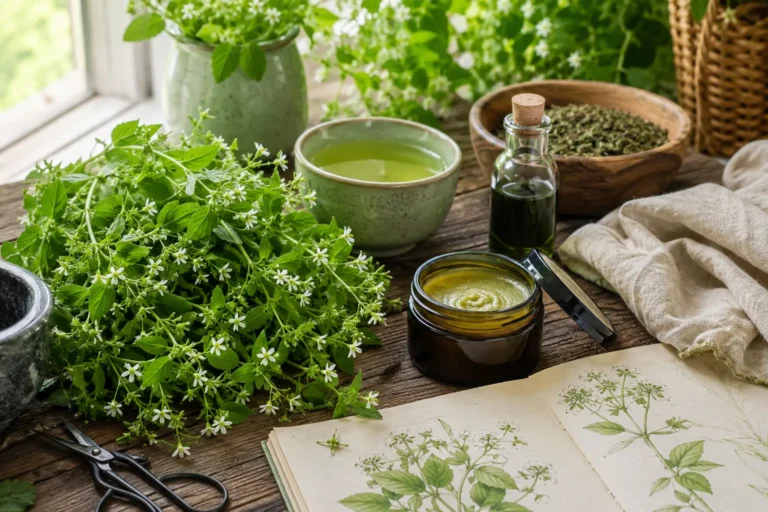
Herbalism traditionally sees diarrhea as a sign that the gut has become too fast, too irritated, too loose, or too reactive. Astringents help tone overly relaxed tissues, demulcents soothe irritated surfaces, and carminatives ease gas and cramping. Herbalists choose between these actions by looking at whether the main picture feels watery, crampy, irritated, nervous, or food-related. These are herbs traditionally used when diarrhea happens: blackberry leaf, raspberry leaf, ginger, chamomile, marshmallow root, slippery elm, fennel seed, peppermint, agrimony, meadowsweet, cinnamon, clove, plantain leaf, nettle, carob, dried blueberry, bilberry, turmeric, lemon balm, passionflower, psyllium husk.
“When your gut starts speaking in rushing water, gentle herbs remind it that not every message needs urgent delivery.”
Recipes & Remedies Diarrhea
Herbal Preparations
Blackberry Leaf Gut-Soothing Tea
This traditional astringent tea uses blackberry leaf to support loose, watery stools, with chamomile and peppermint for gentle digestive comfort.
Ingredients with exact measurements
- 1 teaspoon dried blackberry leaf
- 1 teaspoon dried chamomile flowers
- 1/2 teaspoon dried peppermint leaf
- 8 ounces hot water
- Optional: 1 teaspoon honey, added after steeping
Step-by-step preparation instructions
- Add blackberry leaf, chamomile, and peppermint to a mug or teapot.
- Pour 8 ounces hot water over the herbs.
- Cover the cup to keep the aromatic oils in the tea.
- Steep for 10 to 15 minutes.
- Strain well.
- Let the tea cool until comfortably warm.
How to use
Sip slowly between meals. Keep portions modest, especially during acute digestive upset. Focus on hydration first, and seek medical guidance if diarrhea lasts more than three days, includes blood, or comes with fever or dehydration signs.
Food for support Diarrhea
Simple Rice Congee with Ginger
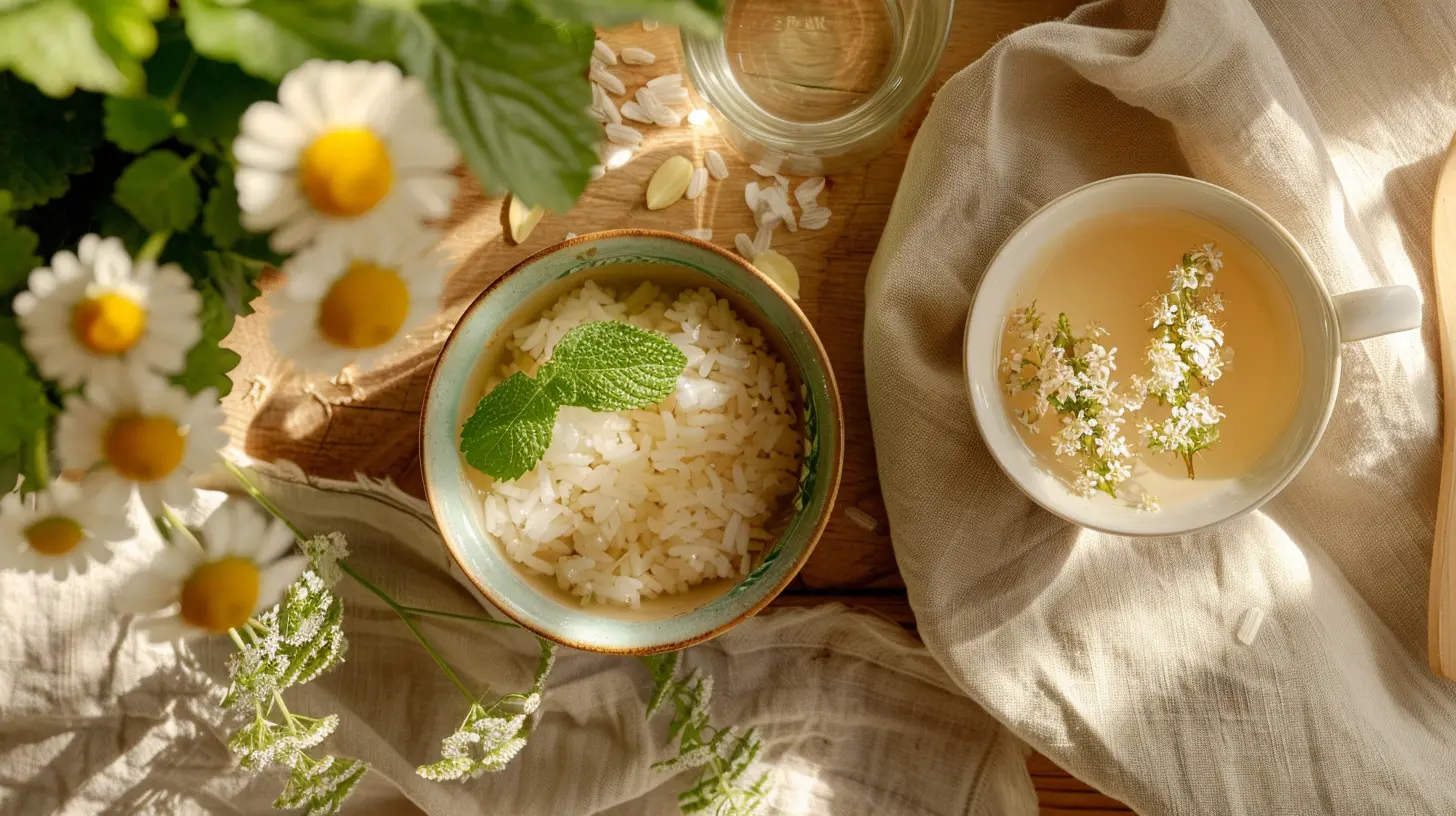
Rice congee is a classic gentle food for unsettled digestion. It feels soft, warm, plain, and deeply practical when the stomach wants a quieter conversation.
Ingredients with exact measurements
- 1/2 cup white rice
- 5 cups water or low-sodium broth
- 3 thin slices fresh ginger
- 1/4 teaspoon sea salt
- Optional: 1 small peeled carrot, finely diced
Step-by-step preparation instructions
- Rinse the rice until the water runs mostly clear.
- Add rice, water or broth, ginger, salt, and carrot to a pot.
- Bring to a gentle boil.
- Reduce heat to low.
- Simmer uncovered for 45 to 60 minutes.
- Stir often until the rice breaks down into a soft porridge.
- Remove the ginger slices before serving.
How to use
Eat small warm portions as tolerated. Pair with fluids or oral rehydration solution when diarrhea causes fluid loss. Keep the meal simple until digestion feels steadier.
What Herbs You Need
For diarrhea support, traditional herbalism often uses blackberry leaf, chamomile, peppermint, ginger, raspberry leaf, and marshmallow root. These herbs do not replace hydration, electrolytes, or medical care when symptoms become severe.
Blackberry Leaf
Latin name: Rubus fruticosus
Key herbal actions:
Astringent: helps tone and tighten overly loose tissues.
Mucous membrane support: traditionally used when digestive tissues feel irritated.
Mild antioxidant: helps protect plant and body tissues from oxidative stress.
Key active compounds: tannins, ellagitannins, flavonoids, phenolic acids.
Chamomile
Latin name: Matricaria recutita
Key herbal actions:
Carminative: helps ease gas and digestive tension.
Antispasmodic: supports relaxation of occasional digestive cramping.
Nervine: traditionally used when stress affects digestion.
Key active compounds: apigenin, alpha-bisabolol, chamazulene, flavonoids, coumarins.
Peppermint
Latin name: Mentha x piperita
Key herbal actions:
Carminative: helps ease gas and bloating.
Antispasmodic: traditionally used for digestive tightness and cramping.
Aromatic: brings strong volatile oils that influence digestive comfort.
Key active compounds: menthol, menthone, rosmarinic acid, flavonoids.
Ginger
Latin name: Zingiber officinale
Key herbal actions:
Warming carminative: supports cold, sluggish, gassy digestion.
Digestive stimulant: traditionally used when food feels heavy.
Anti-nausea support: commonly used for occasional queasiness.
Key active compounds: gingerols, shogaols, zingiberene, paradols.
Raspberry Leaf
Latin name: Rubus idaeus
Key herbal actions:
Astringent: traditionally used for looseness and tissue tone.
Mineral-rich nutritive: provides plant minerals in tea form.
Mucous membrane support: used when tissues feel irritated.
Key active compounds: tannins, flavonoids, ellagic acid, phenolic acids.
Marshmallow Root
Latin name: Althaea officinalis
Key herbal actions:
Demulcent: creates a soothing, slippery texture for irritated tissues.
Mucilage-rich support: helps coat dry or irritated membranes.
Gentle gut comfort: traditionally used when digestion feels raw.
Key active compounds: mucilage polysaccharides, flavonoids, phenolic acids.
Key Herbal Products for Diarrhea
Blackberry Leaf Tea
Blackberry leaf tea is a dried loose-leaf or tea bag product made from Rubus leaves. People commonly choose it when they want a traditional astringent tea for watery looseness. The main benefit is simplicity, while the drawback is its dry, tannic taste. Someone might choose tea when they prefer a gentle, food-like preparation.
Raspberry Leaf Tea
Raspberry leaf tea offers another tannin-rich option with a familiar herbal flavor. People often use it as a mild astringent tea, especially when blackberry leaf feels too strong. It tastes softer than many astringent herbs, but it may not feel strong enough for everyone. Someone might choose it for a gentler daily tea.
Chamomile Tea Bags
Chamomile tea is widely available and easy to prepare. People often choose it when diarrhea comes with stress, cramping, gas, or a tense belly. It tastes mild and slightly apple-like, but people with ragweed-family allergies should use caution. Someone might choose chamomile when nervous digestion sits at the center of the picture.
Enteric-Coated Peppermint Oil Capsules
Peppermint oil capsules contain concentrated volatile oils, usually designed to dissolve lower in the digestive tract. People commonly use them for IBS-type cramping and bloating, not as a first choice for acute diarrhea. They can bother reflux or cause burning in some people. Someone might choose capsules over tea when cramping and bloating matter more than watery stools.
Ginger Tea or Ginger Chews
Ginger products include tea bags, dried root, capsules, and chews. People often choose ginger when loose stools come with queasiness, chilliness, or heavy digestion. Ginger can feel too warming for some irritated stomachs. Someone might choose it when nausea and cold digestive discomfort accompany the issue.
FAQ
Is diarrhea always serious?
Not always. Short-term diarrhea often passes with rest, fluids, and simple foods. However, severe symptoms, blood, fever, dehydration, or diarrhea lasting more than three days deserves medical guidance.
What should I drink first?
Fluids matter most. Water, broth, and oral rehydration solutions help replace fluids and electrolytes. Herbal tea can support comfort, but it should not replace rehydration when fluid loss becomes significant.
Are astringent herbs safe for daily use?
Astringent herbs work best for short-term, specific use. Long daily use may not fit every digestive pattern. Also, tannin-rich herbs may reduce absorption of some medicines, so separate them from medications.
Is fresh herb better than dried herb?
For teas, dried herbs often work very well and store more easily. Fresh peppermint and ginger can taste brighter, while dried blackberry leaf usually offers stronger traditional astringency. Use clean, properly identified herbs only.
Can I give these herbs to children?
Use extra caution with children. Diarrhea can dehydrate children quickly, and oral rehydration guidance matters more than herbs. Ask a pediatric clinician before using concentrated herbs or essential oils.
Can pets use these remedies?
Do not give herbal diarrhea remedies to pets without veterinary guidance. Cats and dogs process herbs differently than humans. Diarrhea in pets can also become serious quickly.
How should I store dried herbs?
Store dried herbs in airtight containers away from heat, light, and moisture. Most dried leaves and flowers taste best within one year. Discard herbs that smell musty, faded, or dusty.
References
NIDDK: Symptoms and Causes of Diarrhea
NCCIH: Peppermint Oil Usefulness and Safety
NCCIH: Irritable Bowel Syndrome
European Medicines Agency: Tormentil Rhizome
NIH/PMC: Rubus fruticosus Use as an Herbal Medicine
NIH/PMC: Therapeutic Applications of Chamomile
UNICEF: Oral Rehydration Salts and Zinc
User-provided article prompt
Disclaimer
This article is for educational purposes only and does not provide medical advice, diagnosis, or treatment. Diarrhea can cause dehydration, especially in children, older adults, pregnant people, and people with chronic health conditions. Seek medical care if diarrhea lasts more than three days, includes blood, causes severe pain, comes with high fever, or shows signs of dehydration. Talk with a qualified healthcare professional before using herbs if you take medication, have a medical condition, are pregnant, are breastfeeding, or are preparing remedies for a child.