A Cooling Green Herb for Skin, and Digestion
Traditionally, chickweed has been used primarily for cooling and soothing purposes, especially when skin or tissues feel dry, hot, itchy, or irritated. It is commonly prepared as a fresh poultice, infused oil, salve, tea, tincture, or spring green. Chickweed is more of a quiet helper than an herbal show-off—it tends to work gently and is often chosen for everyday support rather than dramatic action.
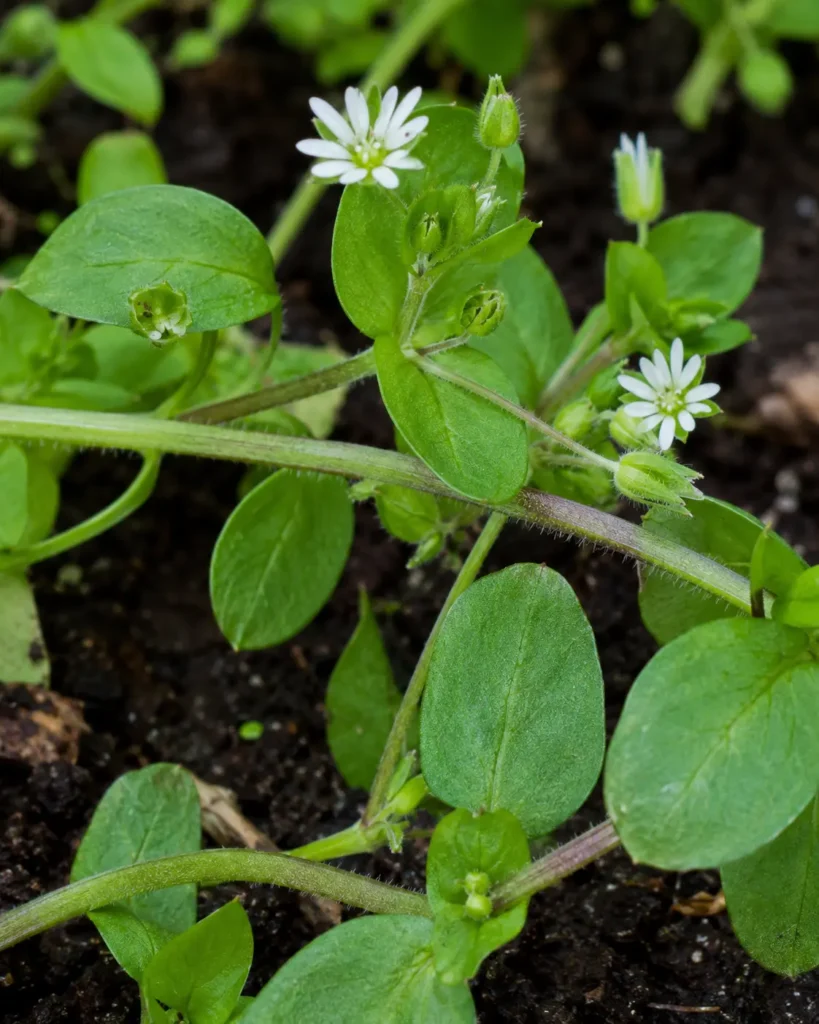
Chickweed (Stellaria media)
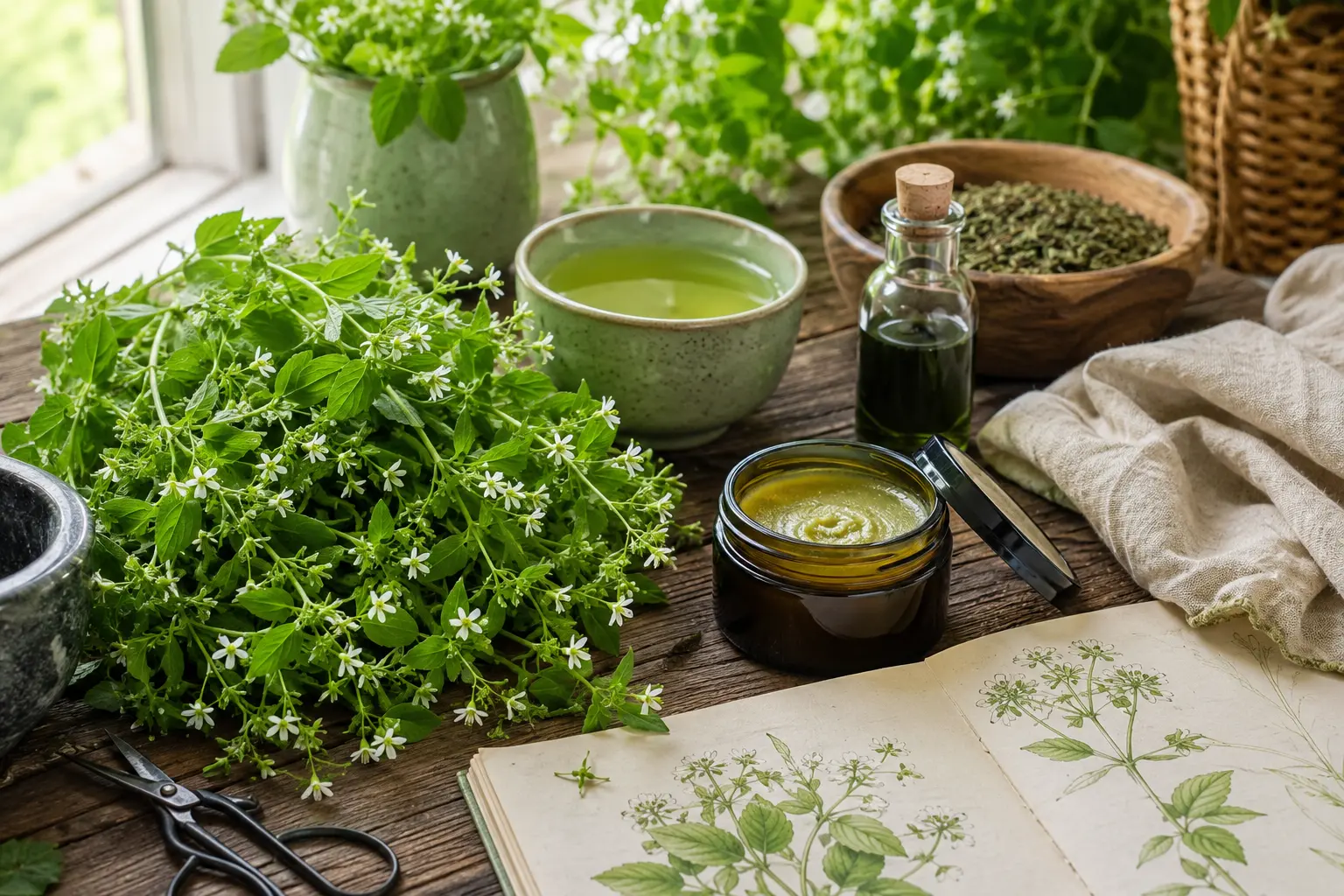
Common chickweed belongs to the Caryophyllaceae, or carnation, family. It has slender trailing stems, pairs of small oval leaves, and tiny white flowers whose deeply divided petals make each flower appear to have ten petals rather than five.
Correct plant identification is essential because “chickweed” is sometimes used for several different plants. One helpful identifying feature of Stellaria media is the single line of fine hairs running along one side of the stem. The line changes sides at each leaf node.
Traditional Uses
Skin Comfort: Chickweed has traditionally been applied to dry, itchy, warm, or mildly irritated skin. Fresh poultices, infused oils, creams, and salves are the most common preparations for this purpose.
Tissue Soothing: Its moist, cooling character has made it a traditional choice when external tissues feel hot, tight, or uncomfortable.
Digestive and Elimination Support: Chickweed has occasionally been used as a gentle food-like herb to support digestion and normal bowel function, although strong clinical evidence for these uses is lacking.
Seasonal Nutrition: Young chickweed leaves and stems are eaten as a mild spring green. They provide small amounts of vitamins, minerals, fiber, and plant antioxidants as part of a varied diet.
Modern human research on chickweed remains limited. Most herbal uses come from traditional practice, food use, laboratory research, and phytochemical studies rather than large clinical trials.
“Chickweed is the garden’s quiet reminder that even the smallest greens can be useful.”
Available Products
Fresh Chickweed
Fresh chickweed is frequently used in salads, pestos, smoothies, poultices, and freshly prepared oils. It has a mild, green flavor and a tender texture when harvested young.
Use only chickweed that has been positively identified and gathered from an area free of pesticides, roadside pollution, animal waste, and contaminated soil. Wash it carefully before culinary or topical use.
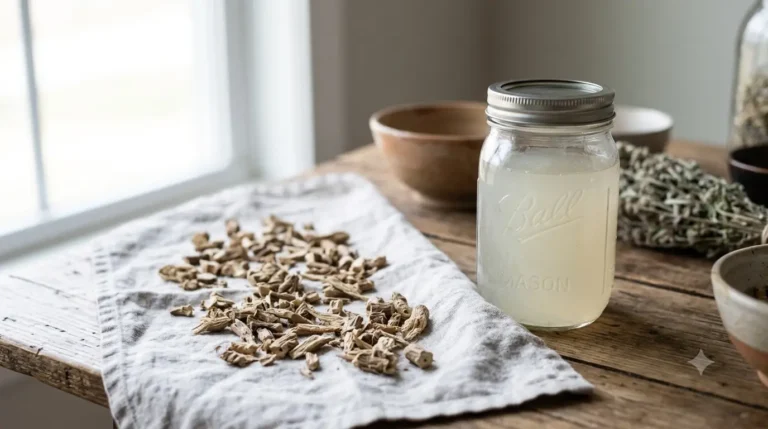
Dried Chickweed
Dried chickweed is sold as loose-cut aerial parts for teas, compresses, baths, and herbal blends. Because chickweed is naturally moist and delicate, dried material should remain greenish and have a mild, fresh herbal scent.
Brown, musty, or odorless material may be old or poorly stored. Dried chickweed does not retain the same fresh, juicy quality as the newly harvested plant, but it is more convenient for year-round use.
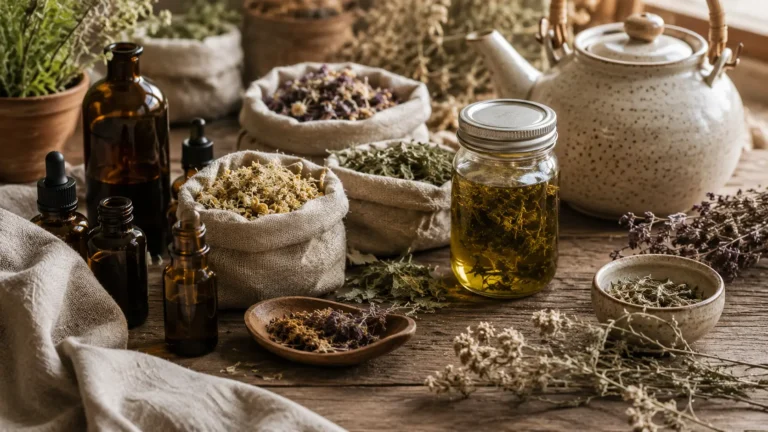
Chickweed Tincture
Chickweed tinctures are liquid extracts usually made with alcohol and water. They are practical for people who prefer a concentrated preparation with a longer shelf life than fresh chickweed.
Labels should clearly identify the botanical name, plant part, extraction ratio, alcohol percentage, recommended serving, and manufacturer. Chickweed tincture should not be viewed as a substitute for evaluating persistent skin, digestive, urinary, or respiratory symptoms.
Chickweed Glycerite
A glycerite is an alcohol-free liquid extract made primarily with vegetable glycerin and water. It may be preferred by people who avoid alcohol, although glycerin may not extract chickweed’s full range of constituents as efficiently as a carefully balanced alcohol-and-water preparation.
Check whether the product was made from fresh or dried chickweed and follow its storage directions. Refrigeration may be recommended after opening.
Chickweed Capsules
Chickweed capsules generally contain dried and powdered aerial parts. They are convenient and have little noticeable taste, but they lack the moistening quality associated with fresh chickweed preparations.
Choose products that list Stellaria media, the amount per capsule, the plant part used, and any additional ingredients. Independent quality testing is helpful because herbal-product strength and purity can vary.
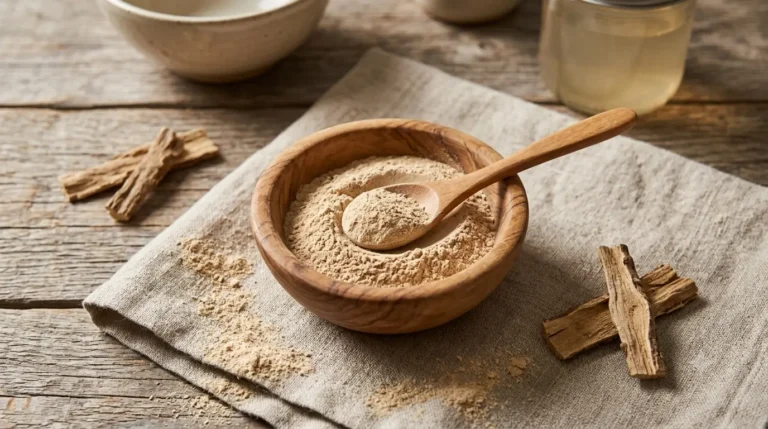
Chickweed Powder
Powdered chickweed may be added in small amounts to foods, smoothies, or homemade topical preparations. Powder absorbs moisture quickly and should be kept tightly sealed.
Because powders have a large surface area, they tend to lose freshness more quickly than coarsely cut herbs. Avoid powder that smells stale or shows signs of clumping, moisture, or mold.
Chickweed Infused Oil
Chickweed-infused oil is used externally as a base for salves, creams, balms, and massage oils. It is especially popular in traditional skin preparations.
Fresh chickweed contains considerable water, so careless oil infusion can support microbial growth. For home preparation, the herb should be thoroughly wilted or dried, and all equipment must be completely clean and dry.
Chickweed Salve or Cream
Commercial chickweed salves and creams combine chickweed extract with oils, waxes, or emulsifying ingredients. They are commonly used on small areas of dry or uncomfortable skin.
Review the full ingredient list, particularly when you have sensitive skin or allergies. Fragrances, preservatives, essential oils, and other herbs may cause a reaction even when chickweed itself is well tolerated.
Key Herbal Actions
Chickweed is traditionally described as a refrigerant, demulcent, emollient, vulnerary, mild alterative, nutritive herb, and antioxidant-containing plant.
Refrigerant
A refrigerant herb is traditionally understood to cool or calm tissues that feel warm or irritated. Chickweed earned this description through its fresh, moist character and its historical use in poultices and skin preparations.
“Cooling” is a traditional herbal concept rather than a measurement of body temperature. It describes the way an herb is selected within traditional practice.
Demulcent
A demulcent contains water-loving constituents that can form a soothing preparation when combined with water. These preparations are traditionally used to moisten and comfort irritated tissues.
Chickweed is not as mucilage-rich as marshmallow root or slippery elm. Its demulcent reputation comes mainly from the fresh plant’s moisture, polysaccharides, and gentle tissue-soothing character.
Emollient
An emollient helps soften, condition, and reduce moisture loss from the skin. Chickweed oils, creams, and salves provide emollient effects partly through their oil or cream base.
This means some of the soothing effect of a chickweed salve comes from both the herb and the carrier ingredients. Herbal preparations are team efforts more often than solo performances.
Vulnerary
A vulnerary is an herb traditionally used to support the normal condition and recovery of skin and superficial tissues. Chickweed has a long history of external use in poultices, washes, oils, and salves.
This traditional category does not mean chickweed should be placed on deep wounds, infected skin, severe burns, or unexplained lesions. Those situations require appropriate medical care.
Mild Alterative
“Alterative” is a traditional term for herbs believed to support gradual metabolic and eliminative processes. Chickweed has sometimes been included in traditional spring formulas intended to accompany a lighter seasonal diet.
This action has not been established through modern clinical trials. It is best understood as part of historical herbal practice rather than as a proven detoxification effect.
Nutritive Herb
Young chickweed is an edible green that contributes water, fiber, and small amounts of micronutrients and phytochemicals. Its nutritional value depends on growing conditions, harvest stage, portion size, and preparation.
It can add variety to salads and cooked dishes, but it should not be treated as a concentrated vitamin or mineral supplement.
Antioxidant-Containing Plant
Laboratory analyses have identified flavonoids, phenolic compounds, and other constituents with antioxidant activity in chickweed extracts. Antioxidants can interact with reactive molecules under laboratory conditions.
Laboratory antioxidant activity does not automatically demonstrate a specific health outcome in people. Human absorption, metabolism, dose, and overall diet all influence whether a compound has a meaningful effect.
Compounds and Extraction
Chickweed contains triterpenoid saponins, flavonoids, phenolic compounds, polysaccharides, phytosterols, fatty compounds, and small amounts of other plant constituents.
The exact chemical profile varies according to plant genetics, soil, climate, harvest time, plant part, drying method, and extraction process.
Triterpenoid Saponins
Saponins are compounds that can create foam when shaken in water. Chickweed and related members of the carnation family contain triterpenoid saponins, including compounds structurally related to oleanolic acid.
In laboratory research, saponins may interact with cell membranes and participate in various biological activities. However, chickweed-specific human evidence is insufficient to connect these laboratory observations with reliable clinical benefits.
Water Extraction
Hot water can extract some saponins and other water-soluble compounds.
To make a simple chickweed infusion, place approximately 1–2 teaspoons of dried chickweed in one cup of just-boiled water. Cover, steep for 10–15 minutes, and strain. There is no well-established clinical dose, so commercial directions and professional guidance should take priority.
Hydroalcoholic Extraction
A mixture of alcohol and water extracts a broader range of constituents than water alone, including some saponins, flavonoids, and moderately alcohol-soluble compounds.
Home tincture strength can vary considerably, particularly when fresh chickweed is used because the plant’s natural water content dilutes the alcohol. A professionally manufactured tincture provides more predictable extraction ratios and preservation.
Flavonoids
Chemical studies have reported flavonoid derivatives associated with apigenin and kaempferol in Stellaria media. Flavonoids are widespread plant pigments and protective compounds.
They are studied for antioxidant and cell-signaling effects, but chickweed has not been adequately evaluated in human trials. It is therefore more accurate to describe chickweed as containing researched phytochemicals than to promise a specific result.
Infusion
Many flavonoid glycosides are partly soluble in hot water. A covered infusion helps reduce contamination and preserves the liquid while the plant material steeps.
Use freshly boiled water, cover the cup, and strain after 10–15 minutes. Drink the infusion promptly or refrigerate it and use it within about 24 hours.
Tincture
A water-and-alcohol tincture can extract both water-soluble flavonoid glycosides and some less water-soluble plant compounds. Extraction depends on the alcohol percentage and the ratio of herb to liquid.
For consistent potency, use a labeled commercial product rather than estimating a home-prepared tincture’s strength.
Phenolic Compounds
Phenolic compounds are a broad family of plant chemicals involved in defense, pigmentation, and responses to environmental stress. Laboratory chickweed extracts have demonstrated antioxidant activity associated partly with their phenolic content.
These results help explain why chickweed attracts research interest, but they do not establish that ordinary servings can prevent or manage disease.
Tea or Compress
Water extracts many polar phenolic compounds. A chickweed infusion may be consumed as tea or cooled and applied externally as a short-term compress on intact skin.
Prepare a fresh infusion, cool it completely, soak a clean cloth in the liquid, and apply briefly. Discard the remaining liquid after use rather than storing a repeatedly handled preparation.
Polysaccharides
Polysaccharides are complex carbohydrates found in plant cell walls and intracellular material. Some dissolve or disperse in water and contribute to the soft, slightly soothing character of herbal infusions.
Chickweed is not considered one of the most mucilage-rich herbs, so its polysaccharide effects should not be compared directly with those of marshmallow or slippery elm.
Fresh Juice or Cool Infusion
Fresh plant juice captures water-soluble constituents, but raw juice also carries a higher food-safety risk and spoils quickly. Only correctly identified, thoroughly washed chickweed from a clean location should be considered.
A safer, gentler option is a freshly prepared cool or warm infusion. Refrigerate it immediately and discard it within 24 hours.
Phytosterols
Researchers have identified phytosterols such as beta-sitosterol and related compounds in chickweed. Phytosterols are plant lipids structurally similar to cholesterol.
They are poorly extracted by plain water and are better captured by alcohol, oils, or laboratory solvents. The amount delivered by ordinary chickweed preparations is uncertain and should not be assumed to equal standardized phytosterol products.
Oil Extraction
Oil can extract lipid-soluble constituents and provides a useful base for topical preparations.
Use fully dried or thoroughly wilted chickweed. Cover it completely with a stable carrier oil in a dry jar, keep water out of the mixture, strain carefully, and discard the oil if it develops bubbling, mold, cloudiness, or an unpleasant odor.
Anthraquinone Derivatives and Other Minor Constituents
Chemical investigations have reported compounds such as emodin, physcion, questin, fatty alcohols, and other minor constituents in chickweed. Their quantities may be low and may differ among samples.
Their presence does not mean chickweed acts like a standardized anthraquinone laxative. No dependable human dosing information exists for these individual chickweed constituents.
Hydroalcoholic Extraction
Alcohol-and-water mixtures generally extract a wider spectrum of minor compounds than tea. This does not necessarily make tincture “stronger” in every useful sense; it simply produces a different chemical profile.
Because the safety and clinical significance of many minor chickweed compounds are poorly characterized, concentrated extracts should be used conservatively.
Harvesting and Storing Right
Chickweed grows best during cool, moist seasons. Depending on the climate, it may appear in fall, winter, or early spring and become less tender when weather turns hot and dry.
Harvest the young aerial parts before or during early flowering. Morning is usually convenient after dew has dried but before the midday sun causes wilting. Avoid harvesting wet plants for drying or oil making because retained moisture increases spoilage risk.
Before gathering chickweed, confirm its identity using several botanical features:
- Opposite, smooth, oval leaves
- Slender, weak, trailing stems
- A single line of hairs along one side of the stem
- Small white, star-like flowers
- Five petals, each divided so deeply that the flower appears to have ten
Do not gather from roadsides, industrial land, chemically treated lawns, dog-walking areas, drainage channels, or soil that may contain heavy metals or other contaminants.
Fresh chickweed should be refrigerated in a breathable container or wrapped loosely in a slightly damp towel. Use it within several days, just as you would other tender salad greens.
To dry chickweed, spread clean plant material in a thin layer in a well-ventilated place away from direct sunlight. It must become completely crisp before storage. Keep dried chickweed in an airtight container away from heat, moisture, and light, and aim to use it within approximately one year.
Commercial tinctures commonly remain usable for several years when tightly closed and stored according to the label. Glycerites usually have a shorter shelf life. Properly prepared infused oils and salves are often used within 6–12 months, but oxidation, moisture exposure, and formulation quality can shorten that period.
Body Functions Supports
Chickweed is traditionally associated with skin comfort, digestive nutrition, normal elimination, lymphatic support, and general antioxidant protection.
Evidence is strongest for its history as an edible plant and traditional topical herb. Clinical evidence for specific internal health outcomes remains limited.
Skin
Chickweed is best known in herbal practice for supporting the comfort of dry, warm, or itchy skin. Its fresh moisture, polysaccharides, and plant phenolics may complement the softening effect of oils and creams.
Use topical chickweed only on intact or superficially irritated skin. Persistent itching, spreading redness, swelling, drainage, pain, blistering, or signs of infection should be medically evaluated.
Digestive System
As a young edible green, chickweed provides water, fiber, and plant compounds that can contribute to a varied diet. Its mild flavor makes it easier to include in food than strongly bitter or aromatic herbs.
Traditional herbalists have also described it as gently soothing and supportive of normal bowel function. These effects have not been adequately confirmed through controlled human studies.
Lymphatic System
Chickweed has historically appeared in formulas described by herbalists as lymphatic or alterative. This traditional use generally refers to supporting normal fluid movement and gradual elimination rather than forcing a rapid effect.
There is not enough clinical research to claim that chickweed changes lymphatic function in people. Unexplained or persistent swollen lymph nodes require professional evaluation.
Urinary System
Some traditional sources describe chickweed as having a mild diuretic quality. This means it has occasionally been used to accompany normal urine production rather than as a treatment for urinary disease.
Reliable human evidence and standardized dosing are lacking. Burning urination, blood in the urine, fever, flank pain, or difficulty urinating should not be managed with chickweed alone.
Circulation and Antioxidant Protection
Chickweed contains flavonoids and phenolic compounds that show antioxidant activity in laboratory tests. These constituents may contribute to the plant’s general protective chemistry.
It is not known whether customary chickweed preparations produce meaningful cardiovascular effects in humans. Diet, physical activity, sleep, blood pressure management, and prescribed care remain far more important.
Immune System
Plant polysaccharides, saponins, and phenolic compounds are frequently studied for interactions with immune pathways. Chickweed extracts have shown biological activity in preliminary laboratory research.
This does not demonstrate that chickweed prevents infections or meaningfully strengthens immunity in people. It is better regarded as a food-like herb than as a proven immune therapy.
Safety and Practical Considerations
Chickweed has a history of use as a food and topical herb, but concentrated medicinal use has not been extensively studied in humans.
Correct identification is the first safety requirement. Other plants may share the chickweed name, and unfamiliar wild greens should never be eaten based on a photograph or a single identifying feature.
Begin with a small food portion or a small topical patch test. People who are allergic to plants in the Caryophyllaceae family may be more likely to react, although documented chickweed allergy information is limited.
Eating unusually large amounts may cause digestive discomfort, possibly because of fiber and saponin content. Stop using it if nausea, cramping, diarrhea, rash, swelling, or breathing difficulty develops.
Fresh chickweed can carry soil organisms, animal contamination, or pesticide residues. Wash it thoroughly and avoid plants from questionable locations. People at increased risk from foodborne illness may prefer cooked chickweed rather than raw preparations.
Do not apply homemade chickweed oils or salves to deep wounds, punctures, severe burns, infected areas, or actively draining skin. Water accidentally introduced into an herbal oil can support bacterial or mold growth even when the oil appears acceptable.
Reliable information about chickweed interactions with prescription medications is lacking. The absence of documented interactions does not prove that none exist, especially for concentrated extracts.
Use during pregnancy or breastfeeding has not been adequately studied. Culinary exposure may differ from tinctures, capsules, or concentrated extracts, so professional guidance is appropriate before medicinal use.
Children, older adults, and people with chronic health conditions may be more sensitive to concentrated products. A pediatrician, pharmacist, veterinarian, or other qualified professional should guide use when special medical circumstances are present.
FAQ
What does chickweed taste like?
Young chickweed has a mild, fresh, green flavor that is sometimes compared with corn silk or tender lettuce. It is usually less bitter than dandelion and less strongly flavored than many culinary herbs.
Older stems can become stringy, particularly after the plant flowers heavily or grows in hot weather. Young tips are generally the most pleasant for food.
When is the best time to use chickweed?
Fresh chickweed is most readily available during cool, moist weather, often in fall, winter, or spring. Topical preparations may be used at any time of year when a properly stored product is available.
The appropriate timing depends on the preparation and purpose. Persistent symptoms should be evaluated rather than repeatedly covered with an herbal product.
Is fresh or dried chickweed better?
Fresh chickweed is usually preferred for salads, poultices, fresh juices, and preparations intended to capture its moist character. Dried chickweed is more convenient for tea, baths, compresses, and storage.
Neither form is universally better. They contain overlapping but not identical chemical profiles and offer different practical advantages.
Is chickweed tea, tincture, or capsule better?
Tea provides a mild water extract and is often chosen for traditional, short-term use. Tinctures are concentrated and portable, while capsules avoid the flavor but do not provide the same hydration as tea or fresh herb.
No form has been proven superior in clinical trials. Product quality, correct identification, serving size, and individual tolerance matter more than choosing the most concentrated option.
Can chickweed be used daily?
Small culinary amounts may be used like other edible greens by adults who tolerate the plant. Long-term daily use of concentrated tinctures, powders, or capsules has not been well studied.
Regular medicinal use is best discussed with a qualified professional, particularly when you take medications or manage a chronic condition.
How should chickweed be stored?
Keep fresh chickweed refrigerated and use it within several days. Store fully dried chickweed in a tightly sealed container away from heat, sunlight, and humidity.
Follow manufacturer instructions for tinctures, glycerites, creams, and capsules. Discard any preparation with mold, gas, separation beyond what the label describes, unusual cloudiness, or a rancid smell.
Does chickweed combine well with other herbs?
In traditional topical formulas, chickweed is often combined with calendula, plantain leaf, violet leaf, or marshmallow. Internal blends may pair it with other mild spring greens or nutritive herbs.
Combining herbs increases formulation complexity and may also increase allergy or interaction risks. Each ingredient should have a clear purpose.
Is chickweed safe for everyone?
No herb is appropriate for absolutely everyone. People who are pregnant, breastfeeding, taking prescription medications, preparing for surgery, or managing a medical condition should seek professional advice before concentrated use.
Anyone with a known plant allergy should begin cautiously. Stop using chickweed if an unexpected reaction occurs.
Can chickweed be used for pets?
Chickweed is sometimes included in traditional animal herbalism, but pets process plants differently from humans. The safe amount varies by species, body size, medical history, and medication use.
Do not give a tincture, capsule, essential-oil blend, or concentrated chickweed product to an animal without veterinary guidance. Contact a veterinarian if a pet consumes a large or unidentified quantity of wild plant material.
Can chickweed be applied directly to itchy skin?
A clean, correctly identified fresh plant may be crushed and used traditionally as a brief poultice on a small area of intact skin. A patch test is wise because plant material itself can occasionally cause irritation.
Do not place it on infected, broken, blistered, or unexplained skin lesions. Remove it immediately if burning, increased redness, or swelling occurs.
Disclaimer
This content is for educational purposes only and is not medical advice, diagnosis, or treatment. Herbs may interact with medications, procedures, or existing health conditions. People who are pregnant, breastfeeding, managing a medical condition, taking prescription medications, or preparing for surgery should consult a qualified healthcare professional before using herbs.
References
Plants of the World Online: Stellaria media
Flora of North America: Stellaria media
PubMed: Scientific Literature on Stellaria media
National Library of Medicine: Chemical Constituents from Stellaria media
Royal Botanic Gardens, Kew: Medicinal Plant Names Services
North Carolina Extension Gardener Plant Toolbox: Common Chickweed
UC Integrated Pest Management: Common Chickweed
Memorial Sloan Kettering Cancer Center: About Herbs—Chickweed