Slow recovery after viral illness can feel like your body has technically “finished” being sick, but forgot to send energy back online. You may feel tired, foggy, weak, easily overwhelmed, or slower than usual after a cold, flu, COVID-19, or another viral infection.
Learn more about Slow Recovery After Viral Illness
Why It Happens
After a viral illness, the body may need time to restore energy, repair irritated tissues, rebuild appetite, and settle inflammation. Sleep disruption, poor appetite, dehydration, stress, and pushing activity too soon can slow that process.
Common Patterns
Some people mainly feel fatigue and heaviness. Others notice lingering cough, poor appetite, brain fog, low stamina, or a nervous system that feels jumpy. Post-viral fatigue can last weeks, and symptoms after COVID-19 may persist longer for some people.
Common Triggers
Recovery may feel slower after poor sleep, too much caffeine, skipped meals, dehydration, stress, intense exercise, or returning to work too quickly. The body often prefers a boring recovery plan: rest, fluids, food, and patience.
How It Shows Up Daily
You may feel fine after breakfast but exhausted after one errand. You may need more sleep, lose focus quickly, or feel “almost better” for several days. This is especially frustrating because you look normal while your energy meter acts dramatic.
Traditional Herbal View
Traditional herbalism often sees slow post-viral recovery through patterns of depletion, dryness, lingering irritation, low appetite, or nervous exhaustion. Herbalists may choose nutritive herbs for rebuilding, demulcents for throat comfort, gentle aromatics for breathing ease, bitters for appetite, and adaptogens only when the person feels stable enough.
How Herbs Can Help Slow Recovery After Viral Illness
Herbalism traditionally sees slow recovery after viral illness as a pattern of depleted energy, irritated tissues, weakened appetite, and an overworked nervous system. Nutritives build gentle mineral support, demulcents soothe dryness, aromatics support easier breathing, and adaptogens help the body respond to stress. Herbalists choose between those actions by noticing whether the person feels dry, tired, tense, foggy, depleted, or slow to regain appetite. These are herbs traditionally used when slow recovery after viral illness happens: elderberry, rosehip, cinnamon, ginger, ashwagandha, oat straw, licorice root, nettle, alfalfa, astragalus, reishi mushroom, tulsi, lemon balm, hawthorn, hibiscus, schisandra, goji berry, thyme, mullein, slippery elm, turmeric, passionflower, valerian, chamomile, maca, cacao, cardamom
“Recovery is not a race; sometimes the body just wants a quiet cup of tea and fewer heroic plans.”
Recipes & Remedies Slow Recovery After Viral Illness
Herbal Preparations
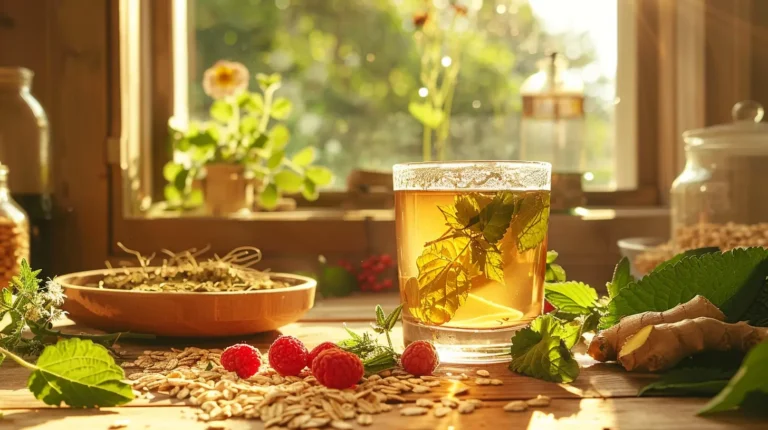
Post-Viral Rebuild Tea
This gentle tea combines mineral-rich herbs, vitamin C-rich fruit, and soothing roots for everyday recovery support after a viral illness.
Ingredients with exact measurements
- 1 tablespoon dried nettle leaf
- 1 tablespoon dried oat straw
- 1 teaspoon dried rose hips
- 1 teaspoon dried marshmallow root
- 1/2 teaspoon dried lemon balm
- 16 ounces hot water
- Optional: 1 teaspoon honey
Step-by-step preparation instructions
- Add nettle, oat straw, rose hips, marshmallow root, and lemon balm to a teapot.
- Pour 16 ounces hot water over the herbs.
- Cover the pot.
- Steep for 20 minutes.
- Strain well.
- Add honey after the tea cools slightly, if desired.
How to use
Sip 1 cup once or twice daily during recovery. Drink it warm or at room temperature. Avoid using this tea as a replacement for food, fluids, rest, or medical care when symptoms feel severe or persistent.
Food for support Slow Recovery After Viral Illness
Ginger Chicken and Rice Recovery Soup
This simple soup offers warm broth, soft rice, protein, ginger, and thyme. It suits the “I need real food, but nothing dramatic” stage.
Ingredients with exact measurements
- 6 cups low-sodium chicken broth
- 1 cup cooked shredded chicken
- 1/2 cup white rice
- 1 medium carrot, diced
- 1 celery stalk, diced
- 2 thin slices fresh ginger
- 1/2 teaspoon dried thyme
- 1 tablespoon olive oil
- 1/4 teaspoon sea salt, or to taste
- Optional: 1 tablespoon fresh parsley, chopped
Step-by-step preparation instructions
- Warm olive oil in a soup pot over medium heat.
- Add carrot and celery.
- Cook for 4 minutes, stirring often.
- Add broth, rice, ginger, thyme, and salt.
- Bring to a gentle boil.
- Reduce heat and simmer for 25 minutes.
- Add shredded chicken.
- Simmer for 5 more minutes.
- Remove ginger slices before serving.
- Add parsley if desired.
How to use
Eat small warm bowls as appetite returns. Pair with water or herbal tea. Keep portions modest if digestion still feels weak.
What Herbs You Need
For slow recovery after viral illness, traditional herbalism often uses nettle, oat straw, rose hips, marshmallow root, lemon balm, elderberry, ginger, thyme, and ashwagandha. These herbs support different recovery patterns, so the best choice depends on whether someone feels depleted, dry, tense, congested, foggy, or low in appetite.
Nettle
Latin name: Urtica dioica
Key herbal actions:
Nutritive: provides minerals and plant compounds that support general nourishment.
Tonic: traditionally used for steady, long-term rebuilding.
Mild diuretic: supports normal fluid movement through the body.
Key active compounds: flavonoids, chlorophyll, carotenoids, minerals, phenolic acids.
Oat Straw
Latin name: Avena sativa
Key herbal actions:
Nutritive nervine: supports the nervous system through gentle nourishment.
Tonic: traditionally used during tired, worn-down states.
Demulcent: brings mild soothing qualities because of its soft plant constituents.
Key active compounds: avenanthramides, flavonoids, minerals, saponins.
Rose Hips
Latin name: Rosa canina
Key herbal actions:
Nutritive: offers fruit-based nourishment.
Antioxidant: helps protect tissues from oxidative stress.
Astringent: gently tones tissues.
Key active compounds: vitamin C, carotenoids, flavonoids, polyphenols.
Marshmallow Root
Latin name: Althaea officinalis
Key herbal actions:
Demulcent: creates a soothing, slippery texture for dry or irritated tissues.
Mucous membrane support: traditionally used when the throat or gut feels raw.
Gentle moistening support: useful when dryness follows illness.
Key active compounds: mucilage polysaccharides, flavonoids, phenolic acids.
Lemon Balm
Latin name: Melissa officinalis
Key herbal actions:
Nervine: supports calm during stress or restlessness.
Carminative: helps ease gas and digestive tension.
Aromatic: contains fragrant volatile oils that support comfort.
Key active compounds: rosmarinic acid, citral, citronellal, flavonoids.
Elderberry
Latin name: Sambucus nigra
Key herbal actions:
Immune-season herb: traditionally used during cold-season wellness routines.
Diaphoretic: traditionally used in warm teas when the body feels chilled.
Antioxidant: contains dark pigments that help protect cells from oxidative stress.
Key active compounds: anthocyanins, flavonoids, phenolic acids.
Ginger
Latin name: Zingiber officinale
Key herbal actions:
Warming carminative: supports cold, sluggish digestion.
Digestive stimulant: traditionally used when appetite feels low.
Circulatory stimulant: brings warmth and movement.
Key active compounds: gingerols, shogaols, zingiberene, paradols.
Thyme
Latin name: Thymus vulgaris
Key herbal actions:
Aromatic expectorant: traditionally used for chesty, mucus-heavy patterns.
Carminative: supports digestion and reduces gas.
Antimicrobial herb: contains aromatic compounds studied for microbial activity.
Key active compounds: thymol, carvacrol, rosmarinic acid, flavonoids.
Ashwagandha
Latin name: Withania somnifera
Key herbal actions:
Adaptogen: traditionally used to support stress resilience.
Nervine tonic: supports the body during worn-down states.
Restorative herb: often used when fatigue comes with stress and poor sleep.
Key active compounds: withanolides, alkaloids, sitoindosides.
Key Herbal Products for Slow Recovery After Viral Illness
Elderberry Syrup
Elderberry syrup combines cooked elderberries with sweeteners and sometimes warming spices. People commonly use it during cold and flu season, though evidence remains limited and product quality varies. It tastes pleasant and works well for people who dislike tea. Someone might choose syrup when they want an easy, familiar seasonal product.
Nettle Tea
Nettle tea uses dried nettle leaf as a mineral-rich daily infusion. People often choose it when recovery feels slow, depleted, and nutritionally flat. It tastes green and earthy, which some people love and others politely endure. Someone might choose nettle tea when they want a simple rebuilding herb without sweetness.
Rose Hip Tea
Rose hip tea offers a tart, fruity option that many people enjoy during recovery. People commonly choose it for a bright, vitamin C-rich herbal drink. It can taste acidic, so sensitive stomachs may prefer a weaker brew. Someone might choose rose hips when they want a refreshing alternative to heavier herbal teas.
Ginger Tea
Ginger tea is a warming preparation made from fresh or dried ginger root. People often choose it when appetite feels low, digestion feels cold, or nausea lingers. It can feel too spicy for irritated stomachs or reflux-prone people. Someone might choose ginger when warmth and digestive encouragement feel helpful.
Ashwagandha Capsules or Powder
Ashwagandha products come as capsules, powders, tinctures, and blends. People commonly use them when stress, poor sleep, and fatigue overlap, but this herb does not suit everyone. It may interact with some medicines and may not fit pregnancy, thyroid conditions, or autoimmune concerns. Someone might choose ashwagandha when they want a longer-term restorative herb under appropriate guidance.
FAQ
Is slow recovery after a viral illness normal?
It can happen, especially after a strong infection or a stressful season. Many people need extra rest, fluids, food, and time before stamina returns. However, symptoms that persist, worsen, or interfere with daily life deserve medical evaluation.
When should I seek medical care?
Seek medical care if you have shortness of breath, chest pain, fainting, confusion, high fever, dehydration, or symptoms that keep worsening. Also check in with a clinician if fatigue lasts several weeks or limits normal activity. Post-viral symptoms can overlap with other health issues.
Can herbs speed up recovery?
Herbs should not be presented as a shortcut. Traditional herbalism focuses on supporting patterns like dryness, low appetite, stress, and depletion. Recovery still depends on rest, hydration, food, sleep, and appropriate medical care.
Are elderberry products safe?
Cooked elderberry products appear common in the marketplace, but raw elderberries and other plant parts can cause digestive upset. Evidence for elderberry remains limited, especially beyond cold and flu symptoms. Use caution during pregnancy, breastfeeding, autoimmune conditions, or medication use.
Is fresh ginger better than dried ginger?
Fresh ginger tastes brighter and juicier, while dried ginger feels hotter and more concentrated. Fresh ginger works well in soups and gentle teas. Dried ginger works better when someone wants a stronger warming effect.
Can I use these herbs every day?
Some gentle herbs, like nettle, oat straw, and rose hips, often fit short daily use for many adults. Stronger products, concentrated extracts, and adaptogens need more caution. Rotate herbs and stop if anything feels irritating.
Can pets use these herbs?
Do not give these herbs to pets without veterinary guidance. Pets process herbs differently than humans. Slow recovery, coughing, low appetite, or fatigue in pets should be checked by a veterinarian.
References
CDC: Long COVID Signs and Symptoms
NHS: Post-Viral Fatigue Management Guide
NHS: COVID-19 Recovery Overview
NHS: Recovery Fatigue, Rest, Food, and Hydration Guidance
NCCIH: Elderberry Usefulness and Safety
NCCIH: Echinacea Usefulness and Safety
NCCIH: Common Cold and Complementary Health Approaches
Cochrane: Echinacea for Preventing and Treating the Common Cold
NIH/PMC: Elderberry for Viral Respiratory Illness Review
User-provided article prompt
Disclaimer
This article is for educational purposes only and does not provide medical advice, diagnosis, or treatment. Slow recovery after viral illness can sometimes point to post-viral fatigue, Long COVID, anemia, thyroid changes, heart or lung issues, medication effects, or other concerns. Seek medical care if symptoms persist, worsen, or interfere with daily life. Talk with a qualified healthcare professional before using herbs if you take medication, have a medical condition, are pregnant, are breastfeeding, or are preparing remedies for a child.