

Learn more about these herb:

Available Ready-to-Use Products
If you prefer a ready-made option, commercially available products that closely reproduce these specific herbal combinations are limited. These are the strongest practical matches identified.
Loose or Poorly Formed Stool — When stool consistency is the main concern. Metamucil — Real Sugar Unflavored Coarse Powder — Provides psyllium, the gel-forming soluble fiber with the strongest evidence among the herbs discussed here for normalizing stool form.
Cramping + Gas — For digestive discomfort accompanying loose stool rather than diarrhea itself. Herb Pharm — Intestinal Soother — Contains chamomile, fennel, turmeric, wild yam, cinnamon, and peppermint, making it a closer match for intestinal spasms and digestive discomfort.
Gas + Bloating — For loose stool accompanied by gas, bloating, or post-meal digestive discomfort. Gaia Herbs — Gas & Bloating — Contains fennel, chamomile, lemon balm, cardamom, star anise, and ginger, plus activated charcoal; it matches associated digestive symptoms rather than serving as a diarrhea treatment.
Nausea + Upset Stomach — When nausea is more prominent than intestinal urgency. Gaia Herbs — Ginger Supreme — Concentrated ginger with turmeric provides a convenient match for the nausea and digestive-upset side of this symptom pattern.
Astringent Loose-Stool Support — No strong currently available commercial formula containing the agrimony + blackberry combination was identified; individual-herb products or a custom combination may offer a closer match to this traditional strategy.
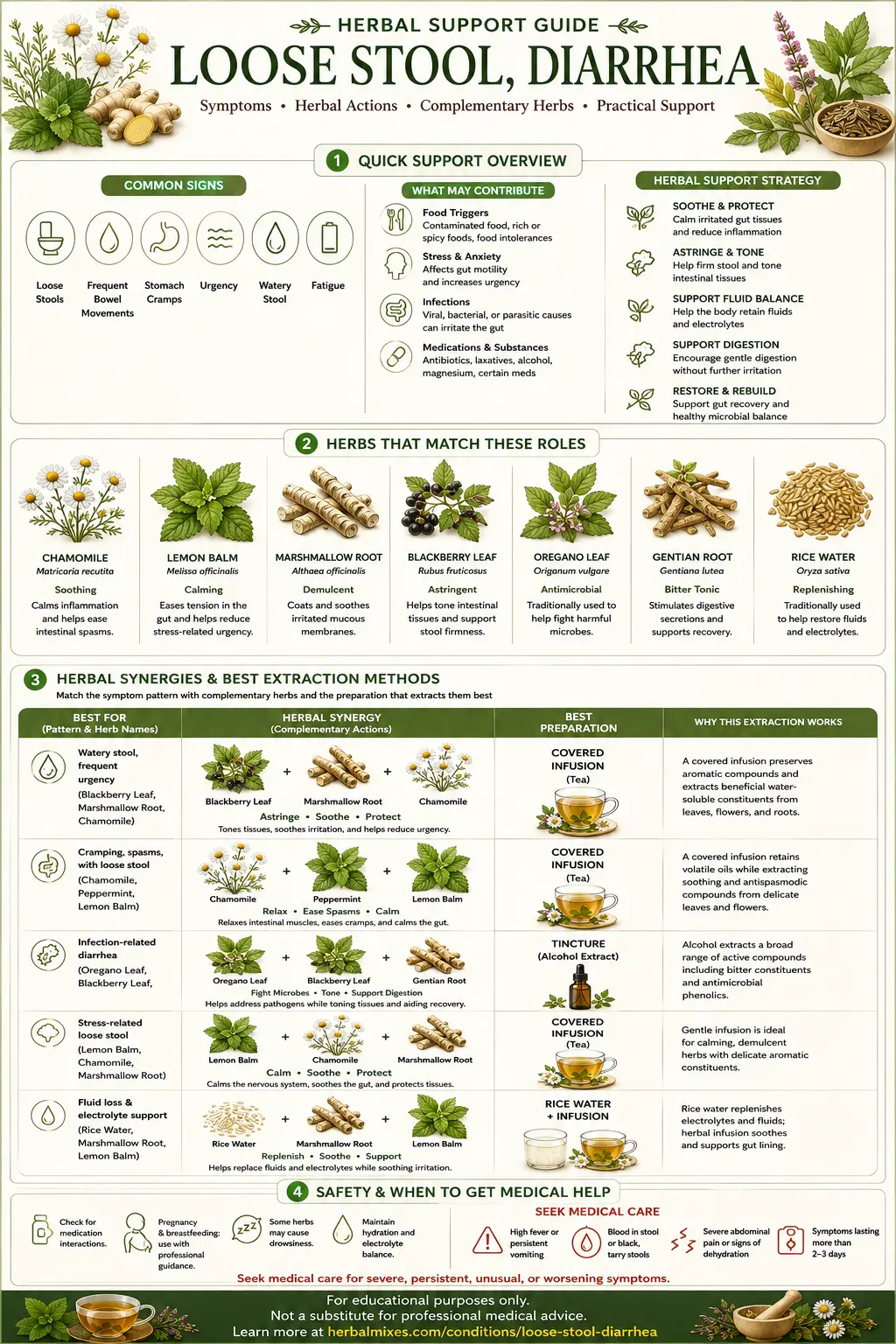
Herbal Synergies & Best Extraction Methods
Agrimony + Blackberry Leaf + Chamomile
Best for: Watery or frequent loose stool accompanied by mild intestinal irritation or cramping.
Agrimony and blackberry leaf provide traditional tannin-rich astringent support, while chamomile adds a gentler antispasmodic component for digestive tension.
Best Preparation: Covered Infusion (Tea). Water extracts the tannins and flavonoids while a covered preparation helps retain chamomile’s aromatic constituents.
Psyllium + Marshmallow Root
Best for: Persistently soft or poorly formed stool when stool consistency is the main concern rather than acute infectious diarrhea.
Psyllium forms a water-holding gel that can help normalize stool consistency, while marshmallow contributes additional soothing mucilage.
Best Preparation: Cold or Room-Temperature Hydrated Preparation. Both plants rely heavily on water-binding polysaccharides and mucilage rather than aromatic constituents.
Chamomile + Peppermint + Blackberry Leaf
Best for: Loose stool with urgency, intestinal spasms, gas, and cramping.
Blackberry provides the traditional astringent element while chamomile and peppermint shift the combination toward intestinal relaxation and digestive comfort.
Best Preparation: Covered Infusion (Tea). This extracts blackberry tannins while helping preserve the aromatic constituents of chamomile and peppermint.
Ginger + Chamomile + Peppermint
Best for: Loose stool accompanied by nausea, unsettled stomach, gas, or cramping.
Ginger is more useful for the accompanying nausea and digestive upset, while chamomile and peppermint provide complementary aromatic and antispasmodic support.
Best Preparation: Covered Infusion (Tea). A practical method for combining ginger with the more volatile aromatic constituents of chamomile and peppermint.
Marshmallow Root + Chamomile + Blackberry Leaf
Best for: Loose stool with digestive sensitivity, irritation, and mild cramping.
Marshmallow emphasizes soothing mucilage, blackberry contributes astringency, and chamomile provides gentle antispasmodic support.
Best Preparation: Cold Infusion + Tea. Marshmallow mucilage is well suited to cool-water extraction, while blackberry and chamomile are better extracted separately as an infusion.
Herbal Properties Required




Herbs With These Properties
Herbal support may focus on improving stool consistency, soothing intestinal irritation, easing cramping and gas, and settling accompanying nausea. Astringent herbs traditionally provide tannins, aromatic carminatives address spasms and gas, while gel-forming soluble fiber such as psyllium has better clinical support for normalizing loose stool consistency.
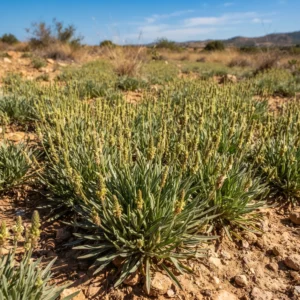
Psyllium (Plantago ovata) — Loose or poorly formed stool. Its gel-forming soluble fiber absorbs and retains water, helping normalize stool consistency rather than simply stimulating or slowing the bowel.
Agrimony (Agrimonia eupatoria) — Watery stool + intestinal astringency. A tannin-rich traditional astringent used when loose stool is the dominant pattern. Its role is primarily traditional herbal support rather than a well-established clinical treatment for diarrhea.
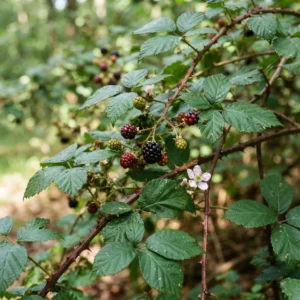
Blackberry Leaf (Rubus fruticosus) — Loose stool + astringent support. Blackberry leaves contain tannins and have a traditional role as an intestinal astringent, making them most relevant when watery stool is more prominent than cramping or nausea.
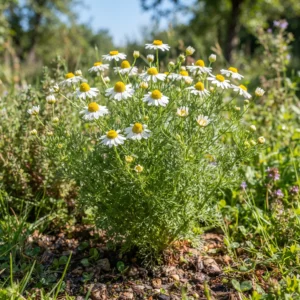
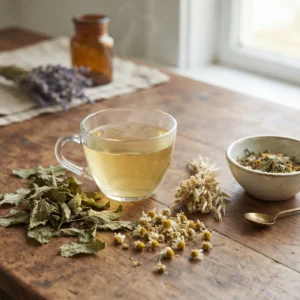
Chamomile (Matricaria recutita) — Cramping + irritated digestion. A gentle aromatic and antispasmodic herb traditionally used for digestive discomfort; particularly useful when loose stool occurs with intestinal tension, cramping, or gas.
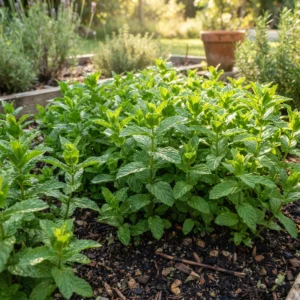
Peppermint (Mentha × piperita) — Spasms + urgency. An aromatic antispasmodic better suited to loose stool accompanied by cramping, intestinal spasms, gas, or urgency than to watery stool alone.
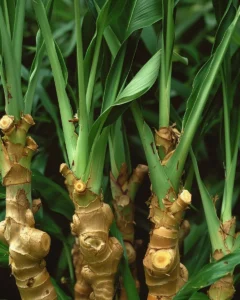
Ginger (Zingiber officinale) — Nausea + digestive upset. A warming aromatic herb useful when loose stool occurs alongside nausea, unsettled digestion, or abdominal discomfort rather than as a primary stool-firming herb.
Marshmallow Root (Althaea officinalis) — Irritated digestive lining + sensitivity. Rich in mucilage that forms a soothing preparation in water; most appropriate when intestinal irritation and sensitivity accompany loose bowel movements.
Use With Care
- Psyllium: Must be taken with adequate liquid and may affect medication absorption; separate it from medicines according to product or professional guidance.
- Peppermint: May worsen heartburn or reflux in some people; concentrated peppermint oil has different safety considerations from peppermint tea.
- Chamomile: Avoid with known allergy to ragweed-family plants; interactions with warfarin and some other medications have been reported.
- Astringent herbs: Strong tannin-rich preparations may interfere with absorption of some medicines or nutrients, so avoid taking concentrated preparations simultaneously with medication.
- Avoid laxative herbs: Senna, aloe latex, cascara, and other stimulant laxatives can worsen diarrhea and should not be used for loose stool.
If you take prescription medication, are pregnant or breastfeeding, or have a medical condition, check with a qualified healthcare professional before using concentrated herbal products.
When to Get Medical Help
Seek medical evaluation if you experience:
- signs of dehydration such as extreme thirst, very little urine, dark urine, dizziness, or fainting;
- black, tarry stool or stool containing blood or pus;
- severe abdominal or rectal pain, repeated vomiting, or high fever;
- six or more loose stools in one day or diarrhea continuing for more than about two days in an adult;
- inability to drink enough fluid or oral rehydration solution to replace losses.
Infants and young children, older adults, pregnant people, and people with weakened immune systems or significant medical conditions may need medical advice sooner.
Persistent, severe, unusual, or worsening symptoms should be evaluated by a healthcare professional.
Frequently Asked Questions
What is the most useful herb for loose stool?
Among the options discussed here, psyllium has substantially better clinical evidence for normalizing stool consistency than traditional astringent herbs. Blackberry leaf and agrimony have traditional astringent roles, but evidence supporting them specifically for diarrhea is much more limited.
Which herbal combination is best for watery loose stool?
Agrimony + Blackberry Leaf + Chamomile is a logical traditional combination when watery stool is accompanied by mild cramping. The first two emphasize astringency while chamomile adds digestive comfort. Acute or severe diarrhea, however, should not simply be managed with herbs without considering its cause.
What is better when diarrhea comes with cramping and gas?
Chamomile + Peppermint + Blackberry Leaf better matches this pattern. Chamomile and peppermint emphasize intestinal relaxation and gas, while blackberry contributes traditional astringent support.
Can psyllium really be used for both constipation and loose stool?
Yes. Psyllium is unusual because its gel-forming soluble fiber holds water and can help normalize stool form. Research describes this physical water-holding mechanism as useful for both hard and overly loose stools, although the underlying cause of persistent diarrhea still needs attention.
What is most important during acute diarrhea?
Replacing lost fluids and electrolytes is more important than choosing an herb. Diarrhea can cause dehydration, especially when stools are frequent or vomiting occurs. Oral rehydration and medical evaluation when warning signs appear should take priority over herbal self-care.
References
National Institute of Diabetes and Digestive and Kidney Diseases — Symptoms & Causes of Viral Gastroenteritis
https://www.niddk.nih.gov/health-information/digestive-diseases/viral-gastroenteritis/symptoms-causes
National Institute of Diabetes and Digestive and Kidney Diseases — Symptoms & Causes of Food Poisoning
https://www.niddk.nih.gov/health-information/digestive-diseases/food-poisoning/symptoms-causes
National Center for Complementary and Integrative Health — Peppermint Oil: Usefulness and Safety
https://www.nccih.nih.gov/health/peppermint-oil
PubMed — Understanding the Physics of Functional Fibers in the Gastrointestinal Tract
https://pubmed.ncbi.nlm.nih.gov/27863994/
PubMed — Fiber, Prebiotics, and Diarrhea: What, Why, When and How
https://pubmed.ncbi.nlm.nih.gov/27428350/
PubMed — Plantago ovata Husk in the Treatment of Constipation and Diarrhea
https://pubmed.ncbi.nlm.nih.gov/40620304/
PubMed — Evidence-Based Approach to Fiber Supplements and Clinically Meaningful Health Benefits
https://pubmed.ncbi.nlm.nih.gov/25972619/
Disclaimer
For educational purposes only. This information is not intended to diagnose, treat, cure, or prevent disease. Herbal products may cause side effects or interact with medications. Consult an appropriate healthcare professional if you have a medical condition, take medication, are pregnant or breastfeeding, or have persistent or concerning symptoms.