

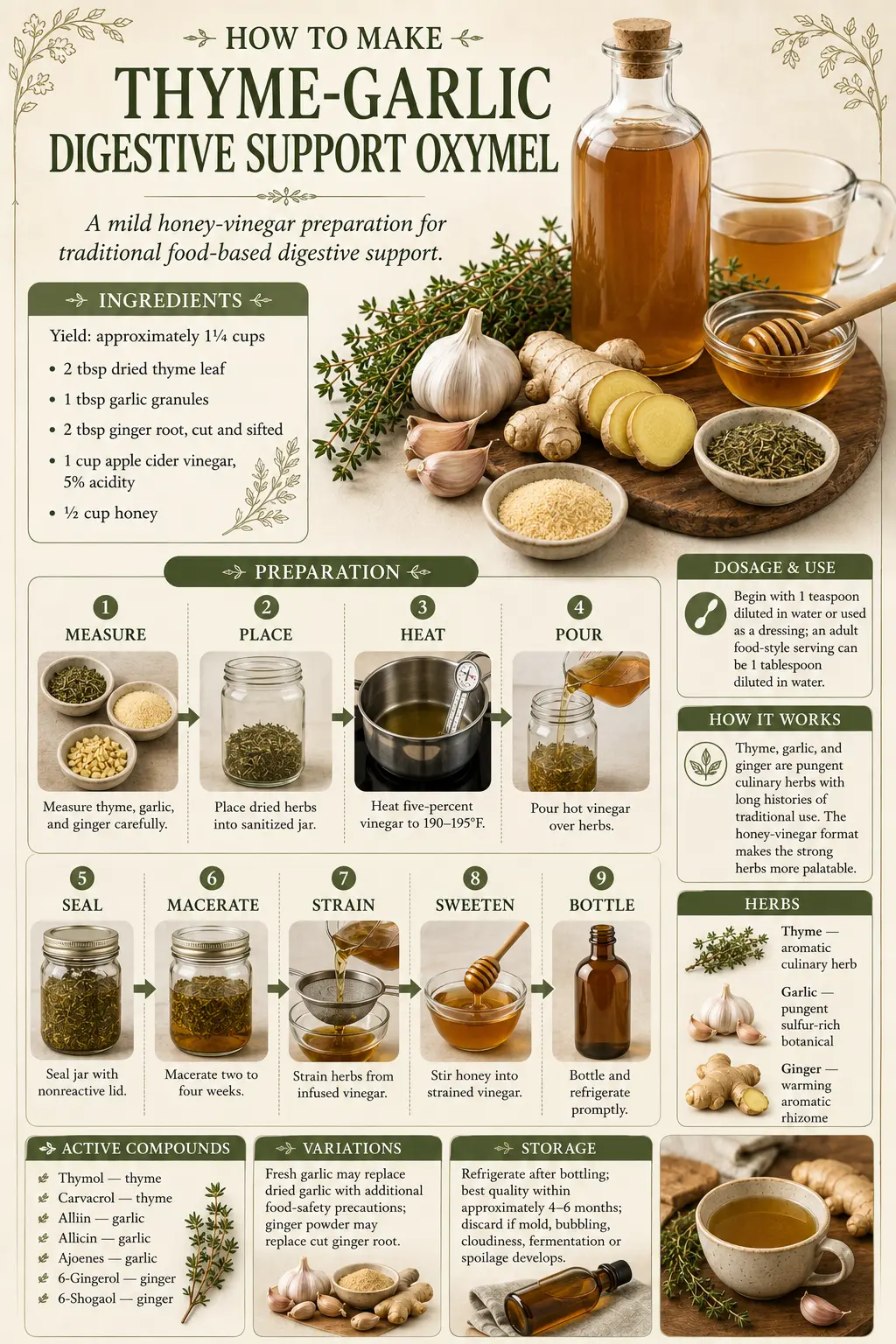
Recipe Details
Preparation Type: Oxymel
Ingredients
Dried thyme leaf — 2 tablespoons
Garlic granules — 1 tablespoon
Ginger root, cut and sifted — 2 tablespoons
1 cup apple cider vinegar, 5% acidity
½ cup honey
Preparation
- Add thyme, garlic, and ginger to a clean, sanitized glass jar.
- Warm the vinegar to approximately 190–195°F, without allowing it to boil vigorously.
- Pour the hot vinegar over the herbs.
- Seal with a nonreactive lid.
- Allow to cool.
- Store in a cool, dark place for 2–4 weeks, shaking gently several times per week.
- Strain thoroughly.
- Stir in the honey after straining.
- Bottle and refrigerate.
The use of a known-acidity vinegar and sanitary preparation is particularly important for homemade flavored vinegars containing garlic. Extension guidance recommends pasteurized vinegar and careful sanitation because added vegetables and herbs can change the safety profile of the finished product.
Yield
Approximately 1¼ cups, depending on herb absorption and straining losses.
Dosage & Usage
For a food-style traditional preparation, begin with 1 teaspoon diluted in water or used as a salad dressing.
If tolerated, a typical adult food-style serving can be 1 tablespoon diluted in water, preferably with food.
This is a culinary/traditional digestive-support preparation, not a treatment for a parasitic infection.
Precautions & Contraindications
- Do not give honey-containing preparations to infants under 12 months.
- People with reflux, ulcers, or significant acid sensitivity may find vinegar irritating.
- Garlic may cause digestive discomfort in some people.
- Use caution with medicinal quantities of garlic if taking anticoagulant or antiplatelet medications.
- People with known allergies to any ingredient should avoid the formula.
- Use commercial vinegar with a clearly stated 5% acidity rather than homemade or vinegar of unknown acidity.
- Refrigerate after straining and bottling.
- Discard if mold, bubbling, cloudiness, fermentation, or unusual odor develops. Extension guidance specifically recommends discarding flavored vinegar showing these signs.
Health Conditions & How It Works
Mild/Food-Based Daily Option
Thyme, garlic, and ginger are all familiar culinary herbs with long histories of traditional use. Thyme contributes aromatic volatile compounds such as thymol and carvacrol, garlic contributes sulfur-containing compounds including alliin and allicin, and ginger contributes pungent gingerols and shogaols.
The vinegar-and-honey format is an oxymel-style preparation that combines acidity and sweetness to make pungent herbs more palatable. Similar garlic-and-thyme oxymels and fire ciders are common in contemporary herbal practice.
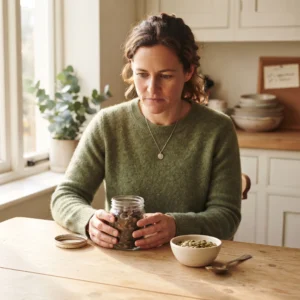
Herbs Used in This Recipe
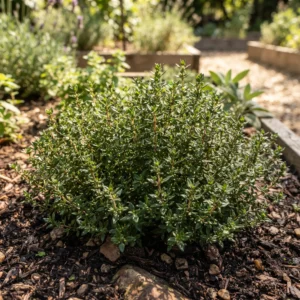
Thyme Leaf — Provides aromatic pungency and a traditional culinary-digestive character.
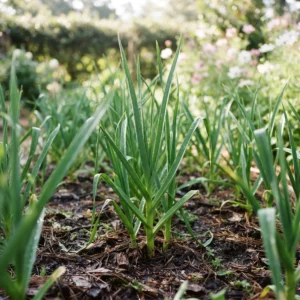
Garlic — Adds strong sulfur-rich pungency and a long history of culinary and traditional herbal use.
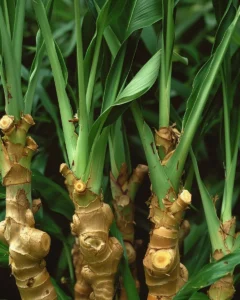
Ginger Root — Adds warming pungency and is traditionally used in digestive preparations.
Active Compounds
- Thymol — Thyme — A major aromatic compound contributing to thyme’s characteristic fragrance and pungency.
- Carvacrol — Thyme — A phenolic monoterpenoid found in thyme volatile oil.
- Alliin — Garlic — A sulfur-containing precursor naturally present in intact garlic.
- Allicin — Garlic — Generated when garlic tissue is crushed and alliin is enzymatically converted.
- Ajoenes — Garlic — Organosulfur compounds associated with processed garlic preparations.
- 6-Gingerol — Ginger — A major pungent phenolic constituent of fresh ginger.
- 6-Shogaol — Ginger — A pungent ginger compound associated particularly with dried or heat-processed ginger.
Ready-to-Use Product
The closest commercial products are fire cider/oxymel preparations, several of which contain thyme, garlic, ginger, vinegar, and honey:
Herbal Revolution Fire Cider Tonic — contains garlic, ginger, thyme, apple cider vinegar, and honey among other botanicals.
Hearthmother Goods Fire Cider — contains apple cider vinegar, honey, ginger, garlic, and thyme.
Hillbilly Nutrition Fire Cider — explicitly describes its preparation as an oxymel containing garlic, thyme, ginger, vinegar, and honey.
Haven Herbs Fire Cider — original recipe includes vinegar, honey, thyme, garlic, and ginger.
Variations & Substitutions
- Dried garlic granules → peeled fresh garlic: possible, but homemade fresh-garlic vinegar requires extra food-safety attention and refrigeration.
- Ginger root → ginger root powder: use approximately 1 tablespoon powder and expect a cloudier finished vinegar.
Storage & Shelf Life
Because this is a homemade flavored vinegar containing garlic and other plant material, refrigeration is the conservative storage choice after straining and bottling.
For best quality, use within 4–6 months and discard immediately if mold, bubbling, cloudiness, fermentation, or other spoilage signs develop. OSU Extension recommends refrigeration for freshness and gives 4–6 months as a best-quality period for flavored vinegars.
FAQ
Why use vinegar and honey together?
The vinegar extracts and carries many aromatic compounds while honey softens the sharp acidity and pungency, making the preparation easier to take.
Can I use homemade vinegar?
For a home preparation where food safety matters, use commercially produced vinegar with a clearly stated acidity rather than vinegar of unknown strength.
Can I use fresh garlic?
Yes, but fresh garlic introduces additional food-safety considerations. For this recipe, dried garlic makes the preparation simpler and more consistent.
Does this oxymel treat parasites?
No. It is a mild traditional digestive-support preparation. Confirmed parasitic infections should be appropriately diagnosed and managed based on the specific organism.
Can I use it in food instead of taking it as a shot?
Yes. A small amount works well in salad dressings, marinades, cooked vegetables, and savory sauces.
References
University of Minnesota Extension — Flavored Vinegar: Fire Cider
Oregon State University Extension — Flavored Vinegars
PubMed — Chemical Constituents and Pharmacological Activities of Garlic
PubMed — Preparation and Bioactivity of Gingerols
PubMed — Thymol: Properties and Applications
European Medicines Agency — Thyme Herbal Monograph
Disclaimer
This recipe is educational and reflects traditional herbal and culinary practices. It is not intended to diagnose, treat, cure, or prevent disease