

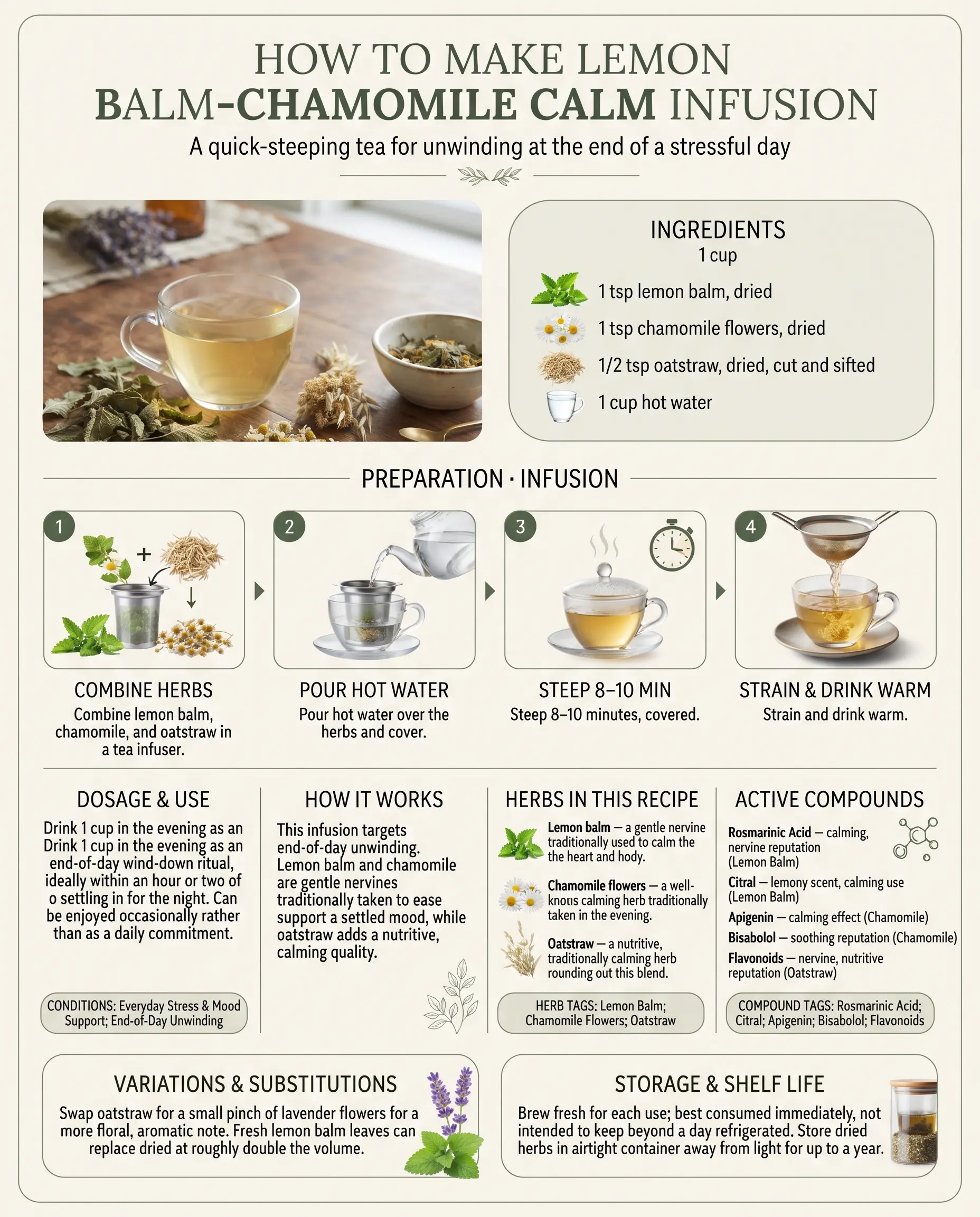
Recipe Details
Preparation Type: Infusion
Ingredients
1 tsp lemon balm, dried
1 tsp chamomile flowers, dried
1/2 tsp oatstraw, dried, cut and sifted
1 cup hot water
Preparation
- Combine lemon balm, chamomile, and oatstraw in a tea infuser or strainer.
- Pour hot water over the herbs and cover.
- Steep 8–10 minutes, covered.
- Strain and drink warm.
Yield: 1 cup
Dosage & Usage
Drink 1 cup in the evening as an end-of-day wind-down ritual, ideally within an hour or two of settling in for the night. Can be enjoyed occasionally rather than as a daily commitment.
Precautions & Contraindications
Avoid if allergic to plants in the Asteraceae (daisy) family, which includes chamomile. Oatstraw is generally well tolerated, but those with celiac disease or gluten sensitivity should confirm the source is processed in a gluten-free facility, as oats can be cross-contaminated with wheat during growing or processing. Consult a healthcare practitioner before use during pregnancy.
Health Conditions & How It Works
This infusion targets end-of-day unwinding, the specific moment of transitioning out of a stressful day rather than an ongoing daily stress-management routine. Lemon balm and chamomile are both traditionally classified as gentle nervines, taken to ease tension and support a settled mood. Oatstraw adds a nutritive, traditionally calming quality that rounds out the blend without adding stimulation.


Herbs Used in This Recipe
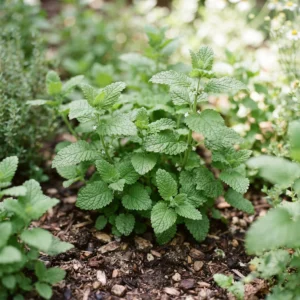
- Lemon balm — a gentle nervine traditionally used to calm the heart and body and support a settled mood.
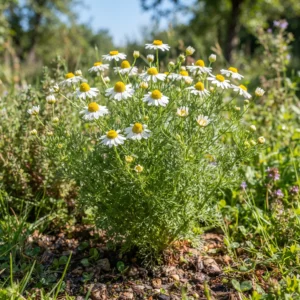
- Chamomile flowers — a well-known calming herb traditionally taken in the evening to ease tension.
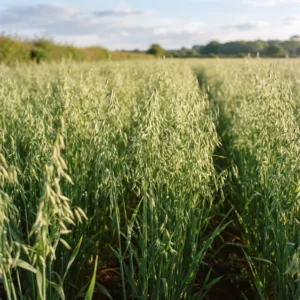
- Oatstraw — a nutritive, traditionally calming herb that rounds out this end-of-day blend.
Active Compounds
- Rosmarinic acid — a compound traditionally associated with lemon balm’s calming, nervine reputation (Lemon Balm)
- Citral — a volatile oil contributing to lemon balm’s characteristic lemony scent and traditional calming use (Lemon Balm)
- Apigenin — a flavonoid traditionally associated with chamomile’s calming effect (Chamomile)
- Bisabolol — traditionally associated with chamomile’s soothing reputation (Chamomile)
- Flavonoids — a broader compound class present in oatstraw, traditionally tied to its nervine, nutritive reputation (Oatstraw)
Ready-to-Use Product
Traditional Medicinals Chamomile with Lavender Tea — a chamomile, lavender, and lemon balm blend built for settling the nervous system in the evening, closely aligned with this formula’s end-of-day intent (this ready-made version includes lavender rather than oatstraw, so it’s a related but not exact match).
Variations & Substitutions
Swap oatstraw for a small pinch of lavender flowers if you prefer a more floral, aromatic note alongside the lemon balm and chamomile. Fresh lemon balm leaves can replace dried at roughly double the volume if available.
Storage & Shelf Life
Brew fresh for each use; this infusion is best consumed immediately and doesn’t keep well beyond a day refrigerated. Store the dried herbs themselves in an airtight container away from light for up to a year.
FAQ
Why is this described as an occasional evening ritual rather than a daily herb? Lemon balm and chamomile are gentle enough for regular use, but this particular formula is framed around the specific moment of winding down after a stressful day — some people reach for it nightly, others only when they notice they need it, and either approach fits the tea’s traditional in-the-moment role.
Can I drink this tea in the morning instead? You can, though its traditional use is centered on evening unwinding — the combination of lemon balm, chamomile, and oatstraw is generally considered calming rather than energizing, so most people find it better suited to the end of the day.
Why steep covered instead of uncovered? Covering the cup while steeping traps the volatile aromatic oils that would otherwise escape as steam, keeping more of the herbs’ calming compounds in the tea.
Is oatstraw the same as oatmeal? No — oatstraw is the green, aerial part of the oat plant harvested before the grain fully matures, distinct from the oat grain used to make oatmeal, though both come from the same Avena sativa plant.
References
- NCCIH: Chamomile
- Mountain Rose Herbs: Lemon Balm Organic
- Mountain Rose Herbs: Oatstraw Organic
- American Botanical Council: HerbalGram
Disclaimer
This content is for educational purposes only and has not been evaluated by the FDA. It is not intended to diagnose, treat, cure, or prevent any disease. Consult a qualified healthcare practitioner before using herbal preparations, particularly if pregnant, nursing, or taking medication.