

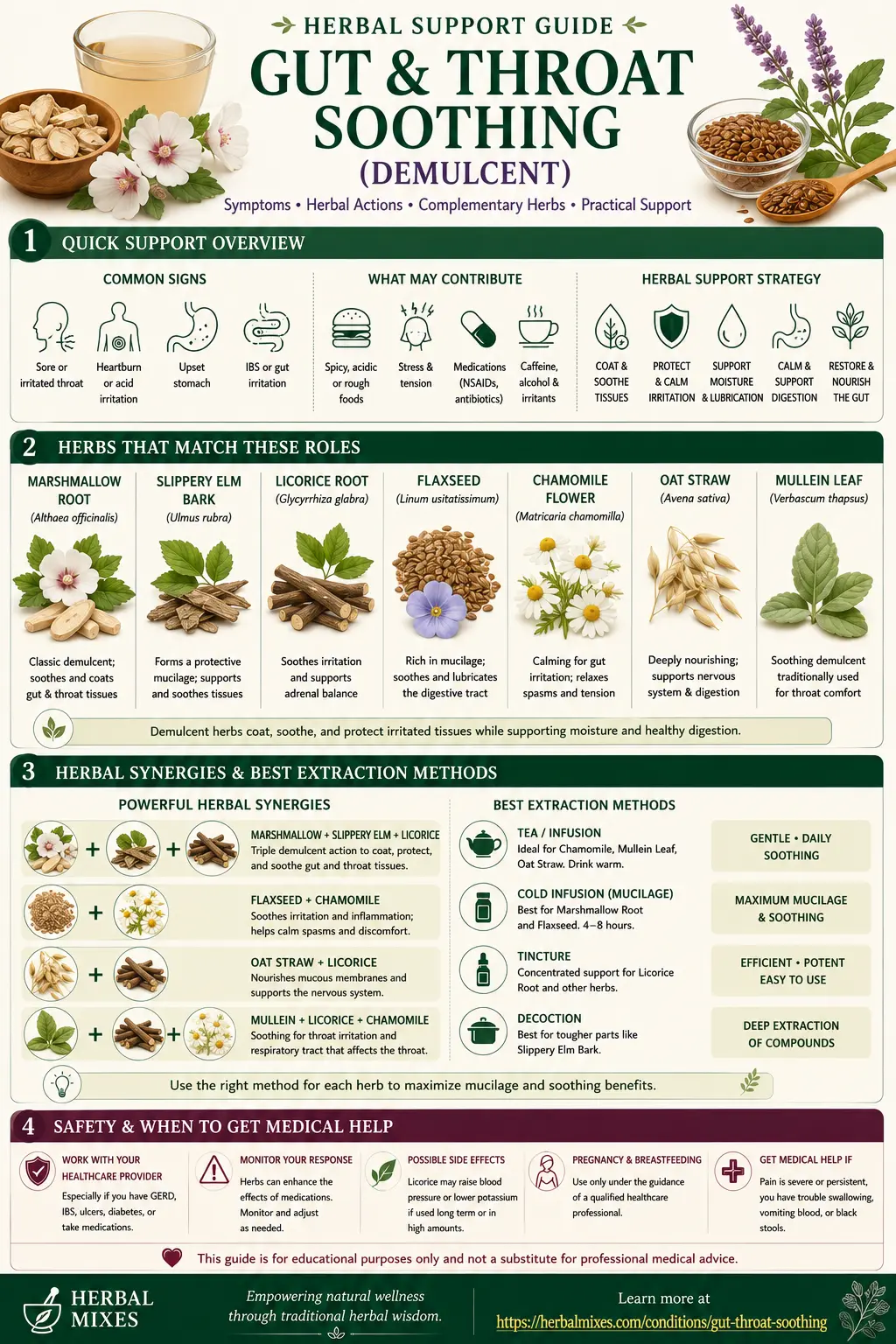
Herbal support for irritated membranes combines mucilage-rich demulcents for protective coating, vulneraries for tissue regeneration, and gentle anti-inflammatories to cool localized irritation. The specific choice of herbs depends heavily on whether raw throat discomfort, gastric lining sensitivity, or swallowing irritation is the primary focus.
Learn more about these herb:


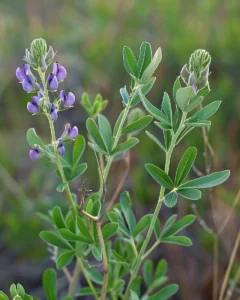
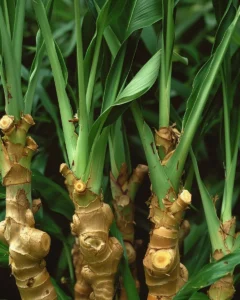
Available Ready-to-Use Products
If you prefer a ready-made option, these commercially available products contain herbs relevant to the approaches discussed above.
Targeted Gut Lining & Mucosal Support — Soothing powder blend designed to coat and nourish the gastrointestinal tract. Traditional Medicinals — Throat Coat Tea — Combines slippery elm, licorice root, marshmallow root, and orange peel to deliver soothing demulcent moisture to the throat and digestive tract.
Digestive Demulcent & Soothing Extract — Alcohol-free fluid extract for internal mucosal hydration. Nature’s Answer — Marshmallow Root Alcohol-Free Extract — Concentrated marshmallow root delivers soothing polysaccharides directly to dry or irritated mucous membranes.
Gastrointestinal Comfort & Repair — Herbal botanical powder for gut wall maintenance and soothing relief. [Dynamic Health — Pure Aloe Vera / or similar demulcent formulas] No direct single ideal match; individual-herb cold infusions or custom root powders offer a closer fit for targeted gut soothing.
Botanical Throat & Mucosal Lozenges — Demulcent lozenges utilizing classic mucilage-rich herbs. Himalaya — Herbals Botanique Lozenges — Slippery elm and licorice root soothe dry throats and provide sustained mucosal comfort throughout the day.
Herbal Synergies & Best Extraction Methods
Marshmallow Root + Slippery Elm + Licorice Root
Best for: Chronic throat rawness, burning upper digestive discomfort, and raw mucosal irritation. Marshmallow and slippery elm deliver heavy-duty mucilage to coat and protect raw linings, while licorice supports tissue healing and moisture retention. Best Preparation: Cold Infusion (Maceration). Soaking roots and barks in cold water extracts rich, slippery polysaccharides without drawing out uncomfortably drying tannins.
Plantain + Calendula + Marshmallow Root
Best for: Sensitive digestive tracts, occasional gut wall irritation, and mild lower GI discomfort. Plantain cools and draws heat from inflamed tissues, calendula promotes direct mucosal repair, and marshmallow provides a soothing, protective blanket. Best Preparation: Cold Infusion or Glycerite. Gentle, alcohol-free preparations ensure direct, non-irritating contact with sensitive mucosal linings.
Slippery Elm + Chamomile + Marshmallow Root
Best for: Stress-related gut irritation, nervous stomach tension accompanied by burning, and throat tightness. Slippery elm coats and protects mucosal surfaces, chamomile relaxes smooth muscle spasms, and marshmallow provides deep hydration. Best Preparation: Covered Infusion + Cold Maceration Blend. Combines a soothing warm chamomile infusion with mucilage-rich cold-extracted roots.
Licorice Root + Plantain + Slippery Elm
Best for: Persistent dry throat irritation, vocal strain, and upper digestive tract dryness. Licorice and slippery elm lock moisture onto delicate membranes, while plantain cools and repairs surface micro-abrasions. Best Preparation: Decoction or Cold Infusion. Extracts dense, coating plant constituents into a rich, soothing liquid suitable for frequent, small sips.
Herbal Properties Required
For gut and throat soothing, the most useful herbal properties are typically demulcent, vulnerary, anti-inflammatory, and mucilaginous. Demulcent and mucilaginous herbs provide a soothing, gel-like coating that protects raw tissue, while vulnerary and anti-inflammatory actions accelerate mucosal repair and relieve localized heat.




Herbs With These Properties
Marshmallow Root (Althaea officinalis) — Deep mucosal hydration + rich mucilage coating. A sweet root packed with high-molecular-weight polysaccharides; traditionally used to coat and soothe dry, irritated tissues all the way from the throat down through the gastrointestinal tract.
Slippery Elm (Ulmus rubra) — Protective demulcent + gastrointestinal soothing. A revered inner bark rich in soothing mucilage and tannins; forms a durable, lubricating film over inflamed mucosal linings to ease discomfort during digestion and swallowing.
Licorice Root (Glycyrrhiza glabra) — Mucosal repair + anti-inflammatory demulcent. A sweet soothing root containing glycyrrhizin and flavonoids; helps support the natural repair of mucosal membranes while locking moisture into irritated digestive walls.
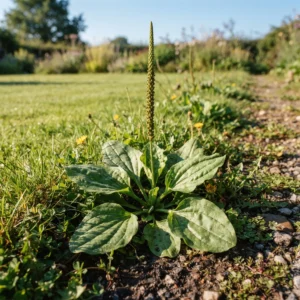
Plantain (Plantago major) — Cooling demulcent + tissue drawing. A resilient yard leaf rich in mucilage and aucubin; excellent for cooling internal heat, soothing minor mucosal abrasions, and supporting gut wall integrity.
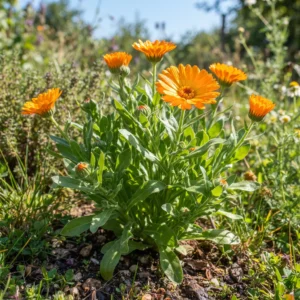
Calendula (Calendula officinalis) — Vulnerary tissue healing + anti-inflammatory. A bright resinous blossom rich in triterpenoids; exceptional for maintaining the health of sensitive digestive and oral tissues prone to irritation.
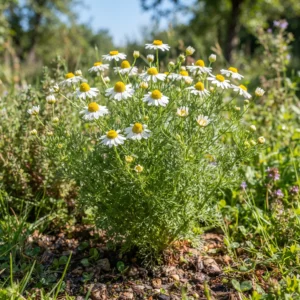
Chamomile (Matricaria recutita) — Spasmolytic soothing + mucosal calming. A gentle floral daisy rich in apigenin and volatile oils; helps relax mild digestive spasms while calming inflamed mucosal tissue throughout the gut.
Use With Care
- Exercise caution with licorice root if you have high blood pressure, kidney disease, or cardiovascular conditions, as high or prolonged doses can cause sodium retention and potassium depletion (choose deglycyrrhizinated licorice when appropriate).
- Ensure mucilaginous herbs like slippery elm are taken with plenty of water, as their dense swelling properties require adequate fluid.
- Because demulcents coat the lining of the digestive tract, they may slow the absorption of certain pharmaceutical medications; take herbs and medications a few hours apart when possible.
- Consult a healthcare professional if gut irritation or throat discomfort persists unexplainably over several weeks.
- If you take prescription medication, are pregnant or breastfeeding, or have a medical condition, check with a qualified healthcare professional before using concentrated herbal products.
When to Get Medical Help
Seek medical evaluation if you experience:
- Severe, unremitting abdominal pain, persistent vomiting, or difficulty swallowing food and liquids.
- Black, tarry stools, rectal bleeding, or vomiting blood, which indicate serious gastrointestinal bleeding requiring immediate medical attention.
- Unintentional, rapid weight loss accompanied by chronic digestive distress.
- Persistent hoarseness or throat pain lasting longer than 2–3 weeks without improvement. Persistent, severe, unusual, or worsening symptoms should be evaluated by a healthcare professional.
Frequently Asked Questions
How do demulcent herbs soothe the gut and throat?
Demulcent herbs are rich in complex plant starches and sugars called mucilage. When prepared with water, these compounds form a slippery, protective gel-like coating over raw, inflamed mucous membranes, shielding them from stomach acid, friction, and environmental irritants.
Why is cold water recommended for extracting roots like marshmallow?
Hot water extracts starches that can make mucilaginous roots thick, gummy, and heavy. Soaking marshmallow root or slippery elm in cold water for several hours draws out the pure, slick polysaccharides cleanly, resulting in a much more soothing and palatable drink.
Can demulcent herbs interfere with prescription medications?
Yes. Because demulcents form a protective coating over the digestive tract and can bind to substances, taking them at the exact same time as oral medications may reduce drug absorption. It is best to separate herbal demulcent teas or supplements from medications by at least two hours.
What is the difference between a demulcent and an astringent?
While demulcents (like marshmallow and slippery elm) soothe, lubricate, and protect raw tissues with moisture, astringents (like yarrow or witch hazel) contain tannins that tighten, dry, and tone loose or weeping tissues.
References
National Center for Complementary and Integrative Health (NCCIH) — Herbs at a Glance: NCCIH Overview PubMed — Evaluation of Mucilaginous Plants in Mucosal Health: PubMed Study PubMed — Licorice Root and Gastrointestinal Protection: PubMed Central Review American Botanical Council — Slippery Elm Monograph and Demulcent Actions: HerbalGram Reference
Disclaimer
For educational purposes only. This information is not intended to diagnose, treat, cure, or prevent disease. Herbal products may cause side effects or interact with medications. Consult an appropriate healthcare professional if you have a medical condition, take medication, are pregnant or breastfeeding, or have persistent or concerning symptoms.