

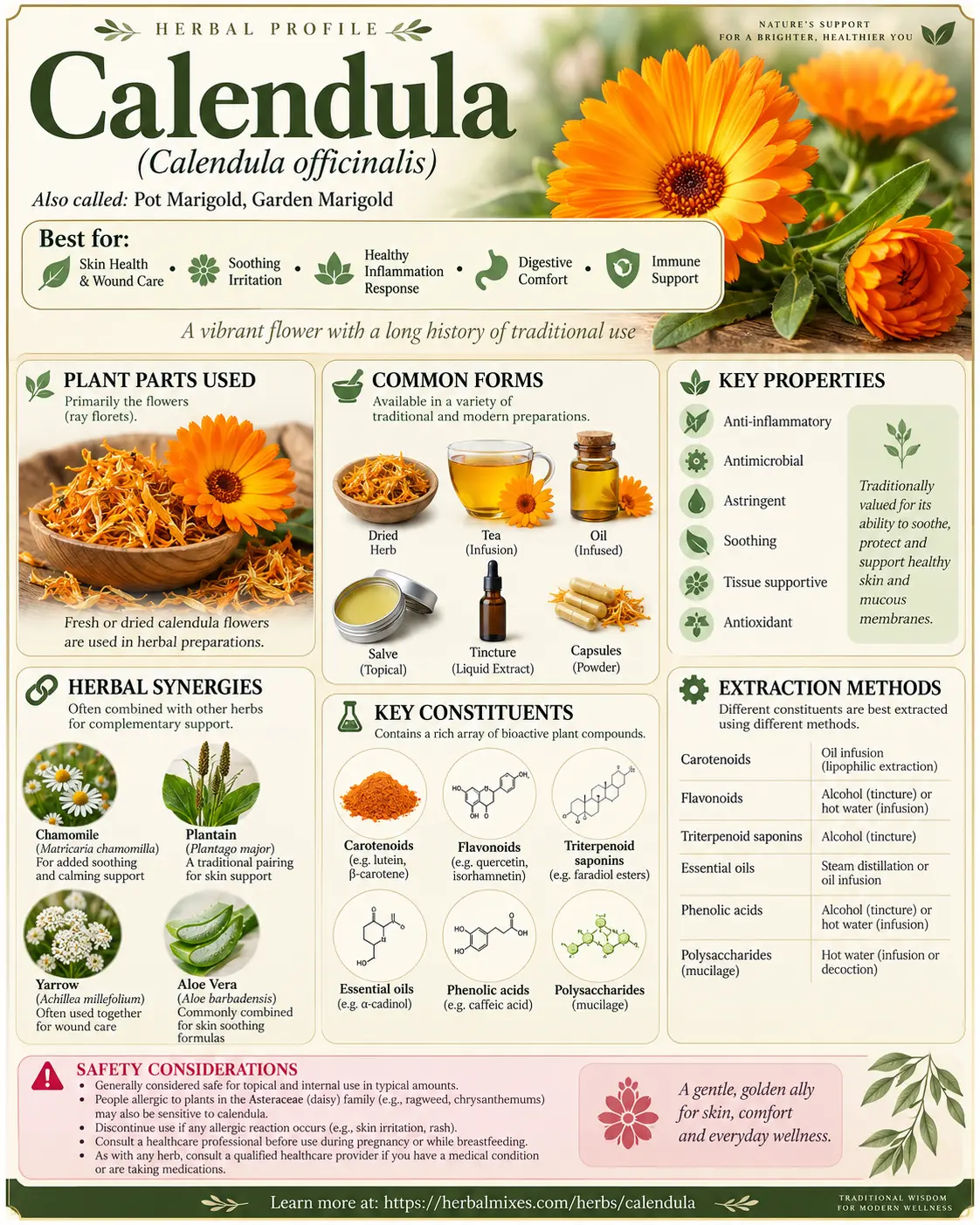
What Calendula Is Good For
Skin Healing & Vulnerary Care — Calendula is a premier vulnerary traditionally renowned for its exceptional ability to support the rapid recovery of minor cuts, scrapes, burns, and abrasions.
Lymphatic Drainage Support — Taken internally as a tea or tincture, it helps gently stimulate lymphatic circulation, supporting fluid clearance and tissue decongestion.
Digestive Mucosa Soothing — Its gentle mucilaginous and anti-inflammatory compounds help soothe irritated mucous membranes along the gastrointestinal tract lining.
Antifungal & Antimicrobial Defense — Widely utilized in topical salves to support skin integrity against fungal irritations, diaper rash, and minor skin blemishes.
Gentle Eye & Ear Care — Historically brewed into sterile, strained herbal infusions to create soothing washes for tired eyes or mild outer ear irritations.
Available Herbal Products
Organic Calendula Flower Petals – Dried golden petals. An authentic, traditional choice for infusing into carrier oils to craft homemade healing salves or steeping a soothing skin tea. Seller: Mountain Rose Herbs – View Mountain Rose Herbs Calendula Flowers →
Calendula Flower Liquid Extract – Hydroalcoholic tincture. A convenient liquid format designed for internal use to support lymphatic drainage and soothe digestive mucosal tissues. Seller: Herb Pharm – View Herb Pharm Calendula Extract →
Herbal First Aid Healing Salve – Professional topical ointment. Formulated with rich calendula oil infused alongside comfrey and plantain to provide comprehensive skin repair. Seller: Wise Woman Herbals – View Wise Woman Herbals Salves →
Calendula Baby & Skin Balm – Gentle soothing balm. Perfect for delicate skin, diaper area protection, and minor chapped skin relief. Seller: Earth Mama Organics – View Earth Mama Calendula Balm →
Herbal Synergies
Calendula pairs especially well with Plantain Leaf, St. John’s Wort, and Echinacea Root, depending on the goal of the formula.
Calendula Flowers + Plantain Leaf – Best for: Rapid skin repair, soothing cuts, drawing out minor irritations, and healing bug bites Calendula provides powerful vulnerability and cellular regeneration for skin tissue, while plantain leaf offers soothing allantoin and drawing properties. Together, they form the gold standard herbal first aid duo. Best extraction: Infused oil salve or strong poultice wash. Both herbs yield their mucilaginous and soothing compounds efficiently into oil or warm water.
Calendula Flowers + St. John’s Wort – Flower Best for: Soothing nerve-rich tissue injuries, minor burns, bruising, and radiant skin care Calendula promotes skin cell proliferation and surface repair, whereas St. John’s wort oil delivers hypericin to ease nerve-related pain and deep tissue discomfort. Best extraction: Dual oil infusion. Macerating fresh calendula and St. John’s wort flowers together in olive oil creates a brilliant red-gold healing oil.
Calendula Flowers + Echinacea Root – Best for: Lymphatic cleansing, immune support, and tissue recovery Calendula supports internal lymphatic drainage and mucosal health, while echinacea stimulates immune surveillance and white blood cell activity. Best extraction: Liquid tincture combination. Blending these extracts provides comprehensive internal support.
Key Herbal Properties
Vulnerary — Promotes the healing of wounds, cuts, and abrasions by stimulating skin cell regeneration.
Lymphagogue — Encourages healthy movement and drainage of lymphatic fluid throughout the body.
Antifungal — Inhibits fungal growth, making it exceptionally effective for skin yeast and minor rashes.
Anti-inflammatory — Calms localized tissue redness, swelling, and irritation.
Demulcent — Soothes, protects, and moistens inflamed mucous membranes.





Active Compounds
Triterpenoid Saponins (including Calendulosides) Found mainly in: Resinous flower heads The primary bioactive compounds responsible for calendula’s anti-inflammatory, wound-healing, and tissue-regenerative properties. Best extraction: Alcohol-water tincture or oil infusion. These compounds dissolve efficiently in hydroalcoholic solvents and warm carrier oils.
Flavonoids (including Quercetin and Isorhamnetin glycosides) Found mainly in: Golden-orange petals Antioxidant compounds that protect cells from oxidative stress and support healthy microcirculation in skin tissue. Best extraction: Hot water infusion (tea) or alcohol extract. Soluble in both warm water and alcohol solutions.
Mucilage and Polysaccharides Found mainly in: Petal tissues High-molecular-weight carbohydrates that provide soothing, demulcent action for skin and mucous membranes. Best extraction: Aqueous extraction (warm infusion or water-based salve). Mucilage dissolves readily in water.
FAQ
What is calendula best used for? Calendula is primarily used topically to heal minor cuts, burns, scrapes, and skin irritations, and internally as a gentle tea or tincture to support lymphatic drainage and soothe digestion.
Can calendula be applied directly to open wounds? Yes, clean, properly prepared calendula infusions or salves are safely used on minor open wounds to encourage clean tissue repair and prevent infection.
Does calendula tea taste bitter? Calendula tea has a mild, resinous, earthy, and slightly bitter flavor profile with a bright, floral aroma.
Can calendula be taken internally every day? Yes, moderate amounts of calendula tea or tincture are safely consumed internally to support lymphatic flow and gastrointestinal comfort.
Is calendula safe for babies and sensitive skin? Yes, calendula is exceptionally gentle, making it one of the most trusted and widely used botanical ingredients for baby care, diaper balms, and sensitive skin formulas.
Safety & Precautions
Asteraceae Allergy: Individuals with known severe allergies to plants in the Asteraceae (daisy/ragweed) family—such as ragweed, marigolds, or daisies—should patch-test topical products before use.
Pregnancy & Breastfeeding: Culinary tea amounts are considered safe, but concentrated internal therapeutic extracts should be used under professional guidance during pregnancy.
Topical Sterility: When preparing homemade calendula washes or compresses, ensure all equipment is sterile to prevent introducing bacteria into open skin injuries.
Medication Interactions: Oral internal use is generally well-tolerated, but consult a healthcare provider if taking sedatives or specialized prescription drugs alongside high-dose extracts.
Consult a qualified healthcare professional before using calendula therapeutically, especially if you manage underlying medical conditions or take prescription drugs.
References
National Center for Complementary and Integrative Health (NCCIH)
PubMed Central – Calendula officinalis: Review of Wound Healing Potential and Phytochemistry
European Medicines Agency (EMA) Monograph on Calendula officinalis L., flos
World Health Organization (WHO) Monographs on Selected Medicinal Plants
Mountain Rose Herbs Calendula Flowers Monograph
Disclaimer
Disclaimer: This article is for educational purposes only and is not intended to diagnose, treat, cure, or prevent any disease. Herbal products can cause side effects and interact with medications. Consult a qualified healthcare professional before using herbs therapeutically, especially if you are pregnant, breastfeeding, taking prescription medications, or managing a medical condition.