

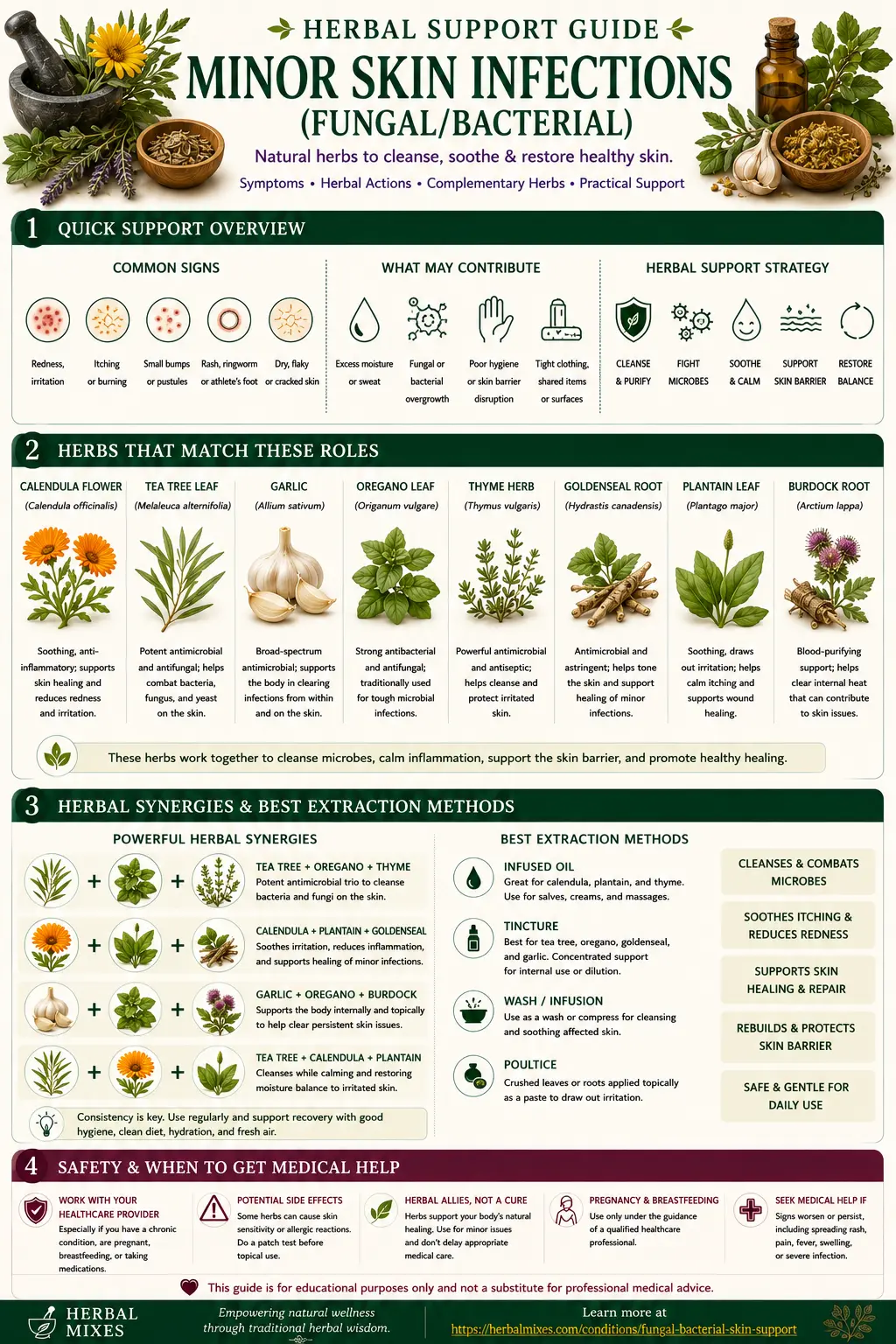
Herbal support for skin infections combines broad-spectrum antimicrobial botanicals to discourage pathogen growth, soothing antiseptics for surface hygiene, and vulneraries to repair damaged skin barriers. The specific choice of herbs depends heavily on whether surface fungal irritation, minor bacterial blemishes, or skin fold discomfort is the primary focus.
Learn more about these herb:

Available Ready-to-Use Products
If you prefer a ready-made option, these commercially available products contain herbs relevant to the approaches discussed above.
Targeted Antimicrobial Skin Salve — Botanical ointment designed for minor skin irritations and microbial balance. Burt’s Bees — Res-Q Ointment — Concentrated herbal extract formulation supports skin health and minor surface recovery.
Organic First-Aid Skin Care Ointment — Soothing herbal salve for minor skin abrasions and microbial defense. Earth Mama Organics — Organic First Aid Ointment — Certified organic herbal blend featuring calendula and herbs to support clean skin healing.
Tea Tree Skin Blemish & Fungal Support Oil — Pure steam-distilled essential oil for localized topical care. Desert Essence — 100% Pure Australian Tea Tree Oil — High-grade tea tree oil provides powerful broad-spectrum antimicrobial and antifungal support when diluted.
Neem & Herbal Skin Soothing Cream — Traditional botanical cream for skin purification and comfort. Neem Aura / or Himalaya — Purifying Neem Cream — Concentrated neem helps soothe and clear minor skin challenges.
Herbal Synergies & Best Extraction Methods
Tea Tree + Calendula + Oregon Grape Root
Best for: Stubborn localized skin irritation, surface fungal challenges, and minor microbial skin blemishes. Tea tree provides direct antimicrobial and antifungal action, while calendula and berberine-rich Oregon grape root soothe and protect the surrounding skin barrier. Best Preparation: Infused Oil, Salve, or Diluted Topical Application. Essential oils or herb-infused oils must be properly diluted in a carrier oil for safe skin contact.
Neem + Thyme + Calendula
Best for: Superficial skin fold discomfort, moisture-related microbial irritation, and general skin cleansing. Neem and thyme offer robust antifungal and antibacterial defense, supported by calendula’s gentle tissue-repairing properties. Best Preparation: Topical Wash (Infusion) or Salve. Concentrated herbal washes or soothing salves maintain direct, clean contact with affected skin surfaces.
Myrrh + Tea Tree + Calendula
Best for: Minor localized skin breaks with secondary microbial concerns and slow-repairing areas. Myrrh acts as a resinous antiseptic to keep the site clean, tea tree targets surface pathogens, and calendula drives skin barrier restoration. Best Preparation: Resinous Tincture or Salve. Alcohol extracts of myrrh or oil-based salves provide concentrated application for minor skin needs.
Oregon Grape Root + Neem + Thyme
Best for: Persistent scaling, dry microbial skin irritation, and deep skin purifier support. Combines potent berberine and azadirachtin constituents to address stubborn surface flora imbalances. Best Preparation: Herbal Salve or Ointment. Locks active botanical extracts onto the skin for prolonged protective exposure.
Herbal Properties Required
For minor skin infections, the most useful herbal properties are typically antimicrobial, antifungal, antibacterial, antiseptic, and vulnerary. Antimicrobial and antifungal herbs help the skin directly combat surface pathogens, while antiseptic actions maintain a clean healing environment, whereas vulnerary herbs accelerate the restoration of healthy skin tissue.




Herbs With These Properties
Tea Tree (Melaleuca alternifolia) — Potent broad-spectrum antimicrobial + antifungal. A potent aromatic leaf oil rich in terpinen-4-ol; widely utilized topically to support clean skin microbial balance and manage minor fungal or bacterial skin concerns.
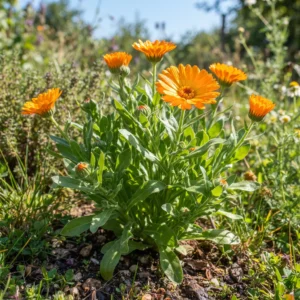
Calendula (Calendula officinalis) — Antimicrobial tissue healing + soothing protection. A bright resinous marigold blossom rich in triterpenoid saponins; exceptional for maintaining surface cleanliness while accelerating the repair of irritated skin barriers.
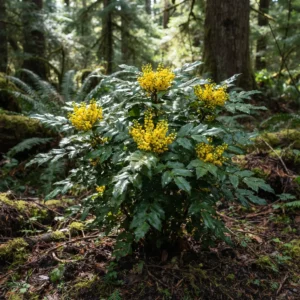
Oregon Grape Root (Mahonia aquifolium) — Berberine-rich antimicrobial + skin tonic. A therapeutic root containing berberine; highly effective when applied topically to support healthy microbial balance in stubborn or chronic skin flare-ups.
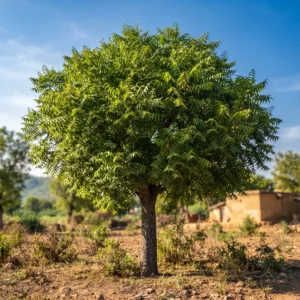
Neem (Azadirachta indica) — Traditional purifying antimicrobial + antifungal. A revered bitter botanical leaf containing nimbin and azadirachtin; traditionally used in skin care to soothe irritated tissues and discourage fungal and bacterial growth.
Myrrh (Commiphora myrrha) — Styptic resinous antiseptic + deep tissue healer. A fragrant tree resin containing terpene compounds; exceptional for supporting clean microenvironments in minor skin breaks and slow-healing sores.
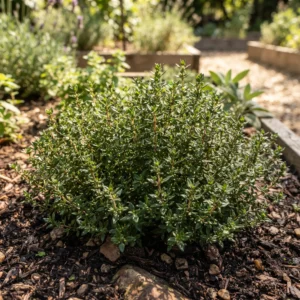
Thyme (Thymus vulgaris) — Thymol-rich volatile oil antiseptic. A fragrant culinary leaf rich in thymol; offers powerful surface antiseptic and antifungal properties when infused into washes or salves.
Use With Care
- Always dilute potent essential oils like tea tree in a clean carrier oil (such as jojoba or coconut oil) before applying them to the skin to avoid chemical irritation or contact dermatitis.
- Discontinue topical herbal use immediately if localized redness, burning, or allergic skin reactions occur.
- Ensure minor skin infections are kept clean and dry, as trapped moisture can worsen both fungal and bacterial skin concerns.
- Consult a healthcare professional if skin infections spread, fail to improve within a few days, or develop systemic symptoms.
- If you take prescription medication, are pregnant or breastfeeding, or have a medical condition, check with a qualified healthcare professional before using concentrated herbal products.
When to Get Medical Help
Seek medical evaluation if you experience:
- A rapidly spreading skin infection characterized by expanding redness, severe swelling, increasing pain, or red streaks.
- Fever, chills, or systemic illness accompanying a localized skin issue.
- Deep, blistering, or oozing lesions that do not respond to basic hygiene and topical care.
- Skin infections occurring in individuals with compromised immune systems or diabetes, which require professional medical oversight. Persistent, severe, unusual, or worsening symptoms should be evaluated by a healthcare professional.
Frequently Asked Questions
How do herbal antimicrobials help manage minor skin infections?
Antimicrobial herbs contain active chemical constituents (like terpinen-4-ol in tea tree or berberine in Oregon grape root) that disrupt the cell walls or metabolic processes of unwanted surface fungi and bacteria, helping the skin restore a healthy microbial balance.
Can essential oils like tea tree be applied directly to the skin?
Generally, pure essential oils should be diluted in a carrier oil before skin application. Applying potent oils undiluted can cause localized skin sensitivity, irritation, or contact dermatitis, especially on compromised skin barriers.
Why is calendula frequently paired with antifungal herbs?
While antifungal and antibacterial herbs work to clear pathogens, calendula provides essential vulnerary support—soothing inflammation, protecting raw tissue, and accelerating the rate at which the skin barrier heals itself.
How do you distinguish between fungal and bacterial minor skin issues?
While both can cause redness and irritation, fungal skin issues often present as circular, scaly, or intensely itchy patches that thrive in moist environments, whereas bacterial issues more commonly involve localized warmth, tenderness, or surface blemishes. A professional diagnosis is always recommended.
References
National Center for Complementary and Integrative Health (NCCIH) — Tea Tree Oil Overview: NCCIH Overview PubMed — Melaleuca alternifolia (Tea Tree) Oil in Skin Infections: PubMed Central Review PubMed — Antimicrobial Properties of Berberine-Containing Plants: PubMed Study American Botanical Council — Calendula and Topical Antiseptic Actions: HerbalGram Reference
Disclaimer
For educational purposes only. This information is not intended to diagnose, treat, cure, or prevent disease. Herbal products may cause side effects or interact with medications. Consult an appropriate healthcare professional if you have a medical condition, take medication, are pregnant or breastfeeding, or have persistent or concerning symptoms.