

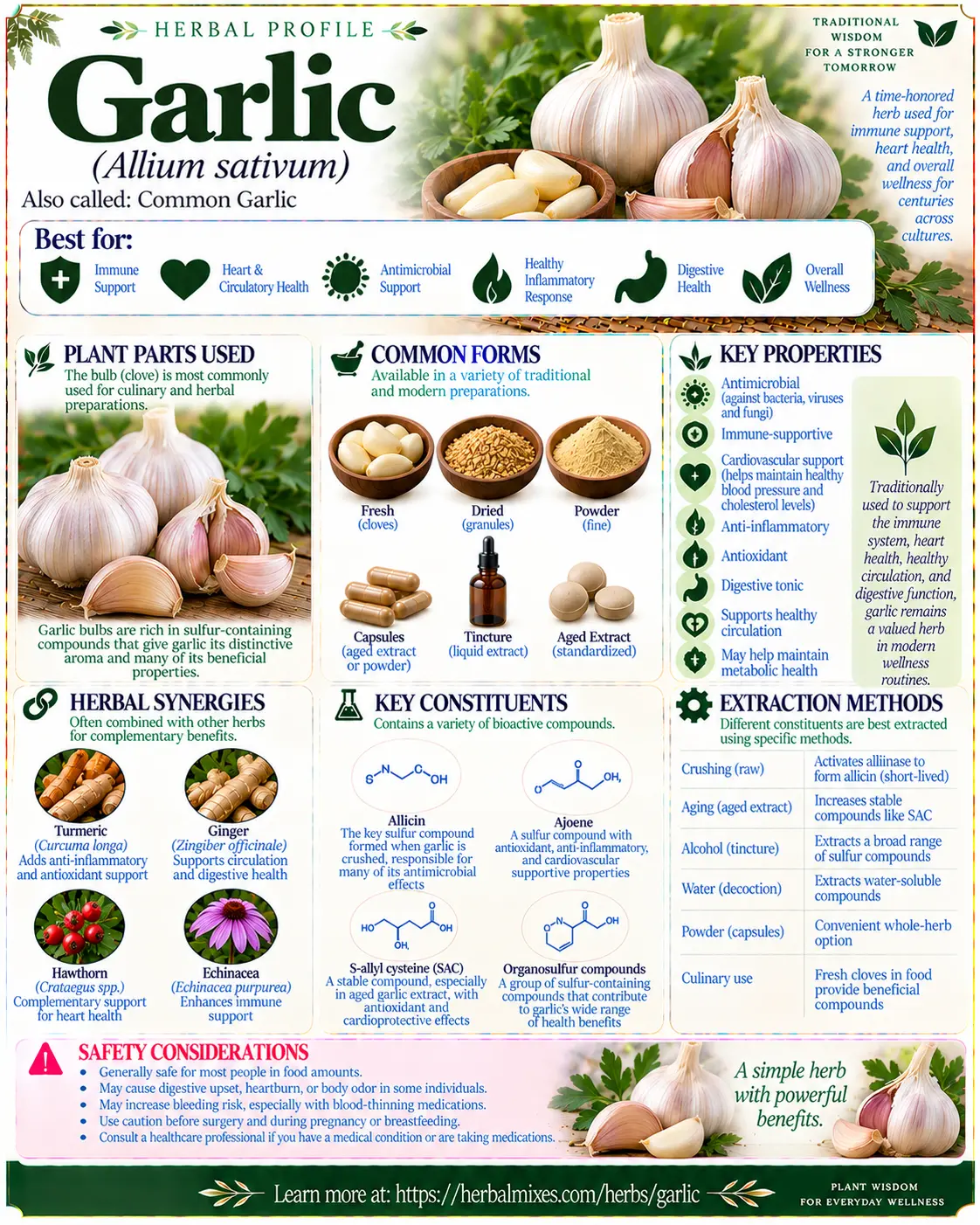
What Garlic Is Good For
Cholesterol support — Garlic supplements may produce a small reduction in total and LDL cholesterol in people with elevated cholesterol. Whole garlic, standardized preparations, and aged garlic extracts differ chemically, so results cannot automatically be transferred from one product type to another.
Healthy blood pressure — Clinical evidence suggests some garlic preparations may modestly support lower blood pressure in people with hypertension. It should complement—not replace—prescribed blood-pressure management.
Cardiovascular & circulation support — Garlic’s sulfur compounds have been extensively investigated for effects on vascular function, platelet activity, oxidative stress, and lipid metabolism. The EMA recognizes garlic bulb within the therapeutic area of circulatory disorders.
Immune support — Garlic is widely used during cold and flu season, and its sulfur compounds demonstrate antimicrobial and immunomodulatory activity in experimental research. However, NCCIH notes that human evidence for preventing or shortening colds remains limited.
Blood sugar support — Some studies suggest garlic supplements may modestly reduce blood glucose in people with diabetes, though garlic should not be considered a substitute for diabetes treatment.
Digestive & antimicrobial support — Fresh crushed garlic generates allicin, a highly reactive sulfur compound with antibacterial and antifungal activity in laboratory studies. This is biologically interesting but does not mean eating garlic can treat an active bacterial or fungal infection.
Available Herbal Products
Buying Guides for Available Garlic Products
Kyolic Aged Garlic Extract Cardiovascular & Immune Reserve – Aged garlic extract capsules. A useful choice when you want an odorless preparation rich in stable water-soluble sulfur compounds such as S-allyl cysteine rather than relying on fresh-garlic allicin formation. Seller: Kyolic – View Kyolic Aged Garlic Extract Reserve →
Garlic Bulb – Whole-herb capsules. Contains garlic bulb powder and is a straightforward choice for people who prefer a simple whole-garlic supplement rather than an aged extract or oil. Seller: Nature’s Way – View Nature’s Way Garlic Bulb →
Garlic Oil 1500 mg Softgels – Concentrated garlic oil. Provides an oil-based garlic preparation emphasizing lipid-soluble sulfur compounds rather than the fiber and full chemistry of fresh garlic. Seller: NOW Foods – View NOW Garlic Oil 1500 mg →
Odorless Garlic Softgels – Deodorized garlic extract. A practical option for people who want supplemental garlic without the strong taste and breath odor associated with raw cloves. Seller: NOW Foods – View NOW Odorless Garlic →
Because garlic products are chemically very different, choose the form according to your goal. Fresh crushed garlic emphasizes newly formed allicin, aged garlic emphasizes stable compounds such as S-allyl cysteine, and garlic oil emphasizes more lipid-soluble sulfur compounds.
Herbal Synergies
Garlic pairs especially well with ginger, hawthorn, turmeric, thyme, and cayenne depending on whether the goal is cardiovascular, circulatory, digestive, or seasonal immune support.
Garlic + Ginger
Best for: Circulation, digestion, and seasonal wellness
Garlic contributes sulfur compounds with cardiovascular and antimicrobial activity, while ginger adds warming circulatory, digestive, anti-nausea, and anti-inflammatory actions.
This is particularly useful as a food-based combination for people who want broad cardiovascular and digestive support rather than a narrowly targeted supplement.
Best extraction: Fresh food, tincture, or combination preparation. Freshly crushed garlic preserves alliinase activity needed to generate allicin, while ginger extracts well into either hot water or alcohol.
Garlic + Hawthorn
Best for: Cardiovascular and circulation support
Garlic contributes lipid- and blood-pressure-related support, while hawthorn is traditionally used as a cardiovascular tonic with an affinity for circulation and vascular function.
The pairing covers complementary aspects of cardiovascular wellness rather than relying on one mechanism.
Best extraction: Combination tincture or separate standardized preparations. Hydroalcoholic extraction works well for hawthorn’s flavonoids and procyanidins, while garlic can be supplied as aged or standardized extract.
Garlic + Turmeric
Best for: Cardiovascular and inflammatory support
Garlic contributes organosulfur compounds while turmeric supplies curcuminoids and aromatic constituents associated with inflammatory pathways.
Their chemistries differ substantially, which makes them complementary in a broad food-based wellness formula.
Best extraction: Food, powder, or combination extracts. Garlic is best crushed fresh or supplied in an appropriate standardized form; turmeric’s curcuminoids are poorly water soluble and perform better with fat-containing foods or specialized extracts.
Garlic + Thyme
Best for: Seasonal respiratory and antimicrobial support
Garlic brings pungent sulfur compounds, while thyme contributes volatile oils—especially thymol- and carvacrol-related chemistry—with traditional respiratory and antimicrobial applications.
This combination works naturally in foods, broths, oxymels, and traditional seasonal preparations.
Best extraction: Fresh garlic plus covered thyme infusion, or an oxymel/tincture combination. Garlic chemistry is strongly affected by crushing and heat, while thyme’s volatile oils are best preserved by covering hot-water preparations.
Garlic + Cayenne
Best for: Warming circulation and sluggish digestion
Garlic contributes cardiovascular and sulfur-based activity, while cayenne provides capsaicinoids with strongly warming and circulatory effects.
The combination is best suited to people who tolerate pungent herbs well.
Best extraction: Food, tincture, or powder. Both herbs work effectively without requiring a traditional tea preparation.
Use caution if you take anticoagulant or antiplatelet medication, because garlic can influence bleeding risk.
Key Herbal Properties
Cardiovascular supportive — Garlic is one of the more extensively researched food-herbs for cardiovascular wellness. Some preparations may modestly influence cholesterol and blood pressure.
Antimicrobial — Allicin and other sulfur compounds demonstrate antibacterial and antifungal activity in laboratory research. This supports garlic’s traditional antimicrobial reputation but does not establish it as a replacement for antimicrobial medications.
Antioxidant — Garlic contains sulfur compounds and phenolics that participate in antioxidant and redox-related pathways. Aged garlic extract is particularly rich in stable antioxidant sulfur compounds such as S-allyl cysteine.
Anti-inflammatory — Garlic sulfur compounds influence several inflammatory signaling pathways in experimental research. Clinical relevance varies by preparation and condition.
Circulatory — Garlic may influence vascular tone, platelet activity, and lipid metabolism, helping explain its longstanding association with cardiovascular and circulatory formulas.
Hypolipidemic — Some garlic preparations may modestly reduce total and LDL cholesterol in people with elevated levels.
Digestive stimulant — Garlic’s pungency may stimulate digestion, although raw garlic can also irritate sensitive stomachs and cause abdominal discomfort, gas, or nausea.
Immunomodulatory — Garlic constituents affect immune-related pathways experimentally, though clinical evidence for everyday cold prevention remains limited.








Active Compounds
Garlic’s most distinctive chemistry comes from organosulfur compounds. The compounds present depend dramatically on whether garlic is intact, crushed, heated, aged, dried, or extracted into oil. Important constituents include alliin, allicin, ajoene, diallyl sulfides, and S-allyl cysteine.
Alliin
Found mainly in: Fresh garlic bulb
Alliin (S-allyl-L-cysteine sulfoxide) is one of the major sulfur-containing compounds naturally present in intact garlic. It serves as the precursor from which allicin forms after the clove is damaged.
Best extraction: Fresh crushed or minced garlic. Alliin itself is present before crushing, but the important transformation occurs when plant tissues are broken and the enzyme alliinase contacts alliin.
If using garlic for allicin generation, crush or chop it before consumption rather than swallowing a completely intact clove.
Allicin
Found mainly in: Freshly crushed or chopped garlic
Allicin is not stored in substantial amounts inside an intact garlic clove. It forms rapidly when alliinase converts alliin after cutting, crushing, chewing, or mincing. It is responsible for much of fresh garlic’s sharp aroma and has prominent antimicrobial activity in laboratory research.
Best extraction: Fresh crushed garlic rather than prolonged hot extraction. Allicin is unstable and degrades with time, heat, and processing.
For culinary use, crushing garlic and allowing it to rest briefly before intensive heating can allow more alliinase-driven conversion to occur before the enzyme is inactivated.
S-Allyl Cysteine — SAC
Found mainly in: Aged garlic extract
S-allyl cysteine (SAC) is a stable, water-soluble sulfur compound strongly associated with aged garlic preparations. Aging converts some harsher, unstable sulfur chemistry into more stable compounds, which is one reason aged garlic differs significantly from raw garlic.
Best extraction: Aged hydroalcoholic extraction. Long-term soaking of sliced garlic in water and alcohol produces preparations rich in water-soluble compounds including SAC.
A fresh-garlic tea should not be expected to reproduce the chemistry of a commercial aged garlic extract.
Diallyl Disulfide — DADS
Found mainly in: Processed garlic and garlic oil fractions
Diallyl disulfide forms as allicin breaks down. It is more lipid soluble than alliin and contributes strongly to garlic’s characteristic odor and biological activity.
Best extraction: Oil-based extraction or garlic essential-oil-type preparations. DADS is lipophilic and is not best represented by plain-water infusion.
Diallyl Trisulfide — DATS
Found mainly in: Garlic oil and processed garlic
Diallyl trisulfide is another lipid-soluble sulfur compound derived from the transformation of allicin and related molecules. Experimental research has examined it for antioxidant, vascular, and cell-signaling effects.
Best extraction: Oil extraction or steam-distilled garlic oil. Lipid-soluble allyl sulfides concentrate better in oily or volatile fractions than in water.
Ajoene
Found mainly in: Processed crushed garlic, especially oil-based preparations
Ajoene forms through chemical transformation of allicin rather than being abundant in intact garlic. Research has particularly examined its effects on platelet activity and microbial processes.
Best extraction: Oil-based garlic preparations. Ajoene formation is favored in lipid-containing processing environments rather than simple cold-water infusion.
Vinyldithiins
Found mainly in: Processed garlic and oil macerates
Garlic contains vinyldithiins formed during decomposition and rearrangement of allicin. They are among the lipid-soluble compounds that make processed garlic chemically different from freshly crushed cloves.
Best extraction: Oil-based extraction. Their lipophilic nature makes oil preparations more appropriate than tea.
Phenolic Compounds
Found mainly in: Garlic bulb
Garlic also contains flavonoids and other phenolic compounds that contribute antioxidant activity alongside its better-known sulfur chemistry.
Best extraction: Fresh food or hydroalcoholic extraction. Many phenolics have useful solubility in water-alcohol mixtures, while eating the whole bulb avoids unnecessary loss of constituents.
FAQ
Is raw garlic better than cooked garlic?
It depends on the goal. Fresh crushed garlic produces allicin, while prolonged heating reduces alliinase activity and alters the sulfur profile. Cooking does not make garlic useless—it simply creates a chemically different preparation.
For ordinary nutrition, both raw and cooked garlic can be valuable.
Why should garlic be crushed before using it?
Crushing breaks open plant cells and allows alliinase to contact alliin, producing allicin. Intact garlic keeps these components physically separated.
This explains why a freshly cut clove rapidly develops its characteristic pungent aroma.
Is aged garlic extract the same as raw garlic?
No. Aging substantially changes garlic chemistry.
Raw crushed garlic emphasizes unstable compounds such as allicin, while aged garlic extract contains more stable water-soluble sulfur compounds such as S-allyl cysteine. Neither form should automatically be considered universally “better”; they are different preparations.
Can garlic be taken every day?
Garlic is commonly consumed daily as food. Supplemental amounts have also been studied for extended periods, but concentrated products can cause gastrointestinal effects and may increase bleeding risk.
Follow the specific product directions and discuss regular high-dose supplementation with a healthcare professional if you take medications.
Does garlic really help the immune system?
Garlic contains compounds with antimicrobial and immune-modulating activity, but clinical evidence for preventing colds or substantially improving immune function is still limited.
NCCIH notes that only a small amount of human research supports garlic supplements for cold and flu prevention.
Safety & Precautions
Garlic used as ordinary food is generally well tolerated, but supplemental or large raw amounts can cause abdominal pain, gas, nausea, heartburn, and strong breath or body odor.
Garlic supplements may increase bleeding risk. This is particularly important for people taking anticoagulants, antiplatelet medicines, or aspirin, and for anyone preparing for surgery. Tell your healthcare providers if you use concentrated garlic supplements.
People with bleeding disorders should use supplemental garlic cautiously. Nature’s Way, for example, specifically advises against its garlic supplement in people with bleeding disorders or those taking blood-thinning medication.
Garlic may also modestly lower blood pressure or blood glucose, so people taking antihypertensive or glucose-lowering medication should be alert to additive effects and discuss concentrated supplementation with their healthcare professional.
Large supplemental amounts are not considered adequately established as safe during pregnancy or breastfeeding beyond amounts normally consumed in food.
Some people are allergic to garlic and other Allium species.
Do not apply raw crushed garlic directly to the skin for prolonged periods. Fresh raw garlic can cause severe irritation and even chemical burns.
Anyone with a medical condition or taking prescription medications should discuss regular therapeutic garlic supplementation with an appropriate healthcare professional.
References
- NCCIH — Garlic: Usefulness and Safety
- European Medicines Agency — Allii sativi bulbus
- PubMed Central — Bioactive Compounds and Biological Functions of Garlic
- PubMed Central — Chemical Constituents and Pharmacological Activities of Garlic
- PubMed — Chemical Composition and Bioactive Compounds of Garlic
- PubMed — Functionality of Garlic Sulfur Compounds
- PubMed Central — Antiviral Potential of Garlic and Its Organosulfur Compounds
- Kyolic — Aged Garlic Extract Cardiovascular & Immune Reserve
- Nature’s Way — Garlic Bulb
- NOW Foods — Garlic Oil 1500 mg Softgels
Disclaimer
Disclaimer: This article is for educational purposes only and is not intended to diagnose, treat, cure, or prevent any disease. Herbal products can cause side effects and interact with medications. Consult a qualified healthcare professional before using herbs therapeutically, especially if you are pregnant, breastfeeding, taking prescription medications, or managing a medical condition.