

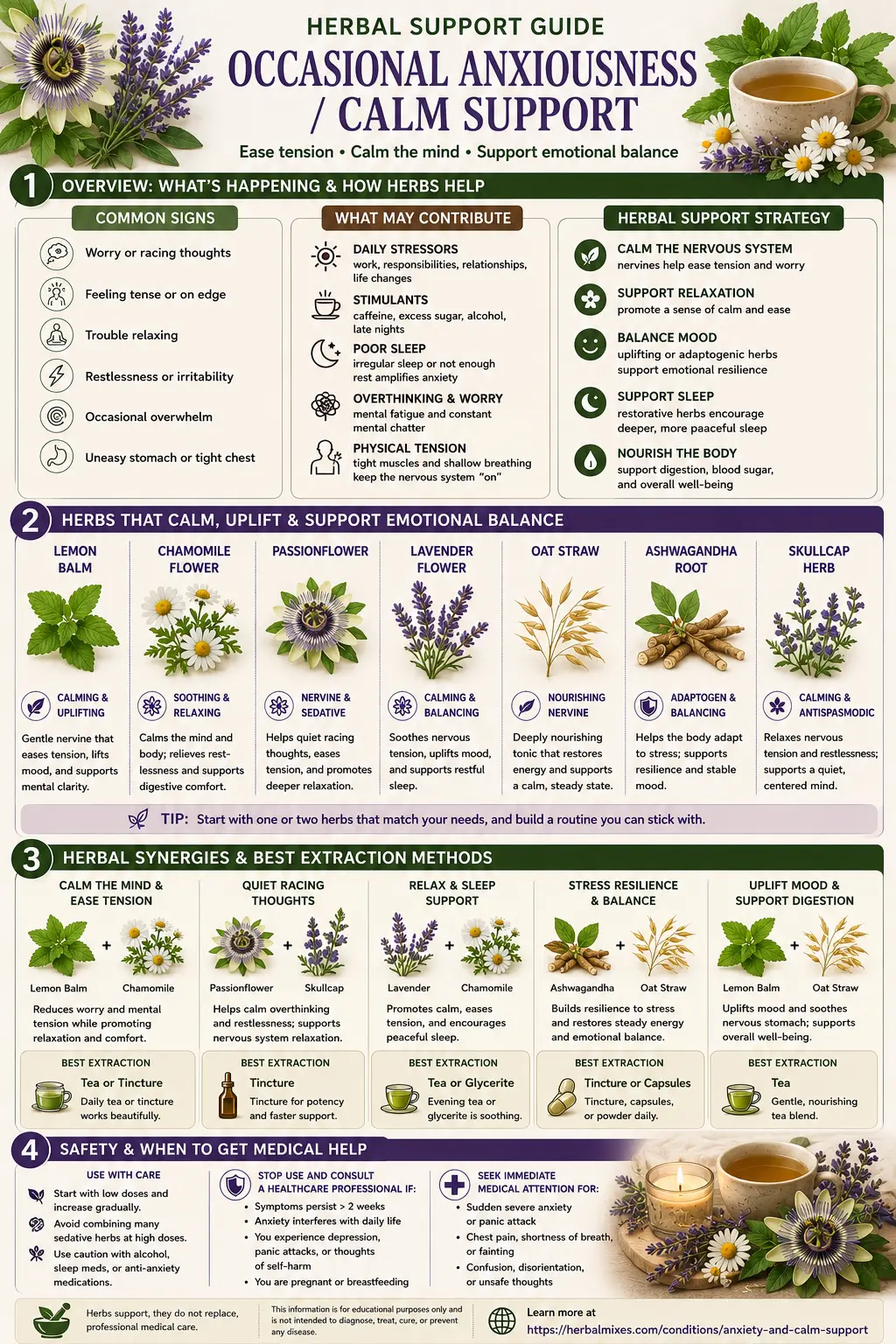
Herbal Support Strategy
A practical strategy matches the herb to the dominant pattern: lemon balm and chamomile fit gentle daytime tension, passionflower is better suited to racing thoughts and restlessness, lavender adds aromatic calming support, skullcap fits physical nervous tension, milky oats suit a depleted or frazzled nervous system, and ashwagandha becomes more relevant when anxiousness accompanies chronic stress.
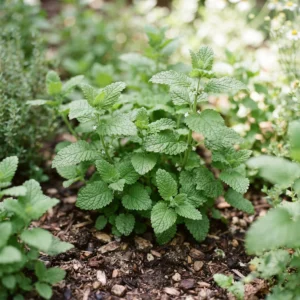
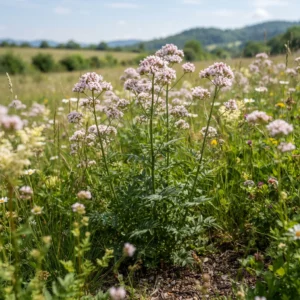

Lemon Balm (Melissa officinalis) — Gentle calm + nervous digestion. A mild aromatic nervine particularly useful when worry overlaps with stomach tension, irritability, or difficulty relaxing without a strong sedative effect.
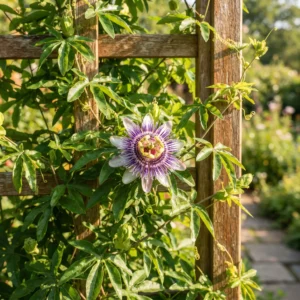
Passionflower (Passiflora incarnata) — Racing thoughts + restlessness. Passionflower is a stronger calming nervine suited to overthinking, agitation, and difficulty switching off. NCCIH notes that limited research suggests possible anxiety benefit, although conclusions remain uncertain. (NCCIH)
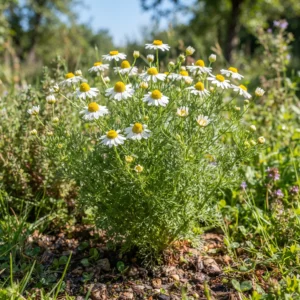
Chamomile (Matricaria recutita) — Sensitive tension + physical relaxation. Chamomile combines calming, antispasmodic, and digestive actions, making it particularly useful when anxiousness includes muscle tension or a nervous stomach. Preliminary clinical studies suggest possible benefit for anxiety. (NCCIH)
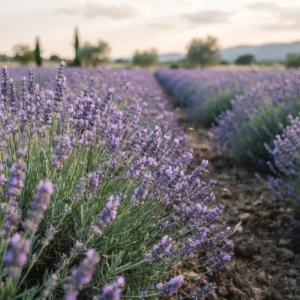
Lavender (Lavandula angustifolia) — Aromatic calm + unsettled mood. Lavender provides gentle aromatic nervine support and is commonly used when nervous tension overlaps with irritability or difficulty settling. Some oral lavender preparations have shown promising anxiety results, though evidence varies. (NCCIH)
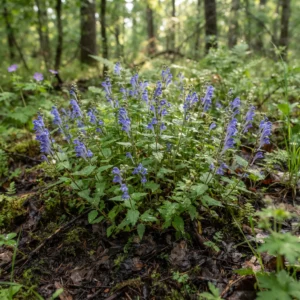
Skullcap (Scutellaria lateriflora) — Physical nervous tension + agitation. A traditional nervine often selected when anxiousness feels physically “wired,” tense, or restless rather than simply mentally worried.
Milky Oat Tops (Avena sativa) — Frazzled nerves + depletion. Traditionally used as a restorative nervine when repeated stress leaves someone feeling emotionally thin, oversensitive, or exhausted rather than acutely panicked.
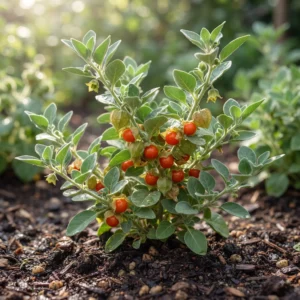
Ashwagandha (Withania somnifera) — Stress-related anxiousness + resilience. Better suited to ongoing stress than immediate calming. A 2024 meta-analysis of nine randomized trials found improvements in stress and anxiety measures, while noting that more long-term safety data are needed. (PubMed)
Herbal Synergies & Best Extraction Methods
Passionflower + Lemon Balm + Chamomile
Best for: Racing thoughts, overthinking, mild restlessness, and difficulty switching off.
Passionflower provides stronger calming support while lemon balm and chamomile soften mental, digestive, and physical tension.
Best Preparation: Covered Infusion (Tea). These aerial herbs extract well in hot water, while covering the tea helps preserve aromatic constituents.
Lemon Balm + Chamomile + Lavender
Best for: Gentle daytime anxiousness, irritability, nervous stomach, and tension without significant exhaustion.
Lemon balm and chamomile provide mild calming and digestive support, while lavender adds an aromatic relaxing quality.
Best Preparation: Covered Infusion (Tea). A covered infusion is well suited to the aromatic leaves and flowers.
Passionflower + Skullcap + Milky Oat Tops
Best for: Feeling wired, physically tense, restless, or mentally overloaded after a stressful day.
Passionflower quiets mental restlessness, skullcap emphasizes physical nervous tension, and milky oats add a restorative element.
Best Preparation: Tincture. A liquid extract is especially practical for fresh milky oat tops and concentrated nervine support.
Ashwagandha + Milky Oat Tops + Lemon Balm
Best for: Occasional anxiousness that appears during prolonged stress, fatigue, or poor recovery.
Ashwagandha emphasizes longer-term resilience, milky oats provide restorative support, and lemon balm adds gentler immediate calming.
Best Preparation: Tea + Tincture. Milky oats and lemon balm suit tea, while ashwagandha is convenient as a concentrated tincture or extract.
Passionflower + Lavender + Chamomile
Best for: Evening anxiousness, restlessness before bed, and difficulty transitioning from activity to relaxation.
Passionflower provides the strongest calming action, while lavender and chamomile add gentle aromatic and physical relaxation.
Best Preparation: Tea + Tincture. A calming tea works well as an evening ritual, with passionflower tincture adding concentrated support.
Available Ready-to-Use Products
If you prefer a ready-made option, these commercially available products contain herbs relevant to the approaches discussed above.
Gentle occasional anxiousness — A simple single-herb liquid option when racing thoughts and restlessness dominate. Herb Pharm — Passionflower — Certified organic passionflower extract marketed for calm, relaxation, and mild occasional anxiety. (Herb Pharm)
Calm + relaxation without a sedative-heavy formula — Useful when passionflower and lemon balm are preferred together. Gaia Herbs — Relax Gummies — Contains passionflower, lemon balm, holy basil, and lemon peel oil, closely matching the gentle calm strategy above. (Gaia Herbs)
More noticeable nervous tension — Appropriate when occasional anxiousness feels physically tense or difficult to settle. Gaia Herbs — Calm A.S.A.P.® — Combines passionflower, skullcap, chamomile, vervain, and holy basil for short-term calm support. (Gaia Herbs)
Evening calm + mild anxiousness — A focused lemon-balm option for winding down. Herb Pharm — Lemon Balm Calm™ — Provides certified organic lemon balm in capsule form and is positioned for a calm mind and mild occasional anxiety. (Herb Pharm)
A strong herbal tea match, Traditional Medicinals Cup of Calm®, contains passionflower, chamomile, lavender, and catnip, but the official product page was showing out of stock when checked, so I have not included it as an available recommendation. (Traditional Medicinals)
Herbal Properties Required
For occasional anxiousness, the most useful herbal properties are typically nervine, calming, antispasmodic, mildly sedative, and adaptogenic actions. Gentle nervines can help soften mental and physical tension, stronger calming herbs are better suited to racing thoughts or restlessness, while adaptogens may be more useful when anxiousness develops during prolonged stress rather than as a brief isolated episode.




Use With Care
- Passionflower may cause drowsiness, dizziness, or confusion and may interact with anesthesia or other sedating medications; NCCIH advises caution before surgery. (NCCIH)
- Chamomile may trigger allergic reactions in people sensitive to ragweed, chrysanthemums, marigolds, or daisies and has reported interactions with warfarin and cyclosporine. (NCCIH)
- Lavender may increase drowsiness when combined with sedating medications. (NCCIH)
- Ashwagandha deserves extra caution with thyroid disease, autoimmune conditions, sedatives, and pregnancy.
- Avoid combining several strongly calming herbs with alcohol, sleep medications, or other sedatives unless a healthcare professional has reviewed the combination.
If you take prescription medication, are pregnant or breastfeeding, or have a medical condition, check with a qualified healthcare professional before using concentrated herbal products.
When to Get Medical Help
Seek medical evaluation if you experience:
- Anxiety that becomes persistent, severe, or difficult to control.
- Panic attacks or repeated episodes of intense fear.
- Symptoms that interfere with work, relationships, sleep, driving, or normal daily activities.
- Chest pain, fainting, severe shortness of breath, or unexplained persistent palpitations.
- Thoughts of self-harm, suicide, or feeling unable to stay safe.
Occasional anxiety is a normal response to stress, but anxiety disorders involve symptoms that become persistent, difficult to control, and disruptive to daily life. (NCCIH)
Persistent, severe, unusual, or worsening symptoms should be evaluated by a healthcare professional.
Frequently Asked Questions
What is the best herb for occasional anxiousness?
For a gentle starting point, lemon balm works well when mild tension or a nervous stomach dominates. Passionflower is usually a stronger match for racing thoughts or restlessness. NCCIH notes that passionflower research is promising but still too limited for firm conclusions. (NCCIH)
What is the best combination when I feel anxious and can’t switch off?
Passionflower + lemon balm + chamomile is a practical combination. Passionflower emphasizes mental restlessness, lemon balm softens general nervous tension, and chamomile adds physical and digestive relaxation.
What should I use if anxiety feels physical rather than mental?
Consider passionflower + skullcap + milky oat tops when the dominant feeling is being wired, tense, restless, or unable to physically settle. If symptoms are severe, recurrent, or resemble panic attacks, professional evaluation is more appropriate.
Is tea or tincture better for occasional anxiousness?
Tea works especially well for lemon balm, chamomile, lavender, and passionflower, particularly when the ritual itself helps you slow down. Tinctures are more concentrated and convenient for passionflower, skullcap, or fresh milky oat preparations.
Can herbs replace therapy or anxiety medication?
No. Complementary approaches may help some people manage occasional stress or anxiety symptoms, but NCCIH notes that they have not been established as treatments for anxiety disorders. Persistent anxiety is commonly treated with psychotherapy, medication, or both. (NCCIH)
References
National Center for Complementary and Integrative Health — Anxiety and Complementary Health Approaches
Read the NCCIH overview (NCCIH)
National Center for Complementary and Integrative Health — 7 Things to Know About Complementary Health Approaches for Anxiety
Read the NCCIH guidance (NCCIH)
National Center for Complementary and Integrative Health — Passionflower: Usefulness and Safety
Read the NCCIH passionflower overview (NCCIH)
National Center for Complementary and Integrative Health — Anxiety and Complementary Health Approaches: What the Science Says
Read the NCCIH evidence summary (NCCIH)
Arumugam et al. — Effects of Ashwagandha on Stress and Anxiety: A Systematic Review and Meta-analysis
View the PubMed record (PubMed)
Disclaimer
For educational purposes only. This information is not intended to diagnose, treat, cure, or prevent disease. Herbal products may cause side effects or interact with medications. Consult an appropriate healthcare professional if you have a medical condition, take medication, are pregnant or breastfeeding, or have persistent or concerning symptoms.