

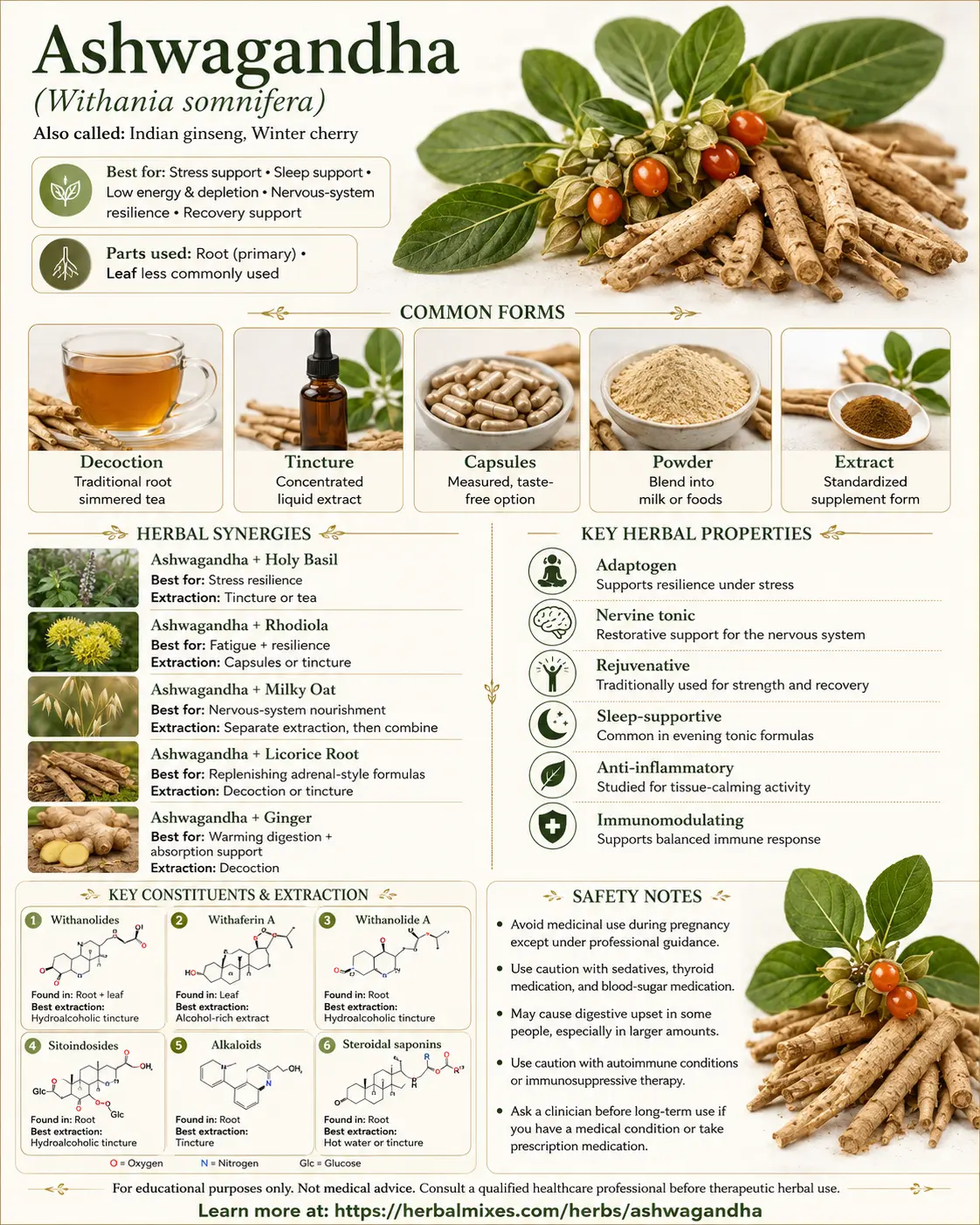
What Ashwagandha Is Good For
Stress Resilience & Adaptogenic Support — Ashwagandha is a premier adaptogen traditionally used to help the body adapt to physical, mental, and environmental stressors while supporting healthy cortisol rhythms.
Nervous System & Calm Energy — Helps soothe nervous tension and reduce feelings of everyday fatigue, promoting a balanced state of calm alertness without heavy sedation.
Sleep Quality & Relaxation — Often utilized to support healthy sleep onset and restorative rest, especially when restlessness stems from overwork or daily stress.
Cognitive Focus & Vitality — Supports normal memory, mental clarity, and overall physical endurance, making it a valued tonic for sustained daily vitality.
Immune & Endocrine Support — Traditionally associated with supporting balanced immune function and overall physiological recovery during times of depletion.
Available Herbal Products
Organic Ashwagandha Root Powder – Pure dried root powder. An ideal, traditional choice for mixing into warm golden milk, smoothies, or honey-herb pastes for daily tonic nourishment. Seller: Mountain Rose Herbs – View Mountain Rose Herbs Ashwagandha Root →
Standardized Ashwagandha Extract – Concentrated capsules. Formulated with a guaranteed concentration of active withanolides to ensure reliable potency for stress and cortisol support. Seller: Gaia Herbs – View Gaia Herbs Ashwagandha →
Ashwagandha Liquid Extract – Hydroalcoholic tincture. A fast-absorbing, convenient liquid format that allows for flexible dose adjustment throughout the day. Seller: Herb Pharm – View Herb Pharm Ashwagandha Extract →
KSM-66 Ashwagandha Root Extract – Clinically studied root extract capsules. Known for preserving the full-spectrum profile of the root while concentrating active bioactives for targeted stress and athletic recovery support. Seller: Swanson Health – View Swanson Health Ashwagandha →
Herbal Synergies
Ashwagandha pairs especially well with Rhodiola, Holy Basil, and Schisandra, depending on the goal of the formula.
Ashwagandha + Holy Basil (Tulsi) – Best for: Comprehensive stress relief, mood balancing, and calming nervous tension Ashwagandha provides deep, nourishing adaptogenic support for the adrenal system, while holy basil offers uplifting, aromatic nervine actions. Together, they soothe frayed nerves and support mental clarity under pressure. Best extraction: Tincture blend or dual preparation. Combining ashwagandha root decoction/tincture with holy basil infusion captures both roots’ dense constituents and the aerial leaves’ aromatic compounds.
Ashwagandha + Rhodiola Rosea – Best for: Balancing energy, overcoming fatigue, and supporting cognitive focus Ashwagandha acts as a grounding, nourishing adaptogen for depleted states, while rhodiola provides energizing, uplifting support for mental stamina and endurance. Best extraction: Standardized extract or hydroalcoholic tincture. Both dense roots yield their active adaptogenic compounds efficiently into alcohol-water extraction solvents.
Ashwagandha + Schisandra Berry – Best for: Deep restorative vitality, liver support, and stress resilience Ashwagandha supports endocrine and nervous system recovery, while schisandra delivers comprehensive adaptogenic and hepatoprotective properties. Best extraction: Tincture or decoction blend. Simmering the ashwagandha root while extracting schisandra berries in alcohol creates a potent restorative formula.
Key Herbal Properties
Adaptogen — Enhances the body’s non-specific resistance and adaptation to diverse physical, emotional, and environmental stressors.
Nervous System Tonic — Nourishes and strengthens nervous tissue, supporting long-term resilience against exhaustion.
Sedative / Nervine Relaxant — Helps calm active nervous energy and supports peaceful sleep onset.
Immunomodulating — Supports balanced immune system activity and cellular health.
Antioxidant — Helps scavenge free radicals and protect tissues from oxidative damage.






Active Compounds
Withanolides (including Withaferin A) Found mainly in: Roots and leaves The primary active steroidal lactones responsible for ashwagandha’s adaptogenic, anti-inflammatory, and stress-modulating properties. Best extraction: Hydroalcoholic tincture or standardized root extract. Withanolides dissolve efficiently in alcohol-water mixtures and concentrated solvents.
Sitoindosides and Alkaloids (including Somniferine) Found mainly in: Root Bioactive compounds that contribute to ashwagandha’s calming, neurological, and cognitive-supporting actions. Best extraction: Alcohol-water extract or warm water decoction. These compounds are effectively captured in both traditional decoctions and modern tinctures.
Amino Acids and Iron Found mainly in: Root Contribute to the root’s nourishing tonic and blood-supporting properties. Best extraction: Decoction (simmered root tea) or whole root powder. Water readily extracts water-soluble nutrients from the root fibers.
FAQ
What is ashwagandha best used for? Ashwagandha is primarily used to build resilience against daily stress, support healthy cortisol levels, reduce fatigue, and promote restful sleep.
Can ashwagandha be taken every day? Yes, as an adaptogenic tonic, ashwagandha is traditionally designed for daily, consistent use over several weeks or months to build cumulative resilience.
Is powder or extract better for ashwagandha? Root powders are wonderful for traditional preparations like warm herbal milk or food blends, while standardized extracts and capsules offer precise dosing and eliminate the earthy, bitter taste.
How long does it take for ashwagandha to work? As an adaptogen that nourishes the endocrine and nervous systems, ashwagandha typically builds in efficacy over 2 to 4 weeks of consistent daily use rather than acting as an instant sedative.
Can ashwagandha cause drowsiness? While it supports relaxation and sleep quality, it is not a heavy pharmaceutical sedative. Most people experience a calm, centered feeling during the day and better relaxation at night.
Safety & Precautions
Pregnancy & Breastfeeding: Traditional and clinical guidance advises avoiding therapeutic or high-dose ashwagandha during pregnancy due to potential uterine-stimulating effects.
Thyroid Function: Because ashwagandha may influence thyroid hormone levels (increasing T3 and T4), individuals with hyperthyroidism or those taking thyroid medications should consult a healthcare provider before use.
Autoimmune Conditions: Individuals with certain autoimmune diseases should use caution, as ashwagandha’s immune-stimulating properties may increase immune activity.
Nightshade Sensitivity: Ashwagandha belongs to the Solanaceae (nightshade) family; individuals with known sensitivities to nightshades should exercise caution.
Medication Interactions: Exercise caution if you take sedatives, thyroid hormones, immunosuppressants, or blood glucose-lowering medications.
Consult a qualified healthcare professional before using ashwagandha therapeutically, especially if you manage underlying medical conditions or take prescription drugs.
References
National Center for Complementary and Integrative Health (NCCIH)
World Health Organization (WHO) Monographs on Selected Medicinal Plants – Radix Withaniae somniferae
European Medicines Agency (EMA) Herbal Documentation on Withania somnifera
Gaia Herbs Ashwagandha Monograph
Mountain Rose Herbs Ashwagandha Root Monograph
Disclaimer
Disclaimer: This article is for educational purposes only and is not intended to diagnose, treat, cure, or prevent any disease. Herbal products can cause side effects and interact with medications. Consult a qualified healthcare professional before using herbs therapeutically, especially if you are pregnant, breastfeeding, taking prescription medications, or managing a medical condition.