


Sage is a strongly aromatic Mediterranean herb with soft gray-green leaves and a long history in both kitchens and herbal traditions. Herbalists have traditionally used sage for oral and throat comfort, digestion, sweating, and cognitive wellness. It is warm, drying, slightly bitter, and very direct — sage does not whisper; it clears its throat and makes a point.
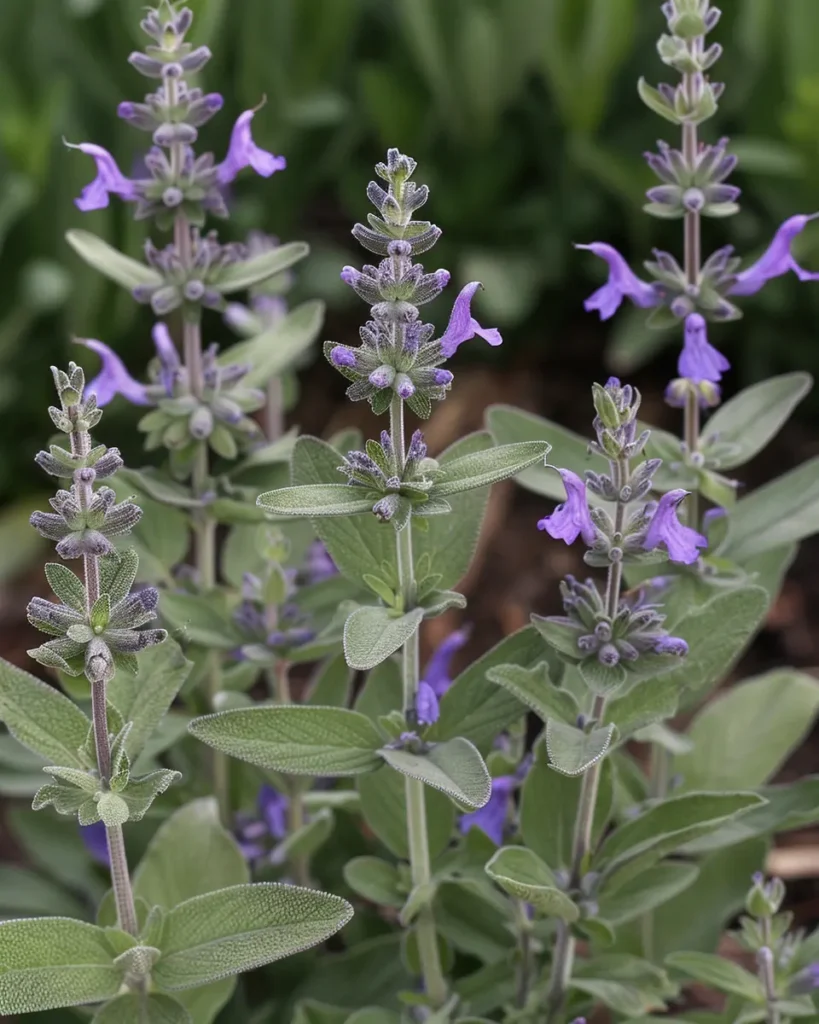
Sage (Salvia officinalis)
Traditional Uses of Sage
Oral & Throat Health: Sage’s astringent tannins and aromatic oils make it a classic traditional gargle for the mouth and throat.
Digestion: Sage is used as a warming carminative and bitter herb to support appetite, gas, bloating, and the digestion of rich foods.
Sweating & Menopausal Comfort: Sage has a traditional reputation for helping regulate excessive sweating, including night sweats and hot-flash patterns.
Cognitive Wellness: Sage has been studied for effects on memory, mood, attention, and cholinesterase activity, especially in extract form.
“Sage is the herb that brings a calm voice, a sharp mind, and a very tidy cup of tea.”
Available Sage Products
Dried Sage
Dried sage is commonly used for tea, gargles, culinary seasoning, steams, and herbal blends. Look for leaves that are still aromatic, green-gray, and slightly fuzzy rather than brown, dusty, or dull.
Sage Tincture
Sage tincture is often used when a concentrated, shelf-stable preparation is preferred. Alcohol extracts aromatic oils, bitter compounds, phenolic acids, and some resinous constituents well.
Sage Capsules
Capsules may be convenient for people who dislike sage’s strong taste. Labels should clearly list the botanical name, plant part, serving size, and whether the product contains whole leaf powder or standardized extract.
Sage Glycerite
Sage glycerite may be useful for people avoiding alcohol, though glycerin does not extract volatile oils and bitter constituents as strongly as alcohol. It tends to taste sweeter and softer than tincture.
Sage Essential Oil
Sage essential oil is concentrated and should be used carefully. It may contain thujone and camphor, depending on the oil, and should not be taken internally as a home practice.
Sage Powder
Sage powder is commonly used in capsules, culinary blends, tooth powders, and herbal pastes. Because powder loses aroma faster than whole dried leaves, buy or prepare it in small amounts.
Fresh Sage
Fresh sage is excellent for cooking, vinegar infusions, honey preparations, and fresh tea. Its flavor is stronger than many leafy herbs, so a little usually goes a long way.
Key Herbal Actions
Sage is known as an astringent, carminative, bitter tonic, antimicrobial aromatic, antioxidant, antiperspirant, anti-inflammatory, cognitive-supporting herb, and warming digestive.
Astringent
Astringent herbs contain tannins that create a tightening, toning effect on tissues. Sage’s astringency helps explain its traditional use in gargles, mouth rinses, and throat preparations.
Carminative
Carminatives are aromatic herbs traditionally used to ease occasional gas and digestive discomfort. Sage’s warming oils make it useful after rich or heavy meals.
Bitter Tonic
Bitter tonics stimulate bitter taste receptors and traditionally support appetite and digestive secretions. Sage’s mild bitterness adds to its digestive value.
Antimicrobial Aromatic
Sage contains volatile oils that have shown antimicrobial activity in laboratory studies. This supports its traditional use in oral, throat, and cleansing preparations.
Antioxidant
Sage contains phenolic compounds such as rosmarinic acid and flavonoids that have been studied for antioxidant activity. These compounds help protect plant tissues and contribute to sage’s broader herbal profile.
Antiperspirant
Sage has a traditional reputation for reducing excessive sweating. This action is especially associated with sage leaf preparations, though individual response can vary.
Anti-inflammatory
Sage contains diterpenes, phenolic acids, and flavonoids studied for inflammation-modulating activity. In herbal practice, this helps explain its use for oral comfort, digestion, and general tissue support.
Cognitive-Supporting Herb
Sage extracts have been studied for effects on memory, attention, and mood. Some research has explored sage’s interaction with cholinesterase activity, though this does not make sage a treatment for cognitive disorders.
Warming Digestive
Sage is warm, aromatic, and slightly bitter. This makes it a traditional digestive herb when meals are heavy, oily, or slow to settle.
Active Compounds and Extraction
Sage contains volatile oils, thujone, camphor, 1,8-cineole, rosmarinic acid, carnosic acid, carnosol, flavonoids, tannins, phenolic acids, diterpenes, and triterpenes.
Volatile Oils
Volatile oils give sage its strong aroma. Common sage essential oil may contain thujone, camphor, 1,8-cineole, borneol, and other terpenes, though the exact profile varies by growing conditions, harvest time, and extraction method.
Best extraction: Covered hot infusion, tincture, steam, infused oil, or professional distillation.
How to make sage infusion: Use 1 teaspoon dried sage per cup of just-boiled water. Cover and steep for 5–10 minutes, then strain. Covering matters because the aromatic oils escape easily with steam.
Thujone
Thujone is a terpene ketone found in common sage and some other aromatic plants. It is one reason sage should be used thoughtfully, because high amounts or long-term concentrated use may be unsafe.
Best extraction: Alcohol tincture and essential oil contain more thujone than mild culinary use.
Practical note: For everyday use, culinary amounts or short-term tea use are much gentler than essential oil or concentrated extracts.
Camphor
Camphor is a strongly aromatic compound that contributes to sage’s sharp, penetrating scent. It is stimulating and should be respected in concentrated preparations.
Best extraction: Essential oil, tincture, and covered infusion.
Simple steam method: Add a small amount of dried sage to hot water and breathe gently from a comfortable distance. Avoid strong steam near the eyes or irritated airways.
1,8-Cineole
1,8-cineole is an aromatic compound also found in herbs such as eucalyptus and rosemary. It contributes to sage’s fresh, clearing aroma and is often discussed in relation to respiratory and antimicrobial research.
Best extraction: Covered infusion, steam, tincture, or essential oil.
Tea tip: A short covered steep preserves more bright aroma than a long uncovered simmer.
Rosmarinic Acid
Rosmarinic acid is a phenolic acid found in many mint-family herbs. It is studied for antioxidant and inflammation-modulating activity and contributes to sage’s tissue-supporting reputation.
Best extraction: Hot water infusion, tincture, or vinegar.
Vinegar method: Cover fresh sage leaves with apple cider vinegar for 2–3 weeks, then strain. Use as a culinary vinegar or diluted herbal rinse.
Carnosic Acid and Carnosol
Carnosic acid and carnosol are diterpenes found in sage and rosemary. They are studied for antioxidant activity and help explain why sage has been valued as both a culinary spice and traditional preserving herb.
Best extraction: Alcohol tincture, oil infusion, and culinary fat-based preparations.
Kitchen method: Add sage to warm olive oil or butter over low heat for a short time. This helps pull out fat-soluble aromatic and diterpene compounds.
Flavonoids
Flavonoids are plant compounds that often contribute antioxidant activity. Sage contains flavonoids such as luteolin and apigenin derivatives.
Best extraction: Hot infusion, tincture, or vinegar.
Simple preparation: A covered sage tea extracts many water-soluble flavonoids and phenolic acids.
Tannins
Tannins are astringent compounds that tone tissues and create a mild tightening sensation. They support sage’s traditional use in mouth rinses and gargles.
Best extraction: Hot water infusion.
Gargle method: Make a strong sage tea, cool until comfortable, strain well, and use as a gargle. Do not swallow large amounts of strong gargle preparations.
Harvesting and Storing Right
Sage leaves are usually harvested in late spring to early summer, before or just as the plant begins to flower. This is when the aromatic oils are often most vibrant. Harvest in the morning after dew has dried but before strong afternoon heat.
Cut healthy leafy stems, leaving enough plant behind for regrowth. Dry sage in small bundles or on screens in a shaded, warm, well-ventilated area.
Fresh sage: Store wrapped lightly in a damp towel in the refrigerator for about 1–2 weeks.
Dried sage: Store in an airtight jar away from light, heat, and moisture. Best quality is usually within 6–12 months.
Sage tincture: Store in dark glass in a cool place. Alcohol tinctures often keep for several years.
Sage glycerite: Usually best within 1–2 years.
Sage infused oil: Store away from heat and light and use within about 6–12 months.
Sage essential oil: Store tightly closed in a cool, dark place and use within about 2–4 years, depending on freshness and storage.
Body Functions Sage can Support
Sage can support dental oral health, digestion system, respiratory system, nervous system, brain, reproductive system female, skin, immune system, and metabolism.
Dental Oral
Sage is one of the classic herbs for mouth and throat rinses. Its tannins provide a toning effect, while volatile oils support a clean aromatic profile.
Digestion System
Sage’s carminative and bitter actions make it useful after rich meals. Its aromatic oils support traditional digestive comfort, especially when food feels heavy or slow.
Respiratory System
Sage’s aromatic compounds make it a traditional herb for throat and seasonal respiratory formulas. It is often used as tea, steam, or gargle rather than as a strong internal extract.
Nervous System
Sage has been studied in human trials for mood, alertness, memory, and cognitive performance. This research is mostly based on specific extracts, so it should not be overextended to every cup of sage tea.
Brain
Sage contains compounds studied for cholinesterase-related activity and antioxidant effects. This helps explain why sage appears in modern research on memory and attention support.
Reproductive System Female
Sage is traditionally used for excessive sweating and menopausal hot-flash patterns. Because of its potency and traditional effects, it should be used cautiously during pregnancy and breastfeeding.
Skin
Sage’s astringent tannins and aromatic compounds make it useful in traditional external washes. Essential oil must be diluted carefully because it can irritate sensitive skin.
Immune System
Sage contains phenolic acids, flavonoids, and volatile oils studied for antioxidant and antimicrobial activity. As a traditional seasonal herb, it is often used in gargles and teas.
Metabolism
Some research has explored sage in relation to glucose and lipid metabolism, but evidence is not strong enough for medical claims. In practical herbalism, sage is better understood as a warming digestive and aromatic culinary herb.
Safety and Practical Considerations
Sage is commonly used as a culinary herb and is generally well tolerated in food amounts. Strong medicinal preparations, high-dose extracts, and essential oil require more caution.
Common sage contains thujone, a compound that may be unsafe in high amounts or with long-term concentrated use. Sage essential oil should not be taken internally and should be avoided by people without professional guidance.
Use caution with sage if you are pregnant, breastfeeding, trying to conceive, have a seizure disorder, liver disease, hormone-sensitive conditions, or are taking prescription medications. People taking diabetes medications, sedatives, anticonvulsants, or medications with narrow dosing ranges should consult a qualified healthcare professional before using concentrated sage products.
Sage may reduce milk supply in some traditional uses, so breastfeeding parents should be especially cautious. Children, older adults, and sensitive individuals should use smaller amounts and avoid essential oil exposure unless professionally guided.
People allergic to mint-family plants should also be cautious. And remember: sage is strong. A little adds wisdom; too much makes the tea taste like a lecture.
FAQ
What does sage taste like?
Sage tastes warm, earthy, slightly bitter, resinous, and aromatic. Fresh sage is greener and softer, while dried sage tastes stronger and more concentrated.
When is the best time to use sage?
Sage is often used after meals, as a throat gargle, or in short-term seasonal teas. In cooking, it pairs especially well with rich foods, beans, squash, poultry, and roasted vegetables.
Is fresh or dried sage better?
Both are useful. Fresh sage is excellent for cooking, vinegar, and short infusions, while dried sage is convenient for tea, gargles, capsules, and storage.
Is sage tea, tincture, or capsule better?
Tea is a good choice for gentle traditional use, especially as a gargle or short-term digestive tea. Tinctures and capsules are more concentrated and require more caution, especially because of thujone concerns.
Can sage be used daily?
Culinary amounts of sage can be used regularly by many people. Daily medicinal use, especially high-dose extracts or essential oil, should not be done without professional guidance.
How should sage be stored?
Dried sage should be stored in an airtight jar away from heat, light, and moisture. If it no longer smells strong and aromatic, it is time to replace it.
Does sage combine well with other herbs?
Yes. Sage combines well with thyme, rosemary, peppermint, ginger, lemon balm, marshmallow root, licorice root, and echinacea, depending on the purpose of the blend.
Is sage safe for everyone?
No. People who are pregnant, breastfeeding, have seizure disorders, take prescription medications, or have significant health conditions should use caution with medicinal sage.
Can sage be used for pets?
Sage should only be used for pets under guidance from a veterinarian or qualified animal herbalist. Sage essential oil is especially concerning around pets and should not be used casually.
Can sage essential oil be added to tea?
No. Sage essential oil is highly concentrated and should not be added to tea for home use. Use fresh or dried sage leaves instead.
Disclaimer
This content is educational only. It is not medical advice, diagnosis, or treatment. Herbs may interact with medications or health conditions. People who are pregnant, breastfeeding, managing a medical condition, taking prescription medications, or preparing for surgery should consult a qualified healthcare professional before using herbs.
References
EMA: Salviae officinalis folium
PubMed Central: Pharmacological Properties of Salvia officinalis and Its Components
PubMed: Effects of Cholinesterase-Inhibiting Sage on Mood, Anxiety and Performance
PubMed: The Acute and Chronic Cognitive Effects of a Sage Extract
PubMed Central: A Focused Review on Cognitive Improvement by the Genus Salvia
PubMed Central: Determination of Thujone and Camphor in Sage Preparations