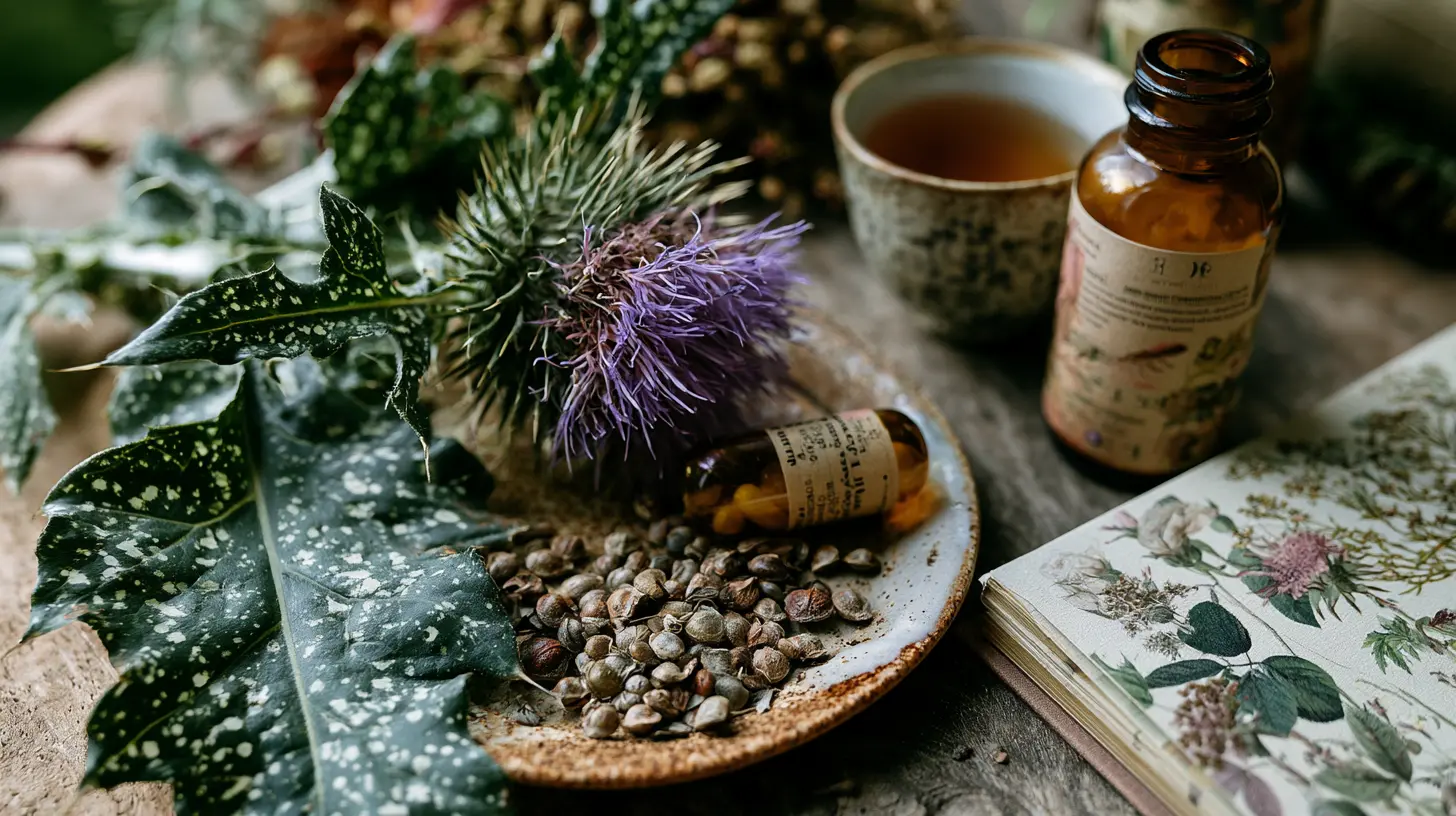
Milk thistle is a tall, prickly plant with purple flower heads and striking green leaves marked with white veins. Those white markings are part of the reason it became known as “milk” thistle. Traditionally, milk thistle has been used to support liver function, digestion, bile flow, and overall vitality. In modern herbal practice, the seed-like fruits are the main part used, especially in extracts standardized for silymarin, a group of flavonolignan compounds.
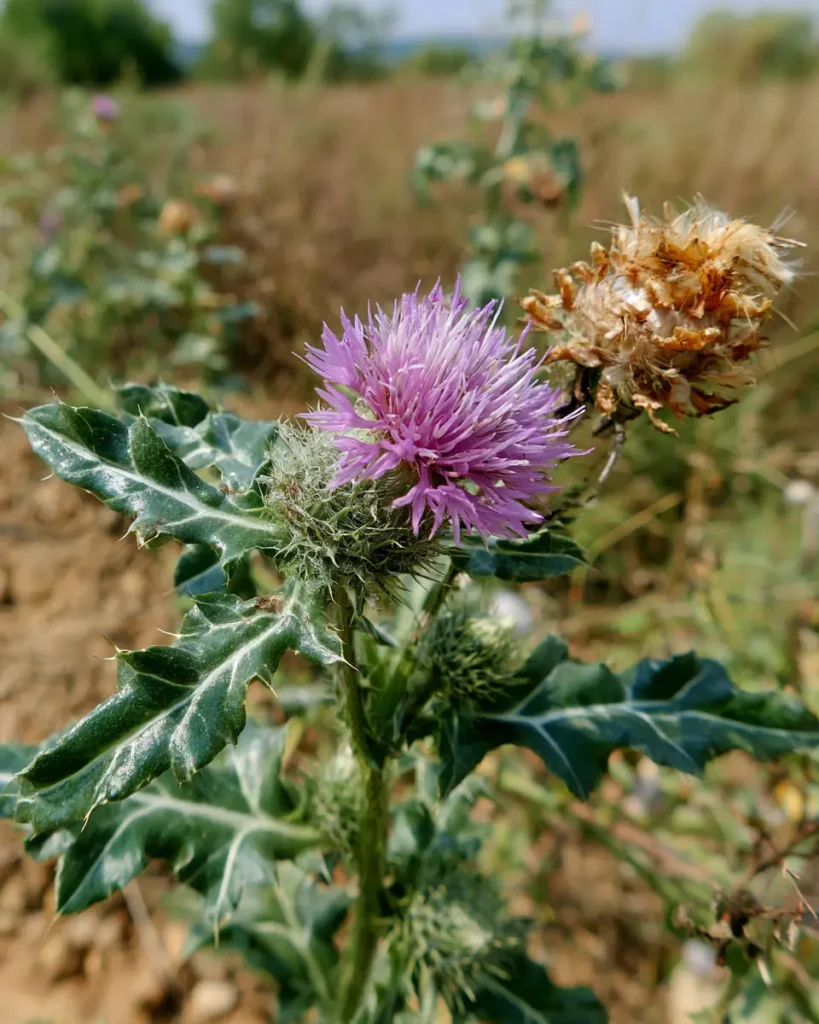
Milk Thistle (Silybum marianum)
Milk thistle is traditionally connected with these wellness areas:
Liver Support: Milk thistle is best known as a liver-supportive herb, especially through the silymarin complex found in the fruits.
Digestive Support: Because the liver and bile system are closely connected with digestion, milk thistle is often included in formulas for digestive and fat-processing support.
Antioxidant Support: Silymarin compounds are studied for antioxidant activity and their role in protecting cells from oxidative stress.
Skin and Metabolic Wellness: Herbalists sometimes connect milk thistle with skin clarity and metabolic balance, usually through its traditional relationship with liver and detoxification pathways.
“Milk thistle is the prickly plant with a soft spot for liver support.”
Available Milk Thistle Products
Dried Milk Thistle Seed
Milk thistle “seed” is technically the fruit, but most products call it seed. Whole dried milk thistle seed is often used for grinding fresh, making decoctions, or adding to herbal blends. The outer coat is tough, so whole seeds should usually be crushed or ground before use.
Milk Thistle Capsules
Capsules are one of the most common forms. They may contain ground seed powder or standardized extract. For liver-support formulas, standardized extracts are more common because they list silymarin content.
Milk Thistle Extract
Standardized milk thistle extract is usually made from the fruits and often standardized to 70–80% silymarin. This form is more concentrated than plain seed powder and is commonly used in supplements.
Milk Thistle Tincture
Milk thistle tincture is available, though silymarin is not highly water-soluble and can be difficult to extract fully in simple homemade preparations. Commercial tinctures may vary widely in strength. Look for clear labeling and reputable manufacturing.
Milk Thistle Powder
Powdered milk thistle seed can be added to smoothies, oatmeal, yogurt, or capsules. Because oils in the seed can become stale, powder should be stored carefully and used sooner than whole seed.
Milk Thistle Tea or Decoction
Milk thistle seed tea is usually prepared as a decoction because the seed is hard. Crushing the seeds first helps extraction. Tea is gentler than standardized extract, but it may not deliver as much silymarin.
Milk Thistle Softgels
Some products use softgels or enhanced-absorption formulas because silymarin has naturally low bioavailability. These may include phospholipid complexes or other delivery systems. Follow label directions carefully.
Key Herbal Actions
Milk thistle is known as a hepatic, hepatoprotective herb, antioxidant, cholagogue, bitter tonic, anti-inflammatory herb, nutritive seed herb, and mild digestive support herb.
Hepatic
A hepatic is an herb traditionally used to support liver function. Milk thistle is one of the most recognized hepatic herbs because its fruits contain silymarin compounds studied in relation to liver cells and oxidative stress.
Hepatoprotective Herb
A hepatoprotective herb is traditionally understood to help protect or support liver tissue. This term should be used carefully because it does not mean milk thistle treats liver disease. It refers to its traditional and research-based association with liver-supportive activity.
Antioxidant
Milk thistle’s silymarin complex is studied for antioxidant activity. Antioxidants help the body manage oxidative stress, which is one reason milk thistle is so often discussed in liver and metabolic wellness.
Cholagogue
A cholagogue supports healthy bile flow. Milk thistle is not as sharply bitter as gentian or artichoke leaf, but it is traditionally used in liver and bile-support formulas.
Bitter Tonic
Milk thistle has a mild bitter quality, especially compared with stronger bitters. As a bitter tonic, it may support digestive readiness and liver-related digestive function over time.
Anti-Inflammatory Herb
Silymarin and related compounds are studied for their influence on inflammatory pathways. In herbal practice, this supports milk thistle’s reputation as a tissue-protective and liver-supportive herb.
Nutritive Seed Herb
Milk thistle seed contains fatty acids, plant sterols, proteins, and other nutrients. While most modern attention goes to silymarin, the whole seed also has food-like qualities.
Mild Digestive Support Herb
Milk thistle is traditionally connected with digestion through liver and bile support. It is not a fast carminative like fennel or peppermint, but it can be part of a longer-term digestive wellness plan.
Active Compounds and Extraction
Milk thistle contains silymarin flavonolignans, including silybin A, silybin B, isosilybin A, isosilybin B, silychristin, silydianin, and taxifolin, along with fatty acids, flavonoids, phenolic compounds, sterols, proteins, and fiber.
Silymarin
Silymarin is the main compound complex associated with milk thistle. It is not a single compound but a group of flavonolignans found mainly in the fruits. Many commercial extracts are standardized to about 70–80% silymarin.
Silymarin is studied for antioxidant activity, liver-cell support, inflammatory pathways, and cell membrane stability. However, human research is mixed depending on the condition studied, product quality, dose, and extract type.
Best extraction methods:
Standardized extract: This is the most reliable way to obtain a meaningful silymarin amount. Look for products listing the percentage of silymarin.
Alcohol-water extraction: Hydroalcoholic extracts can capture more compounds than water alone, though homemade tinctures may not be as strong as standardized commercial products.
Powdered seed: Grinding the seed gives access to the whole fruit material, but silymarin absorption may be lower than with specialized extracts.
Silybin
Silybin, also called silibinin, is one of the most studied parts of the silymarin complex. It includes silybin A and silybin B and is often considered a major contributor to milk thistle’s liver-supportive reputation.
Best extraction methods:
Standardized extract: Commercial extracts are best when the goal is silybin-rich support.
Phospholipid complex: Some products combine silybin or silymarin with phospholipids to improve absorption. These are supplement forms rather than home preparations.
Silychristin and Silydianin
Silychristin and silydianin are additional flavonolignans in milk thistle. They contribute to the overall silymarin profile and are part of what makes milk thistle chemically unique.
Best extraction methods:
Hydroalcoholic extract: A water-and-alcohol extract is more suitable than plain water for a broad flavonolignan profile.
Commercial extract: Standardized products provide more consistent levels than homemade preparations.
Taxifolin
Taxifolin is a flavonoid found in milk thistle. Flavonoids are widely studied for antioxidant activity. In milk thistle, taxifolin supports the broader antioxidant profile of the plant.
Best extraction methods:
Hydroalcoholic extraction: Alcohol-water extraction is useful for flavonoids.
Whole seed powder: Powder provides the full plant material, including flavonoids and fiber.
Fatty Acids
Milk thistle seeds contain fatty acids, including linoleic acid and oleic acid. These compounds are part of the nutritive seed profile and may contribute to the overall food-like nature of ground seed preparations.
Best extraction methods:
Fresh grinding: Grind whole seeds shortly before use to preserve freshness.
Food use: Add freshly ground seed to oatmeal, smoothies, or yogurt. Because the seed contains oils, avoid storing powder for too long.
Phenolic Compounds
Phenolic compounds are plant antioxidants found in many herbs, fruits, and seeds. In milk thistle, they support the herb’s antioxidant reputation.
Best extraction methods:
Ground seed: Eating the ground seed provides phenolics along with fiber and seed oils.
Hydroalcoholic extract: Extracts can concentrate certain phenolic compounds.
Harvesting and Storing Right
Milk thistle fruits are harvested after the purple flower heads mature and dry. This usually happens in late summer to early autumn, depending on climate. The seed heads become dry and fluffy, and the fruits can be separated from the pappus.
Because the plant is spiny, harvesting requires gloves, long sleeves, and patience. The fruits should be fully dry before storage to prevent mold.
Storage tips:
Whole dried seed: Store in an airtight jar away from heat, light, and moisture. Best used within 1–2 years.
Ground seed powder: Store tightly sealed in a cool place and use within 3–6 months after grinding.
Standardized capsules or tablets: Follow the label expiration date and keep away from heat and moisture.
Tincture: Store in dark glass in a cool, dark place.
Softgels: Store according to the label because heat may affect softgel quality.
Body Functions Milk Thistle Can Support
Milk thistle can support liver support, digestion system, metabolism, skin, immune system, circulation, and energy and vitality.
Liver Support
Milk thistle is most strongly associated with liver support. Its silymarin compounds are studied for antioxidant activity, liver-cell protection, and inflammatory pathways. It should not be described as a cure or treatment for liver disease.
Digestion System
The liver and bile system play an important role in digestion, especially fat digestion. Milk thistle is traditionally used in formulas for sluggish digestion, bile support, and post-heavy-meal discomfort. It is gentler than strong bitter herbs.
Metabolism
Milk thistle has been studied in relation to blood sugar, insulin resistance, cholesterol, and fatty liver markers, but results vary. It may support metabolic wellness as part of a broader lifestyle plan, not as a stand-alone solution.
Skin
Herbalists often connect skin wellness with liver and elimination pathways. Milk thistle may be included in formulas for general skin support because of its liver and antioxidant associations. It should not be presented as a treatment for acne, eczema, or other skin conditions.
Immune System
Silymarin has been studied for immune-modulating and inflammatory pathway effects. In practical herbal use, milk thistle is better described as a supportive antioxidant herb rather than an immune stimulant.
Circulation
Milk thistle’s antioxidant compounds may support vascular wellness indirectly. Some studies explore cardiometabolic markers, but milk thistle should not be used as a circulation treatment. Its role here is supportive and secondary.
Energy and Vitality
Milk thistle is not a stimulant and does not provide quick energy. Traditionally, it supports vitality through nourishment, digestion, and liver function. Think of it as steady housekeeping, not a marching band.
Safety and Practical Considerations
Milk thistle is generally well tolerated by many adults, but it is not appropriate for everyone. Possible side effects include digestive upset, nausea, loose stools, headache, itching, or allergic reactions.
People allergic to plants in the Asteraceae family, such as ragweed, daisies, chrysanthemums, or marigolds, should use caution. Allergic reactions are uncommon but possible.
Milk thistle may interact with medications processed by the liver. People taking prescription medications, including diabetes medications, blood thinners, cholesterol medications, seizure medications, hormone-related medications, or cancer therapies, should consult a healthcare professional before using it.
People with hormone-sensitive conditions should use caution because some milk thistle constituents may have mild estrogen-like activity in laboratory settings. Clinical relevance is not always clear, but caution is reasonable.
Pregnant or breastfeeding people should consult a qualified healthcare professional before using milk thistle supplements. Milk thistle has traditional associations with lactation, but safety and effectiveness data are not strong enough for casual supplement use.
People with liver disease should not self-treat with milk thistle instead of receiving medical care. Liver conditions can be serious and require proper diagnosis, monitoring, and professional guidance.
Product quality matters. Choose reputable brands that test for identity, heavy metals, microbes, pesticide residues, and contaminants. This is especially important because herbal supplements are not regulated like prescription medications.
FAQ
What does milk thistle taste like?
Milk thistle seed tastes mild, slightly nutty, earthy, and faintly bitter. It is much gentler in flavor than strong bitter herbs like gentian or artichoke leaf.
When is the best time to use milk thistle?
Milk thistle is commonly taken with meals, especially if using capsules or extracts. Taking it with food may reduce stomach upset. Follow the product label or professional guidance.
Is fresh or dried milk thistle better?
Dried milk thistle seed is the most common and practical form. Fresh leaves and roots have traditional food uses, but modern herbal use focuses mostly on the dried seed-like fruit.
Is milk thistle tea, tincture, capsule, or extract better?
Standardized extract is usually preferred when the goal is silymarin content. Tea is gentler but may extract less silymarin. Capsules are convenient, while tinctures vary in strength depending on how they are made.
Can milk thistle be used daily?
Some people use milk thistle daily for periods of time, especially in standardized supplement form. However, daily use should be discussed with a healthcare professional if you take medications, have liver disease, are pregnant or breastfeeding, or manage a medical condition.
How should milk thistle be stored?
Whole seeds should be stored in an airtight jar away from heat, light, and moisture. Ground seed should be used sooner because the oils can go stale. Capsules and extracts should be stored according to the label.
Does milk thistle combine well with other herbs?
Yes. Milk thistle is often combined with dandelion root, artichoke leaf, burdock root, turmeric, schisandra, yellow dock, or ginger in liver and digestion formulas. Combining herbs with medications should be done cautiously.
Is milk thistle the same as blessed thistle?
No. Milk thistle is Silybum marianum, while blessed thistle is Cnicus benedictus. They are different herbs with different traditional uses and safety profiles.
Is milk thistle safe for everyone?
No. People with allergies to Asteraceae plants, medication use, hormone-sensitive conditions, pregnancy, breastfeeding, or serious liver disease should seek professional guidance before using milk thistle.
Can milk thistle be used for pets?
Milk thistle is sometimes used in veterinary herbal practice, especially for liver support, but pet use should be guided by a veterinarian. Do not give human supplements to pets without professional dosing guidance.
Disclaimer
This content is educational only. It is not medical advice, diagnosis, or treatment. Herbs may interact with medications or health conditions. People who are pregnant, breastfeeding, managing a medical condition, taking prescription medications, or preparing for surgery should consult a qualified healthcare professional before using herbs.
References
European Medicines Agency: Milk Thistle Fruit
Kew Science: Plants of the World Online – Silybum marianum
PubMed: Milk Thistle Nomenclature and Silymarin Chemistry
PubMed Central: Silymarin as Supportive Treatment in Liver Diseases
PubMed Central: Silymarin and Its Components in Health Research