Traditionally, horseradish has been used as a pungent food herb to support digestion, clear-feeling breathing, circulation, and seasonal wellness. It is most often used fresh, grated, and mixed with vinegar as a condiment. In herbal practice, it belongs to the family of warming, stimulating roots rather than gentle daily tonic herbs.
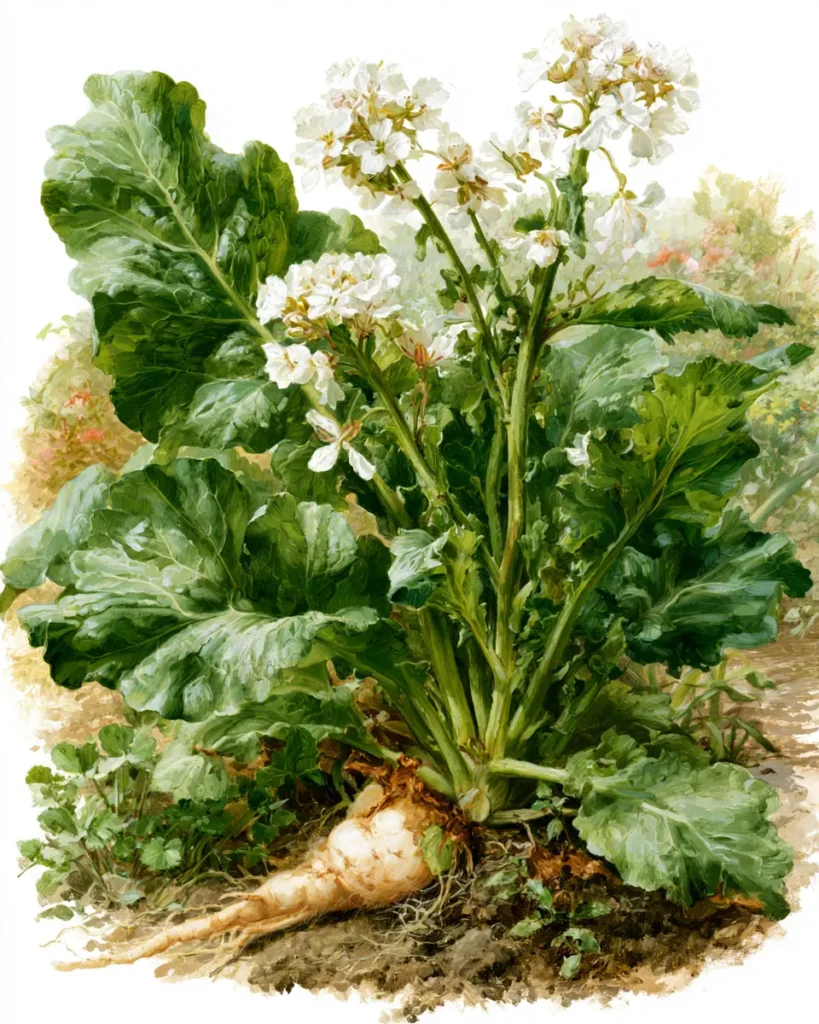
Horseradish (Armoracia rusticana)
Horseradish is traditionally connected with these wellness areas:
Respiratory Support: Its sharp volatile compounds create a strong sinus-opening sensation and have traditionally been used when the head and chest feel heavy or congested.
Digestive Support: The pungent taste may encourage saliva, digestive juices, and appetite, especially when used in small culinary amounts.
Circulation and Warmth: Horseradish is traditionally considered warming and stimulating. Externally, it has been used as a rubefacient, meaning it brings warmth and redness to the skin.
Seasonal Wellness: Horseradish contains glucosinolates and isothiocyanates, plant compounds also found in mustard, wasabi, cabbage, and other Brassica vegetables.
“Horseradish is the root that does not knock politely; it clears its throat and enters the room.”
Available Horseradish Products
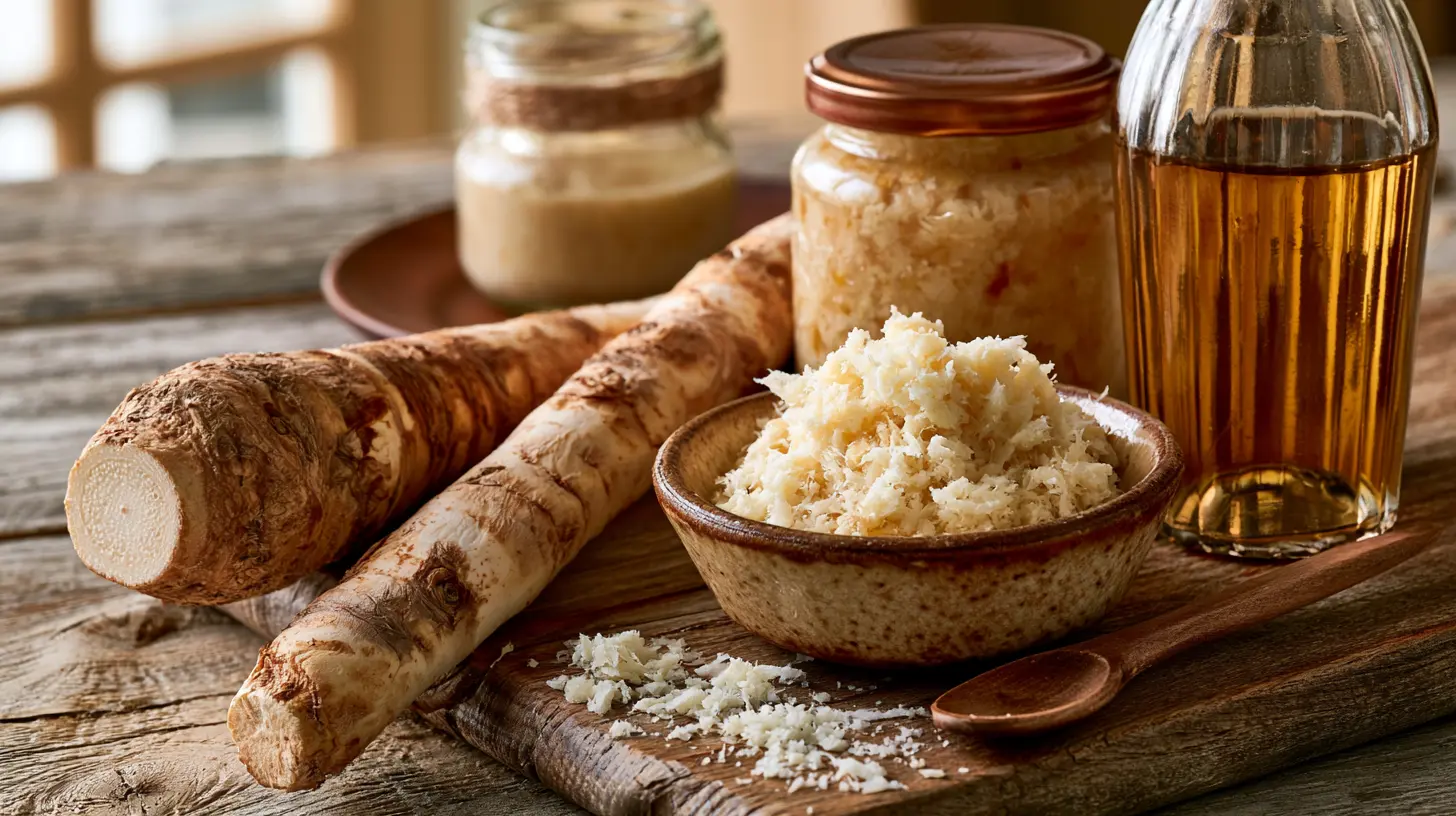
Fresh Horseradish Root
Fresh root is the classic form. It is grated and usually mixed quickly with vinegar to make prepared horseradish. Fresh root should be firm, pale cream-white inside, and free from mold, soft spots, or a sour smell.
Prepared Horseradish
Prepared horseradish is grated root preserved with vinegar and sometimes salt. This is the most common market form and is used as a condiment with meats, fish, roasted vegetables, sandwiches, and sauces. Choose products with simple ingredients and avoid versions with unnecessary sugar, artificial flavors, or excessive sodium.
Horseradish Powder
Powdered horseradish is dried and ground root. It can be rehydrated with water and vinegar, added to spice blends, or used in culinary preparations. Powder loses pungency faster than fresh root, so freshness matters.
Horseradish Capsules
Capsules may contain dried root powder or extracts. Because horseradish is naturally irritating in larger amounts, capsules should be used cautiously and only according to label directions. Culinary use is usually more traditional than supplement-style use.
Horseradish Tincture
Horseradish tincture is less common but may appear in traditional respiratory or digestive formulas. Because it is strong and pungent, tinctures should be used carefully and are not ideal for people with sensitive stomachs.
Horseradish Syrup or Honey
Some traditional home preparations combine grated horseradish with honey or syrup. These are usually used in small amounts for the pungent, warming effect. They are not appropriate for infants under 1 year old if honey is used.
Horseradish Poultice
Historically, grated horseradish was used externally as a warming poultice. This requires caution because it can irritate or burn the skin. It should not be used on broken skin, sensitive skin, children, or without experienced guidance.
Key Herbal Actions
Horseradish is known as a pungent stimulant, digestive stimulant, expectorant, rubefacient, diaphoretic, antimicrobial food herb, carminative, and antioxidant-rich Brassica root.
Pungent Stimulant
A pungent stimulant is an herb that wakes up the senses through sharp, warming compounds. Horseradish fits this action perfectly because freshly grated root releases volatile mustard oils that strongly stimulate the nose, mouth, and throat.
Digestive Stimulant
Horseradish is traditionally used in small amounts to encourage appetite and digestive secretions. Its heat and sharpness make it useful as a condiment with heavier foods, especially rich meats and fatty meals.
Expectorant
An expectorant is traditionally used to support the body’s natural clearing of mucus. Horseradish’s pungent volatile compounds create a strong sensation in the sinuses and airways, which explains its traditional respiratory use.
Rubefacient
A rubefacient is applied externally to bring warmth, redness, and blood flow to the skin surface. Horseradish has been used this way traditionally, but it is very strong and can irritate or burn skin if used carelessly.
Diaphoretic
A diaphoretic supports the body’s natural sweating response. Warming pungent herbs like horseradish have traditionally been used when someone feels chilled and wants gentle warmth.
Antimicrobial Food Herb
Horseradish contains isothiocyanates, especially allyl isothiocyanate, which have shown antimicrobial activity in laboratory research. This does not mean horseradish acts like an antibiotic in the body, but it helps explain why pungent Brassica plants have long been valued in food traditions.
Carminative
A carminative helps ease the feeling of gas and digestive heaviness. Horseradish is not a gentle carminative like fennel or chamomile, but its warming digestive stimulation may support the body’s response to heavy meals.
Antioxidant-Rich Brassica Root
As a member of the Brassica family, horseradish contains glucosinolates, phenolic compounds, and vitamin C. These compounds contribute to its food-based wellness value.
Active Compounds and Extraction
Horseradish contains glucosinolates, especially sinigrin and gluconasturtiin, plus allyl isothiocyanate, 2-phenethyl isothiocyanate, myrosinase enzyme, flavonoids, phenolic acids, vitamin C, minerals, and horseradish peroxidase.
Glucosinolates
Glucosinolates are sulfur-containing plant compounds found in Brassica vegetables. In horseradish, sinigrin is especially important. When the root is cut, crushed, or grated, the plant enzyme myrosinase helps convert glucosinolates into sharp isothiocyanates.
Best extraction methods:
Fresh grating: Peel and grate fresh horseradish root outdoors or near ventilation because the vapors are strong. Let it sit for a few minutes to allow pungent compounds to develop.
Prepared horseradish: Mix grated root with vinegar after a few minutes. Vinegar slows the enzymatic reaction and preserves the flavor.
Food use: Add prepared horseradish to meals in small amounts. This is the most traditional and practical way to use the root.
Allyl Isothiocyanate
Allyl isothiocyanate is one of the main compounds responsible for horseradish’s sharp, nose-clearing heat. It is volatile, meaning it evaporates easily and reaches the nose quickly. This is why freshly grated horseradish feels much stronger than old prepared horseradish.
Best extraction methods:
Fresh preparation: Grating or crushing fresh root releases the strongest aroma.
Vinegar preservation: Add vinegar after grating to hold the flavor. Adding vinegar immediately makes the preparation milder; waiting a few minutes makes it sharper.
Covered storage: Store prepared horseradish in a tightly sealed jar in the refrigerator to preserve volatile compounds.
2-Phenethyl Isothiocyanate
This is another pungent sulfur compound produced from horseradish glucosinolates. It contributes to the root’s sharp flavor and is studied in relation to Brassica plant chemistry.
Best extraction methods:
Fresh grated root: Crushing the root activates myrosinase and helps form isothiocyanates.
Condiment preparation: Mixing with vinegar and refrigerating helps preserve pungency for culinary use.
Myrosinase
Myrosinase is the plant enzyme that transforms glucosinolates into isothiocyanates. It becomes active when the plant cells are broken through chopping, crushing, or grating.
Best extraction methods:
Raw preparation: Fresh raw grating preserves enzyme activity best.
Avoid long cooking: Heat can reduce myrosinase activity and soften the pungency. Add horseradish near the end of cooking or use it raw as a condiment.
Flavonoids and Phenolic Acids
Horseradish contains flavonoids and phenolic acids that contribute antioxidant activity. These compounds are common in many herbs and vegetables and add to the root’s broader nutritional profile.
Best extraction methods:
Food use: Eating small amounts of prepared horseradish provides the whole-root profile.
Vinegar extraction: Vinegar-based preparations may pull some water-soluble and acid-stable plant compounds into the condiment.
Vitamin C
Fresh horseradish contains vitamin C, though typical serving sizes are small. Historically, pungent roots and greens were valued in winter and early spring when fresh plant foods were limited.
Best extraction methods:
Fresh use: Fresh grated horseradish preserves more vitamin C than long cooking.
Short storage: Use prepared horseradish within a reasonable time because vitamin C and volatile compounds decline with age.
Horseradish Peroxidase
Horseradish peroxidase is an enzyme from the plant that is widely used in laboratory research and diagnostic testing. This is scientifically important, but it is not the reason most people use horseradish as food or an herb.
Best extraction methods:
Not a home preparation target: Horseradish peroxidase is extracted and purified for laboratory use. Home herbal preparations are focused on the root’s pungent food and traditional wellness qualities.
Harvesting and Storing Right
Horseradish root is usually harvested in autumn after frost or in early spring before strong new growth begins. Cooler-season roots often have the strongest flavor. The best time to dig is when the soil is workable and the plant’s energy is concentrated in the root.
Fresh roots should be washed, dried, and stored in the refrigerator. They can also be wrapped loosely and kept in a cool, humid place such as a root cellar. Once grated, horseradish loses strength quickly, so prepare only what you can use within a short time.
Storage tips:
Fresh root: Refrigerate and use within several weeks for best flavor.
Prepared horseradish: Store tightly sealed in the refrigerator and use according to the label or within a few weeks for homemade batches.
Powder: Keep in an airtight container away from light, heat, and moisture. Best used within 6–12 months.
Tincture: Store tightly closed in a cool, dark place.
Syrup or honey: Refrigerate homemade preparations and use promptly.
Body Functions Horseradish Can Support
Horseradish can support respiratory system, digestion system, immune system, circulation, metabolism, and energy and vitality.
Respiratory System
Horseradish is traditionally used for its strong pungent effect on the nose, sinuses, and airways. The volatile isothiocyanates create a clear-feeling sensation that many people associate with easier breathing. This is sensory and supportive, not a treatment for respiratory illness.
Digestion System
Small amounts of horseradish can stimulate saliva and digestive secretions. This is why it is traditionally served with rich or heavy foods. People with reflux, ulcers, gastritis, or a sensitive stomach may find it too irritating.
Immune System
Horseradish contains glucosinolates and isothiocyanates, compounds studied for antimicrobial and antioxidant activity. As a food herb, it may support seasonal wellness traditions, but it should not be described as curing or preventing infections.
Circulation
Horseradish is warming and stimulating. Externally, it has been used as a rubefacient to bring warmth to the skin surface. Because it can irritate skin, topical use should be approached carefully.
Metabolism
Horseradish belongs to the Brassica family, a group of vegetables known for sulfur-containing compounds. These compounds participate in normal plant-food metabolism discussions, but horseradish is not a weight-loss herb. Its role is best understood as a pungent culinary support.
Energy and Vitality
Horseradish does not provide stimulant energy like caffeine. Instead, its sharp taste can feel awakening because it stimulates the senses, breathing passages, and digestion. It is more of a “wake up, food is here” root than an energy supplement.
Safety and Practical Considerations
Horseradish is generally used in small food amounts as a condiment. Larger amounts, concentrated supplements, or frequent medicinal use require caution.
Horseradish can irritate the mouth, throat, stomach, skin, and eyes. People with stomach ulcers, gastritis, significant acid reflux, inflammatory bowel conditions, kidney disease, or strong digestive sensitivity should avoid supplement-style use and use food amounts cautiously.
Horseradish may not be appropriate for people with thyroid conditions, especially if using concentrated forms. Like other Brassica plants, it contains glucosinolate compounds that can influence thyroid-related nutrition discussions, particularly in large amounts.
Pregnant or breastfeeding people should avoid medicinal or supplement use of horseradish. Culinary amounts may be different, but strong concentrated use is not recommended without professional guidance.
Children should not use horseradish supplements or strong preparations. Even food amounts can be too sharp for young children and may irritate the mouth or stomach.
Topical horseradish can burn or blister the skin. Do not apply it to broken skin, sensitive skin, the face, or near the eyes. If used externally under professional guidance, it should be brief, diluted, and watched carefully.
Avoid inhaling large amounts of freshly grated horseradish vapor. Grate it in a well-ventilated area and keep it away from the eyes.
FAQ
What does horseradish taste like?
Horseradish tastes sharp, hot, pungent, and slightly bitter. Its heat rises into the nose more than it burns the tongue, which makes it different from chili pepper heat.
When is the best time to use horseradish?
Horseradish is most often used with meals, especially rich, fatty, or heavy foods. Traditionally, small amounts are used to stimulate digestion and add warmth.
Is fresh or prepared horseradish better?
Freshly grated horseradish is stronger and more aromatic. Prepared horseradish is easier to use and stores better because vinegar helps preserve it. Both are useful, but fresh root gives the boldest flavor.
Is horseradish tea, tincture, capsule, or food better?
Food use is the most traditional and practical form. Tinctures and capsules are stronger and should be used cautiously. Horseradish tea is not very common because the volatile compounds are best experienced fresh and pungent.
Can horseradish be used daily?
Small culinary amounts may be fine for many people, but daily strong use is not ideal for everyone. People with reflux, ulcers, digestive irritation, kidney problems, thyroid concerns, pregnancy, breastfeeding, or medication use should be cautious.
How should horseradish be stored?
Fresh root should be refrigerated and kept dry. Prepared horseradish should be stored tightly sealed in the refrigerator. Powder should be kept away from heat, light, and moisture.
Does horseradish combine well with other herbs?
Yes. Horseradish combines well with garlic, mustard seed, ginger, black pepper, thyme, parsley, dill, lemon, apple cider vinegar, and honey. In respiratory folk traditions, it is often paired with garlic, onion, honey, or lemon.
Is horseradish the same as wasabi?
No. Real wasabi comes from Eutrema japonicum, while horseradish is Armoracia rusticana. Many commercial “wasabi” products outside Japan are actually made mostly from horseradish, mustard, and green coloring.
Is horseradish safe for everyone?
No. Horseradish can be too irritating for people with sensitive digestion, ulcers, reflux, kidney problems, thyroid concerns, or sensitive skin. Strong preparations should be avoided during pregnancy and breastfeeding unless professionally guided.
Can horseradish be used for pets?
Horseradish should not be given to pets. Its pungent compounds can irritate the mouth, stomach, and digestive tract. Pet use should only be discussed with a veterinarian.
Disclaimer
This content is educational only. It is not medical advice, diagnosis, or treatment. Herbs may interact with medications or health conditions. People who are pregnant, breastfeeding, managing a medical condition, taking prescription medications, or preparing for surgery should consult a qualified healthcare professional before using herbs.
References
Kew Science: Plants of the World Online – Armoracia rusticana
PubMed: Glucosinolates and Their Breakdown Products in Food and Food Plants
PubMed Central: Isothiocyanates from Brassica Vegetables and Their Biological Activities