


Meadowsweet is a fragrant flowering herb that grows in damp meadows, riverbanks, and moist woodland edges. Its creamy-white flower clusters smell sweet and almond-like, which makes its old common name, “queen of the meadow,” feel very well earned.
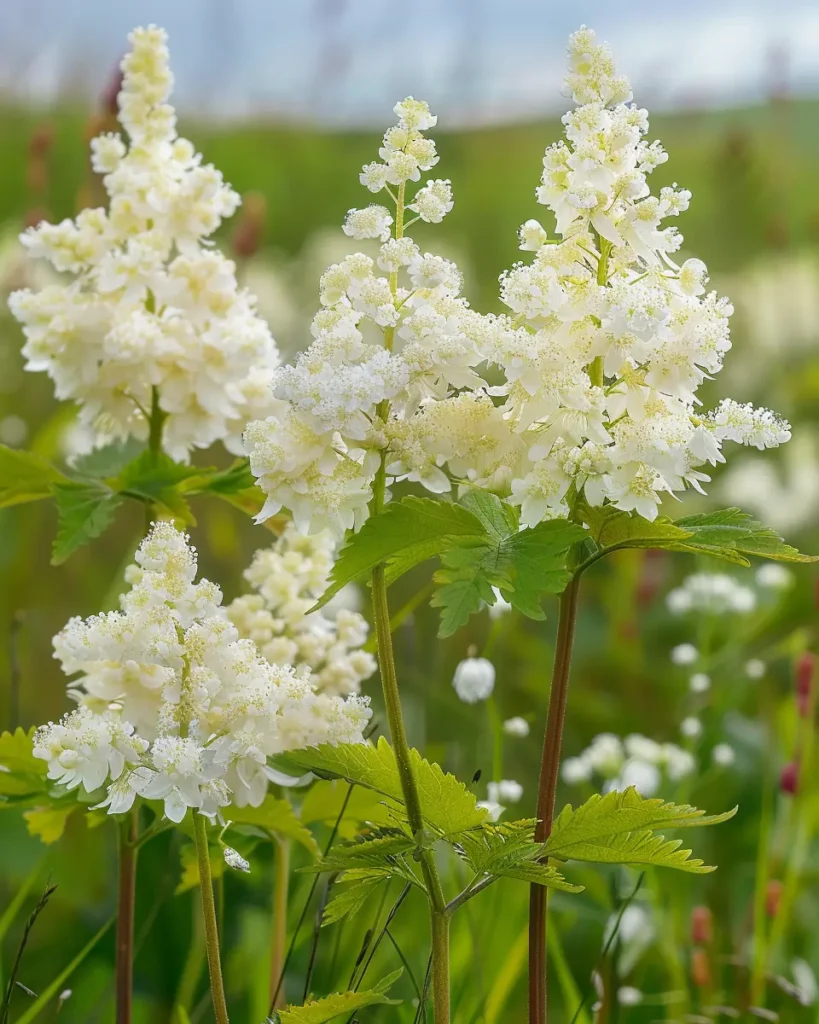
Meadowsweet (Filipendula ulmaria)
Traditional Uses of Meadowsweet
Digestive Comfort: Meadowsweet has long been used as a gentle digestive herb, especially when the stomach feels sour, heavy, or irritated. Its tannins and mucilage give it both toning and soothing qualities.
Seasonal Warmth and Sweating Support: Meadowsweet is traditionally used in warm teas during seasonal discomfort, especially when the body wants gentle warmth and release.
Muscles and Joint Comfort: Because meadowsweet contains natural salicylate-related compounds, herbalists have traditionally used it in formulas for body aches and stiffness.
Urinary and Fluid Movement: Meadowsweet has also been used as a mild diuretic herb, supporting the body’s natural fluid elimination.
Meadowsweet is gentle in personality, but not boring. Think of it as the calm herbalist who still knows exactly where the good tea is kept.
“Meadowsweet brings the softness of flowers and the quiet strength of old herbal wisdom.”
Available Meadowsweet Products
Dried Meadowsweet Herb
Dried meadowsweet herb usually includes the flowering tops and leaves. It is commonly used for tea, infusions, and herbal blends. Look for a pleasant sweet aroma, green leaf pieces, and pale cream flower fragments.
Meadowsweet Tea
Meadowsweet tea is the most traditional preparation. It is often used as a warm infusion for digestion, seasonal comfort, or gentle urinary support.
Meadowsweet Tincture
Meadowsweet tincture is a liquid extract made with alcohol and water. It is practical when someone wants a concentrated and shelf-stable preparation.
Meadowsweet Capsules
Capsules may contain powdered herb or extract. They are convenient, but labels should clearly identify Filipendula ulmaria and whether the product uses aerial parts, flowering tops, or extract.
Meadowsweet Powder
Powdered meadowsweet may be used in capsules or formulas. Because aromatic and phenolic compounds can fade over time, powder should be bought in small amounts and stored carefully.
Meadowsweet Glycerite
A glycerite is an alcohol-free liquid extract made with vegetable glycerin and water. Meadowsweet glycerites are less common than teas and tinctures, but they may be useful for people avoiding alcohol.
Meadowsweet Infused Vinegar
Meadowsweet can be infused into vinegar as a culinary-herbal preparation. This is more of a food-style extraction than a classic medicinal form.
Meadowsweet Essential Oil
Meadowsweet essential oil is not a common or standard home herbal product. Because the herb’s traditional use focuses on tea, tincture, and dried flowering tops, essential oil is not usually the preferred form.
Key Herbal Actions
Meadowsweet is known as an astringent, anti-inflammatory, digestive tonic, diaphoretic, mild analgesic-supportive herb, mild diuretic, antioxidant, vulnerary, and antacid-like soothing herb.
Astringent
An astringent herb gently tones and tightens tissues. Meadowsweet contains tannins, which help explain its traditional use when tissues feel loose, irritated, or overly moist.
Anti-inflammatory
Meadowsweet contains salicylate derivatives, flavonoids, and phenolic compounds studied for their relationship to inflammatory pathways. This supports its traditional use for comfort, though it should not be described as a treatment for inflammatory disease.
Digestive Tonic
A digestive tonic supports digestive function over time. Meadowsweet’s combination of aromatic compounds, tannins, and mucilage makes it useful when digestion needs both tone and gentleness.
Diaphoretic
A diaphoretic supports the body’s natural sweating response. Warm meadowsweet tea has been traditionally used during seasonal discomfort for this reason.
Mild Analgesic-Supportive Herb
Meadowsweet contains salicylate-related compounds, which are historically linked with comfort and body ache support. It is not the same as aspirin, but it shares botanical chemistry that made the plant famous.
Mild Diuretic
A mild diuretic supports normal urine flow. Meadowsweet has traditional use as a fluid-moving herb, especially in tea form.
Antioxidant
Antioxidant herbs contain compounds that help protect cells from oxidative stress. Meadowsweet is rich in phenolics, flavonoids, tannins, and related compounds.
Vulnerary
A vulnerary herb is traditionally used to support tissue comfort and repair. Meadowsweet’s tannins and soothing qualities explain its use in washes and topical preparations.
Antacid-Like Soothing Herb
Meadowsweet is traditionally used when the stomach feels sour or irritated. This does not mean it works like a pharmaceutical antacid, but herbalists often value its gentle stomach-soothing profile.
Active Compounds and Extraction
Meadowsweet contains salicylate derivatives, salicylaldehyde, methyl salicylate, flavonoids, tannins, ellagitannins, phenolic acids, essential oil constituents, mucilage, and minerals.
Salicylate Derivatives
Salicylate derivatives are compounds related to salicylic acid chemistry. Meadowsweet contains compounds such as salicylaldehyde and methyl salicylate, which help explain its traditional use for comfort and seasonal wellness.
Best extraction: hot water infusion or tincture.
To make meadowsweet tea, use 1–2 teaspoons dried flowering tops per cup of hot water. Cover and steep for 10–15 minutes, then strain.
Salicylaldehyde
Salicylaldehyde is an aromatic salicylate-related compound that contributes to meadowsweet’s characteristic scent and activity. It is part of the plant’s fragrant and comfort-supportive chemistry.
Best extraction: covered hot infusion or alcohol-water tincture.
Cover the cup while steeping because aromatic compounds can escape with steam. Meadowsweet is fragrant, and fragrance has a habit of leaving the room if not politely contained.
Methyl Salicylate
Methyl salicylate is a strongly aromatic salicylate compound found in some plants. In meadowsweet, it occurs as part of a broader mix rather than as a highly concentrated wintergreen-style oil.
Best extraction: tincture or covered infusion.
A tincture may extract aromatic and phenolic compounds more broadly than water alone. For home use, tea remains the gentlest traditional preparation.
Flavonoids
Flavonoids are antioxidant plant compounds. Meadowsweet contains flavonol glycosides and other flavonoids that contribute to its antioxidant and circulation-supportive profile.
Best extraction: hot water or tincture.
A standard infusion extracts many flavonoids well. For tincture, dried flowering tops can be macerated in an alcohol-water blend for several weeks, then strained.
Tannins
Tannins are astringent compounds that gently tone tissues. Meadowsweet contains hydrolyzable tannins, condensed tannins, and ellagitannins, which support its traditional use for digestive and tissue comfort.
Best extraction: hot water infusion.
Use hot water and steep for 10–15 minutes. Very long steeping can make the tea more astringent and drying.
Ellagitannins
Ellagitannins are tannin compounds found in plants in the rose family. They are studied for antioxidant and tissue-toning properties.
Best extraction: hot water.
A strong infusion is suitable for extracting ellagitannins. For external use, the cooled infusion may be used as a wash on intact skin.
Phenolic Acids
Phenolic acids are antioxidant plant compounds. Research has found meadowsweet to be rich in phenolic compounds, with some studies reporting total phenolics up to about 65 mg per gram in various plant parts.
Best extraction: hot water, tincture, or vinegar.
For a vinegar infusion, cover dried meadowsweet with apple cider vinegar, steep for 2–4 weeks, strain, and use as a culinary vinegar. This is best understood as food-herbal use rather than a medical preparation.
Essential Oil Constituents
Meadowsweet contains small amounts of volatile aromatic compounds. These contribute to its sweet scent and some of its traditional character.
Best extraction: covered infusion or fresh preparation.
A covered tea is usually enough for home herbal use. Avoid boiling the flowers hard, as this can flatten the aroma.
Mucilage
Mucilage is a softening plant fiber. Meadowsweet is not as mucilage-rich as marshmallow root, but its mild soothing quality contributes to its digestive use.
Best extraction: warm water infusion.
Steep the herb gently rather than boiling aggressively. A warm infusion captures both the softening and aromatic qualities.
Harvesting and Storing Right
Meadowsweet is usually harvested in summer when the flowering tops are open, fragrant, and creamy white. The best time of day is late morning, after dew has dried but before strong afternoon heat fades the aroma.
Harvest only from clean, unsprayed areas away from roadsides, industrial runoff, and polluted waterways. Cut the flowering tops and upper leaves, leaving enough plant behind for regrowth and pollinators.
Dry meadowsweet quickly in a shaded, airy place in a single loose layer. Once fully dry, store it in an airtight jar away from heat, light, and moisture. Dried meadowsweet is usually best within 6–12 months. Tinctures often keep for several years when stored well, while powders are best used within 6 months.
Body Functions Meadowsweet can Support
Meadowsweet can support the digestion system, muscles and joints, urinary system, immune system, respiratory system, skin, circulation, liver support, and energy and vitality.
Digestion System
Meadowsweet is traditionally used for sour, irritated, or heavy digestion. Its tannins provide tone, while its gentle mucilage and aromatic compounds offer a softer side.
Muscles and Joints
Meadowsweet’s salicylate-related compounds explain its traditional use in formulas for body comfort. It should not be used as a substitute for pain medication or medical care, especially for persistent or severe discomfort.
Urinary System
Meadowsweet has traditional use as a mild diuretic. As a warm tea, it may support the body’s normal fluid elimination pathways.
Immune System
Meadowsweet is used traditionally in warm seasonal teas, often alongside elderflower, yarrow, peppermint, or linden. Its diaphoretic and antioxidant actions make it a classic herb for seasonal wellness blends.
Respiratory System
Meadowsweet is not a primary expectorant, but warm tea may support comfort when the throat or upper respiratory tract feels irritated. It is often used in blends rather than alone for this purpose.
Skin
Meadowsweet’s tannins and antioxidant compounds support its traditional use in external washes. A cooled infusion may be used on intact skin as a gentle botanical rinse.
Circulation
Flavonoids and salicylate-related compounds give meadowsweet a traditional connection to circulation and body comfort. People using blood-thinning medications should be cautious because of possible interaction concerns.
Liver Support
Meadowsweet is not a strong liver herb, but its role as a bitter-aromatic digestive and elimination-supporting herb connects it indirectly to liver-digestive wellness. It is better described as digestive support than as a liver cleanse.
Energy and Vitality
Meadowsweet supports vitality gently through digestion, comfort, and seasonal wellness. It is not stimulating like coffee or cayenne; its personality is more meadow breeze than marching band.
Safety and Practical Considerations
Meadowsweet contains salicylate-related compounds, so people allergic or sensitive to aspirin or salicylates should avoid it. It should also be avoided by people with active stomach ulcers, bleeding disorders, or those advised not to take salicylate-containing substances.
Use caution with blood-thinning medications, antiplatelet medications, NSAIDs, aspirin, anticoagulants, blood pressure medications, and multiple prescriptions. Meadowsweet should generally be avoided before surgery unless a healthcare professional gives specific guidance.
People with asthma triggered by aspirin or NSAIDs should avoid meadowsweet. Those with kidney disease, serious liver disease, or chronic medical conditions should seek professional guidance before using it.
Pregnant and breastfeeding people should avoid medicinal use due to limited safety data and salicylate concerns. Children and teenagers should not use salicylate-containing herbs during viral illness unless directed by a qualified healthcare professional.
Meadowsweet is commonly used dried as tea or tincture. Its flavor is sweet, floral, slightly almond-like, and mildly astringent. If the tea tastes harshly bitter or stale, the herb may be old or over-steeped.
FAQ
What does meadowsweet taste like?
Meadowsweet tastes sweet, floral, slightly almond-like, and mildly astringent. A strong infusion can become more drying because of its tannins.
When is the best time to use meadowsweet?
Meadowsweet is often used after meals for digestive comfort or as a warm tea during seasonal discomfort. If it feels drying, use a lighter infusion or blend it with demulcent herbs.
Is fresh or dried meadowsweet better?
Fresh meadowsweet is wonderfully fragrant but seasonal. Dried meadowsweet is more practical for tea, tinctures, and year-round use.
Is meadowsweet tea, tincture, or capsule better?
Tea is the most traditional and gentle form. Tincture is more concentrated and shelf-stable, while capsules are convenient but less connected to meadowsweet’s aromatic tea tradition.
Can meadowsweet be used daily?
Meadowsweet is usually best used short-term or as needed rather than as an everyday long-term herb. People with medication use, salicylate sensitivity, pregnancy, breastfeeding, or chronic health conditions should avoid or seek guidance.
How should meadowsweet be stored?
Store dried meadowsweet in an airtight jar away from light, heat, and moisture. Use it within 6–12 months for best aroma and quality.
Does meadowsweet combine well with other herbs?
Yes. Meadowsweet combines well with elderflower, yarrow, peppermint, linden, chamomile, marshmallow root, licorice, and ginger, depending on the goal.
Is meadowsweet the same as aspirin?
No. Meadowsweet contains natural salicylate-related compounds, while aspirin is acetylsalicylic acid, a modified pharmaceutical compound. They are related historically and chemically, but they are not the same.
Is meadowsweet safe for everyone?
No. Avoid it with aspirin allergy, salicylate sensitivity, blood thinners, bleeding disorders, active ulcers, pregnancy, breastfeeding, and certain medical conditions unless professionally guided.
Can meadowsweet be used for pets?
Pet use should be guided by a veterinarian or qualified animal herbalist. Because of salicylate-related compounds, meadowsweet is not appropriate for casual pet use.
Disclaimer
This content is educational only. It is not medical advice, diagnosis, or treatment. Herbs may interact with medications or health conditions. People who are pregnant, breastfeeding, managing a medical condition, taking prescription medications, or preparing for surgery should consult a qualified healthcare professional before using herbs.
References
EMA: Filipendulae ulmariae herba – Herbal Medicinal Product
https://www.ema.europa.eu/en/medicines/herbal/filipendulae-ulmariae-herba
EMA: Community Herbal Monograph on Filipendula ulmaria Herba
https://www.ema.europa.eu/en/documents/herbal-monograph/draft-community-herbal-monograph-filipendula-ulmaria-l-maxim-spiraea-ulmaria-l-herba-first-version_en.pdf
EMA: Assessment Report on Filipendula ulmaria Herba and Flos
https://www.ema.europa.eu/en/documents/herbal-report/final-assessment-report-filipendula-ulmaria-l-maxim-herba-and-filipendula-ulmaria-l-maxim-flos-first-version_en.pdf
NIH / PubMed Central: In Vitro Biotransformation and Anti-Inflammatory Activity of Filipendula ulmaria
https://pmc.ncbi.nlm.nih.gov/articles/PMC10146082/
PubMed: Antioxidant, Anti-Inflammatory and Gastroprotective Activity of Filipendula ulmaria
https://pubmed.ncbi.nlm.nih.gov/29132911/
PubMed: Variation in Phenolic Compounds, Antioxidant and Antibacterial Activity of Filipendula ulmaria
https://pubmed.ncbi.nlm.nih.gov/37110746/
NIH / PubMed Central: Variation in Phenolic Compounds, Antioxidant and Antibacterial Activity of Filipendula ulmaria
https://pmc.ncbi.nlm.nih.gov/articles/PMC10140895/
NIH / PubMed Central: Total Content and Composition of Phenolic Compounds from Filipendula Species
https://pmc.ncbi.nlm.nih.gov/articles/PMC11085259/
NIH / PubMed Central: Rapid Chemical Profiling of Filipendula ulmaria Using CPC and NMR
https://pmc.ncbi.nlm.nih.gov/articles/PMC10489126/
USGS: Queen of the Meadow, Filipendula ulmaria Species Profile
https://nas.er.usgs.gov/queries/FactSheet.aspx?SpeciesID=3810