


Acne is a common skin condition that shows up as clogged pores, blackheads, whiteheads, pimples, or deeper tender bumps. In everyday life, it can feel frustrating because it often appears on the most visible places, usually the face, chest, shoulders, or back.
Learn more about Acne >>>
Acne happens when hair follicles become clogged with a mix of sebum, dead skin cells, and keratin. Sebum is the natural oil your skin makes, and keratin is a protective protein found in skin cells. When this mixture builds up inside a pore, it can create a plug. If bacteria and inflammation become involved, the area may become red, swollen, tender, or raised.
Acne is not caused by “dirty skin,” which is good news for anyone who has ever scrubbed their face like they were polishing a kitchen sink. Over-cleansing can actually irritate the skin barrier and make the skin feel more reactive.
The main types of acne are usually described in plain language like this:
Comedonal acne includes blackheads and whiteheads. These are clogged pores that may look dark, pale, bumpy, or slightly raised.
Inflammatory acne includes red or tender bumps, often called papules or pustules. These are the spots most people think of as pimples.
Nodular or cyst-like acne involves deeper, more painful bumps under the skin. This type can be more persistent and may need professional care.
Common acne triggers may include hormonal changes, stress, heavy or pore-clogging skin products, sweating under tight clothing or gear, some medications, and individual diet patterns. Research suggests that high-glycemic foods may play a role for some people, though acne is never just about one food or one habit.
In daily life, acne may show up as small bumps along the forehead, breakouts around the jawline, irritated spots after sweating, or deeper bumps that seem to arrive right before an important photo. It can also affect confidence, even when the skin changes are mild.
Traditional herbalism tends to look at acne through patterns rather than one single cause. Herbalists may describe some acne patterns as “hot and inflamed,” especially when the skin is red, tender, and reactive. Other patterns may be understood as sluggish elimination, excess oiliness, digestive imbalance, hormonal fluctuation, or skin that needs gentle cooling and soothing support.
Herbs are traditionally selected based on how the skin presents. Red, irritated-looking skin may call for cooling and soothing herbs. Oily, congested skin may lead herbalists toward gently astringent herbs. Skin that feels reactive may call for demulcent or calming herbs. When digestion, stress, or cycles appear connected, herbalists may think more broadly and choose herbs that support the whole person, not just the visible spot.
How Herbs Can Help Acne
Herbalism traditionally views acne as a mix of skin congestion, heat, oiliness, and inflammation-like irritation, sometimes influenced by digestion, stress, or hormonal rhythms. The main herbal actions often used are cooling herbs to calm hot-looking skin, astringents to tone oily areas, demulcents to soothe irritation, and gentle alteratives traditionally used to support the body’s natural clearing processes. Herbalists choose between these actions by looking at whether the skin appears red and tender, oily and clogged, dry and irritated, or connected with stress, cycles, food patterns, or skin-care habits.
Recipes & Remedies
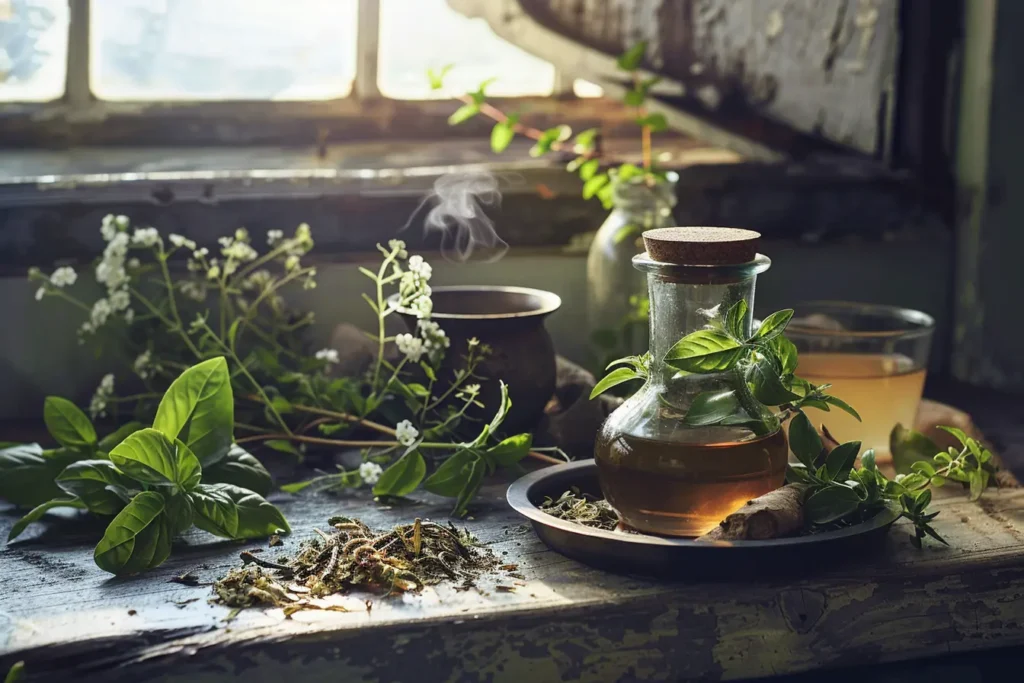
Herbal Preparations
Green Tea, Calendula & Aloe Cooling Skin Compress
This gentle topical compress is inspired by traditional herbal skin care and uses green tea, calendula, and aloe to cool, tone, and soothe acne-prone skin. It is best for skin that looks red, oily, warm, or easily irritated.
See What You’ll Need & How to Make It >>>
1 teaspoon dried green tea leaves
1 teaspoon dried calendula flowers
1 cup hot water
1 tablespoon pure aloe vera gel
Optional: 1 drop tea tree essential oil, only if well diluted and tolerated
Materials needed
- Heat-safe cup or small jar
- Small strainer
- Clean spoon
- Cotton pads or clean soft cloth
- Small glass storage jar with lid
Step-by-step preparation instructions
Pour into a clean glass jar and store in the refrigerator for up to 3 days.
Place the green tea and calendula flowers into a heat-safe cup or jar.
Pour 1 cup of hot water over the herbs.
Cover and steep for 10 minutes.
Strain well and let the liquid cool completely.
Stir in 1 tablespoon of aloe vera gel.
If using tea tree essential oil, add only 1 drop and mix very well. Skip this step for sensitive skin.
How to use
Apply to clean skin with a cotton pad or soft cloth once daily. Leave on for 5-10 minutes, then rinse with cool water and apply a simple, non-comedogenic moisturizer. Patch test first on a small area of skin and avoid the eyes, lips, broken skin, and irritated open spots.
See More Acne Related Herbal Recipes >>>
Acne may be loud on the skin, but gentle care, steady habits, and herbal support can help bring the whole picture back into balance.
Food for Support
Low-Glycemic Salmon, Lentil & Herb Bowl
This practical meal is inspired by Mediterranean-style eating and focuses on protein, fiber, leafy greens, herbs, and healthy fats. It is designed as a skin-friendly food option rather than a magic acne me
See What You’ll Need & How to Make It >>>
- 1 cooked salmon fillet, about 4-5 ounces
- 3/4 cup cooked green or brown lentils
- 1 cup chopped romaine or mixed greens
- 1/2 cup chopped cucumber
- 1/2 cup cherry tomatoes, halved
- 1 tablespoon chopped fresh parsley
- 1 tablespoon chopped fresh dill
- 1 tablespoon extra virgin olive oil
- 1 tablespoon fresh lemon juice
- 1/4 teaspoon sea salt
- 1/8 teaspoon black pepper
- Optional: 1 tablespoon pumpkin seeds
Materials needed
- Medium bowl
- Small bowl
- Fork
- Knife and cutting board
- Measuring spoons
Step-by-step preparation instructions
- Add the cooked lentils, greens, cucumber, tomatoes, parsley, and dill to a medium bowl.
- In a small bowl, whisk together olive oil, lemon juice, salt, and black pepper.
- Pour the dressing over the lentil mixture and toss gently.
- Place the cooked salmon on top.
- Sprinkle with pumpkin seeds if using.
- Serve fresh.
How to use
Enjoy as a balanced lunch or dinner. This meal works well when you want something filling, lower-glycemic, and rich in protein, fiber, and omega-3 fats.
Key Herbs & Ingredients
For acne-prone skin, the herbs and botanicals in these recipes are traditionally chosen for cooling, soothing, toning, and skin-supportive qualities. The key herbs and ingredients are green tea, calendula, aloe vera, tea tree, parsley, and dill.
-
 Chickweed A Cooling Green Herb for Skin, and Digestion Traditionally, chickweed […]
 -
 Angelica Root Traditionally, angelica root has been used to support digestion, appetite, […]
 -
 Alfalfa Traditionally, alfalfa leaf has been used to support general nourishment, […]
 -
 Agrimony Traditionally, agrimony has been used for digestive tone, mild diarrhea […]
Shop Herbal Products
Explore the herbs and ingredients featured in this post, and stock your herbal pantry with what you need to make them at home.
FAQ
Is acne caused by dirty skin?
No. Acne is not simply a cleanliness issue, and over-washing can make skin feel more irritated. Gentle cleansing is usually more helpful than scrubbing, especially because acne involves clogged follicles, oil, inflammation, and other internal and external factors.
Can herbs make acne go away?
Herbs should not be presented as a guaranteed way to make acne disappear. In traditional herbalism, herbs are used to support skin comfort, reduce the feeling of irritation, or match patterns such as oiliness, heat, or congestion. Persistent, painful, cyst-like, or scarring acne should be discussed with a qualified healthcare professional.
Are herbal face masks safe for acne-prone skin?
Some can be useful, but gentle is the key word. Strong essential oils, rough scrubs, lemon juice, baking soda, and harsh drying masks can irritate acne-prone skin. A mild clay and green tea mask used occasionally is usually more sensible than a “burn it all down” approach.
Is fresh aloe better than bottled aloe gel?
Fresh aloe can be lovely, but bottled aloe is often more practical and consistent. Look for a simple product without fragrance, dyes, or unnecessary irritants. Fresh aloe should be handled cleanly and used quickly because it does not keep as long.
Can I use dried herbs instead of fresh herbs?
Yes, dried herbs are often preferred for teas, rinses, and compresses because they are shelf-stable and easy to measure. Use good-quality dried herbs with a fresh color and aroma. If herbs smell dusty, flat, or musty, they belong in the compost, not on your face.
How should I store homemade herbal acne preparations?
Water-based preparations such as teas, rinses, and compresses should be stored in the refrigerator and used within 1-2 days. Herbal oils and balms last longer, but they still need clean handling and should be discarded if the smell, color, or texture changes.
Are these herbs safe for pets?
Do not apply acne-focused herbal products to pets unless a veterinarian approves it. Cats and dogs have different skin, grooming habits, and sensitivities, and some herbs or essential oils can be unsafe for them. Keep herbal preparations out of reach of curious paws and professional countertop inspectors.
References
NIAMS: Acne Diagnosis, Treatment, and Steps to Take
American Academy of Dermatology: Acne Overview
American Academy of Dermatology: Acne Causes
Acne Vulgaris: A Review of the Pathophysiology, Treatment, and Recent Nanotechnology Based Advances
Green Tea and Other Tea Polyphenols: Effects on Sebum Production and Acne Vulgaris
The Effects of Green Tea on Acne Vulgaris: A Systematic Review and Meta-Analysis
NCBI Bookshelf: InformedHealth.org Overview of Acne
Disclaimer
This article is for educational purposes only and is not medical advice. Acne can have many causes, and painful, persistent, cyst-like, infected, or scarring acne should be evaluated by a qualified healthcare professional. Always patch test topical herbal preparations before wider use, and stop using any product that causes burning, rash, swelling, or worsening irritation. Ask a clinician before using internal herbs if you are pregnant, breastfeeding, taking medication, managing a health condition, or preparing herbs for a child.