

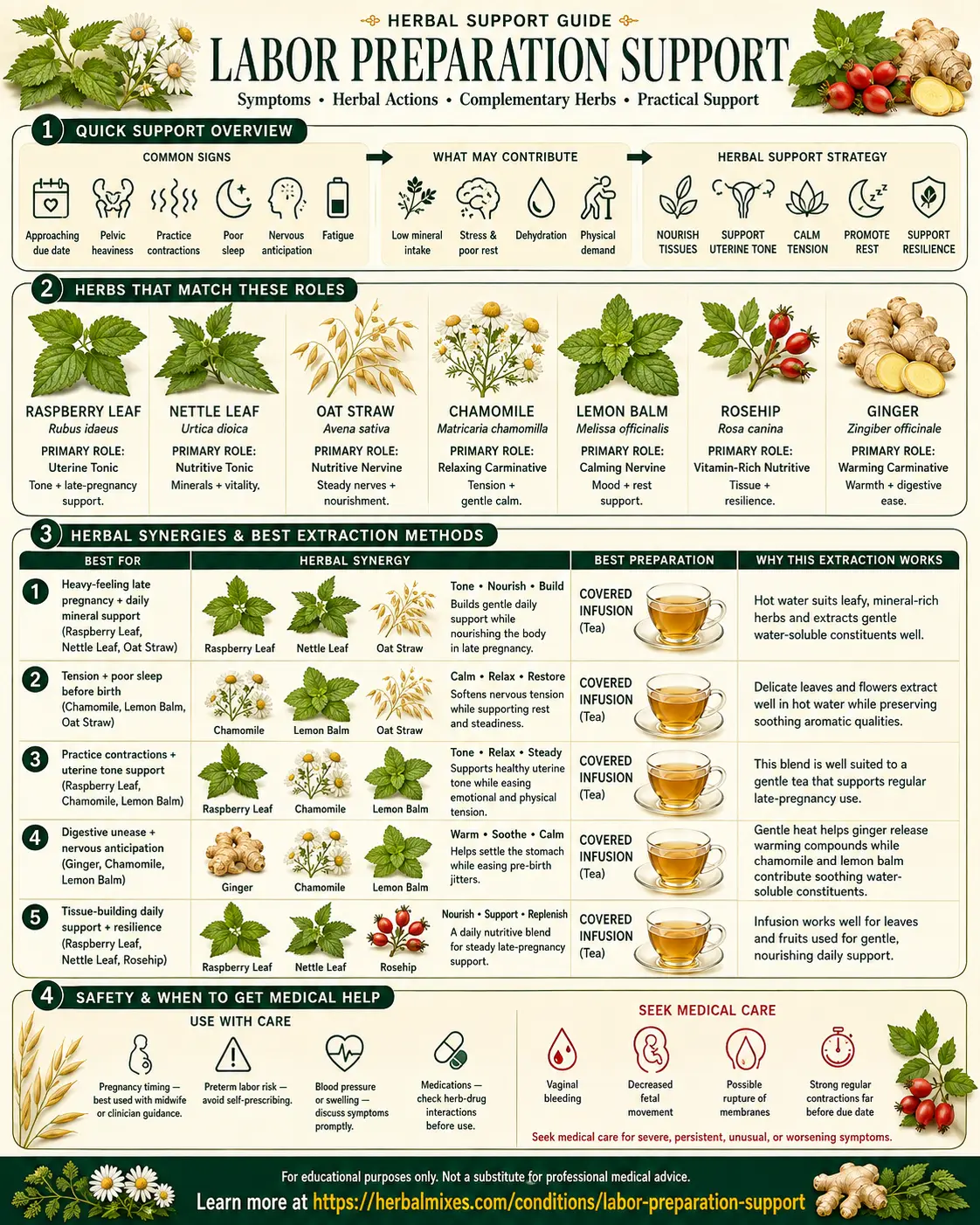
Herbal support for late pregnancy combines mineral-dense uterine tonics for muscle stamina, relaxing nervines for nervous system calm, and gentle pelvic relaxants to prepare tissues for birth. The specific choice of herbs depends heavily on whether daily uterine toning, third-trimester relaxation, or pre-labor pelvic ease is the primary focus.
Learn more about these herb:


Available Ready-to-Use Products
If you prefer a ready-made option, these commercially available products contain herbs relevant to the approaches discussed above.
Third-Trimester Uterine Tonic — Certified organic herbal tea blend designed specifically for late pregnancy and labor preparation. Traditional Medicinals — Organic Pregnancy Tea — Combines organic raspberry leaf, nettle, and other supportive botanicals to tone the uterus and nourish maternal vitality.
Daily Pregnancy Mineral Nourishment — Nutrient-dense green leaf blend for maternal stamina and mineral replenishment. Earth Mama Organics — Third Trimester Tea — Organic raspberry leaf, chamomile, and spearmint support comfortable late-stage pregnancy and uterine tone.
Nervous System & Sleep Calm — Gentle herbal extract for late-pregnancy rest and tension relief. Gaia Herbs — Chamomile Flower Extract — Pure organic chamomile liquid extract helps soothe nervous tension and promote restful sleep during restless nights.
Pelvic & Smooth Muscle Ease — Botanical support for acute late-pregnancy cramping and tightness. No strong ready-to-use match identified; individual-herb teas or custom professional formulas offer a closer fit for specific late-stage preparation.
Herbal Synergies & Best Extraction Methods
Raspberry Leaf + Nettle Leaf + Lemon Balm
Best for: Daily second and third-trimester foundational nourishment, uterine toning, and sustained maternal stamina. Raspberry leaf tones smooth muscle fibers in the uterus, nettle delivers vital minerals for muscle contraction, and lemon balm keeps daily stress in check. Best Preparation: Long Infusion (Tea). Steeped in a tightly covered Mason jar for 4 to 8 hours, nutrient-dense leaves release their full spectrum of minerals and tonifying compounds.
Chamomile + Lemon Balm + Raspberry Leaf
Best for: Late-pregnancy sleep disturbances, nervous anticipation, and gentle daytime relaxation. Chamomile and lemon balm soothe anxious tension and promote restful sleep, while raspberry leaf maintains foundational reproductive tissue tone. Best Preparation: Covered Infusion (Tea). Preserves volatile calming oils while effectively extracting water-soluble plant flavonoids and tonics.
Cramp Bark + Chamomile + Raspberry Leaf
Best for: Uncomfortable Braxton Hicks contractions, lower back tightness, and false labor tension. Cramp bark relaxes tight uterine smooth muscle, chamomile soothes accompanying nervine tension, and raspberry leaf supports overall uterine balance. Best Preparation: Decoction + Infusion Blend. Simmering the bark briefly before pouring it over the soothing leaves ensures proper extraction of both tough and delicate plant parts.
Raspberry Leaf + Nettle Leaf + Chamomile
Best for: Final weeks preparation, easing nervous energy before birth, and maintaining mineral reserves. Combines daily uterine conditioning with deep nervous system relaxation to help the body transition smoothly into active labor. Best Preparation: Long Infusion (Tea). Maximizes the daily extraction of calcium, magnesium, and plant tonics for optimal tissue support.
Herbal Properties Required
For labor preparation support, the most useful herbal properties are typically uterine tonic, antispasmodic, nervine, emmenagogue (gentle), and nutritive. Uterine tonics help strengthen and coordinate smooth muscle contractions, while antispasmodic and nervine actions ease pelvic tension and anxiety, whereas nutritive herbs supply essential minerals like calcium and magnesium for muscle function.




Herbs With These Properties
Raspberry Leaf (Rubus idaeus) — Uterine tonic + mineral nourishment. A nutrient-dense astringent leaf rich in fragrine, calcium, and iron; traditionally consumed throughout the second and third trimesters to tone uterine muscles and support efficient labor contractions.
Nettle Leaf (Urtica dioica) — Mineral replenishment + systemic tonic. A deeply nourishing green leaf rich in bioavailable iron, chlorophyll, and trace minerals; helps support overall maternal vitality and tissue resilience in late pregnancy.
Chamomile (Matricaria recutita) — Nervous tension soothing + gentle relaxation. A calming floral nervine containing apigenin; useful for easing late-pregnancy anxiousness, promoting restful sleep, and softening mild smooth muscle tension.
Lemon Balm (Melissa officinalis) — Mood soothing + nervous system calm. A fragrant calming herb rich in rosmarinic acid; helps quiet racing thoughts, soothe nighttime restlessness, and support emotional balance during the approach of birth.
Blue Cohosh / Black Cohosh (Caulophyllum thalictroides / Actaea racemosa) — Pelvic coordination + late-stage uterine preparation. Specialized botanical roots utilized exclusively under professional guidance in the final weeks of pregnancy to support normal cervical ripening and uterine readiness.
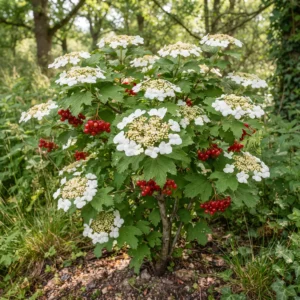
Cramp Bark (Viburnum opulus) — Smooth muscle relaxation + pelvic ease. An antispasmodic bark containing scopoletin; helpful for easing acute Braxton Hicks contractions or tight lower abdominal tension in late pregnancy.
Use With Care
- Never use uterine-stimulating or strong emmenagogue herbs (such as blue cohosh, black cohosh, pennyroyal, or high-dose dong quai) in the first or second trimesters, as they can induce dangerous uterine contractions.
- Potent labor-stimulating herbs should only be used under the direct supervision of a qualified midwife, obstetrician, or clinical herbalist in the final weeks of pregnancy.
- Ensure uterine tonics like raspberry leaf are introduced gradually (typically starting in the second trimester) rather than in large quantities early in pregnancy.
- Consult a healthcare professional immediately if you experience signs of preterm labor or unexpected spotting.
- If you take prescription medication, are pregnant or breastfeeding, or have a medical condition, check with a qualified healthcare professional before using concentrated herbal products.
When to Get Medical Help
Seek medical evaluation if you experience:
- Signs of preterm labor (regular uterine contractions, pelvic pressure, or cramping) before 37 weeks of pregnancy.
- Sudden fluid leakage or rupture of membranes (water breaking) accompanied by unusual color or odor.
- Vaginal bleeding at any point during the second or third trimester.
- Decreased fetal movement, severe headache, sudden visual disturbances, or facial swelling. Persistent, severe, unusual, or worsening symptoms should be evaluated by a healthcare professional.
Frequently Asked Questions
When is the best time to start drinking raspberry leaf tea?
Red raspberry leaf is traditionally introduced during the second trimester (around 20 to 24 weeks) as a gentle daily uterine tonic. Starting gradually allows the nutrient-dense leaves to progressively build strength and tone in the uterine muscles prior to labor.
Does raspberry leaf tea cause labor to start?
No. Raspberry leaf is a tonic, not an immediate oxytocic stimulant. It does not force contractions to begin; instead, it nourishes and coordinates smooth muscle tissue so that when labor naturally commences, the contractions are more efficient and effective.
Why is a long infusion recommended for pregnancy teas?
Preparing herbs like raspberry leaf and nettle as a long infusion (steeping covered for 4 to 8 hours or overnight) allows water to break down tough plant walls, fully extracting deep-seated minerals like calcium, magnesium, and bioavailable iron that a quick 5-minute cup misses.
Are powerful herbs like blue cohosh safe to use at home?
No. Powerful labor-preparation herbs like blue and black cohosh have potent physiological effects on the uterus and cardiovascular system and should never be self-administered. They must only be used under the direct care of an experienced birth professional.
References
National Center for Complementary and Integrative Health (NCCIH) — Herb-Supplement Safety in Pregnancy: NCCIH Overview PubMed — Raspberry Leaf and Its Effect on Labour: PubMed Central Study PubMed — Herbal Supplement Use During Pregnancy and Safety: PubMed Review American Botanical Council — Red Raspberry Leaf Monograph: HerbalGram Reference
Disclaimer
For educational purposes only. This information is not intended to diagnose, treat, cure, or prevent disease. Herbal products may cause side effects or interact with medications. Consult an appropriate healthcare professional if you have a medical condition, take medication, are pregnant or breastfeeding, or have persistent or concerning symptoms.