

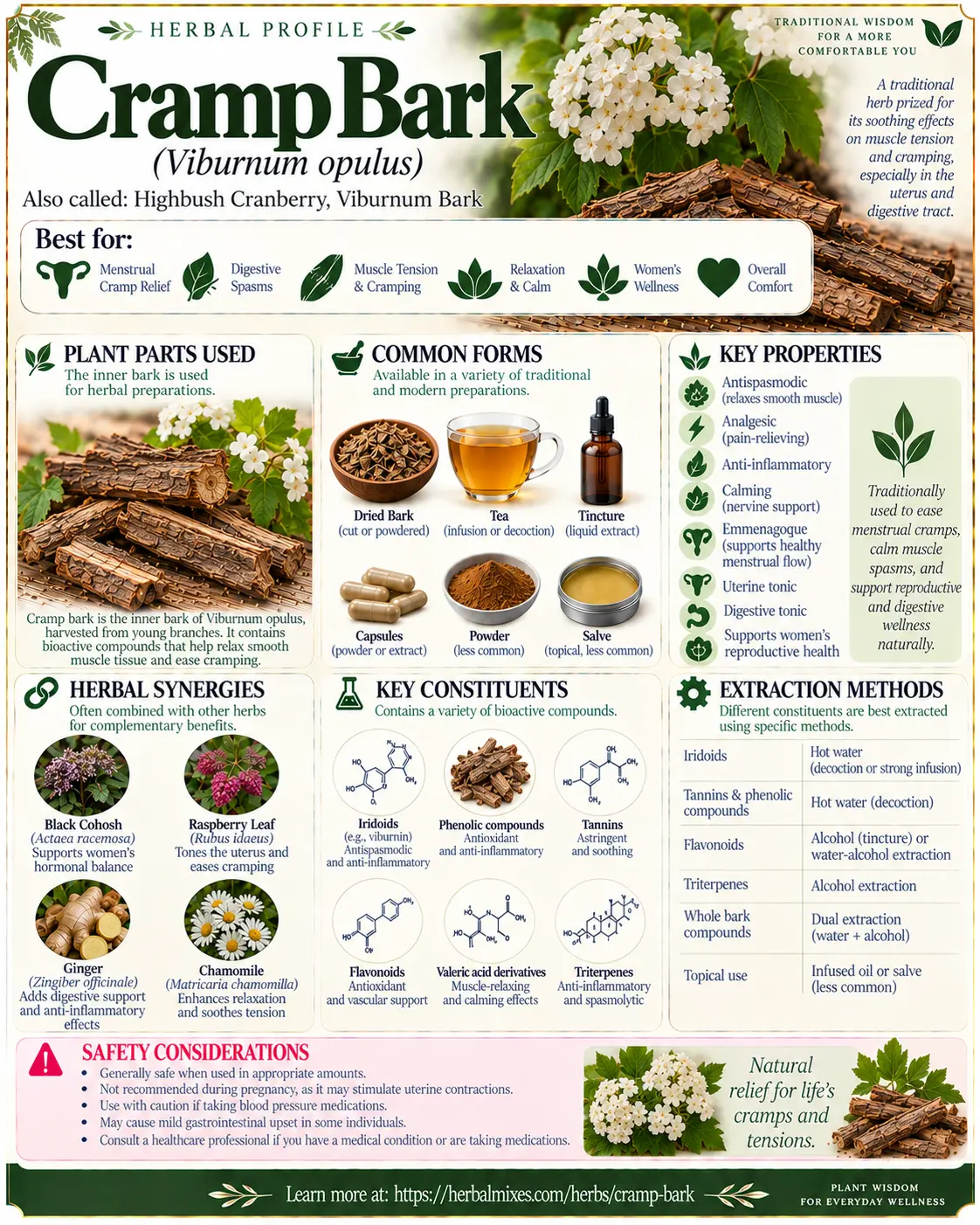
What Cramp Bark Is Good For
Menstrual Cramp & Dysmenorrhea Relief — Cramp bark is globally renowned as a premier antispasmodic specifically tailored to relax painful uterine cramping and gripping menstrual pain.
Smooth Muscle Spasm Reduction — Relaxes involuntary smooth muscle tissue throughout the body, easing abdominal cramps, spasmodic bowel distress, and muscle twitches.
Uterine & Pelvic Tension Release — Traditionally used to tone and calm an overactive, tightly bound uterus, promoting ease throughout the pelvic basin.
Postpartum Afterpains Support — Historically utilized by midwives and herbalists to ease intense postpartum uterine contractions (“afterpains”) during recovery.
Ovarian & Pelvic Congestion Comfort — Helps soothe nagging ovarian tension and minor discomfort associated with the premenstrual phase.
Available Herbal Products
Buying Guides for Available Cramp Bark Products
Organic Cramp Bark Cut – Dried inner bark pieces. An authentic, traditional choice for simmering into a rich, deep decoction for acute menstrual cramp relief. Seller: Mountain Rose Herbs – View Mountain Rose Herbs Cramp Bark →
Cramp Bark Liquid Extract – Hydroalcoholic tincture. A fast-absorbing liquid format that allows for rapid drop-by-drop dosing to halt acute menstrual spasms quickly. Seller: Herb Pharm – View Herb Pharm Cramp Bark Extract →
Women’s Menstrual Comfort Formula – Concentrated liquid extract blend combining cramp bark with black haw, dong quai, and ginger. Designed to provide comprehensive monthly cycle support. Seller: Wise Woman Herbals – View Wise Woman Herbals Formulas →
Standardized Cramp Bark Extract Capsules – Concentrated capsules. Formulated with pure viburnum bark powder to provide convenient daily support for women experiencing chronic cycle discomfort. Seller: Nature’s Way – View Nature’s Way Herbal Formulas →
Herbal Synergies
Cramp bark pairs especially well with Black Haw Bark, Ginger Root, and Motherwort Herb, depending on the goal of the formula.
Cramp Bark + Ginger Root – Best for: Relieving painful menstrual cramps, warming cold pelvic circulation, and relaxing spasms Cramp bark acts as a premier smooth muscle relaxant that stops acute uterine cramping, while ginger root delivers pungent oleoresins that warm core circulation and accelerate local blood flow. Together, they form the ultimate cramp-relief duo. Best extraction: Simmered decoction or tincture blend. Simmering these barks and roots together extracts their active coumarins and warming oils.
Cramp Bark + Black Haw Bark – Best for: Deep pelvic relaxation, calming severe menstrual griping, and supporting uterine tone Cramp bark provides immediate antispasmodic action for smooth muscle, whereas black haw (its close botanical cousin) delivers deeper vascular and uterine sedative support. Best extraction: Combined decoction or dual-extract tincture. Yields potent, comprehensive pelvic support.
Cramp Bark + Motherwort Herb – Best for: Easing emotional stress during painful cycles, regulating flow, and soothing heart-uterus tension Cramp bark relaxes physical uterine spasms, while motherwort offers gentle nervine relaxation for hormone-related anxiety and irritability. Best extraction: Tincture combination. Blending these extracts bridges nervous calm with physical muscle relief.
Key Herbal Properties
Antispasmodic — Relaxes smooth and skeletal muscle tissue, effectively stopping acute cramps, spasms, and tension.
Uterine Sedative — Calms hypertonic, gripping uterine muscle tissue, easing painful dysmenorrhea.
Astringent (Mild) — Tones and tightens tissues, supporting normal vascular tone in the pelvic basin.
Nervine (Mild) — Calms nervous system tension that exacerbates physical pain and stress.
Anti-inflammatory — Helps modulate normal inflammatory pathways in pelvic tissues.





Active Compounds
Coumarins (including Scopolin, Scopoletin, and Umbelliferone) Found mainly in: Dried bark The primary bioactive compounds responsible for cramp bark’s powerful smooth-muscle-relaxing and antispasmodic properties. Best extraction: Hydroalcoholic tincture or warm water decoction. Coumarins and active glycosides dissolve efficiently in alcohol and simmering water.
Iridoid Glycosides (including Viburnin) Found mainly in: Fresh and dried bark Support the plant’s anti-inflammatory and muscle-relaxing actions. Best extraction: Alcohol-water extract. Soluble in hydroalcoholic solutions.
Tannins and Resins Found mainly in: Bark tissues Provide mild astringency and protect mucous membranes. Best extraction: Simmered decoction. Soluble in warm water.
FAQ
What is cramp bark best used for? Cramp bark is primarily used to relieve painful menstrual cramps, ease smooth muscle spasms, and calm uterine tension.
How fast does cramp bark work for menstrual cramps? When taken as a liquid alcohol extract or strong hot decoction during acute cramping, cramp bark often begins easing smooth muscle tension within 15 to 30 minutes.
Does cramp bark taste bitter? Yes, cramp bark tea has a distinctly bitter, woody, and astringent flavor profile due to its high tannin and coumarin content; many people prefer taking it as a sweetened tincture or tea blended with mint or ginger.
Can cramp bark be taken every day during a cycle? Yes, it can be taken preventatively in small daily doses leading up to menstruation, or taken acutely as needed at the onset of cramping.
Is cramp bark safe to use during pregnancy? While traditionally used by midwives for specific late-stage afterpains under strict clinical care, pregnant women should consult their obstetrician or clinical herbalist before using uterine-relaxant barks.
Safety & Precautions
Pregnancy & Breastfeeding: Consult a qualified clinical herbalist or healthcare professional before using cramp bark during pregnancy, as it directly influences uterine smooth muscle tissue.
Low Blood Pressure: Individuals with naturally very low blood pressure should monitor intake, as smooth-muscle-relaxing herbs can occasionally contribute to mild vascular relaxation.
Allergies: Individuals with known sensitivities to plants in the Adoxaceae / Caprifoliaceae (honeysuckle) family should exercise mild caution.
Medication Interactions: Exercise caution if you take prescription muscle relaxants or blood pressure medications, as additive relaxant effects may occur.
Consult a qualified healthcare professional before using cramp bark therapeutically, especially if you manage underlying medical conditions or take prescription drugs.
References
National Center for Complementary and Integrative Health (NCCIH)
PubMed Central – Viburnum opulus (Cramp Bark) Coumarins and Smooth Muscle Antispasmodic Pharmacology
European Medicines Agency (EMA) Herbal Documentation
World Health Organization (WHO) Monographs on Selected Medicinal Plants
Mountain Rose Herbs Cramp Bark Monograph
Disclaimer
Disclaimer: This article is for educational purposes only and is not intended to diagnose, treat, cure, or prevent any disease. Herbal products can cause side effects and interact with medications. Consult a qualified healthcare professional before using herbs therapeutically, especially if you are pregnant, breastfeeding, taking prescription medications, or managing a medical condition.