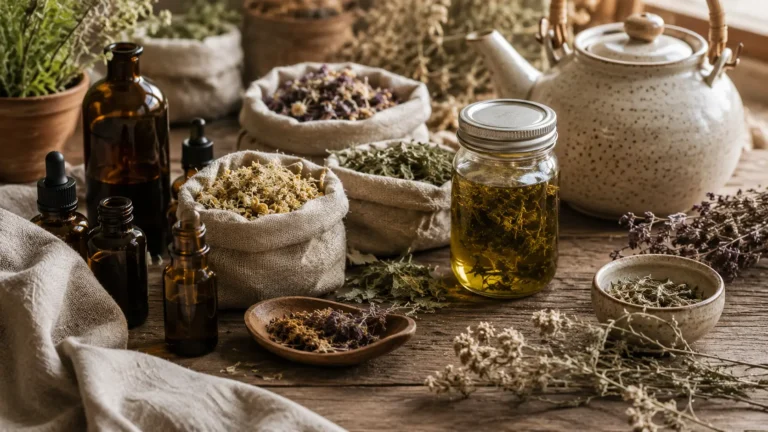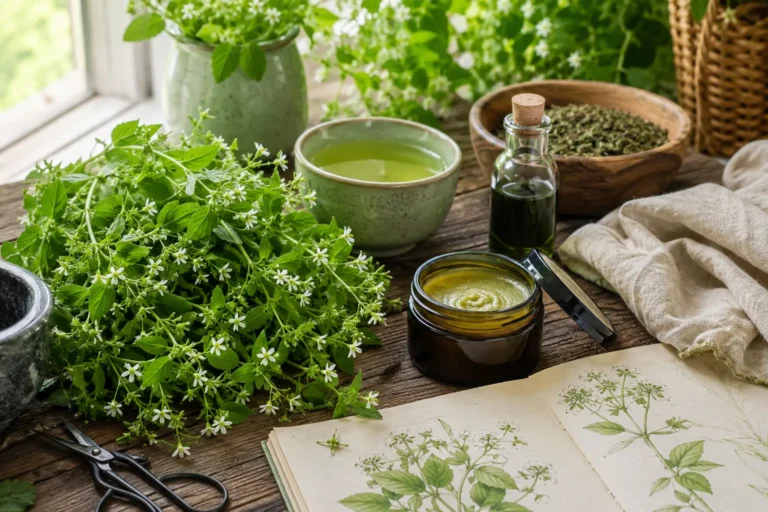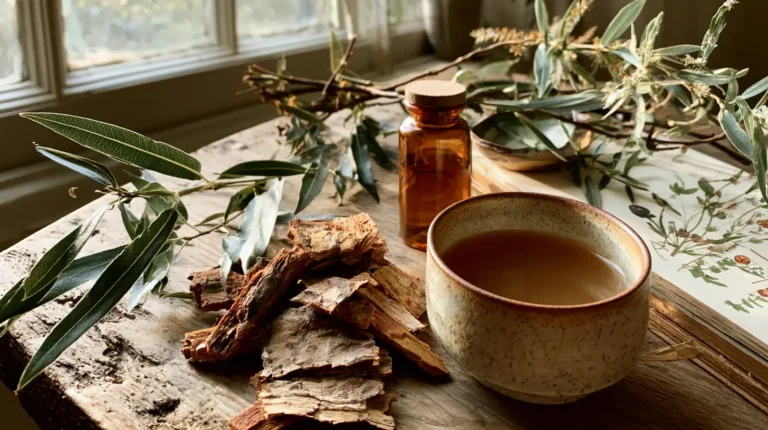
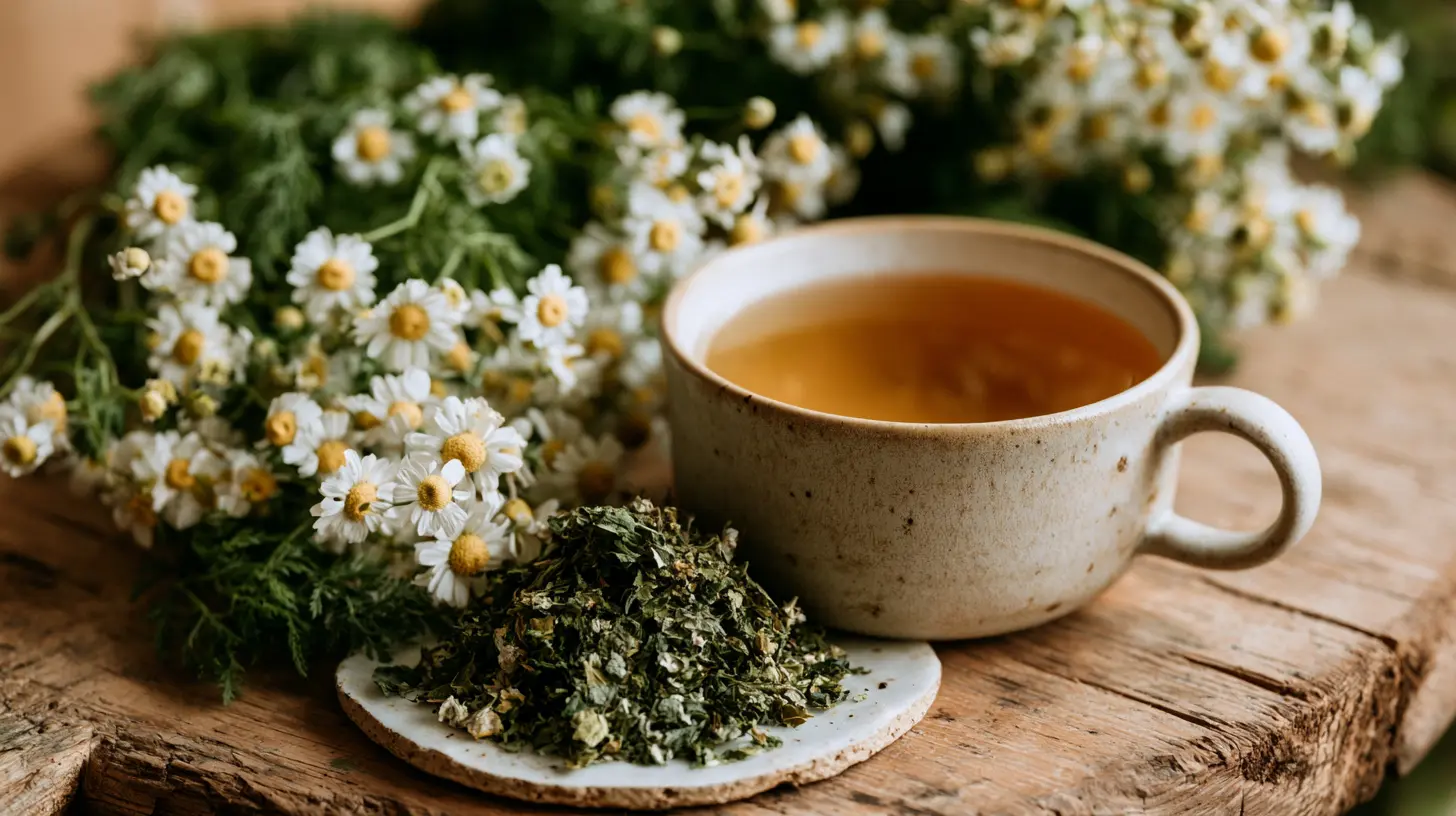
Feverfew is a small, daisy-like perennial herb in the Asteraceae family. Traditionally, feverfew has been used to support head comfort, menstrual wellness, digestive sluggishness, and the body’s response to occasional inflammatory stress. In modern herbalism, it is most often discussed in relation to migraine-prevention support, especially as a long-term herb rather than something used during an active attack.
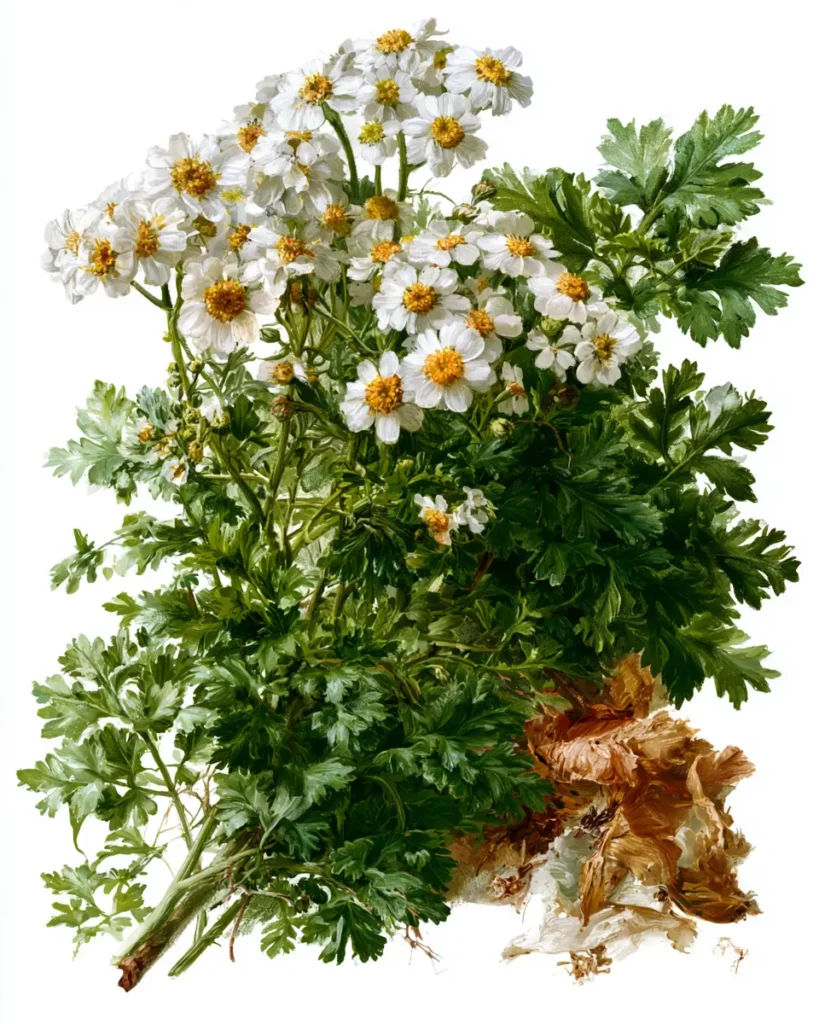
Feverfew (Tanacetum parthenium)
Traditional Uses of Feverfew
Head Comfort: Feverfew is best known for its traditional use in supporting people who experience recurring head tension or migraine patterns.
Nervous System Support: Herbalists may consider feverfew when head discomfort appears connected with stress, tension, or sensitivity.
Digestive Support: Its bitter taste gives it a traditional role as a digestive bitter, especially when appetite and digestive readiness need gentle encouragement.
Menstrual Wellness: Feverfew has historical use in women’s wellness traditions, though this area requires caution because it is not appropriate during pregnancy.
“Feverfew is the bitter little daisy that reminds us: sometimes the strongest herbs do not taste friendly.”
Available Feverfew Products
Dried Feverfew Leaf
Dried feverfew leaf is one of the traditional forms used in teas, capsules, and herbal blends. It should look green to gray-green and smell strong, bitter, and aromatic. Avoid material that smells musty or looks overly brown.
Feverfew Tea
Feverfew tea can be made from dried leaves and aerial parts, but the flavor is strongly bitter. It is usually blended with better-tasting herbs such as peppermint, lemon balm, ginger, or chamomile.
Feverfew Capsules
Capsules are one of the most common market forms. Many products contain dried powdered leaf or standardized extract. Some labels mention parthenolide content, though quality can vary between products.
Feverfew Tablets
Tablets are common in standardized feverfew supplements. They are convenient for consistent use, especially because feverfew is usually taken over time rather than as a one-time herb.
Feverfew Tincture
Feverfew tincture is an alcohol-water extract. It is practical for people who prefer liquid herbs and may extract bitter and aromatic compounds more broadly than water alone.
Feverfew Glycerite
A glycerite is an alcohol-free liquid extract made with vegetable glycerin. It may be useful for people avoiding alcohol, though feverfew’s bitterness can still come through.
Feverfew Powder
Feverfew powder is used in capsules and custom formulas. Powder loses freshness faster than whole dried leaf and should be stored carefully away from heat, light, and moisture.
Fresh Feverfew Leaf
Fresh feverfew leaf has been used traditionally, but chewing fresh leaves can irritate the mouth and may cause sores in some people. For this reason, fresh leaf use should be approached cautiously.
Feverfew Essential Oil
Feverfew essential oil is not a common or recommended home herbal product. Feverfew is usually used as dried herb, capsule, tablet, tincture, or extract rather than essential oil.
Key Herbal Actions
Feverfew is known as a bitter tonic, nervine-supportive herb, anti-inflammatory-supportive herb, antispasmodic, vascular-support herb, digestive bitter, emmenagogue, antioxidant, and mild analgesic-supportive herb.
Bitter Tonic
A bitter tonic is an herb with a bitter taste traditionally used to support appetite and digestive activity. Feverfew is very bitter, which explains part of its digestive herbal use.
Nervine-Supportive Herb
Feverfew is not a classic calming nervine like skullcap or lemon balm. Its nervous system connection is more specific to traditional head-comfort and migraine-pattern support.
Anti-Inflammatory-Supportive Herb
Feverfew contains sesquiterpene lactones and flavonoids studied for inflammation-related pathways. This supports its traditional use, but it should not be described as a cure for inflammatory disease.
Antispasmodic
Antispasmodic herbs are traditionally used to ease patterns of tightness or gripping. Feverfew has historical use where tension, head discomfort, or menstrual discomfort are part of the pattern.
Vascular-Support Herb
Feverfew is often discussed in relation to blood vessel signaling and platelet activity. This is one reason it requires caution with blood thinners, surgery, and bleeding concerns.
Digestive Bitter
Feverfew’s bitterness can stimulate digestive awareness. However, because it is strong and not especially pleasant, it is not usually the first bitter chosen for everyday digestion.
Emmenagogue
An emmenagogue is an herb traditionally used to influence menstrual flow. This traditional action is one reason feverfew should be avoided during pregnancy.
Antioxidant
Feverfew contains flavonoids and phenolic compounds that contribute to antioxidant activity in research settings. These compounds are part of the plant’s broader chemistry.
Mild Analgesic-Supportive Herb
Feverfew has traditional use where discomfort and tension overlap. This does not mean it replaces pain care or acute migraine treatment, but it explains its long-standing herbal reputation.
Active Compounds and Extraction
Feverfew contains parthenolide, sesquiterpene lactones, flavonoids, tanetin, apigenin, luteolin, volatile oils, camphor, chrysanthenyl acetate, phenolic compounds, tannins, and small amounts of minerals.
Parthenolide
Parthenolide is the best-known sesquiterpene lactone in feverfew. It is often used as a marker compound in feverfew products and has been studied for effects related to inflammation signaling, platelet activity, and migraine-related pathways.
Best extraction: Alcohol-water tincture or standardized extract.
To make a tincture, cover dried feverfew leaf with an alcohol-water mixture in a clean jar. Let it macerate for several weeks, shaking regularly, then strain and store in dark glass.
Sesquiterpene Lactones
Sesquiterpene lactones are bitter plant compounds found in many Asteraceae herbs. In feverfew, they contribute to bitterness and biological activity, but they can also trigger allergic reactions in sensitive people.
Best extraction: Tincture or standardized capsules.
These compounds extract well in alcohol-containing preparations. Standardized capsules may be preferred when consistent parthenolide content is desired.
Flavonoids
Flavonoids are antioxidant plant compounds. Feverfew contains flavonoids such as apigenin, luteolin, and tanetin, which contribute to the plant’s antioxidant and inflammation-related research profile.
Best extraction: Hot water infusion or alcohol-water tincture.
A covered infusion extracts many water-soluble flavonoids. Tincture provides a broader extract that includes more bitter constituents.
Tanetin
Tanetin is a flavonoid associated with feverfew. It has been studied in relation to inflammation-related pathways and helps explain why feverfew has attracted scientific interest.
Best extraction: Alcohol-water tincture or extract.
A tincture or standardized extract is more suitable than a quick tea when the goal is broader phytochemical extraction.
Apigenin and Luteolin
Apigenin and luteolin are flavonoids found in several herbs, including feverfew. They are studied for antioxidant and cell-signaling activity.
Best extraction: Hot water infusion or tincture.
A tea can extract some flavonoids, especially when steeped covered for 10–15 minutes. Tincture may capture a wider range of compounds.
Volatile Oils
Feverfew contains volatile oil compounds, including camphor and other aromatic constituents. These contribute to its strong scent and part of its traditional herbal activity.
Best extraction: Covered hot infusion or tincture.
To make feverfew tea, use about 1 teaspoon dried herb per cup of hot water. Cover and steep for 10 minutes, then strain. The taste is bitter, so blending is often wise.
Camphor
Camphor is an aromatic compound found in feverfew’s volatile oil. It contributes to the plant’s sharp scent and stimulating quality.
Best extraction: Covered infusion or tincture.
Covering the cup helps keep aromatic compounds from escaping with steam. Avoid using concentrated essential oil forms casually.
Phenolic Compounds
Phenolic compounds are antioxidant plant constituents. In feverfew, they contribute to the herb’s broader protective chemistry.
Best extraction: Infusion, tincture, or standardized extract.
A simple tea is suitable for traditional use. Extracts are more concentrated and should be used with greater caution.
Tannins
Tannins are astringent compounds that create a mild tightening effect on tissues. In feverfew, they are secondary to the bitter lactones and flavonoids.
Best extraction: Hot water infusion.
Water extracts tannins well, especially with longer steeping. Oversteeping may make the tea more bitter and astringent.
Harvesting and Storing Right
Feverfew aerial parts are usually harvested when the plant is in active growth and before or during early flowering. The leaves are the most commonly used part, though aerial parts may include leaf, stem, and flower.
Harvest in late morning after dew has dried but before strong afternoon heat. Choose healthy, unsprayed plants and avoid harvesting from roadsides or polluted areas. Wear gloves if you are sensitive to Asteraceae plants because feverfew may irritate the skin in some people.
Dry feverfew in a thin layer in a shaded, airy place. Avoid high heat, which can reduce quality. Once fully dry, store in an airtight container away from light, heat, and moisture.
Dried feverfew is best used within about 1 year. Powder should be used faster, often within 6 months. Tinctures generally keep for several years when made and stored properly.
Body Functions Feverfew Can Support
Feverfew can support brain, nervous system, circulation, digestion system, reproductive system female, immune system, muscles and joint comfort, and energy and vitality.
Brain
Feverfew is most often discussed for recurring head-comfort traditions and migraine-prevention support. It should not be presented as an acute migraine treatment, and people with frequent or severe headaches should seek medical guidance.
Nervous System
Feverfew’s traditional use connects it with head tension, sensory sensitivity, and nervous system patterns around recurring discomfort. It is not a calming sedative herb, but it may be part of a long-term nervous system support plan.
Circulation
Feverfew has been studied in relation to platelet activity and vascular signaling. This is part of why it appears in migraine-prevention research, but it also explains why bleeding-risk cautions are important.
Digestion System
Feverfew’s bitter taste supports digestive activity in traditional herbalism. However, it can irritate the mouth or stomach in some people, especially when used fresh or in strong amounts.
Reproductive System Female
Feverfew has historical use in menstrual wellness traditions. Because it may influence menstrual flow and is not appropriate during pregnancy, this use requires careful professional guidance.
Immune System
Feverfew contains compounds studied for inflammation-related and antioxidant activity. This supports general wellness language, but it should not be described as an immune treatment.
Muscles and Joint
Feverfew has traditional use where tension and discomfort overlap. Some people discuss it in relation to joint comfort, but evidence is limited and it should not replace care for inflammatory or painful conditions.
Energy and Vitality
Feverfew does not directly increase energy. However, supporting head comfort and digestive balance may indirectly help a person feel more functional and steady.
Safety and Practical Considerations
Feverfew is not appropriate for everyone. It should not be used during pregnancy because of its traditional emmenagogue activity and potential effects on the uterus. Breastfeeding people should avoid medicinal use unless guided by a qualified healthcare professional.
People allergic to plants in the Asteraceae family, such as ragweed, chamomile, yarrow, daisies, chrysanthemums, marigolds, or sunflowers, should use feverfew cautiously or avoid it. Feverfew can cause allergic reactions, mouth irritation, mouth ulcers, digestive upset, nausea, diarrhea, or rash.
Feverfew may affect platelet activity and bleeding risk. People taking blood thinners, antiplatelet drugs, NSAIDs, aspirin, or preparing for surgery should consult a healthcare professional before using it.
Feverfew is generally discussed as a long-term preventive herb rather than something taken for an active migraine attack. Stopping feverfew suddenly after long-term use may cause rebound headaches or body aches in some people, so gradual discontinuation may be preferable.
Children, older adults, people with chronic illness, people taking prescription medication, and sensitive individuals should use extra caution.
FAQ
What does feverfew taste like?
Feverfew tastes very bitter, green, and slightly aromatic. Most people prefer capsules, tincture, or blended tea rather than drinking it alone.
Is feverfew used for migraines?
Feverfew has a long traditional use for migraine-prevention support, and some studies have explored this use. Evidence is mixed, and it should not replace medical care or prescribed migraine treatment.
Can feverfew stop an active migraine?
Feverfew is not typically used as an acute migraine treatment. It is more commonly discussed as a preventive or long-term support herb.
Is fresh or dried feverfew better?
Both fresh and dried feverfew have been used traditionally, but fresh leaves can irritate the mouth and may cause sores. Dried capsules, tablets, or tinctures are more common modern forms.
Is feverfew tea, tincture, or capsule better?
Capsules and tablets are convenient and may offer more consistent intake. Tincture is flexible and broad-spectrum. Tea is traditional but very bitter and may be harder to tolerate.
Can feverfew be used daily?
Feverfew is often used daily in traditional migraine-prevention approaches, but daily use should be guided by a healthcare professional, especially with medications, bleeding concerns, pregnancy risk, or chronic headaches.
How should feverfew be stored?
Store dried feverfew in a sealed jar away from heat, light, and moisture. Powdered feverfew should be used more quickly because it loses freshness faster.
Does feverfew combine well with other herbs?
Yes. Feverfew is sometimes blended with ginger, peppermint, lemon balm, skullcap, magnesium-containing formulas, or other head-comfort herbs. Formulas should be chosen carefully to avoid unnecessary interactions.
Is feverfew safe for everyone?
No. Feverfew may not be suitable for pregnant or breastfeeding people, those with Asteraceae allergies, people taking blood thinners, people preparing for surgery, or anyone with complex medical conditions.
Can feverfew be used for pets?
Pet use should be guided by a veterinarian or qualified animal herbalist. Feverfew is not appropriate for casual pet use, especially because of allergy and medication concerns.
Disclaimer
This content is educational only. It is not medical advice, diagnosis, or treatment. Herbs may interact with medications or health conditions. People who are pregnant, breastfeeding, managing a medical condition, taking prescription medications, or preparing for surgery should consult a qualified healthcare professional before using herbs.
References
EMA: European Union Herbal Monograph on Feverfew
EMA: Assessment Report on Feverfew
PubMed: Feverfew for Preventing Migraine – Cochrane Review
PubMed: Feverfew Systematic Review
PubMed: Feverfew Phytochemistry and Pharmacology Review
NCBI Bookshelf: Herbal Medicine Safety and Herb-Drug Interaction Considerations