


Aloe vera is a thick-leaved succulent best known for the clear gel inside its leaves. That gel has been traditionally used to cool, soothe, and moisturize the skin, especially after sun, heat, dryness, or minor everyday irritation. Aloe is simple-looking, but it is not a simple plant — the inner gel and the yellow latex just under the rind are very different preparations with very different safety profiles.
For everyday herbal use, aloe vera gel is the friendly part. Aloe latex is the “handle with caution” part.
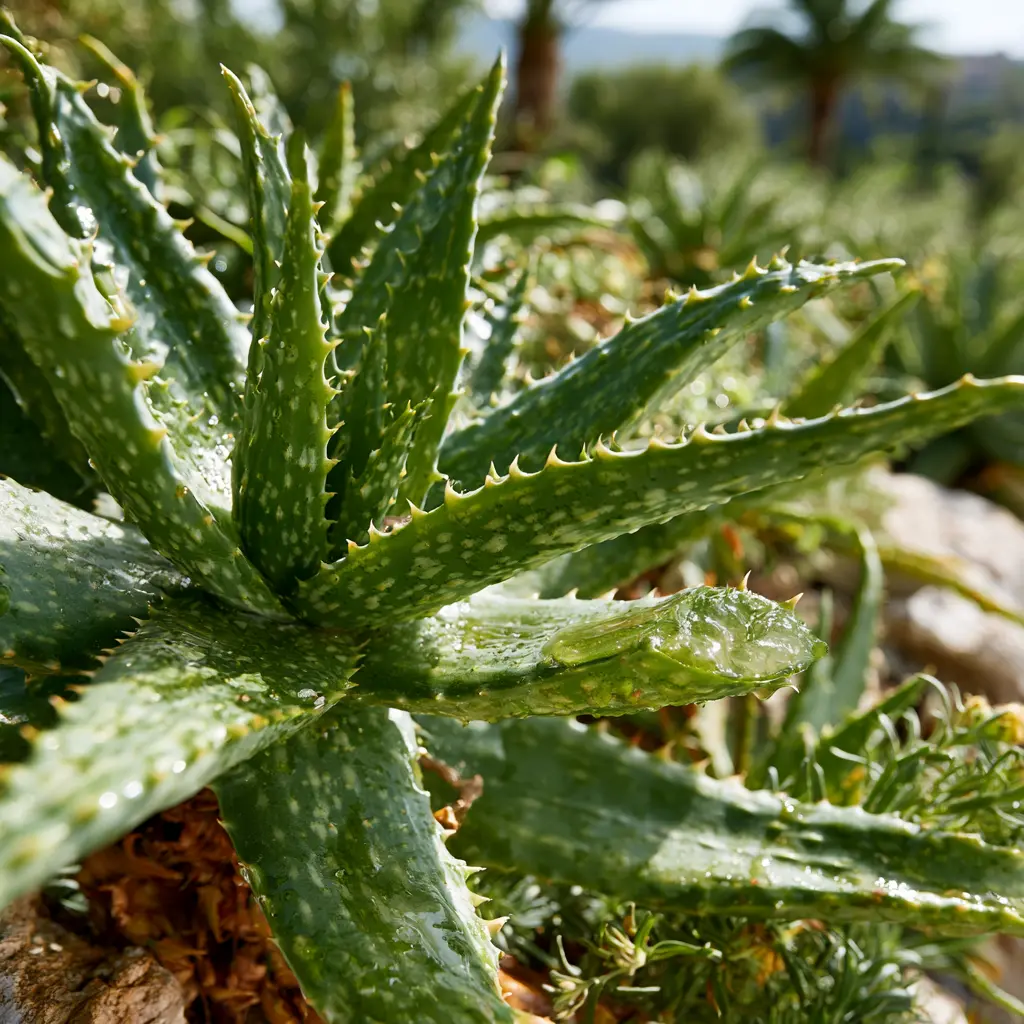
Aloe Vera (Aloe barbadensis Miller)
Traditional Uses of Aloe Vera
Skin Support: Aloe gel is traditionally used topically for cooling, moisturizing, and soothing the skin.
Minor Burn & Sun Care: Aloe gel has a long history of use after heat exposure, including sunburn and minor kitchen burns.
Digestive Support: Inner aloe gel products have been used for digestive comfort, though oral use should be approached carefully and should not include aloe latex unless professionally guided.
Oral & Gum Care: Aloe appears in some mouth gels and rinses for soothing oral tissues, especially when formulated for that purpose.
“Aloe vera is the plant version of a cool cloth and a calm voice.”
Available Aloe Vera Products
Aloe Vera Capsules — Capsules/Tablets
A single-ingredient supplement using concentrated inner-leaf aloe, valued for supporting digestive balance, joints, and stomach comfort.
Buy Aloe Vera Capsules
Aloe Vera Juice — Juice/Liquid
Whole-leaf, preservative-free aloe juice made for drinking, containing natural vitamins and digestive enzymes to support gut health and skin wellness.
Buy Aloe Vera Juice
Aloe Vera Topical Gel — Topical Gel
A soothing, non-sticky gel applied directly to skin for sunburn relief, moisturizing, and calming irritation, redness, or minor cuts.
Buy Aloe Vera Topical Gel
Aloe Vera Powder — Powder
A freeze-dried, highly concentrated aloe powder that dissolves in water, used for internal wellness support or added into skincare and hair care routines.
Buy Aloe Vera Powder
⚠️ These are dietary supplements/cosmetic products — not evaluated by the FDA for treating disease. Oral aloe vera (especially whole-leaf/latex forms) can act as a laxative and may not be suitable during pregnancy, nursing, or for those with certain digestive conditions. Check with a healthcare provider before internal use, and patch-test topical products if you have sensitive skin.
Key Herbal Actions
Aloe vera is known as a vulnerary, demulcent, emollient, humectant, anti-inflammatory, cooling refrigerant, antioxidant, and, in the case of aloe latex only, stimulant laxative.
Vulnerary
Vulnerary herbs are traditionally used to support the skin’s natural repair process. Aloe gel is one of the best-known topical vulnerary herbs for minor skin stress.
Demulcent
Demulcent herbs contain soothing compounds that feel moistening and protective. Aloe gel’s polysaccharides help explain its traditional use for cooling and soothing tissues.
Emollient
Emollients soften and comfort the skin. Aloe gel is not oily like a balm, but it provides light moisture and is often used in lotions and gels.
Humectant
Humectants help attract and hold water. Aloe gel’s water-rich texture and polysaccharides make it useful in hydrating skin-care formulas.
Anti-inflammatory
Aloe gel contains compounds studied for inflammation-modulating activity. This supports its traditional use after heat, sun, and minor skin irritation.
Cooling Refrigerant
In herbal language, a refrigerant is cooling and refreshing. Aloe’s gel-like texture and cooling feel make this action easy to understand — the plant practically explains itself.
Antioxidant
Aloe contains phenolic compounds, vitamins, and other constituents studied for antioxidant activity. These compounds contribute to the plant’s overall skin and wellness profile.
Stimulant Laxative
This action belongs mainly to aloe latex, not the clear inner gel. Aloe latex contains anthraquinones such as aloin that stimulate bowel movement but may also cause cramping and safety problems.
Active Compounds and Extraction
Aloe vera contains polysaccharides, acemannan, glucomannans, anthraquinones, aloin, aloe-emodin, phenolic compounds, salicylic acid, enzymes, amino acids, sterols, vitamins, minerals, and organic acids.
Polysaccharides
Polysaccharides are long-chain carbohydrates that contribute to aloe gel’s slippery, soothing texture. They are studied for moisture retention, tissue-soothing effects, and skin-supporting activity.
Best extraction: Fresh gel, cold blending, freeze-dried inner gel powder.
Fresh gel method: Cut a mature aloe leaf, let the yellow latex drain away, remove the green rind, and scoop out only the clear inner gel. Blend briefly and use topically the same day, or refrigerate for short-term use.
Acemannan
Acemannan is one of aloe’s best-known polysaccharides. It has been studied for immune-related and wound-healing activity, especially in topical and experimental models.
Best extraction: Fresh inner gel or stabilized commercial gel.
Practical method: Use fresh inner gel directly on clean, unbroken or mildly irritated skin. Avoid deep wounds, severe burns, or infected skin unless guided by a clinician.
Glucomannans
Glucomannans are gel-forming polysaccharides that help aloe feel slippery and moistening. They contribute to aloe’s demulcent and humectant qualities.
Best extraction: Fresh gel, cold infusion, or freeze-dried gel powder.
Simple cold preparation: Blend inner gel with a small amount of clean water and strain if needed. Use promptly because fresh aloe spoils quickly.
Anthraquinones
Anthraquinones are compounds found mainly in aloe latex, the yellow sap under the rind. Aloin and aloe-emodin are the best-known examples, and they are responsible for aloe latex’s stimulant laxative effect.
Best extraction: Latex collection, whole-leaf extract, alcohol preparations.
Important note: Home extraction of aloe latex is not recommended for casual use. The strength is unpredictable, and safety concerns are significant.
Aloin
Aloin is a bitter anthraquinone glycoside found in aloe latex. It stimulates the bowel but is also associated with cramping, diarrhea, electrolyte imbalance, and medication interaction concerns.
Best extraction: Latex and whole-leaf extracts.
Safety note: Avoid oral aloe latex unless specifically guided by a qualified healthcare professional.
Aloe-Emodin
Aloe-emodin is another anthraquinone compound found in aloe latex and whole-leaf preparations. It has been studied in laboratory research, but that does not make it appropriate for unsupervised internal use.
Best extraction: Latex and whole-leaf preparations.
Practical note: Choose decolorized or purified inner gel products when looking for oral aloe products, and avoid products that do not clearly identify the plant part used.
Salicylic Acid
Aloe contains small amounts of salicylic acid-like compounds. These may contribute to aloe’s traditional use for skin comfort, although aloe is much gentler than concentrated salicylic acid skin products.
Best extraction: Fresh gel and stabilized gel.
Topical method: Apply a thin layer of aloe gel to clean skin and let it dry before adding moisturizer if needed.
Sterols
Aloe contains plant sterols such as lupeol, campesterol, and beta-sitosterol. These compounds are studied for skin and inflammation-related effects.
Best extraction: Fresh gel, stabilized gel, and some alcohol-based preparations.
Skin-care method: Aloe gel combines well with simple lotions or carrier oils. Apply aloe first for hydration, then seal with a small amount of oil or cream.
Vitamins and Minerals
Aloe gel contains small amounts of vitamins, minerals, amino acids, and organic acids. It is not usually a major nutrient source, but these compounds add to the whole-plant profile.
Best extraction: Fresh gel or stabilized inner gel juice.
Practical method: For topical use, fresh gel is best used quickly. For internal products, choose reputable commercial preparations with clear labeling and safety testing.
Harvesting and Storing Right
Aloe leaves are usually harvested from mature plants that are at least a few years old. Choose thick, healthy outer leaves and harvest during the cooler part of the day.
Cut the leaf near the base and let it stand upright for several minutes so the yellow latex can drain out. Then wash the leaf, remove the green rind, and use only the clear inner gel for gentle topical preparations.
Fresh aloe gel: Refrigerate and use within 3–5 days. Discard if it changes smell, color, or texture.
Frozen aloe gel: Freeze in small cubes and use within a few months.
Commercial aloe gel: Follow the label and expiration date.
Aloe juice: Refrigerate after opening and follow the product label.
Aloe powder: Store airtight, cool, dry, and away from light.
Aloe latex products: Avoid casual home use and follow professional guidance only.
Body Functions Aloe Vera can Support
Aloe vera can support skin, digestion system, dental oral health, immune system, urinary system, and reproductive system female.
Skin
Aloe gel is most strongly associated with skin support. Its polysaccharides, humectant texture, and cooling quality make it useful in topical preparations for dryness, heat, and minor everyday irritation.
Digestion System
Purified inner aloe gel products have been used for digestive comfort, though evidence and product quality vary. Aloe latex is very different and may cause cramping, diarrhea, and electrolyte problems.
Dental Oral
Aloe appears in some oral gels and mouth rinses designed for gum and mouth comfort. Its gel texture and soothing polysaccharides explain why it is used in oral-care formulas.
Immune System
Aloe polysaccharides, including acemannan, have been studied for immune-related activity in laboratory and experimental research. For everyday use, aloe is best understood as a supportive plant rather than an immune treatment.
Urinary System
Aloe’s relevance to the urinary system is mostly safety-related. Aloe latex may contribute to fluid loss and electrolyte imbalance through diarrhea, which can stress the body and should be avoided in vulnerable individuals.
Reproductive System Female
Aloe is widely used topically in cosmetic and skin-care products, but oral aloe latex should be avoided during pregnancy and breastfeeding. Concentrated internal use should be guided by a qualified healthcare professional.
Safety and Practical Considerations
Aloe gel and aloe latex are not the same. Clear inner gel is generally used for topical soothing and moisture, while yellow aloe latex is a strong stimulant laxative with more safety concerns.
Topical aloe gel is generally well tolerated, but some people experience burning, itching, rash, or eczema-like reactions. Patch testing is wise for sensitive skin.
Oral aloe latex may cause abdominal pain, cramps, diarrhea, low potassium, dehydration, kidney problems, and medication interactions. Aloe whole-leaf extracts and latex-containing products should be used only with professional guidance.
Avoid oral aloe latex during pregnancy and breastfeeding. Use caution with kidney disease, liver disease, inflammatory bowel disease, intestinal obstruction, hemorrhoids, diabetes medications, diuretics, digoxin, blood thinners, laxatives, and medications affected by fluid or potassium changes.
Do not apply aloe to deep wounds, severe burns, infected skin, or serious injuries without medical care. Children, older adults, pets, and sensitive individuals need extra caution, especially with internal products.
Fresh aloe gel spoils quickly. When in doubt, throw it out — your skin does not need a science experiment.
FAQ
What does aloe vera taste like?
Clear inner aloe gel tastes mild, watery, slightly bitter, and a little plant-like. Aloe latex is very bitter and should not be casually consumed.
When is the best time to use aloe vera?
Topical aloe gel is commonly used after sun exposure, heat, dryness, shaving, or minor skin irritation. Oral aloe products should be used carefully and only when the label clearly identifies purified inner gel.
Is fresh or bottled aloe vera better?
Fresh aloe gel is simple and useful for topical use if prepared carefully. Bottled products are more convenient and may be stabilized for longer shelf life, but quality varies.
Is aloe gel, juice, or capsule better?
For skin, aloe gel is the most practical form. Aloe juice or capsules are internal products and require more caution, especially if they contain whole leaf, latex, or anthraquinones.
Can aloe vera be used daily?
Topical aloe gel can be used daily by many people if the skin tolerates it. Daily internal use should be discussed with a qualified healthcare professional, especially for supplements or juice products.
How should aloe vera be stored?
Fresh gel should be refrigerated and used within a few days. Commercial products should be stored according to the label, and any product with a strange smell, color, or texture should be discarded.
Does aloe vera combine well with other herbs?
Yes. For skin, aloe combines well with calendula, chamomile, lavender, rose, marshmallow root, and plantain leaf. For oral use, combinations should be chosen carefully and based on the product type.
Is aloe vera safe for everyone?
No. People who are pregnant, breastfeeding, taking medications, managing kidney or liver disease, or sensitive to laxatives should avoid aloe latex and use internal aloe products only with guidance.
Can aloe vera be used for pets?
Aloe should not be used casually for pets, especially internally. Some aloe products can be irritating or unsafe for animals, so pet use should be guided by a veterinarian.
Can aloe vera gel be used on burns?
Aloe gel is traditionally used for minor heat irritation and mild sunburn. Serious burns, blistering, infection, or large injured areas need medical care.
Disclaimer
This content is educational only. It is not medical advice, diagnosis, or treatment. Herbs may interact with medications or health conditions. People who are pregnant, breastfeeding, managing a medical condition, taking prescription medications, or preparing for surgery should consult a qualified healthcare professional before using herbs.
References
EMA: Aloe barbadensis and Aloe species Herbal Monograph
PubMed Central: Aloe Vera: A Short Review
PubMed Central: Aloe Vera Toxicity and Adverse Clinical Effects
PubMed: Safety Assessment of Aloe-Derived Ingredients
NCBI Bookshelf: Evaluation of the Nutritional and Metabolic Effects of Aloe Vera