


Plantain leaf is one of those humble backyard herbs that many people step over without realizing they are walking past a classic herbal ally. The leaves of Plantago major and Plantago lanceolata have been traditionally used in Western herbalism for skin, mucous membranes, digestion, respiratory comfort, and everyday “something feels irritated” situations.
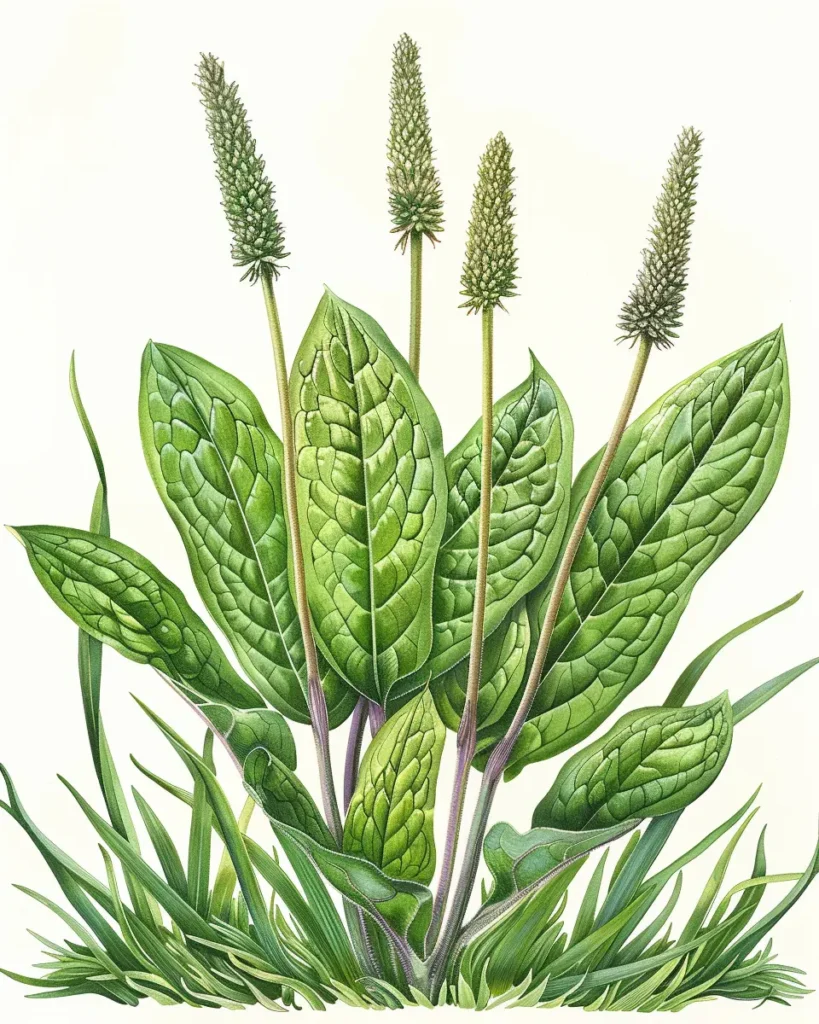
Plantain Leaf (Plantago major, Plantago lanceolata) – Common names include broadleaf plantain, greater plantain, ribwort plantain, narrowleaf plantain, English plantain, and lanceleaf plantain.
Traditional uses of plantain leaf:
Skin Support: Fresh plantain leaf is traditionally used as a poultice for minor skin irritation, roughness, insect bites, and everyday outdoor mishaps.
Mucous Membrane Support: Plantain leaf contains mucilage, tannins, and iridoids that make it useful for tissues that feel irritated, dry, or inflamed.
Respiratory Comfort: Plantago lanceolata leaf has recognized traditional use in Europe for irritation of the mouth and throat and dry cough.
Digestive Support: Plantain leaf tea is traditionally used when the digestive tract feels sensitive or irritated, especially when a gentle, cooling herb is preferred.
Plantain leaf is not glamorous. It is more like the practical friend who shows up with a first-aid kit and no need for applause.
“Plantain leaf is the quiet green helper that grows where people forget to look.”
Available Plantain Leaf Products
Dried Plantain Leaf
Dried plantain leaf is one of the most common herbal forms. It is used in teas, infusions, compresses, washes, salves, poultices, syrups, and herbal blends. Good dried plantain should be green to olive-green, leafy, and mildly grassy in scent.
Look for products labeled Plantago major or Plantago lanceolata. Avoid old, brown, dusty, or musty material.
Plantain Leaf Tea
Plantain leaf tea is a simple and traditional preparation. It has a mild, grassy, slightly earthy taste. It is often used for throat comfort, digestive support, and as a cooled wash for the skin.
A simple tea can be made with 1–2 teaspoons dried plantain leaf per cup of hot water. Cover, steep for 10–15 minutes, then strain well.
Plantain Leaf Tincture
Plantain leaf tincture is a concentrated liquid extract. It is convenient, portable, and shelf-stable. Tinctures extract iridoid glycosides, flavonoids, phenolic acids, tannins, and other constituents.
Plantain Leaf Capsules
Plantain leaf capsules usually contain powdered leaf or dry extract. They may be convenient for people who do not enjoy herbal tea. Labels should clearly list the botanical name, plant part, serving size, and whether the product is powdered leaf or standardized extract.
Plantain Leaf Glycerite
Plantain leaf glycerite is an alcohol-free liquid preparation. It may be useful for people avoiding alcohol. Because some of plantain’s key compounds are water-soluble, glycerites made with water and glycerin can be a reasonable gentle option.
Plantain Leaf Powder
Plantain leaf powder is used in capsules, poultices, face masks, salves, and powdered herbal blends. It can be mixed with a little water to make a quick external paste. Powder loses freshness faster than whole dried leaf, so buy small amounts and store it carefully.
Fresh Plantain Leaf
Fresh plantain leaf is a classic field herb. Clean leaves can be crushed or chewed into a quick poultice for minor skin irritation when proper identification and cleanliness are certain. This old herbal trick is useful, but please do not use leaves from sprayed lawns, roadsides, dog-walking zones, or questionable parking-lot ecosystems.
Plantain Leaf Infused Oil
Plantain leaf infused oil is made by steeping dried plantain leaf in a carrier oil such as olive, sunflower, or jojoba oil. It is used externally in salves, balms, and skin oils. Dried leaf is preferred for oil infusions because fresh leaves contain moisture and may spoil.
Plantain Leaf Salve
Plantain salve is commonly made from plantain infused oil and beeswax or another wax. It is used externally for dry, rough, itchy, or irritated skin. It is a classic herbal first-aid salve ingredient.
Plantain Leaf Syrup
Plantain leaf syrup is usually made from a strong infusion combined with honey or another syrup base. It is traditionally used for throat comfort. It may be prepared alone or with herbs such as marshmallow root, thyme, licorice root, or elderflower.
Plantain Leaf Compress or Wash
A strong plantain infusion can be cooled and used externally as a wash or compress. This is one of the simplest ways to use dried plantain leaf for skin. Use fresh preparations and discard leftovers after 24–48 hours if refrigerated.
Key Herbal Actions
Plantain leaf is known as a demulcent, vulnerary, astringent, anti-inflammatory-supportive herb, antimicrobial-supportive herb, expectorant, alterative, diuretic-supportive herb, and mucous membrane tonic.
Demulcent
A demulcent herb contains soothing compounds that support irritated mucous membranes. Plantain leaf contains mucilage and polysaccharides, giving it a softening quality in teas and washes. This makes it especially useful when tissues feel dry, scratchy, or tender.
Vulnerary
A vulnerary herb is traditionally used to support the natural comfort and repair of skin and tissues. Plantain leaf is a classic vulnerary herb for everyday topical use. Fresh poultices, washes, oils, and salves are common forms.
Astringent
Astringent herbs contain tannins that gently tone tissues. Plantain leaf has mild astringency, which balances its moistening quality. This makes it useful when tissues need both soothing and gentle tightening.
Anti-inflammatory-Supportive Herb
Plantain leaf contains compounds such as aucubin, plantamajoside, flavonoids, and phenolic acids that have been studied for inflammation-related activity. This supports its traditional use for irritated skin and mucous membranes. It should not be treated as a replacement for medical care when inflammation is severe or persistent.
Antimicrobial-Supportive Herb
Plantain extracts have shown antimicrobial activity in laboratory studies. This helps explain the plant’s long history in wound and skin traditions. Laboratory antimicrobial activity does not mean a plantain salve can replace proper wound care or antibiotics when needed.
Expectorant
Plantain leaf, especially Plantago lanceolata, is traditionally used for dry cough and throat irritation. Its mucilage soothes while its gentle expectorant action supports respiratory comfort. It is often paired with marshmallow root, thyme, mullein, or licorice root.
Alterative
An alterative herb is traditionally used to support the body’s natural cleansing and tissue-maintenance processes over time. Plantain’s alterative reputation is connected to skin, lymphatic, urinary, and mucous membrane support. It is gentle and usually used consistently rather than dramatically.
Diuretic-Supportive Herb
Plantain leaf has traditional use as a mild urinary herb. This means it may support normal fluid movement through the urinary system. It is not a strong diuretic and should not be used as a substitute for care when urinary symptoms are painful or persistent.
Mucous Membrane Tonic
Plantain leaf supports tissues lining the mouth, throat, digestive tract, respiratory tract, and urinary tract. Its combination of mucilage, tannins, and iridoids makes it useful for tissues that need both soothing and toning. This is one of plantain’s strongest herbal themes.
Active Compounds and Extraction
Plantain leaf contains iridoid glycosides, aucubin, catalpol, plantamajoside, acteoside, mucilage polysaccharides, flavonoids, tannins, phenolic acids, minerals, allantoin-like compounds, and small amounts of vitamins.
Iridoid Glycosides
Iridoid glycosides are bitter plant compounds involved in plant defense. Plantain leaf contains iridoids such as aucubin and catalpol. These compounds are studied for inflammation-related, antimicrobial, and tissue-supportive activity.
Best extraction: Hot infusion, tincture, glycerite.
To make plantain leaf tea, use 1–2 teaspoons dried leaf per cup of hot water. Cover, steep 10–15 minutes, and strain. This extracts water-soluble iridoids along with mucilage and tannins.
Aucubin
Aucubin is one of the key iridoid glycosides in plantain leaf. It is studied for anti-inflammatory, antioxidant, liver-protective, and antimicrobial-related activity in laboratory and preclinical research. It is also somewhat unstable, so good drying and storage matter.
Best extraction: Fresh tincture, hot infusion, glycerite.
Fresh plantain tincture can capture a broad range of constituents. For everyday home use, tea or fresh poultice is more common.
Catalpol
Catalpol is another iridoid glycoside found in plantain species. It contributes to the plant’s bitter and tissue-supportive profile. It is part of the broader iridoid chemistry that gives plantain more activity than its mild taste suggests.
Best extraction: Hot infusion, tincture.
A covered infusion is a simple method. Avoid long, aggressive boiling of the leaf because delicate compounds may degrade.
Plantamajoside
Plantamajoside is a phenylethanoid glycoside found in Plantago major and Plantago lanceolata. It is studied for antioxidant, antimicrobial, and inflammation-related effects. It is one of the important marker compounds in plantain research.
Best extraction: Hot infusion, tincture, glycerite.
A strong infusion can be made with 1 tablespoon dried leaf per cup of hot water, steeped for 15–20 minutes. This can be used as tea or cooled as an external wash.
Acteoside
Acteoside, also known as verbascoside, is another phenylethanoid glycoside found in plantain species. It is studied for antioxidant and tissue-supportive activity. It works alongside plantamajoside and iridoids in the whole leaf.
Best extraction: Hot infusion, tincture, glycerite.
Water and alcohol-water preparations are both suitable. For sensitive individuals, tea is usually the gentler starting point.
Mucilage Polysaccharides
Mucilage polysaccharides are water-loving compounds that become slippery or soothing in water. Plantain leaf contains less mucilage than marshmallow root but enough to contribute a softening effect. This is especially relevant for throat, digestive, and urinary tissue comfort.
Best extraction: Hot infusion, cold infusion, poultice.
For a more mucilage-focused preparation, steep dried plantain leaf in cool water for several hours. For a fresh poultice, crush clean fresh leaves with a little water until juicy, then apply externally to intact skin.
Flavonoids
Flavonoids are antioxidant plant compounds. Plantain leaf contains flavonoids such as luteolin and apigenin derivatives, depending on species and growing conditions. These contribute to antioxidant and tissue-supportive activity.
Best extraction: Hot infusion, tincture.
Tea extracts many flavonoids well. Tincture may extract a broader range of compounds.
Tannins
Tannins are astringent compounds that gently tone tissues. Plantain leaf’s tannins make it useful in washes, mouth rinses, and digestive formulas where tissue tone is desired. The astringency is mild and balanced by mucilage.
Best extraction: Hot infusion, tincture, compress.
A stronger tea can be cooled and used as a compress or rinse. Strain carefully to remove leaf particles.
Phenolic Acids
Phenolic acids are antioxidant compounds found in many herbs. In plantain leaf, they contribute to antioxidant and inflammation-related activity. They are part of the reason plantain is studied for skin and tissue support.
Best extraction: Hot infusion, tincture, glycerite, vinegar.
A plantain vinegar can be made by covering dried plantain leaf with apple cider vinegar and steeping for 2–4 weeks. Strain and use diluted in culinary or external preparations.
Minerals
Plantain leaves contain minerals, though the amount varies by soil and growing conditions. As a leafy herb, plantain may contribute small amounts of potassium, calcium, magnesium, and trace minerals. It should be viewed as a supportive green herb rather than a mineral supplement.
Best extraction: Long infusion, vinegar, food use.
Young clean plantain leaves can be eaten as a wild green when properly identified and harvested from safe locations. Older leaves become tougher and more fibrous.
Harvesting and Storing Right
Plantain leaves are usually harvested from spring through early autumn, when the leaves are fresh, green, and healthy. Young to mid-sized leaves are often preferred because they are less tough than older leaves. For topical use, fresh leaves are especially useful.
Harvest in the late morning after dew has dried. Choose unsprayed plants from clean areas away from roads, treated lawns, industrial sites, and pet traffic. Since plantain often grows close to the ground, wash it carefully.
To dry plantain leaf, spread leaves in a single layer in a shaded, well-ventilated place. Dry quickly but gently to preserve color and reduce mold risk. Leaves are ready for storage when crisp and fully dry.
Store dried plantain leaf in an airtight container away from light, heat, and moisture. It is usually best used within 1 year. Powder is best used within 6 months. Fresh plantain poultices should be used immediately. Prepared teas or washes should be refrigerated and used within 24–48 hours.
Body Functions Plantain Leaf Can Support
Plantain leaf can support skin, respiratory system, digestion system, dental oral wellness, urinary system, immune system, lymphatic system, liver support, and circulation.
Skin
Plantain leaf is one of the classic herbs for skin support. Its vulnerary, demulcent, astringent, and antimicrobial-supportive qualities make it useful in poultices, washes, oils, and salves. It is especially associated with minor irritation, bites, roughness, and everyday skin discomfort.
Respiratory System
Plantago lanceolata leaf has recognized traditional use for irritation of the mouth and throat and related dry cough. Its mucilage soothes, while its iridoids and tannins support tissue comfort. It is often included in syrups and teas for throat support.
Digestion System
Plantain leaf tea is traditionally used for sensitive or irritated digestive tissues. Its mucilage and tannins offer both soothing and gentle toning. It is often paired with marshmallow root, calendula, chamomile, or meadowsweet in digestive blends.
Dental Oral
Plantain leaf can be used as a cooled tea rinse for mouth and gum comfort. Its mild astringency and soothing quality make it relevant for oral tissues. It does not replace dental care, but it can be a gentle supportive rinse.
Urinary System
Plantain leaf has traditional use as a mild urinary demulcent and diuretic-supportive herb. Its soothing mucilage may be relevant when urinary tissues feel irritated. Persistent urinary symptoms require medical evaluation.
Immune System
Plantain leaf supports immune wellness mostly through tissue-level support, antioxidant compounds, and traditional wound and mucous membrane use. It is not a strong immune stimulant. Its role is more about supporting the body’s surface barriers.
Lymphatic System
Plantain is sometimes used in traditional formulas for sluggish skin and tissue states. Its alterative and tissue-supportive reputation makes it relevant to lymphatic wellness. This is gentle support, not treatment for lymphatic disease.
Liver Support
Plantain compounds such as aucubin have been studied for liver-protective activity in preclinical research. In practical herbalism, plantain is better described as a gentle alterative and antioxidant-supportive herb. People with liver disease should seek professional guidance before medicinal use.
Circulation
Plantain’s circulation relevance is mostly local and tissue-focused. It may support comfort in irritated skin and minor topical situations through its astringent and vulnerary actions. It is not a primary cardiovascular herb.
Safety and Practical Considerations
Plantain leaf is generally considered gentle when used as tea, food, or topical preparation, but safe identification and clean harvesting are essential.
Do not confuse herbal plantain leaf with cooking plantain fruit. Also avoid harvesting from sprayed lawns, roadsides, contaminated soil, or areas where pets frequently visit. Because plantain grows low to the ground, it can collect dirt and microbes.
People with known allergy to plantain pollen or Plantago species should use caution. Some people may develop skin irritation, dermatitis, or allergic reactions. Patch test topical preparations before wider use.
Plantain leaf contains fiber and mucilage and may affect absorption of medications if taken at the same time. Separate plantain leaf tea or supplements from medications by at least 1–2 hours unless a healthcare professional gives different guidance.
Pregnant and breastfeeding people should consult a qualified healthcare professional before using plantain medicinally. Food-level use of properly identified young leaves is different from concentrated extracts.
Children, older adults, and sensitive individuals should use mild preparations and small amounts. For serious wounds, infected skin, deep punctures, spreading redness, fever, severe pain, or persistent symptoms, seek medical care.
Pet use should be guided by a veterinarian or qualified animal herbalist. Do not apply homemade salves to pets if they may lick ingredients that are not pet-safe.
FAQ
What does plantain leaf taste like?
Plantain leaf tastes mild, grassy, earthy, and slightly bitter. Young fresh leaves are more tender and green-tasting. Older leaves can be tough and fibrous.
When is the best time to use plantain leaf?
Plantain leaf is often used when tissues feel irritated, dry, itchy, or tender. Fresh leaf poultices are common for minor outdoor skin situations. Tea may be used for throat, digestive, or urinary tissue support.
Is fresh or dried plantain leaf better?
Fresh plantain leaf is excellent for poultices and immediate topical use. Dried plantain leaf is more practical for teas, salves, washes, and storage. Both are useful when properly harvested and identified.
Is plantain leaf tea, tincture, or salve better?
It depends on the goal. Tea is best for throat, digestive, urinary, and general mucous membrane support. Salve or infused oil is best for external skin use. Tincture is convenient and more concentrated.
Can plantain leaf be used daily?
Plantain leaf tea may be used regularly by many people for short periods, but daily medicinal use should be thoughtful. People taking medications, pregnant or breastfeeding people, and those with medical conditions should seek guidance. Food-level use is different from concentrated extracts.
How should plantain leaf be stored?
Store dried plantain leaf in an airtight container away from heat, light, and moisture. Use within about 1 year for best quality. Powder should be used faster because it loses freshness more quickly.
Does plantain leaf combine well with other herbs?
Yes. Plantain leaf combines well with calendula, marshmallow root, chamomile, yarrow, mullein, thyme, licorice root, violet leaf, chickweed, and comfrey leaf for external use. For throat blends, it pairs nicely with marshmallow root and thyme.
Is plantain leaf safe for everyone?
No herb is safe for absolutely everyone. Plantain leaf may not be appropriate for people with Plantago allergies, medication timing concerns, pregnancy, breastfeeding, or uncertain plant identification. Topical use should stop if irritation occurs.
Can plantain leaf be used for pets?
Plantain leaf is sometimes used in animal herbalism, especially for topical skin support, but pet use should be guided by a veterinarian or qualified animal herbalist. Pets may lick topical products, and not every salve ingredient is safe for animals.
Is plantain leaf the same as psyllium?
They are related but not the same product. Psyllium usually comes from the seeds or husks of Plantago ovata and is used as a bulk-forming fiber. Plantain leaf usually refers to the leaves of Plantago major or Plantago lanceolata and is used more for skin and mucous membrane support.
Disclaimer
This content is educational only. It is not medical advice, diagnosis, or treatment. Herbs may interact with medications or health conditions. People who are pregnant, breastfeeding, managing a medical condition, taking prescription medications, or preparing for surgery should consult a qualified healthcare professional before using herbs.
References
EMA: Plantaginis lanceolatae folium
EMA: European Union Herbal Monograph on Plantago lanceolata L., folium
PubMed: The Traditional Uses, Chemical Constituents and Biological Activities of Plantago major L.
PMC: The Traditional Uses, Chemical Constituents and Biological Activities of Plantago major L.
PubMed: Chemical Constituents and Medical Benefits of Plantago major
PMC: Antimicrobial and Other Biomedical Properties of Extracts from Plantago major
PubMed: The Effect of Plantago major on Wound Healing in Preclinical Studies
PMC: Therapeutic Efficacy of Great Plantain in Second-Degree Burn Wounds
PMC: Plantago major in Traditional Persian Medicine and Modern Phytotherapy
PMC: Characteristics, Isolation Methods, and Biological Properties of Aucubin